
NTA Overhauls Exam Protocols, Retest Rules After UGC NET Retest Controversy
The National Testing Agency (NTA) is undergoing its most sweeping structural overhaul in history, with more than 50 staff members removed and ten new professional leadership positions created, following a directive from Union Education Minister Pralhad Joshi on August 17, 2026.
The National Testing Agency (NTA) is undergoing its most sweeping structural overhaul in history, with more than 50 staff members removed and ten new professional leadership positions created, following a directive from Union Education Minister Pralhad Joshi on August 17, 2026. The reforms come just one day after the NTA announced a controversial re-test for three UGC-NET papers — English, Commerce, and Sociology — due to errors including misspelt scholar names and garbled book titles, affecting roughly 10 lakh registered candidates across India.
NTA Overhaul: 50 Staff Removed, New CTO and CISO Appointed as UGC NET Retest Dates Confirmed for September 9-10
New Delhi, August 17, 2026 — Union Education Minister Pralhad Joshi convened a high-stakes review meeting on Monday with the Secretary of the Department of Higher Education, NTA Director General, and other senior officials to assess the agency's reform trajectory. The meeting resulted in a directive for a "war footing" overhaul of the Confidential Operations (CONOPS) architecture, including the deployment of air-gapped systems and strict device-deposit protocol compliance. This decisive action follows a weekend of turmoil for the agency, which on Sunday night announced re-examinations for three UGC-NET June 2026 papers after an internal audit committee flagged multiple errors in question papers.

The Structural Purge: 50 Staff Removed, New Professional Leadership
The most immediate and tangible reform is the removal of more than 50 NTA staff members from the agency as part of the ongoing restructuring. This is not a cosmetic change; it represents a fundamental shift in how the agency will operate. In parallel, the NTA has advertised ten new professional leadership positions, which are currently being onboarded. These include a Chief Technology Officer (CTO), Chief Financial Officer (CFO), Chief Information Security Officer (CISO), General Manager (Test Security), and General Manager (R&D and Psychometrics).
The induction of domain specialists from the private sector for cybersecurity, psychometrics, and question-paper design marks a departure from the NTA's previous reliance on academic and bureaucratic personnel. For Indian students who have faced repeated exam disruptions — from the NEET-UG 2024 leak scandal to the UGC-NET 2024 cancellation and the recent NEET-UG 2026 cancellation — this professionalisation of leadership is a critical step toward restoring institutional credibility. The question remains whether these new experts can fix systemic flaws before the next examination cycle begins.
CONOPS Overhaul: Air-Gapped Systems and Secluded Rooms
Minister Joshi's directive for a complete overhaul of the Confidential Operations (CONOPS) architecture is the technical core of this reform. The new protocols mandate the strengthening of secluded rooms where question papers are prepared, the deployment of air-gapped systems — computers physically isolated from unsecured networks — and strict compliance with device-deposit protocols for all personnel involved in exam preparation. These measures are designed to prevent the kind of leaks that have plagued Indian examinations, most notably the NEET-UG 2026 cancellation over paper leak allegations.
The minister also ordered a comprehensive audit of all examination processes, with a detailed report on corrective actions to be submitted. This audit is not merely administrative; it is a political necessity. The NTA conducts exams for NEET-UG, JEE, CUET-UG, and UGC-NET, serving crores of candidates annually. Any systemic failure in these exams has cascading consequences for medical admissions, engineering seats, and university faculty recruitment across the country. The air-gapped system mandate, if implemented rigorously, could close the most significant vulnerability in the exam pipeline.
The UGC-NET Retest: What Candidates Need to Know
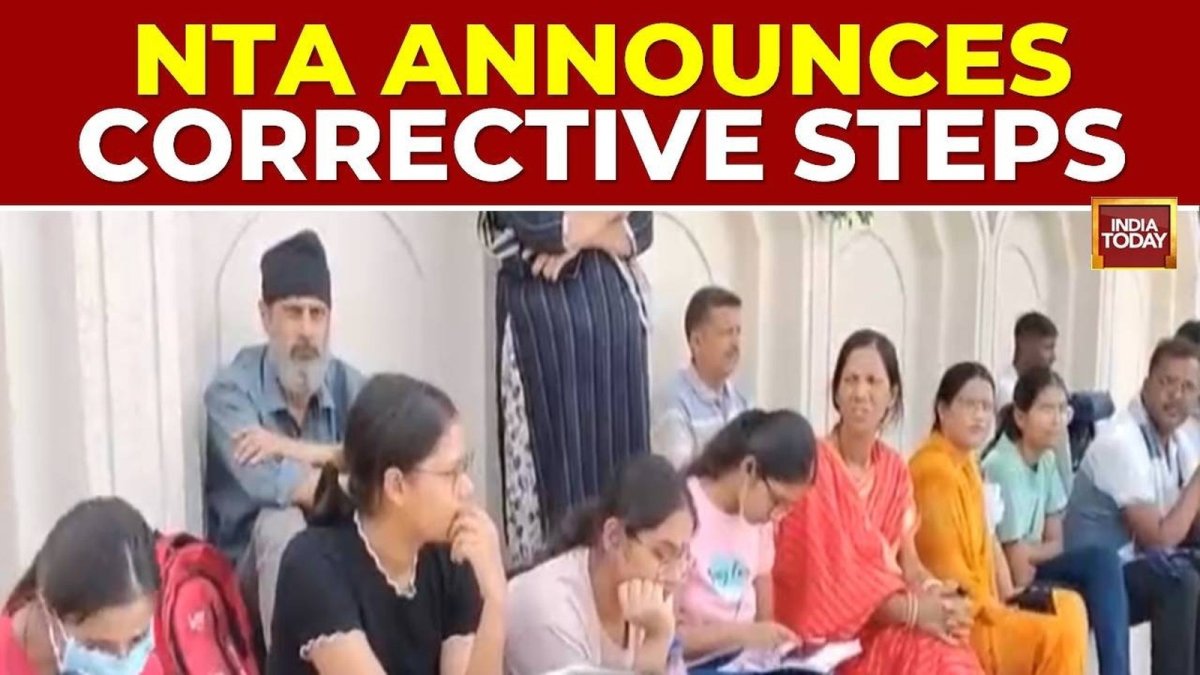
The immediate trigger for this overhaul was the NTA's August 16 announcement of a re-test for three UGC-NET June 2026 papers: English, Commerce, and Sociology. The re-examinations are scheduled for September 9, 2026 (English and Commerce) and September 10, 2026 (Sociology). Critically, the NTA has stated that no additional fee will be charged to candidates, and the number of qualifying candidates and subject-wise allocations will not be reduced despite the retest.
The UGC-NET June 2026 cycle was conducted from June 22-30 across 87 subjects, with roughly 10 lakh candidates registered for the Junior Research Fellowship (JRF), assistant professor eligibility, and PhD admissions. The errors found by the internal audit committee included misspelt names of prominent scholars and garbled book titles — errors that undermine the very validity of the assessment. For candidates who have spent months preparing, the retest is a double-edged sword: it offers a fair chance but also extends the uncertainty. As one aspirant told reporters, "Our hopes are shattered."
What This Means for India: The Political and Educational Fallout
This overhaul cannot be viewed in isolation. It comes within months of the cancellation of NEET-UG 2026 for medical admissions over paper leak allegations, and follows the NEET-UG 2024 leak scandal and the UGC-NET 2024 cancellation. The political ramifications are significant. The Congress party has targeted the ruling government and Education Ministry over these controversies, with Congress leader Rahul Gandhi delivering a sharp rebuke: "NTA makes mistake, students pay the price."
For Indian students, this is not merely an administrative issue; it is a matter of life trajectory. A delayed UGC-NET result affects PhD admissions, junior research fellowships, and assistant professor appointments — decisions that shape academic careers for decades. The government's response — removing staff, hiring professionals, and overhauling security — signals recognition that the NTA's credibility is a national priority. However, the timing of these reforms, announced just days before the retest, raises questions about whether the agency is reacting to crises rather than preventing them.
Strengthening the Source: Question Paper Design and Psychometrics
Beyond security, the NTA aims to strengthen question paper setting, moderation, translation, and composing protocols. The errors in the UGC-NET papers — misspelt names and garbled titles — point to failures in the editorial and quality-control stages, not just the security stage. The induction of a General Manager (R&D and Psychometrics) is a direct response to this. Psychometrics, the science of measuring mental capacities and processes, is essential for ensuring that exam questions are valid, reliable, and free from bias.
This focus on question quality is particularly relevant for India's multilingual education landscape. The UGC-NET is conducted in multiple languages, and translation errors can disproportionately affect candidates from non-English medium backgrounds. By professionalising the translation and moderation process, the NTA can address a long-standing grievance among aspirants from smaller towns and rural areas, who often feel disadvantaged by poorly translated question papers.
Expert Perspectives: Can the NTA Rebuild Trust?
Education policy experts in New Delhi have broadly welcomed the structural reforms but caution against over-optimism. Analysts note that removing more than 50 staff members and hiring a CTO, while necessary, addresses personnel rather than institutional culture; leak-prevention incentives must be aligned at every level, from the question-paper printer to the exam-centre invigilator. Experts also point to the need for independent oversight: the internal audit committee that flagged the UGC-NET errors was constituted by the NTA itself, and for public confidence, external scrutiny by bodies such as the Comptroller and Auditor General (CAG) or a parliamentary committee would carry greater weight. The government's decision to bring in private-sector domain specialists is a step in this direction, but the effectiveness of these hires will depend on their authority within the bureaucratic hierarchy.
Others point to the need for independent oversight. The internal audit committee that found the UGC-NET errors was constituted by the NTA itself. For the public to have confidence, some experts argue, external audits by bodies like the Comptroller and Auditor General (CAG) or a parliamentary committee should be mandated. The government's decision to bring in private-sector domain specialists is a step in this direction, but the effectiveness of these hires will depend on their authority within the bureaucratic hierarchy.
The Bottom Line
The NTA's overhaul, announced on August 17, 2026, is the most aggressive reform attempt in the agency's history. With 50 staff removed, ten professional leadership positions created, and a mandate for air-gapped systems and comprehensive audits, the government is signalling that exam integrity is non-negotiable. The retest dates of September 9-10 for English, Commerce, and Sociology provide a clear timeline for affected candidates, and the assurance that qualifying numbers will not be reduced offers some relief. However, the true test will be the upcoming NEET-UG and JEE cycles. If the NTA can conduct these exams without incident, the reforms will have proven their worth. If not, the agency — and the students who depend on it — will face an even deeper crisis of confidence. For now, the 10 lakh UGC-NET aspirants and crores of future candidates are watching closely, hoping that this time, the system delivers.
— By Dr. Raj Patel, Staff Writer
This article was produced with AI-assisted research and editorial support. Reporting is based on sources cited in the article.
What's Your Reaction?
 Like
0
Like
0
 Dislike
0
Dislike
0
 Love
0
Love
0
 Funny
0
Funny
0
 Wow
0
Wow
0
 Sad
0
Sad
0
 Angry
0
Angry
0

India/South Asia Correspondent at Global1.News. Analytical voice with a background in science and health journalism. Based in New Delhi, covering Indian politics, education, healthcare, technology, and policy. Breaks down complex data into clear, actionable reporting.















Comments (0)