
NTA Waives Re-Test Fee for 22 Lakh NEET Aspirants
The National Testing Agency (NTA) has formally communicated its commitment to conducting a fair examination process, confirming that it will not levy any re-test fee on the over 22 lakh candidates who appeared for the NEET (UG) 2026 re-examination held on June 21.
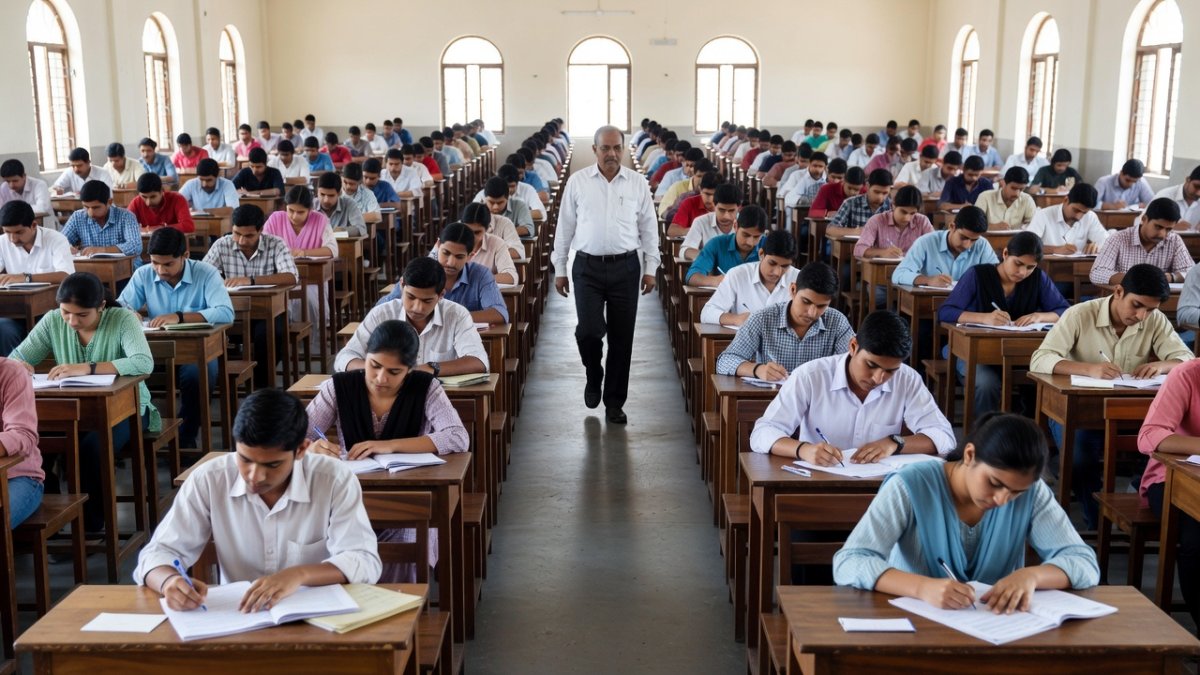
The National Testing Agency (NTA) has formally communicated its commitment to conducting a fair examination process, confirming that it will not levy any re-test fee on the over 22 lakh candidates who appeared for the NEET (UG) 2026 re-examination held on June 21. This decision, confirmed by agency sources on Monday, comes as a significant relief for medical aspirants across India who were already grappling with the disruption caused by the cancellation of the original exam following a paper leak.
NTA Waives Re-Test Fee for 22 Lakh NEET Aspirants
New Delhi, India – August 17, 2026 — The National Testing Agency has confirmed it will absorb the cost of the NEET (UG) 2026 re-examination, waiving the registration fee for all candidates who appeared in the June 21 test, a move that spares lakhs of students a collective financial burden estimated in crores of rupees.
What the Fee Waiver Means for Candidates
The decision to forgo the re-test fee directly impacts the financial planning of families who had already paid the standard examination fee for the original May 3 attempt. With the NTA confirming that no additional charge will be levied for the June 21 re-test, candidates who qualified—and even those who did not—will not face a double financial hit. The agency has also opened a dedicated window for candidates to update their bank details to facilitate the refund of the original examination fee paid for the cancelled May 3, 2026, test. This process is critical for the 22 lakh candidates who registered for the initial attempt, ensuring that the refunds are processed without bureaucratic delays.
For a typical MBBS aspirant from states like Uttar Pradesh, Bihar, or Rajasthan, where coaching costs already run into lakhs of rupees, this waiver removes an unexpected additional expense. The NTA’s move is a tacit acknowledgment that the cancellation was not the fault of the students, and that penalizing them financially for an administrative and security failure would have been unjust. The refund window, which opened in late June, is a separate but parallel process aimed at closing the loop on the original transaction.
Why the Re-Exam Happened: The May 3 Cancellation
The chain of events leading to this fee waiver began with a significant breach of trust. The original NEET (UG) 2026 examination, scheduled for May 3, 2026, was cancelled by the NTA with approval from the Central government following a confirmed paper leak. This was not a minor logistical glitch; it was a systemic failure that prompted a high-level investigation by the Central Bureau of Investigation (CBI) and the formation of a Special Operations Group (SOG). The SOG’s probe has since revealed over 100 suspects linked to the leak case, exposing a network that allegedly operated across multiple states to compromise the integrity of the exam.
The cancellation threw the academic calendar of over 22 lakh students into disarray. Medical colleges, including the prestigious AIIMS institutions, had to delay their admission cycles. The Supreme Court monitored the subsequent re-examination process closely, responding to petitions from candidates and parents who demanded transparency and a level playing field after the May 3 debacle. The NTA’s decision to conduct the re-exam on June 21, 2026, in offline pen-and-paper mode from 2:00 PM to 5:15 PM, was an attempt to restore order, but the shadow of the leak loomed large over the proceedings.
Security Overhaul at NTA: A Rs 7.5 Crore Commitment
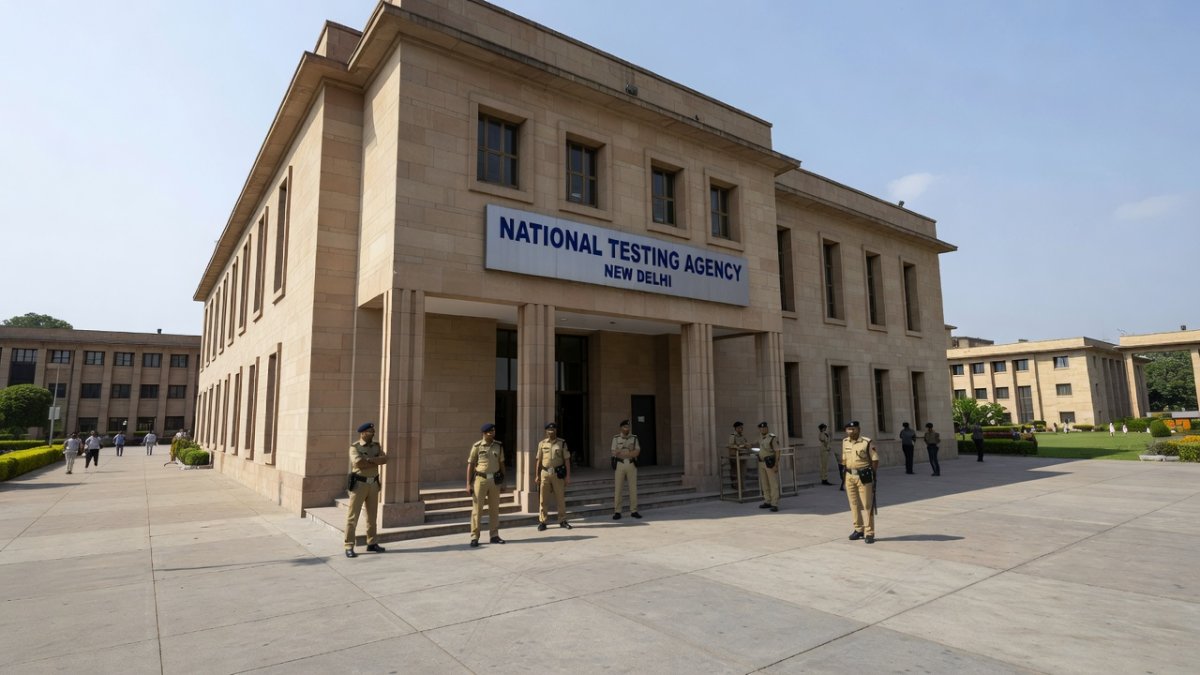
In response to the leak, the NTA has announced a comprehensive suite of measures designed to fortify its examination infrastructure. The most tangible of these is a nearly Rs 7.5 crore tender floated to appoint an external agency tasked with providing round-the-clock security at NTA headquarters, its regional offices, and other sensitive locations. This is a significant escalation from previous security protocols, signaling that the agency is moving beyond internal checks to external, professional oversight.
Beyond physical security, the NTA is implementing technological upgrades. Biometric verification of candidates at exam centres is being made mandatory to prevent impersonation, a tactic often used in tandem with paper leaks. Additionally, the agency has introduced GPS patrols of exam centres to ensure that question paper dispatch and collection routes are monitored in real-time. Perhaps the most controversial measure, according to agency sources, is the restriction of Telegram, a messaging platform that has been allegedly used to run misinformation campaigns and coordinate cheating networks. The NTA has identified Telegram as a vector for the distribution of leaked papers and the coordination of answer-sharing during the exam window, making its restriction a key pillar of the new security architecture.
The Numbers Behind NEET 2026: Results and Demographics
The re-examination results, released in late July, provide a statistical snapshot of the medical aspirant pool. Of the more than 22 lakh candidates who appeared on June 21, approximately 11.21 lakh students qualified, translating to a qualification rate of just over 50%. According to NTA data, girls outperformed boys in the qualifying criteria, a trend that has been consistent in recent years but remains a crucial data point for policymakers examining gender parity in STEM fields.
The NTA has also released the Final Answer Keys for the NEET (UG) 2026 re-examination and has displayed scanned images of OMR answer sheets and recorded responses on its portal. This move towards radical transparency is designed to pre-empt any disputes regarding the evaluation process. Candidates can now cross-verify their marked responses against the official answer key, reducing the likelihood of post-result litigation. This is a critical step for a country where a single mark can determine admission to a government medical college versus a private one, where fees can be five to ten times higher.
What This Means for India's Medical Aspirants
For the 11.21 lakh qualifiers, the journey is far from over. NEET (UG) is the single gateway for admission to MBBS, BDS, and other undergraduate medical courses across India, covering seats in both government and private medical colleges, including the AIIMS system. The counselling process, which follows the results, is where the real competition for merit-based seats intensifies. The fee waiver and the transparency measures are welcome, but they do not address the underlying scarcity of seats. With roughly 1.1 lakh MBBS seats available in government colleges, a significant portion of the 11.21 lakh qualifiers will be forced to either pay exorbitant private college fees or re-attempt the exam next year.
The financial relief from the fee waiver is a drop in the ocean compared to the overall cost of medical education in India. However, it is a symbolic victory for student rights. It establishes a precedent that the examination body must bear the cost of its own failures. The decision also has political ramifications, as the NTA has been under intense scrutiny from the Parliament's Standing Committee, which has already summoned the NTA chief to explain the security lapses. The fee waiver is likely a strategic move to demonstrate accountability ahead of that parliamentary review.
The Road Ahead for Exam Integrity
The NTA’s security overhaul, while necessary, raises questions about the scalability of such measures. The biometric verification and GPS patrols are feasible for a single, high-stakes exam like NEET, but the NTA also conducts other exams like JEE (Main) and CUET, which have similar candidate volumes. The Rs 7.5 crore security tender is a significant investment, but it is a recurring cost that will need to be factored into the NTA’s annual budget. The ban on Telegram is a more complex issue, as it borders on internet censorship and may face legal challenges regarding freedom of speech, even if the intent is to curb cheating.
The CBI investigation into the paper leak, with over 100 suspects identified, is still ongoing. The outcome of this probe will be crucial in determining whether the May 3 leak was an isolated incident or a symptom of a deeper, more organized racket. The NTA’s commitment to not charging a re-test fee is a short-term fix; the long-term solution lies in the successful prosecution of the accused and the implementation of a foolproof digital and physical security framework that can withstand sophisticated attempts at sabotage.
The Bottom Line
The NTA’s decision to waive the re-test fee is a pragmatic and student-centric move that mitigates the financial distress caused by the May 3 cancellation. However, it is merely the first step in rebuilding trust. The agency’s credibility now rests on the robustness of its new security measures and the transparency of its result declaration process. For the 22 lakh students who sat through the uncertainty of a cancelled exam and a rushed re-test, the promise of a fair process is more valuable than any fee waiver. The onus is now on the NTA to ensure that the June 21 examination remains the last time such a massive disruption occurs in India’s medical education pipeline.
— By Dr. Raj Patel, Staff Writer
This article was produced with AI-assisted research and editorial support. Reporting is based on sources cited in the article.
What's Your Reaction?
 Like
0
Like
0
 Dislike
0
Dislike
0
 Love
0
Love
0
 Funny
0
Funny
0
 Wow
0
Wow
0
 Sad
0
Sad
0
 Angry
0
Angry
0

India/South Asia Correspondent at Global1.News. Analytical voice with a background in science and health journalism. Based in New Delhi, covering Indian politics, education, healthcare, technology, and policy. Breaks down complex data into clear, actionable reporting.















Comments (0)