
North Korea Answers Seoul's Talks Offer With a Dozen Missiles and a Drone Doctrine
Seoul offered military talks on 23 October and North Korea never answered. Days later Seoul's Joint Chiefs detected a missile barrage from Wonsan, and Pyongyang's state media revealed a live-fire demonstration and a drone and AI doctrine. The allies cannot agree how many missiles flew.

Seoul spent six days waiting for an answer to an offer of talks. It got rockets instead, and then it got a doctrine.
North Korea Answers Seoul's Talks Offer With a Dozen Missiles and a Drone Doctrine
Seoul, South Korea — South Korea's Ministry of National Defense proposed military talks with North Korea on 23 October 2026. The purpose was to settle where the Military Demarcation Line actually runs, get the two militaries talking again and stop a stray round from starting something. North Korea never answered. On Thursday 29 October, Seoul's Joint Chiefs of Staff detected launches from the Wonsan area. On Friday 30 October, Pyongyang's own state media published an account of a weapons demonstration held the day before, complete with a leader's speech about drones and artificial intelligence. Whether the launches and the demonstration were the same event is not confirmed.
Seoul Offered Talks. Pyongyang Answered With Rockets.
The sequence is the story. On 23 October 2026, Seoul's defense ministry put military talks on the table, seeking to jointly verify where the border actually runs, restore military communication lines and agree measures to stop accidental clashes, Euronews reported. Unification Minister Chung Dong-young renewed the appeal on Wednesday 28 October in an address read on his behalf at a forum in Goyang, near Seoul. "South and North Korea should align their positions on the MDL through dialogue," Chung said. Pyongyang has not replied to the proposal. Direct military communication between the two Koreas remains suspended, although the US-led United Nations Command keeps a separate channel to the North Korean military. Then came Thursday. Seoul's military detected launches from the Wonsan area shortly after midday. The offer sat unanswered on the table. The rockets went up anyway.
What the Joint Chiefs Detected
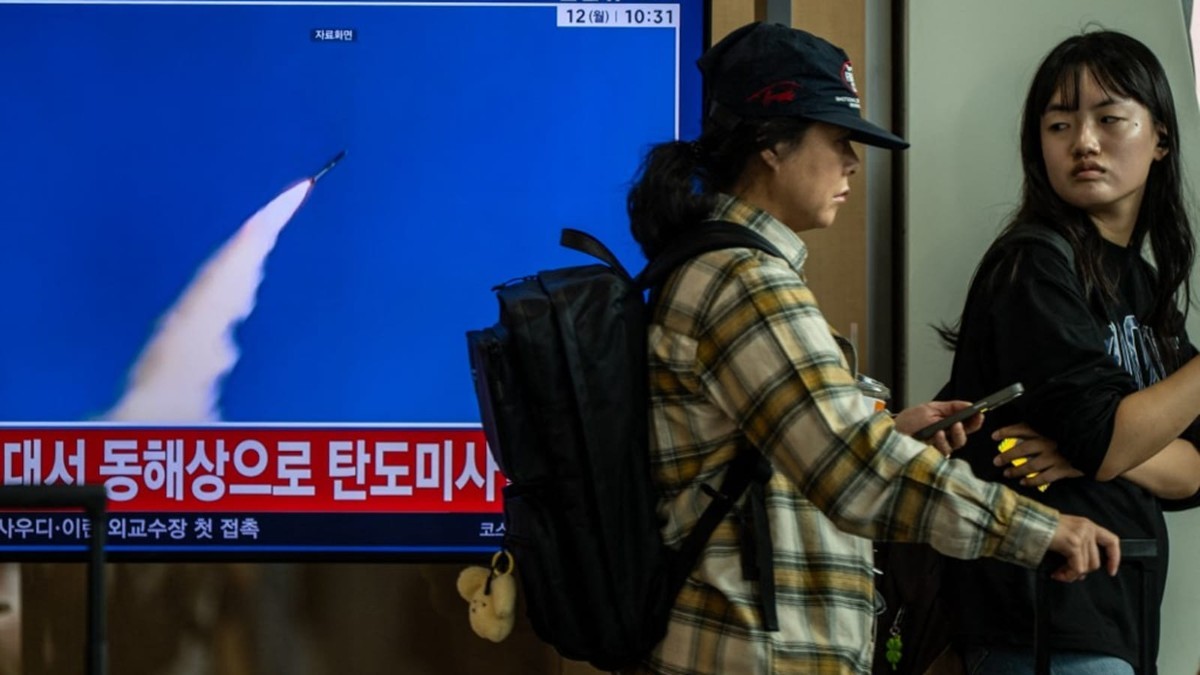
Here is the detection as Seoul's Joint Chiefs of Staff reported it. The launches came from the Wonsan area on North Korea's eastern coast at about 12:30 pm local time on Thursday 29 October 2026, according to Hankyoreh. The missiles flew roughly 250 kilometres, about 155 miles, toward the East Sea, which is also known as the Sea of Japan. Seoul said South Korea and the United States are conducting a detailed analysis of their exact specifications, and that it had stepped up surveillance for possible additional launches. Yonhap reported that Thursday's salvo was the North's 17th ballistic missile launch of the year, and that the previous one had been fired on 12 October. Japan's Defense Ministry also reported a suspected ballistic missile launch by North Korea, the Associated Press noted. No casualties, no damage and no interception claims have been issued by anyone.
Two Militaries, Two Counts
This is the part where the allies do not agree, and there is no honest way to smooth it over. Seoul's Joint Chiefs put the count at "around a dozen," as CNA reported it. Yonhap carried the same assessment as "around 10 short-range ballistic missiles." Hankyoreh wrote "more than 10." The Associated Press said "about 10." Then there is US Pacific Command. In a statement dated Thursday 29 October, PACOM said: "We are aware of the missile launches and are consulting closely with our allies and partners." It added that the event "does not pose an immediate threat to U.S. personnel or territory, or to our allies." And PACOM put the number of ballistic missiles launched on Thursday at two, which differs from Seoul's assessment of about a dozen, Yonhap reported. Two militaries, two counts, one launch window. Neither figure is settled, and anyone who tells you otherwise is guessing.
Kim's Own Account, One Day Later
On Friday 30 October 2026, the Korean Central News Agency published Pyongyang's version of the previous day. KCNA reported that the North fired a 600-millimetre multiple rocket launcher, tactical cruise missiles and air-to-surface missiles during a weapons demonstration, Yonhap reported. The demonstration was held on Thursday alongside an exhibition on unmanned aeronautical technology attended by Kim Jong Un. KCNA's account of the results was flat and total: "Tactical suicide attack drones, air-to-surface missiles from multi-purpose drones and cruise missiles hit the islet target with 100 percent accuracy." The agency also claimed that "the combat reliability and effectiveness of all the major weapon systems were successfully verified," a formulation that describes everything and measures nothing. North Korean state photographs showed Kim watching the firing accompanied by his daughter Ju-ae, his wife Ri Sol-Ju and Pak Jong-chon, vice chairman of the Central Military Commission of the Workers' Party of Korea.
A Rocket Launcher Fired in Public for the First Time
The centrepiece of that account is a system the public had not seen fire before. The multiple rocket launcher, known as "Sniper," opened fire before an audience for the first time, according to KCNA. Photographs released by North Korean state media showed more than 10 of the 600-mm launchers firing simultaneously. The same pictures, as Yonhap described them, showed suicide attack drones striking mock targets believed to represent South Korean front-line guard posts and US M1 Abrams tanks. A military official in Seoul said the salvo is believed to have involved the KN-25 super-large 600-mm multiple rocket launcher, a system Pyongyang claims can be fitted with its Hwasan-31 tactical nuclear warheads. Note the verb. Claims. The launcher is real and now publicly demonstrated. The nuclear pairing is Pyongyang's own assertion, and the two should not be allowed to merge into one fact.
The Doctrine Behind the Demonstration
Strip away the hardware and what Kim Jong Un was selling on Friday was a theory of survival. KCNA quoted him saying: "Strength precisely means peace and peace is guaranteed only by strength. This is a matter of common sense needed to survive in the present noisy world." He called the pursuit of "absolute superiority" in drone technology an indispensable option given what the agency called the ever-changing patterns of modern warfare. And he told the country's scientists to go all out for "miraculous results in development of unmanned aeronautical technology and AI for national defense," arguing that the North had already secured the function of a nuclear weapons state and made new leaps in conventional weapons. The claim is not new, but the sequence is instructive: Euronews reported an intermediate-range missile on 4 October described by the North as flying an evasive profile with AI features, an AI-powered torpedo system on 17 October, and now drones, cruise missiles and rocket artillery on the same afternoon.
The Border That Started This
All of it sits on top of a border crisis that predates the rockets. Landmine explosions inside the Demilitarised Zone on 21 September 2026 wounded three South Korean soldiers, two of them seriously, Euronews reported. Seoul accused North Korean troops of planting the mines south of the demarcation line. Pyongyang denied responsibility and accused the South of fabricating the incident in a letter to the UN Security Council. The US-led United Nations Command said a joint investigation with South Korea identified an active North Korean mine south of the line and determined that an armistice violation had occurred. CNA reported that the same investigation concluded the mines had been planted more than a year earlier. Seoul called it "a clear violation of the Armistice Agreement" and demanded an apology, which the North dismissed. Kim Yo Jong, the leader's sister, then said the North would put loudspeakers on standby along the frontier "within days" and had placed unspecified "new counter means" on alert. On 29 October, Yonhap reported that North Korea appeared to be testing those propaganda loudspeakers.
Why the Line Itself Is in Dispute
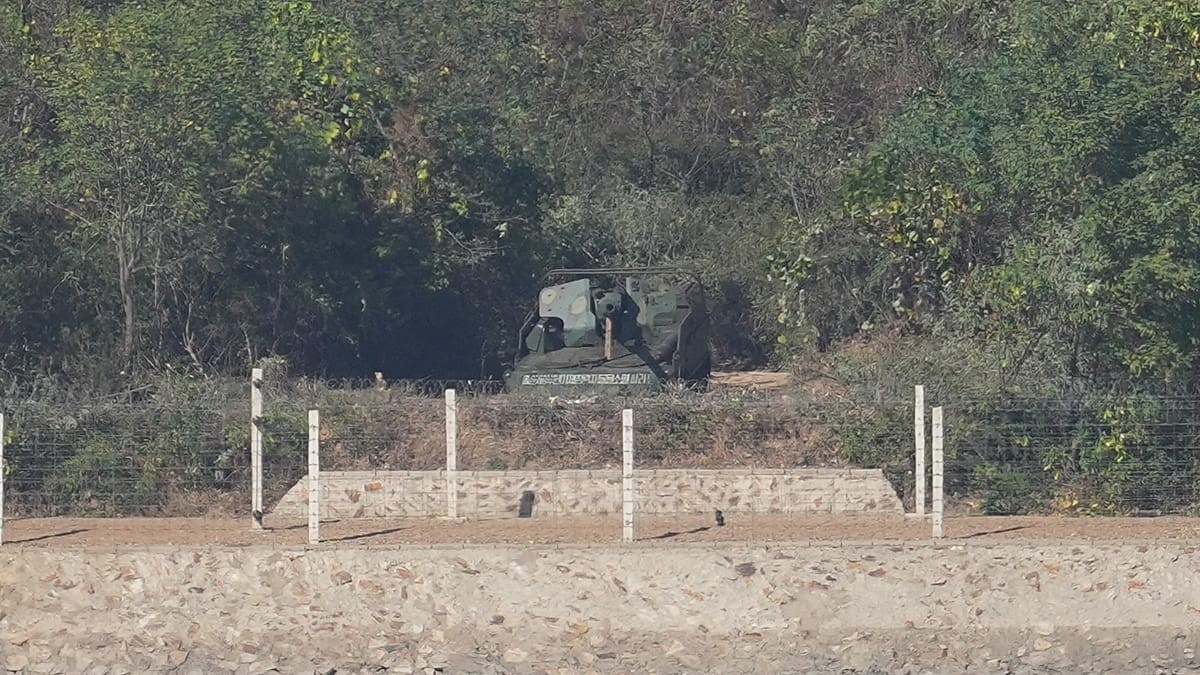
Here is the reason Seoul wanted to talk about a boundary line at all. Many of the markers installed under the 1953 armistice have deteriorated or disappeared, and only about 200 of the original 1,292 remain identifiable, according to Yonhap. Seoul argues that differing interpretations of where the line falls could produce an accidental clash neither side intended. That is precisely the gap the October proposal was designed to close. The legal frame has not moved: the two Koreas remain technically at war, because the Korean conflict ended with a truce rather than a peace treaty. Meanwhile North Korean troops have been reinforcing the frontier with roads, fences and minefields. Seoul says they have repeatedly crossed the demarcation line during that work, prompting warning broadcasts and warning shots across the border, while Pyongyang denies any such crossings took place.
Washington, Tokyo and Seoul on One Call
The official response ran on more than one track. In Seoul, the National Security Office convened an emergency meeting with the defense ministry, the Joint Chiefs and other agencies to review the security situation. A spokesperson said afterwards: "We emphasized the need to thoroughly assess the implications of the launches for our security and ensure that all necessary measures are taken." The office urged Pyongyang to halt its repeated launches immediately, calling them violations of UN Security Council resolutions and acts that do nothing to help contain the situation. On Friday 30 October, Baek Yong-jin, director general for Korean Peninsula policy at Seoul's foreign ministry, held telephone consultations with David Wilezol, deputy assistant secretary for Northeast Asia at the US State Department, and Takashi Ariyoshi, a senior official at Japan's foreign ministry. "The three officials shared relevant information and discussed future responses," the ministry said, noting that the three countries keep a standing channel for exactly this.
What Nobody Has Answered
Three questions are still open. First, whether the barrage and the demonstration were one event or two: CNA noted that it was not immediately clear whether the launches were linked to the demonstration. Second, where the demonstration happened. KCNA disclosed neither location; Yonhap believes Wonsan-Kalma Airport, judging by the structures in the photographs, and that is an inference rather than a confirmed site. Third, what Pyongyang does about the talks offer it has ignored. National Security Adviser Wi Sung-lac said on Friday: "Our government will continue taking necessary measures in response to the DMZ mine blast incident based on clear principles." He added that Seoul would focus its resources on "creating peace that makes fighting unnecessary by consistently pursuing its policy of peaceful coexistence." What he did not say, and what Washington has not said either, is whether the overtures to Kim Jong Un now coming from the White House leave Seoul watching from the outside.
By Jessica Ali, Staff Writer
This article was produced with AI-assisted research and editorial support. Sources: Yonhap News Agency; Associated Press; CNA/AFP; Euronews; Hankyoreh; Korean Central News Agency as relayed by Yonhap and CNA; United States Pacific Command; South Korea's Joint Chiefs of Staff; South Korea's Ministry of National Defense; South Korea's Ministry of Foreign Affairs; the United Nations Command. Photographs: a North Korean artillery position seen from an observation point in Gimpo, South Korea, via Euronews; a Seoul Station news broadcast of an earlier launch, Philip Fong/AFP via CNA. Cover: Global 1 News editorial image. Covers on Global 1 News are composited in-house.
What's Your Reaction?
 Like
0
 Dislike
0
 Love
0
 Funny
0
 Wow
0
 Sad
0
 Angry
0

Editor-in-Chief at Global1.News. Atlanta-based journalist who cuts through the BS and tells it like it is. Lead anchor, host, and the voice you hear when the spin stops and the truth starts.















Comments (0)