
Nonthaburi School Shooting: Classes Resume Online Aug 18 as Thailand Tightens Gun Laws
The grief is still raw in Nonthaburi, but the machinery of daily life is slowly turning again. Five days after a 14-year-old student at Debsirin Nonthaburi School in Bang Kruai district shot dead his grandparents, opened fire on teachers and classmates, and then turned the gun on himself — leaving n
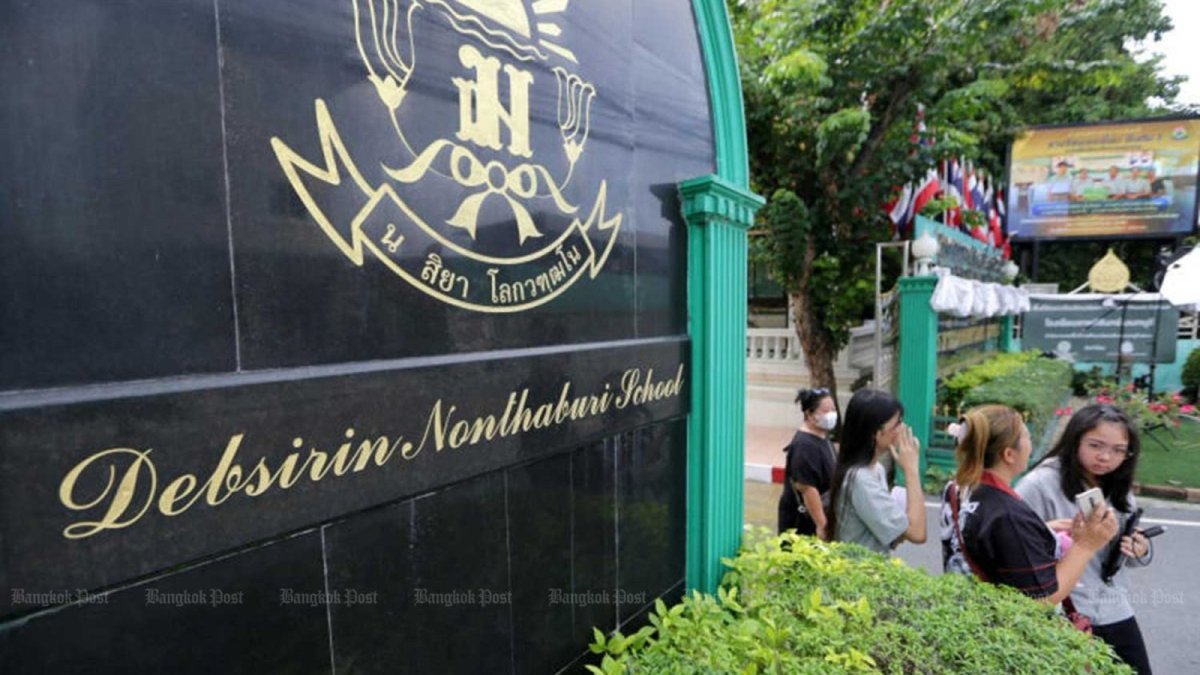
The grief is still raw in Nonthaburi, but the machinery of daily life is slowly turning again. Five days after a 14-year-old student at Debsirin Nonthaburi School in Bang Kruai district shot dead his grandparents, opened fire on teachers and classmates, and then turned the gun on himself — leaving nine dead and 27 injured — the school has announced a structured return to learning. Classes will resume on August 18, but they will be conducted entirely online until the end of the month, with on-site teaching scheduled to begin on September 1.
Nonthaburi School Shooting: Classes Resume Online Aug 18 as Thailand Tightens Gun Laws
Bangkok, Thailand — The order to resume classes was signed by school director Nathanapong Thongplap on Tuesday, extending the teaching suspension until next Monday, August 17. The decision gives teachers, students, and parents a clear timeline as the community of Bang Kruai district — a quiet suburb just across the Chao Phraya River from Bangkok — continues to process the worst school shooting in recent Thai memory. For the families of the five school staff members and the 12-year-old girl who died in hospital on Saturday, no schedule will ease the pain. But for the hundreds of other students at Debsirin Nonthaburi, the online format offers a bridge back to normalcy without forcing them to walk through the gates where the violence unfolded.
A Nation's Gun Debate Reopens After the Aug 7 Rampage
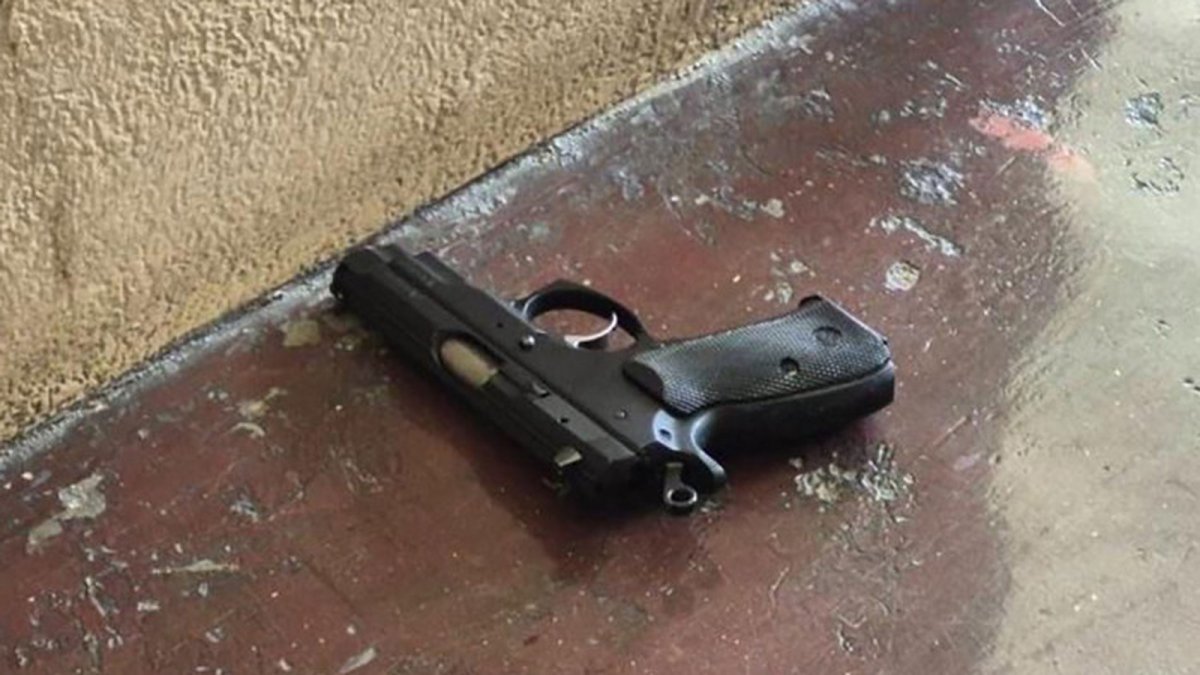
The shooting on Friday, August 7, began not at the school but at the home of the suspect's grandparents in Nonthaburi. The 14-year-old used a CZ75 9mm semi-automatic pistol — legally registered to his grandfather — to kill the elderly couple before travelling to Debsirin Nonthaburi School and continuing his rampage. The weapon is a model widely distributed through the government's "welfare gun" programme, a scheme that allowed police officers and local officials to purchase firearms at discounted prices. That detail has ignited a fierce national conversation about who should have access to guns in Thailand, and under what conditions.
Prime Minister Anutin Charnvirakul has moved swiftly. On Tuesday, he ordered the suspension of permits to purchase firearms and instructed officials to accelerate work on tougher gun-control laws. By Wednesday, the Department of Provincial Administration had issued an urgent directive to deputy governors across all provinces, instructing them to implement the prime minister's measures on licensing, sales, and possession of guns, and to crack down on illegal firearms. The speed of the response reflects the gravity of the moment — and the government's awareness that public anger is mounting.
Government Clarifies: No Blanket Ban, But Stricter Controls
As the government moves to tighten regulations, it is also working to calm fears that lawful gun owners will lose their rights. Deputy government spokeswoman Lalida Persvivatana addressed the nation on Wednesday, seeking to allay concerns that proposed measures would undermine the public's right to self-defence. "The prime minister's approach is to draw a clear distinction between the right to possess a firearm and the right to carry or use one," she said. No decision has been made to impose a blanket ban on firearms, and public feedback is being considered. But legally owned firearms would remain subject to stricter controls — owners could not freely carry weapons in public or use them at their discretion.
Ms Lalida emphasised that Section 68 of the Criminal Code on lawful self-defence remains in force, and no new law prohibits self-defence. However, she cautioned that self-defence should not be a blanket justification for carrying firearms in public. "We cannot know whether someone carrying a gun intends to defend themselves, intimidate others or prepare to commit an offence," she said. The government is addressing both illegal and legally registered firearms, with tighter controls planned on licences, dealers, ammunition, and shooting ranges, alongside a stronger crackdown on unregistered weapons.
Thailand Context: A Culture of Guns Meets a Moment of Reckoning
For Thai readers, this moment feels both familiar and unprecedented. Thailand has one of the highest rates of gun ownership in Southeast Asia, with an estimated 10 million firearms in civilian hands — a significant portion of them unregistered. The "welfare gun" programme, a scheme that supplied discounted firearms to police officers and local officials, has long been defended as a practical response to concerns about personal security, particularly in rural areas where police response times can be slow. But the Debsirin Nonthaburi shooting has exposed an uncomfortable truth: the same weapons intended for self-defence are increasingly finding their way into the hands of those who should never have them.
The shooter was described by those who knew him as "well behaved," and bullying is being investigated as a possible motive. Prime Minister Anutin said preliminary information indicated the suspect was under stress and had planned the shooting. Initial investigations also noted the gunman was an avid gamer, prompting Digital Economy and Society Minister Chaichanok Chidchob to clarify that the shooter had not watched dark web content, but instead viewed documentaries and conducted searches on gun usage on YouTube. The distinction matters in a country where video games and online content are often blamed for youth violence — but the minister's clarification suggests the problem may be closer to home than any virtual world.
Implications for Southeast Asia: A Regional Watchpoint
The ripple effects of this tragedy extend well beyond Thailand's borders. Southeast Asia has largely avoided the mass shooting epidemics seen in the United States, but the region is not immune. In recent years, shootings have occurred in the Philippines, Indonesia, and Malaysia, often linked to religious or political extremism rather than school violence. Thailand's experience — a teenage boy with access to a legally registered firearm — raises questions that neighbouring countries are watching closely. If Thailand, a nation with deep cultural ties to Buddhism and a reputation for gentle hospitality, cannot prevent a 14-year-old from committing mass murder, what does that mean for the rest of ASEAN?
The regional tourism industry is also paying attention. Thailand welcomes tens of millions of international visitors each year, and the government has positioned the kingdom as a safe, family-friendly destination. A school shooting — particularly one involving a child — threatens that carefully cultivated image. The Ministry of Tourism and Sports has not yet issued a statement on the shooting's impact on arrivals, but industry analysts expect a short-term dip in bookings from families, particularly from East Asian markets like China, Japan, and South Korea, where school safety is a paramount concern.
Expert Perspectives: Balancing Rights, Safety, and Mental Health
Thai legal scholars and public health experts are weighing in on the government's proposed measures. Many legal commentators regard the distinction between possession and carry as a sound legal principle, but warn that implementation will be challenging. The concern, voiced repeatedly in Thai media this week, is that stricter controls must not disproportionately affect law-abiding citizens while leaving the black market untouched — the real test, they argue, will be enforcement, which requires resources, training, and political will.
On the health screening ideas floated by the government, Ms Lalida acknowledged that such measures could be studied but would require careful consideration of legal issues, implementation capacity, and fairness. Mental health professionals have pointed out that the shooter's behaviour — described as well-behaved, with no prior disciplinary issues — suggests that screening based on observable behaviour alone may not be sufficient. Child psychologists in Thailand have called for greater investment in school counselling services, training teachers to recognise warning signs, and creating a culture where students feel safe reporting concerns about their peers.
Meanwhile, DES Minister Chaichanok Chidchob has asked video game-related associations and companies to notify the state of players preoccupied by firearms, as part of broader efforts to aid gun violence prevention. The request has drawn mixed reactions — some see it as a practical early-warning system, while others worry about privacy and the potential for stigmatising gamers. The minister's office has stressed that the request is voluntary and focused on identifying concerning behaviour, not surveilling ordinary players.
What to Watch For
The coming weeks will be critical. The Department of Provincial Administration's directive to deputy governors sets the stage for nationwide implementation of the prime minister's measures, but the details remain unclear. How will the suspension of firearm purchase permits be enforced? What new requirements will be placed on existing gun owners? How will shooting ranges and ammunition dealers be regulated? These questions will be answered in the coming days as the government finalises its proposals.
For the Debsirin Nonthaburi School community, the immediate focus is on healing. The online classes beginning August 18 will allow students to reconnect with their teachers and classmates without the trauma of returning to the physical campus. On-site teaching resumes September 1, but the school has not yet announced what security measures will be in place. Parents in Bang Kruai district — and across Thailand — are demanding answers. The government's response, both in terms of gun control and mental health support, will determine whether this tragedy becomes a turning point or just another statistic.
The CZ75 pistol that ended nine lives on August 7 was legally registered, legally purchased, and legally stored in the home of a grandfather who trusted his grandson. That trust was betrayed in the most violent way imaginable. As Thailand mourns, the question that lingers is not just how to prevent the next shooting, but how to address the deeper currents of stress, bullying, and isolation that drive a 14-year-old to such despair. The gun is the instrument; the tragedy is the story behind it. Thailand is now writing the next chapter — and the world is watching.
By Ann Srisawat, Staff Writer
This article was produced with AI-assisted research and editorial support. Reporting is based on sources cited in the article.
What's Your Reaction?
 Like
0
Like
0
 Dislike
0
Dislike
0
 Love
0
Love
0
 Funny
0
Funny
0
 Wow
0
Wow
0
 Sad
0
Sad
0
 Angry
0
Angry
0

Southeast Asia Correspondent at Global1.News. Based in Bangkok, covering Thai and Southeast Asian politics, economy, technology, and culture. Deep regional perspective on one of the world's most dynamic regions.











Comments (0)