
Mekong Floods Thai-Lao Market as Water Nears Crisis Level
NAKHON PHANOM — The Mekong River has once again reminded the people of northeastern Thailand of its immense power, overflowing its banks and submerging a bustling Thai-Lao border trading market in Nakhon Phanom. Hydrological officials recorded the river level at 11.98 metres at 06:00 on We
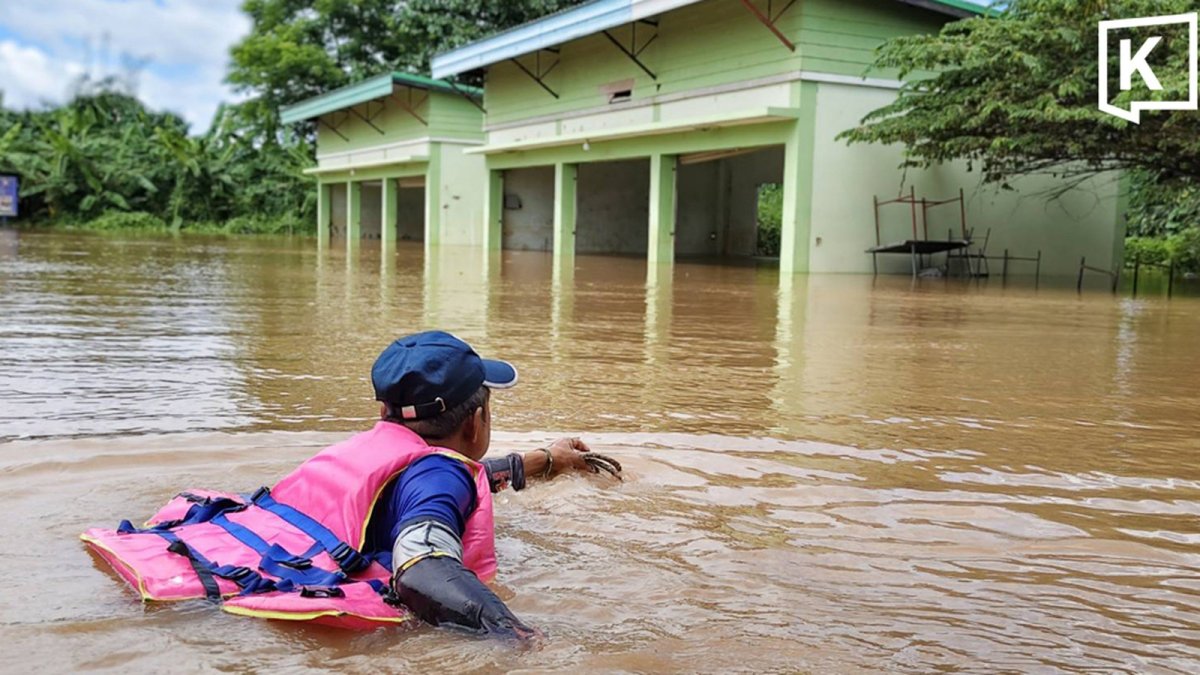
The River Rises: Nakhon Phanom Braces as Mekong Crests Near Critical Mark
NAKHON PHANOM — The Mekong River has once again reminded the people of northeastern Thailand of its immense power, overflowing its banks and submerging a bustling Thai-Lao border trading market in Nakhon Phanom. Hydrological officials recorded the river level at 11.98 metres at 06:00 on Wednesday, a sharp 15-centimetre rise from the previous day, placing the water just 2 centimetres below the critical threshold. Authorities have warned that the level could breach that mark by the afternoon, prompting urgent preparations across the province.
For the river communities that line this stretch of the Mekong, the rising water is a familiar yet always anxious sight. The monsoon season has brought relentless rain and rapid runoff from upstream areas, including Bueng Kan province and the Lao side of the river, swelling the great waterway far beyond its banks. The Nakhon Phanom municipal authorities have moved swiftly, ordering all four floodgates at key pumping stations to be closed to prevent the Mekong from flowing back into the city itself, a precaution that speaks to the delicate balance between the river and the urban centre that has grown alongside it for generations.
Floodgates Closed as City Prepares for the Worst
Niwat Chiawiriyabunya, mayor of Nakhon Phanom Municipality, confirmed that the Mekong level has continued its steady climb. The four automatic pumping stations along the river — located on Thetsapradit Road, Samut Banharn Road, at the post office junction, and in front of Wat Pho Si — normally work to pump water from the city back into the Mekong. However, the river has now risen beyond the stations' capacity, forcing authorities to close all floodgates at these four critical locations.
In their place, the municipality will deploy remote pumping equipment and more than 10 large mobile water pumps from the Department of Disaster Prevention and Mitigation's Sakon Nakhon regional office. These units will be stationed at key points along the Mekong, ready to respond if heavy rain causes floodwater to surge back into the city. The strategy reflects a hard-learned lesson from past floods: preparation must come before the water arrives, not after. For residents of Nakhon Phanom town, the sight of these pumps being positioned along the riverfront is both reassuring and a sobering reminder of the force they are preparing to face.
Border Market Submerged: Vendors Lose Goods to the Flood
The most visible impact of the rising river has been at the temporary border trading area and OTOP goods buildings, a vibrant hub where Thai and Lao traders have long gathered to exchange local products. The floodwaters have swept through the market with little warning, leaving chaos in their wake. Five or six rubbish bins were carried away by the current, while ice boxes, tables and chairs belonging to vendors were left floating in the murky water after traders failed to move their belongings in time. Some vendors, desperate to hold onto their livelihoods, used ropes to secure their possessions to whatever fixed points they could find.
The scene is one of quiet devastation. The market, normally filled with the sounds of bargaining and the aromas of fresh produce and grilled meats, now sits partially underwater, its goods scattered and ruined. For the traders who depend on this daily exchange, the losses are not just financial but deeply personal. Many of these vendors have worked at the market for years, building relationships with customers on both sides of the Mekong. The flood has disrupted not only their income but also the rhythm of their daily lives, a rhythm that has defined this border community for decades.
Daosawan the Bamboo Farmer: A Race Against the Rising Water
Among those affected is Daosawan, a 59-year-old farmer whose story illustrates the broader impact of the flood on agricultural communities. Daosawan owns three bamboo plantations covering more than 30 rai, with over 200 clumps of bamboo that she has carefully tended for years. The rapidly rising Mekong has flooded two of her plantations to a depth of about 1 metre since 9 August, leaving only one plantation, with about 50 bamboo clumps, above the waterline.
Daosawan normally harvests bamboo shoots for sale to fresh markets in Nakhon Phanom town, with daily orders of at least 50 kilogrammes. On Wednesday, a vendor placed an order for 2,000 kilogrammes — a significant contract that could provide much-needed income. But with two of her three plantations submerged, she is uncertain whether she can fulfil the order. She told reporters that she may suffer substantial losses and could have to use a boat to harvest bamboo from the flooded plantations, a difficult and potentially dangerous task given the strength of the current.
Her story is echoed across the riverbank in Ban Klang subdistrict, Muang district, about 28 kilometres from Nakhon Phanom town. More than 100 rai of banana, bamboo and aromatic coconut plantations have been inundated, with water reaching about 1 metre deep in many areas. A concrete road stretching more than 3 kilometres has also been flooded, cutting off access for farmers and residents alike. The scale of the damage is still being assessed, but for families like Daosawan's, the losses are already being felt in their daily lives and their hopes for the coming months.
The Songkhram River Overflows: A Wider Regional Crisis
The flooding is not confined to the Mekong itself. The Songkhram River in Si Songkhram district overflowed its banks on the afternoon of 11 August, adding to the region's woes. Flooding has particularly affected Tha Bo Songkhram village in Tha Bo Songkhram subdistrict and Pak Un village in Si Songkhram subdistrict, where water has entered homes built close to the river. Around eight to 10 houses have been inundated to an average depth of 50 centimetres to 1 metre, forcing families to move their belongings to higher ground and, in some cases, to evacuate altogether.
Si Songkhram district chief Kornkan Kaewdee has led a coordinated response, taking staff from two health-promoting hospitals and village leaders in flat-bottomed boats into the affected areas. Their mission is to deliver essential supplies and provide support to residents who are cut off by the floodwaters. Officials have been instructed to pay particular attention to waterborne diseases and the needs of elderly people, children and patients requiring special care until the situation returns to normal. The presence of health workers in these communities is a critical reminder that flooding brings not just physical damage but also public health risks that can linger long after the water recedes.
Lao Traders Affected Too: The Border's Shared Vulnerability
The flooding has also disrupted the cross-border trade that is the lifeblood of this region. Traders from Pak Peng on the Lao side, opposite Ban Nad village in Ban Klang subdistrict, have struggled to cross the Mekong to sell forest products such as rats, squirrels, mushrooms and insects. The flooding has affected the Lao side as well, making the journey across the river both difficult and dangerous. Some goods that traders were unable to remove from the temporary border trading buildings have been swept away and are still floating on the water, awaiting collection by boat.
Booncharoen Phrombutr, 67, a kamnan inspector in Ban Klang subdistrict, explained that rapid runoff from upstream areas combined with heavy rain had caused the Mekong to gradually overflow its banks over the past two to three days. Floodwaters have reached about 1 metre in some areas and as deep as 1.5 metres in others, making roads impassable and fields unusable. The shared vulnerability of Thai and Lao communities along this stretch of the Mekong is a powerful reminder that the river connects as much as it divides, and that the challenges of the monsoon season are felt on both sides of the border.
What This Means for Mekong Border Communities
For the people of Nakhon Phanom and the surrounding region, this flood is more than a seasonal inconvenience. It is a test of resilience and a reminder of the deep connection between the river and the communities that depend on it. The Mekong is not just a waterway; it is a source of livelihood, a cultural touchstone and a lifeline for trade and transport. When it rises, it brings with it both destruction and renewal, reshaping the landscape and the lives of those who live along its banks.
The flooding also highlights the broader challenges facing the Mekong region, from climate change to the pressures of development. As extreme weather events become more frequent and severe, communities on both sides of the river will need to adapt, investing in better flood preparedness and stronger infrastructure. The cooperation between Thai and Lao officials in responding to this crisis is a positive sign, but much more needs to be done to ensure that the most vulnerable members of these communities are protected.
For now, the immediate priority is to help those affected by the flood, from vendors who have lost their goods to farmers like Daosawan who face an uncertain harvest. The district officials, health workers and volunteers who have mobilised to provide support are a testament to the strength of these communities. As the water slowly recedes, the work of recovery will begin, and with it, the hope that the Mekong will once again return to its banks, leaving behind fertile soil and renewed livelihoods.
By Ann Srisawat, Staff Writer
This article was produced with AI-assisted research and editorial support. Reporting is based on sources cited in the article.
What's Your Reaction?
 Like
0
Like
0
 Dislike
0
Dislike
0
 Love
0
Love
0
 Funny
0
Funny
0
 Wow
0
Wow
0
 Sad
0
Sad
0
 Angry
0
Angry
0

Southeast Asia Correspondent at Global1.News. Based in Bangkok, covering Thai and Southeast Asian politics, economy, technology, and culture. Deep regional perspective on one of the world's most dynamic regions.














Comments (0)