
Lebanon's Bank Collapse Architect Faces New Charges: Ex-Central Bank Chief Riad Salameh Indicted Again
Former Lebanese central bank chief Riad Salameh faces new embezzlement and bribery charges with ex-Bank Audi head Samir Hanna. The 76-year-old, already in custody, allegedly stole tens of millions while Lebanon's economy collapsed. International probes, including HSBC charges, continue.
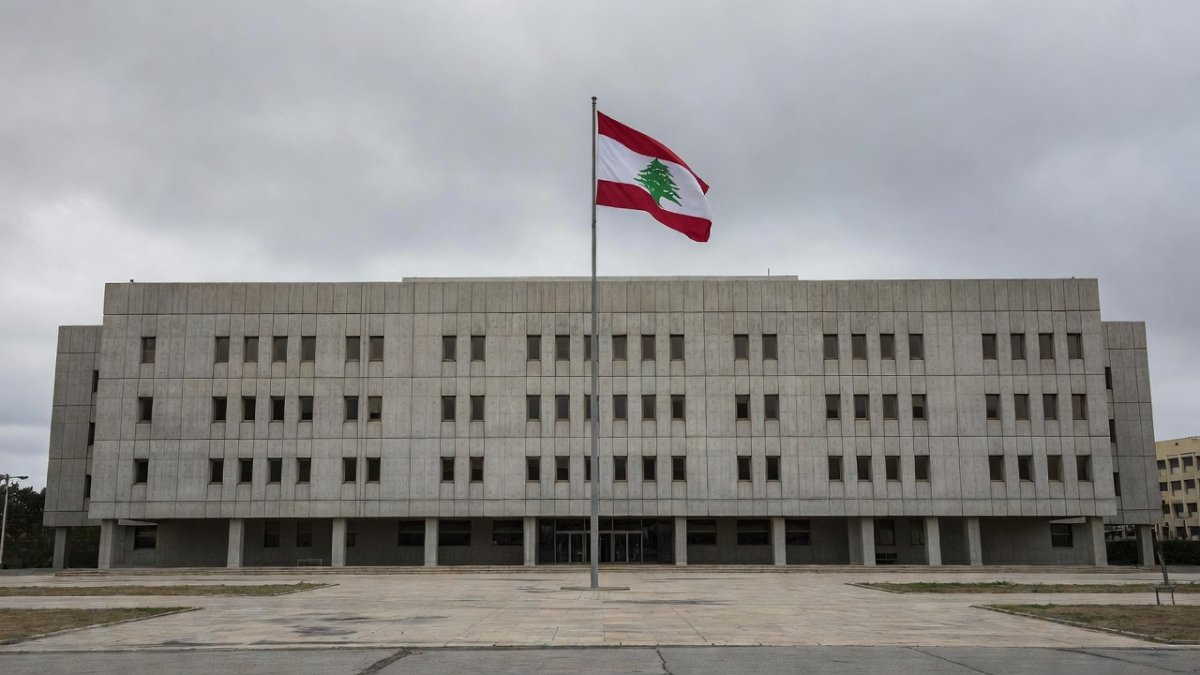
A New Indictment for a Man Who Broke a Nation's Trust
For three decades, Riad Salameh was the untouchable face of Lebanese finance — the man Western bankers toasted and depositors trusted with their life savings. On Monday, August 10, 2026, that carefully constructed facade crumbled further when a Lebanese judge indicted the 76-year-old former central bank governor on fresh charges of embezzlement and illicit enrichment. This isn't just another legal footnote in a long-running saga; it's a reckoning for the man who presided over one of the most catastrophic financial collapses in modern history.
Judge Raja Hamouche filed formal proceedings against Salameh and Samir Hanna, the 88-year-old former head of Bank Audi, one of Lebanon's largest financial institutions. The charges are stark: the pair stand accused of embezzling tens of millions of dollars directly from the Lebanese central bank, with the file including explosive allegations that Hanna bribed Salameh during his tenure as governor. A senior Lebanese judicial source confirmed the details to Reuters, marking yet another chapter in a case that has already seen Salameh arrested and held under tight security at a government hospital north of Beirut.
Let's be clear about what this means. This is not a case of regulatory sloppiness or poor economic forecasting. This is a case about a man who allegedly treated a nation's central bank like a personal piggy bank while the country's currency lost more than 98% of its value against the dollar. The Lebanese pound didn't just stumble; it was pushed off a cliff — and ordinary citizens, not bankers, were the ones who hit the ground.
The Charges: Embezzlement, Bribery, and a Web of Corruption
The new indictment, referred to Beirut's first investigating judge Rola Othman, comes with arrest warrants for both Salameh and Hanna. The judicial source told Reuters the file accuses the duo of siphoning tens of millions of dollars from Banque du Liban, the institution Salameh ran from August 1993 until July 2023. The bribery allegation against Hanna is particularly damning — it suggests a quid pro quo where Bank Audi's chief paid off the central bank governor to secure favorable treatment.
This isn't Salameh's first rodeo with Lebanese justice. He was already indicted and arrested in late July 2026 after failing to appear before a judge for questioning, and he's currently being held at a government hospital outside Beirut — a facility chosen for its security rather than its medical necessity, one suspects. The new lawsuit was filed following a complaint lodged by Salameh's own successor as central bank governor, according to AFP — a move that signals the current leadership's determination to distance itself from the rot of the past.
But here's the thing that should make every Lebanese citizen's blood boil: this case has been building for years, and the international community has been watching. In June 2026, the Swiss subsidiary of HSBC was formally charged with helping Salameh embezzle more than $300 million from Lebanon's central bank, according to Le Monde. That's not pocket change — it's a figure that could have funded hospitals, schools, or infrastructure, instead allegedly ending up in the pockets of the elite while the country's poor queued for bread.
The Forry Associates Scheme: A Family Affair
At the heart of the international investigations lies Forry Associates, a company owned by Salameh's brother, Raja Salameh. Prosecutors from Germany, France, and Luxembourg have been investigating commissions collected by the central bank that were purportedly transferred to this entity. The structure is almost laughably simple: the central bank pays commissions on financial operations, and those commissions allegedly flow to a shell company controlled by the governor's brother.
The National newspaper published a special report called "The Salameh Papers" that delved into these allegations, laying out in meticulous detail how the former governor allegedly used his position to enrich himself and his family. The report, which drew on leaked documents and interviews with insiders, painted a picture of a man who saw no distinction between the state's money and his own — a pattern all too familiar in the Middle East, where public office has too often been treated as a license to print personal wealth.
Salameh, for his part, denies all charges. He has long maintained his innocence, insisting that his wealth came from family real estate and investments made before his tenure began. It's a defense that might hold water if the timing of his alleged enrichment didn't so perfectly coincide with his time in office. The man who was once celebrated as a financial wizard — named Middle East Central Bank Governor of the Year by Emerging Markets magazine in 2005, and Central Banker of the Year (Middle East) by The Banker magazine in 2012 — now faces the very real prospect of spending his remaining years behind bars.
The Collapse: A Nation's Savings Wiped Out
To understand the gravity of these charges, you have to understand what happened to Lebanon. In 2019, the country's financial system collapsed in spectacular fashion. Banks froze depositor accounts, preventing people from accessing their own money. The Lebanese pound, pegged to the dollar for decades, lost more than 98% of its value. The country defaulted on its sovereign debt in 2020. And through it all, Salameh was running monetary policy — making decisions that would determine whether millions of people could afford food, medicine, and shelter.
The numbers are staggering. The World Bank has described Lebanon's crisis as one of the worst economic depressions in modern history, rivaling the Great Depression of the 1930s. Inflation soared to triple digits at its peak. The poverty rate climbed above 80% in some estimates. And while ordinary citizens watched their savings evaporate, the central bank governor was allegedly funneling hundreds of millions of dollars into offshore accounts and shell companies.
This isn't just a crime against individuals; it's a crime against the very concept of a functioning state. When a central bank governor embezzles funds, he's not just stealing money — he's stealing trust in the institutions that hold society together, telling every citizen that the system is rigged and the only way to get ahead is to be connected. That's a legacy that will outlast any prison sentence.
The International Dimension: Europe Closes In
Salameh's legal troubles extend far beyond Lebanon's borders. He faces investigations in multiple European countries — including allegations of money laundering, embezzlement, and fraud linked to hundreds of millions of dollars — and the German, French, and Luxembourg prosecutors investigating the Forry Associates commissions are part of a coordinated international effort to hold him accountable. This isn't a case of a small country trying to go after a powerful figure; this is a global pursuit of justice.
The HSBC charge in June 2026 was a watershed moment. A major international bank being charged with helping a central bank governor embezzle funds shakes the foundations of global finance — it suggests the rot wasn't just in Beirut, but extended to the corridors of Swiss banking, where the wealthy have long gone to hide their ill-gotten gains. The $300 million figure cited in the Le Monde report is just the tip of the iceberg, according to investigators.
What's particularly galling is that Salameh was celebrated internationally for years — the darling of the IMF, the World Bank, and Western finance ministries, the man who kept Lebanon's currency stable through wars, political assassinations, and regional turmoil. But stability, it turns out, was just a veneer. Behind the scenes, the system was being hollowed out, and the man at the top was allegedly taking his cut.
The Legal Road Ahead: What Happens Now
Judge Hamouche's decision to refer the case to Beirut's first investigating judge, Rola Othman, and issue arrest warrants for both Salameh and Hanna sets the stage for a potentially lengthy legal process. Salameh is already in custody, so the immediate practical impact may be limited — but the new charges broaden his legal exposure and could lead to additional convictions if the evidence holds up.
For Hanna, the 88-year-old former Bank Audi chief, the arrest warrant is a significant development. At his age, the prospect of a trial and potential imprisonment carries a particular weight. The bribery allegations suggest the corruption wasn't just a one-way street — it was a system of mutual benefit, where bankers and central bank officials colluded to extract wealth from the state.
The case will now proceed through Lebanon's notoriously slow and often politicized judicial system. There's a real risk this could drag on for years, with appeals, procedural delays, and the possibility of political interference. But the fact that Salameh is already in custody — and that the new charges have been filed — suggests the judiciary is at least making an effort to hold him accountable.
The Broader Context: Lebanon's Unfinished Reckoning
This indictment is happening against the backdrop of a country that is still in crisis. The financial collapse of 2019 was not an accident; it was the result of decades of corruption, mismanagement, and elite capture. Salameh was a central figure in that system, but he was far from the only one — politicians, bankers, and business leaders all played their part in looting the state while ordinary citizens paid the price.
The fact that Salameh's successor filed the complaint that led to this new lawsuit is significant. It suggests there's at least some institutional will to break with the past. But one indictment, no matter how high-profile, doesn't fix a broken system. Lebanon needs comprehensive reforms: an independent judiciary, transparent banking regulations, and a political class that's actually accountable to the people it serves.
There's also the question of the money. Even if Salameh is convicted, the hundreds of millions of dollars allegedly embezzled are unlikely to be recovered — the funds have probably been laundered through multiple jurisdictions or hidden in assets that are difficult to trace. The victims of this crime, the Lebanese people, will likely never see their money again. That's the bitter reality of financial crime on this scale.
A Legacy of Ruin
Riad Salameh's legacy is not the stability he once promised. It's not the awards he collected or the praise he received from international financiers. His legacy is the empty bank accounts of millions of Lebanese citizens — the young people who fled the country in search of opportunity, the elderly who can't afford their medication, the children who go to bed hungry because their parents' savings were wiped out.
The new indictment is a step toward justice, but it's a small step. The real work of rebuilding Lebanon — economically, politically, and morally — has barely begun, and it can't begin in earnest until the people who caused this catastrophe are held accountable, not just in court but in the court of public opinion. As this case moves forward, the world will be watching: whether Salameh is convicted, and whether Lebanon can finally break free from the cycle of corruption that has strangled it for so long. The real test is whether Lebanon's institutions can deliver justice — and whether the country can ever rebuild the trust that was so thoroughly destroyed.
This article was produced with AI-assisted research and editorial support. Sources: Reuters, AFP, Le Monde, The National, OCCRP.
By Jessica Ali, Staff Writer
What's Your Reaction?
 Like
0
Like
0
 Dislike
0
Dislike
0
 Love
0
Love
0
 Funny
0
Funny
0
 Wow
0
Wow
0
 Sad
0
Sad
0
 Angry
0
Angry
0

Editor-in-Chief at Global1.News. Atlanta-based journalist who cuts through the BS and tells it like it is. Lead anchor, host, and the voice you hear when the spin stops and the truth starts.










Comments (0)