
Nizhnekamsk Under Fire: Ukraine's Deepest Strike Kills 13 in Russia's Heartland
In a recent BBC News report, Kyiv confirmed that Ukrainian forces had struck the TANECO oil refinery in Nizhnekamsk, deep inside Russian territory, in an attack that Russian authorities say killed at least 13 people.
In a recent BBC News report, Kyiv confirmed that Ukrainian forces had struck the TANECO oil refinery in Nizhnekamsk, deep inside Russian territory, in an attack that Russian authorities say killed at least 13 people. The overnight assault on the Tatarstan city — more than 1,100 kilometres from the Ukrainian border — left a child among the dead and 75 people injured, in what is being described as one of the deadliest single attacks on Russian soil since Moscow launched its full-scale invasion in 2022.
Nizhnekamsk Under Fire: Ukraine's Deepest Strike Kills 13 in Russia's Heartland
Moscow, Russia – 10 August 2026 — The strike on the Volga-region city sent a shudder through the Russian interior, killing workers sheltering in a hostel and citizens of Uzbekistan who had come to Tatarstan for industrial work. Ukraine's Armed Forces said the TANECO refinery, one of the most advanced in Russia, had been hit, and the Ukrainian defence manufacturer FirePoint said its FP-1 long-range drones were used. Moscow has promised that those responsible will face "inevitable and severe punishment," while the republic has declared a day of mourning. The attack, which CNN reported was the deadliest to hit Russia in more than two years, has focused unwelcome attention on the vulnerability of the country's energy heartland and on the migrant workers whose labour keeps its refineries running.
The Strike on Nizhnekamsk
According to local officials, the attack unfolded over several hours overnight and into Monday morning, with drones reaching a city roughly 1,100 kilometres from Ukrainian territory. Verified images circulated on social media showed large plumes of smoke and flames rising into the sky in daytime, with air raid sirens howling in the background. The regional authorities put the death toll at at least 13, including one child, and said 75 more people had been injured.
Most of the victims had been staying in a hostel at the time of the attack, according to the Russian news agency RIA. The Uzbek consulate in Tatarstan said seven of those killed were citizens of Uzbekistan — a stark reminder of the migrant workforce that staffs the region's industrial plants. Russia's Investigative Committee said that "civilian individuals who were not involved in any military operations were present" where the drones struck, a statement seemingly intended to underscore the civilian character of the casualties. The BBC has not independently verified these details.
Nizhnekamsk Mayor Radmir Belayev called the deaths "a tremendous pain for all of us," while the head of the republic, Rustam Minnikhanov, confirmed the strike and offered his condolences to the families of the deceased.
The TANECO Refinery and Russia's Energy Vulnerability
Ukraine's Armed Forces confirmed that the TANECO oil refinery in Nizhnekamsk had been hit. The complex is owned by Tatneft, one of Russia's largest oil companies, headquartered in Almetyevsk in the same republic. Commissioned in 2011, TANECO is among the most technologically advanced refineries in the country, processing roughly 360,000 barrels of oil per day and producing high-quality gasoline, diesel and jet fuel for the domestic market and export routes. President Vladimir Putin and Rustam Minnikhanov attended a commissioning ceremony at the complex in January 2018.
Nizhnekamsk itself is a petrochemical "monotown," built in 1961 around the region's refining and petrochemical industry. Its refineries had already been hit once before — on 12 June — and Monday's attack underscored how deeply the war has reached into Russia's own industrial heartland. Each strike on facilities of this kind tests the Kremlin's ability to protect critical infrastructure far from the front line, in regions long treated as insulated from the conflict.
The assault also showcased Ukraine's expanding long-range arsenal. FirePoint said its FP-1 drones had been used — a one-way attack drone introduced in late 2024 for deep-strike missions with a range of roughly 1,600 kilometres, with an upgraded version unveiled this year extending its reach to about 2,700 kilometres.
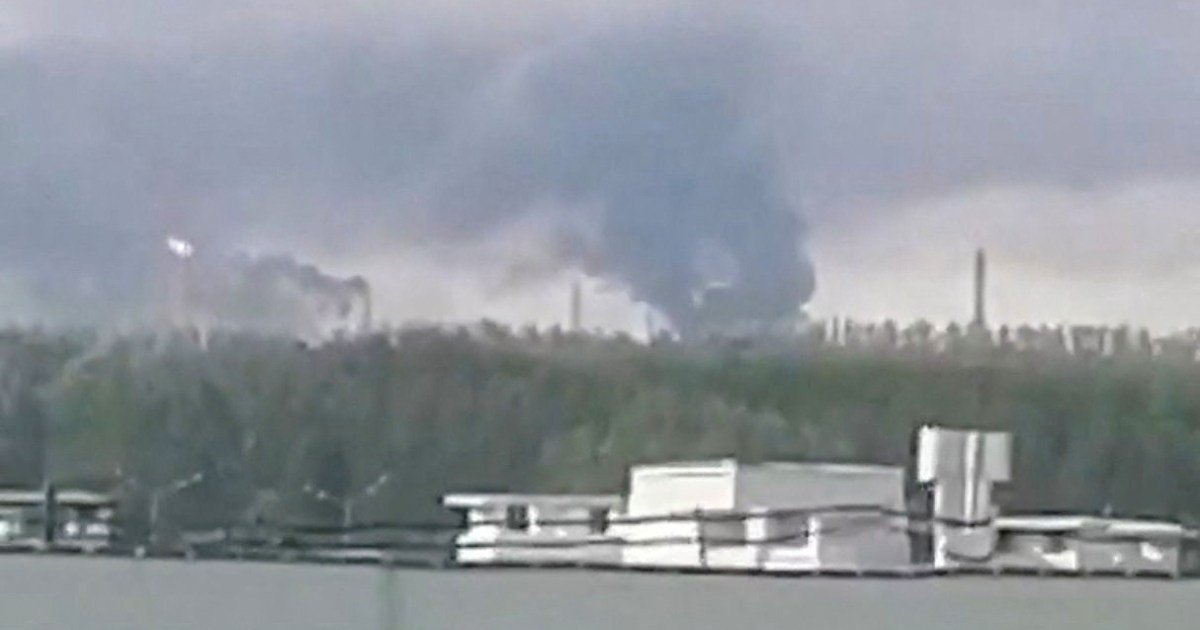
Moscow's Response and the Human Toll
Moscow responded swiftly and sternly, with officials saying that "all those involved in the attacks" would "face inevitable and severe punishment." The Investigative Committee said it had opened proceedings over the strike, framing it as an attack on civilians rather than a purely military engagement. State media amplified the death toll and the image of a child among the victims — an emotional counterweight to Ukraine's insistence that it targets only infrastructure that sustains the Russian war effort.
The human cost of the long-range campaign is no longer confined to the front. In Tatarstan, the dead include migrant workers from Central Asia, and a local economy built around refining and petrochemicals now carries the risk of further strikes. Across Russia, the authorities said more than 450 Ukrainian drones were shot down by air defences overnight, and local officials reported fires at an industrial facility in Siberia's Tyumen region hit by several falling drones.
For many ordinary Russians, the attack is a jarring collision between the Kremlin's narrative of a contained military operation and the reality of a war that now reaches the Volga region, more than a thousand kilometres from Ukraine.
The Investigative Committee's statement that civilians "not involved in any military operations" were present was echoed in state media coverage that highlighted the child among the dead.
Ukraine's Deep-Strike Campaign
Kyiv has recently stepped up long-range strikes on facilities it says contribute revenue and logistics to Russia's war effort. "The facilities Ukraine targets are used to carry out attacks against Ukraine, manufacture weapons, support Russia's war effort," said Andriy Kovalenko, head of Ukraine's Centre for Countering Disinformation. He went further, arguing that "every civilian death in Russia is on [President Vladimir] Putin" and that "Russians should direct their grievances at Putin and at the decisions made within their own country."
"Without Putin, there would have been no aggression. Without the aggression, these people would still be alive," he added.
The Nizhnekamsk strike fits a pattern of increasingly successful Ukrainian deep strikes against warehouses and energy infrastructure across Russian territory. FirePoint states that FP-class systems fly roughly 60 percent of Ukraine's long-range strikes inside Russia, at five to twenty strikes a day. The campaign is designed to choke the revenue streams that finance Moscow's offensive — but each strike also carries a political price, as civilian casualties inside Russia hand the Kremlin material for its own messaging and risk hardening domestic opinion.
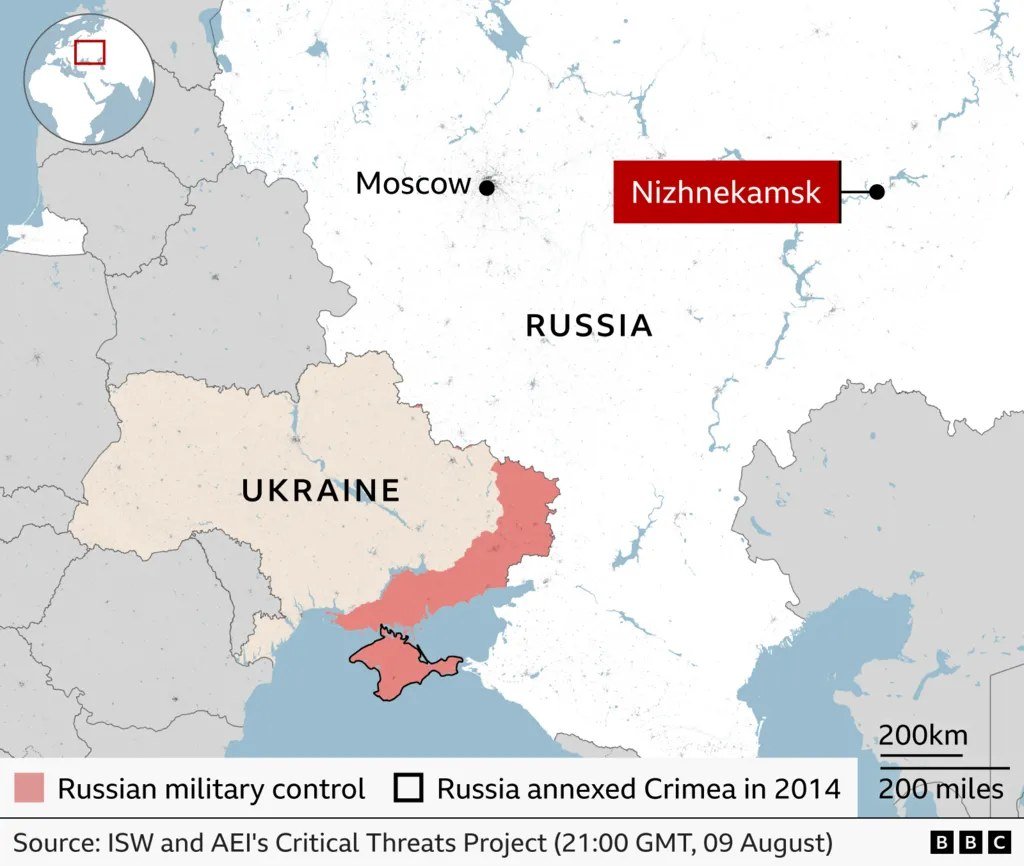
The Escalating Air War
The attack on Nizhnekamsk came amid an intensifying exchange of long-range blows. Moscow said more than 450 Ukrainian drones had been shot down by Russian air defences overnight across the country — an extraordinary figure that speaks to the scale of the assault. In Siberia's Tyumen region, fires broke out at an industrial facility hit by falling drones, according to local authorities.
Ukraine, meanwhile, remains under relentless aerial pressure of its own. Moscow continues to target Ukrainian cities and residential centres with regular large-scale attacks; last week, a combined drone and missile strike on Kyiv killed 21 people, with the Russian defence ministry saying it had struck logistics hubs and supply centres in and around the capital. The symmetry of suffering is stark: both sides are absorbing mounting civilian casualties, even as each frames the other's strikes as terrorism and its own as legitimate military action.
Air defences on both sides are being tested as never before — Ukraine pleading for more interceptors after the Kyiv strike, Russia scrambling to cover a vast territory against swarms of relatively cheap, long-range drones.
Analysis — What This Means for the War
The Nizhnekamsk strike marks a threshold in the conflict. Analysts suggest it signals that Ukraine's deep-strike campaign has matured from symbolic pinpricks into a strategic programme capable of inflicting mass casualties and hitting the economic arteries of the Russian state. The TANECO refinery is not merely a target of opportunity; it is a symbol of the energy wealth that underwrites the Kremlin's war chest, and its repeated targeting suggests Kyiv has mapped Russian critical infrastructure and is working through it methodically.
The political consequences are harder to predict. The deaths of civilians — including migrants and a child — could galvanise Russian public opinion behind the war and strengthen the Kremlin's hand domestically. But the attack also exposes the limits of Russian air defences and the vulnerability of regions far from the front, potentially fuelling quieter questions about the cost and conduct of the war. Moscow's promise of "inevitable and severe punishment" may satisfy domestic audiences, yet it does not answer the operational challenge of stopping drones that fly more than a thousand kilometres.
The 12 June strike on the same refineries had already shown that Nizhnekamsk was within Ukraine's reach; Monday's attack demonstrated that the campaign could now inflict a far heavier toll. If Kyiv continues to strike at the heart of Russia's energy economy, Moscow's retaliation against Ukrainian cities is likely to intensify in kind. The war, now in its fourth year, has entered a phase in which the home front — on both sides — has become a battlefield in its own right.
By Irina Volkov, Staff Writer
This article was produced with AI-assisted research and editorial support. Reporting is based on sources cited in the article.
What's Your Reaction?
 Like
0
Like
0
 Dislike
0
Dislike
0
 Love
0
Love
0
 Funny
0
Funny
0
 Wow
0
Wow
0
 Sad
0
Sad
0
 Angry
0
Angry
0
Russia/Eastern Europe Correspondent at Global1.News. Covering Russian politics, energy, security, and the shifting dynamics of the post-Soviet space. Provides clear-eyed analysis on one of the world's most opaque regions.











Comments (0)