
Michail Antonio-Backed Ghanaian Academy Seeks Premier League Breakthroughs in Rural England
The dusty training pitches of rural Leicestershire are a long way from the bustling streets of Kumasi, but for 20 young footballers from Ghana, this quiet corner of England has become the stage for their biggest audition yet.
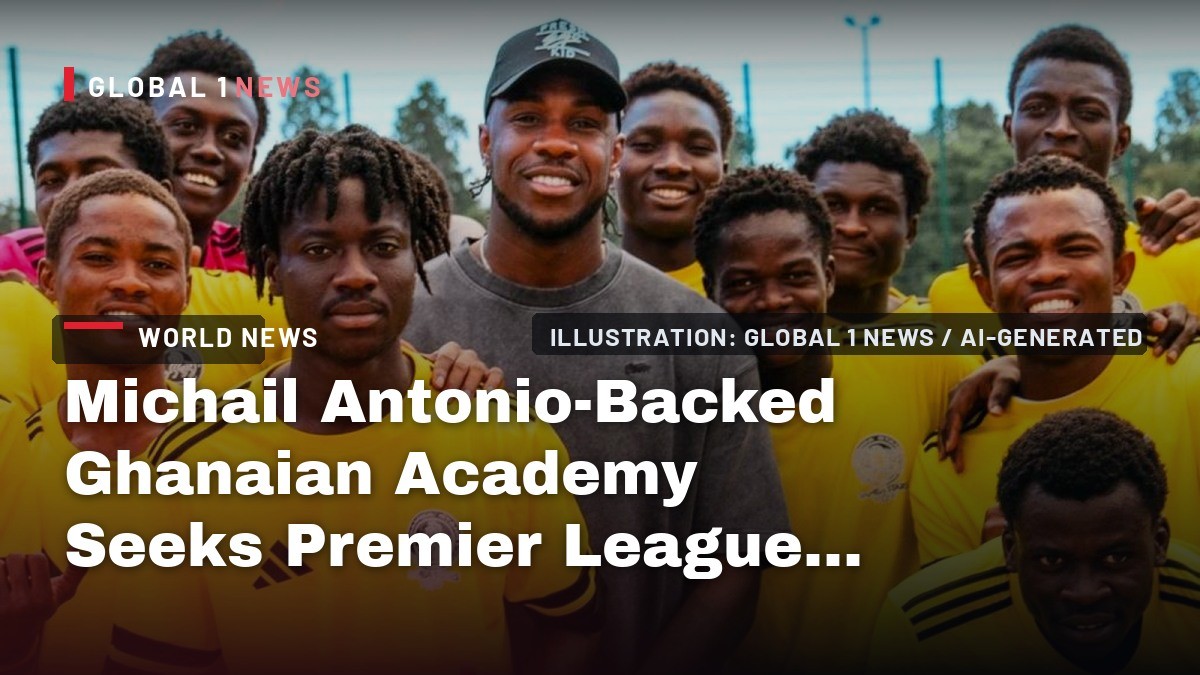
Samba Stars: Ghana's Academy Stars Chase English Pro Contracts
Leicestershire, England — Article continues...
A Dream Forged in Kumasi, Tested in Leicestershire
The scene is almost pastoral: head coach Freddie Okyere puts his squad through a final shooting exercise, the thud of boots on leather echoing across the fields. The players, teenagers mostly, catch their breath in the English heat, their minds far from home. They are part of an ambitious project backed by former West Ham United and Nottingham Forest forward Michail Antonio, a man who knows exactly what it takes to climb English football's unforgiving ladder.
"We created Samba Stars Academy to give young players in Ghana access to elite coaching, shape them as players and create real avenues into the pro game and show how much talent Ghana has," Antonio told BBC Sport. The academy, based in Kumasi, is already developing a new facility in Bompata, just over 100 miles north of Ghana's capital, Accra. But the real test is happening now, on English soil, where the squad has spent the summer knocking on doors.
For many of these teenagers, the journey began long before they set foot on a plane. In Ghana, football is not merely a pastime; it is a deeply embedded cultural currency. From the sandy pitches of Accra's beaches to the packed schoolyards of Kumasi, the game offers a rare pathway to prominence. Yet the gap between local stardom and international recognition remains vast. The Samba Stars project is designed to bridge that chasm, offering structured coaching, nutritional guidance and tactical education that most grassroots players in West Africa never receive. The players who made the trip to England were selected not just for their raw ability, but for their capacity to absorb and apply new ideas under pressure — a trait that European scouts increasingly value.
Seven Clubs, One Summer of Trials
The numbers tell a story of opportunity seized. This summer, players from the Samba Stars Academy took part in trials at seven Premier League and Championship clubs: Bournemouth, Everton, Manchester City, Charlton, Preston, Barnsley and Peterborough. For young men who grew up watching the Premier League from afar, stepping onto those training grounds is a monumental leap.
The academy's coaching staff brings experience from the Premier League, Bundesliga, Serie A and MLS, a deliberate strategy to bridge the gap between Ghanaian grassroots football and the demands of European academies. The two-and-a-half-month tour was designed not just to showcase talent, but to immerse the players in the professional environment they aspire to join — the intensity, the tactics, the lifestyle.
Trials at elite clubs are notoriously competitive, with hundreds of hopefuls vying for a handful of spots. For the Samba Stars contingent, each session was a high-stakes audition. Coaches from the visiting clubs watched for technical proficiency, but also for intangible qualities: composure under scrutiny, willingness to learn, and the mental resilience to bounce back from mistakes. The players were also introduced to the analytical side of the modern game, with video review sessions and data-driven feedback becoming part of their weekly routine. This holistic approach, rare for a West African academy, is what sets Samba Stars apart in an increasingly crowded marketplace of talent development.

Listowell Lord Hinneh: The First Breakthrough
For one player, the gamble has already paid off. Midfielder Listowell Lord Hinneh, 18, has completed a move to English Championship side Middlesbrough after a successful trial spell, joining the club's under-21 squad subject to international clearance. Samba Stars Academy confirmed the transfer of the highly-rated teenage midfielder, a moment of validation for the entire project.
Hinneh's move is more than a personal triumph; it is proof of concept. It signals to other Ghanaian teenagers that the path from Kumasi to the English Football League is not a fantasy, but a route that can be navigated with the right support. For Antonio, who spent a decade at West Ham and previously played for Nottingham Forest, this is the kind of story he wants to multiply.
The economic implications of Hinneh's contract extend far beyond the player himself. In Ghana, where the average monthly wage remains modest by global standards, a professional contract in England represents a life-changing windfall. Young players who sign such deals often become the primary breadwinners for extended families, funding siblings' education, improving housing and even supporting entire communities back home. This financial ripple effect is well understood across West Africa, where football academies are increasingly viewed as legitimate engines of economic uplift. For the families of the 20 players who travelled to Leicestershire, the hope is not merely that their sons succeed, but that their success transforms the circumstances of everyone connected to them.
Ghana's Footballing Heritage and the West African Academy Movement
Ghana's relationship with the World Cup is a source of immense pride. The Black Stars have reached five of the past six FIFA World Cups — a remarkable feat for a nation that had never qualified before 2006 — and made the quarter-finals in 2010, a run that captivated the continent. Legends like Abedi Pele and Michael Essien paved the way, proving that Ghanaian talent could thrive at the highest levels of European football.
The Samba Stars Academy is part of a broader West African movement. Senegal's Diambars and Generation Foot, Cote d'Ivoire's ASEC Mimosas, and Ghana's own Right to Dream have all built reputations for developing young talent and moving it to European leagues. These academies are more than football schools; they are engines of social mobility, offering young Africans a chance to change their families' fortunes through sport.
The 2010 World Cup quarter-final run remains a touchstone for an entire generation of Ghanaian footballers. When Asamoah Gyan's extra-time penalty struck the crossbar against Uruguay, the collective heartbreak was felt across the continent. Yet that tournament also broadcast a powerful message: Ghana belonged on the world stage. The players who watched those matches as children are now the teenagers knocking on the doors of English academies. The legacy of that 2010 squad, and of the pioneers who came before them, is not just nostalgic memory — it is a living blueprint that fuels the ambitions of every young player who dreams of following in their footsteps.
More Than Football: A Cultural Exchange and a Lifeline
For the players, the trip to England is about more than trials and contracts. It is an education in professionalism, a crash course in the culture of English football. They have faced youth teams from across the EFL and non-league circuits, learning to adapt to different styles, physicality and pace. The experience of living and training in England for two and a half months is itself a transformative journey.
Antonio's involvement carries a deeply personal resonance. The Jamaica international forward survived a serious car crash in December 2024, an event that reframed his perspective on life and football. His commitment to the Samba Stars Academy is a testament to his desire to give back to the game that gave him so much, and to open doors for the next generation of African talent.
Antonio's story is emblematic of a growing trend among diaspora players of African descent. Having navigated the complexities of European football themselves, many are now channelling their resources and influence back toward the continent. From funding grassroots facilities to mentoring young prospects, these former players understand that the pathway to success is rarely linear. They also recognise the risks: for every success story, there are countless young Africans who travel to Europe on trial deals, only to find themselves without contracts, visas or support networks. Structured academies like Samba Stars offer a safer, more sustainable alternative — one that prioritises education and welfare alongside sporting development, reducing the vulnerability that has historically plagued African talent migration.
The Road Ahead: From Trials to Contracts
As the summer tour concludes, the Samba Stars players return to Ghana with mixed emotions — some with offers in hand, others with valuable experience and a clearer understanding of what it takes to make it. The academy's model, combining elite coaching in Ghana with exposure to English clubs, is one that could be replicated across the continent.
For the young men who wore the Samba Stars crest this summer, the dream is no longer abstract. They have seen the training grounds, met the coaches, and felt the intensity of English football's youth system. Whether they return to England permanently or continue their development in Kumasi, they carry with them the knowledge that the path is real, and that with talent, hard work and the right support, the Premier League is within reach.
The Samba Stars Academy's journey is a reminder that African football's pipeline to Europe is not just about individual brilliance; it is about structured development, strategic exposure and the belief that talent knows no borders. As Antonio put it, the goal is to show how much talent Ghana has. This summer, in the heat of rural Leicestershire, they made their case.
By Amara Diop, Staff Writer
This article was produced with AI-assisted research and editorial support. Sources: BBC Sport, Ghana Guardian, Modern Ghana, Ghana SoccerNet, MyJoyOnline, Gazette Live, UK Pulse.
What's Your Reaction?
 Like
0
Like
0
 Dislike
0
Dislike
0
 Love
0
Love
0
 Funny
0
Funny
0
 Wow
0
Wow
0
 Sad
0
Sad
0
 Angry
0
Angry
0

West Africa/Sahel Correspondent at Global1.News. Dakar-based journalist covering politics, security, climate, and development across Francophone and Anglophone West Africa. Tells the stories of a region undergoing profound transformation.













Comments (0)