
Navi Pillay Wins the 2026 Nobel Peace Prize for a Life in International Law
Navanethem "Navi" Pillay, the 85-year-old South African jurist who helped establish that rape can be a crime against humanity and who later concluded Israel committed genocide in Gaza, has won the 2026 Nobel Peace Prize.
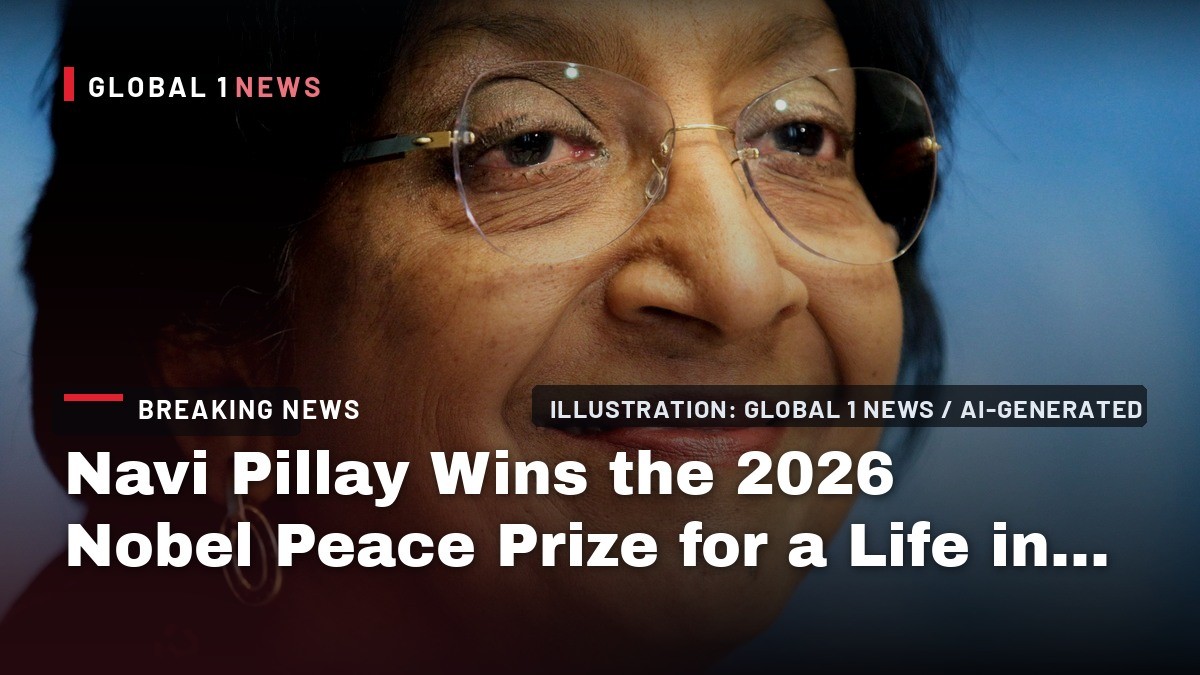
The 2026 Nobel Peace Prize has gone to Navanethem "Navi" Pillay, the 85-year-old South African jurist who helped make rape a prosecutable war crime and later concluded that Israel has committed genocide in Gaza. The Norwegian Nobel Committee announced the award Friday morning in Oslo, citing her efforts to promote peace and international law. The decision lands in the middle of a global fight over who gets to enforce the rules of war, and who gets punished for trying.
Navi Pillay Wins the 2026 Nobel Peace Prize for a Life in International Law
Oslo, Norway — The Norwegian Nobel Committee named Navanethem "Navi" Pillay the 2026 Nobel Peace Prize laureate on Friday 9 October 2026, announcing the decision at 11:00 CEST.
The Announcement in Oslo
Committee chair Jørgen Watne Frydnes delivered the news from Oslo, reading a citation that praised a life spent building courts that can reach the powerful. The committee said the prize goes to "a person who with exceptional courage and integrity has led the way towards a more comprehensive global legal order," adding that this year's laureate "has been instrumental in ensuring that war crimes, crimes against humanity and genocide are prosecuted."
Frydnes called Pillay "one of the great defenders of international legal principles in our time." He said "her commitment to justice and human dignity is a source of hope and inspiration to all those who seek to bring about a more peaceful world."
This year, 287 individuals and organisations were nominated. The prize carries 12 million Swedish kronor, about $1.2 million or 1 million euros. It is the fifth Nobel handed out this week, after literature, chemistry, physics and medicine, with economics still to come on Monday. The award is presented in Oslo on 10 December. This year marks the 125th anniversary of the Peace Prize, first awarded in 1901.
A Career That Began Under Apartheid
Pillay was born in Durban, South Africa, to a family of Indian Tamil origin, and grew up under apartheid. In 1967 she became the first woman to start a law practice in Natal. She later became the first non-white woman to serve on South Africa's High Court.
As a lawyer, she defended Nelson Mandela and others who stood up against apartheid. That work put her on the wrong side of a state built to exclude people like her, and it set the pattern for everything that followed: take on the system, not just the case.
The Rwanda Case That Rewrote the Law
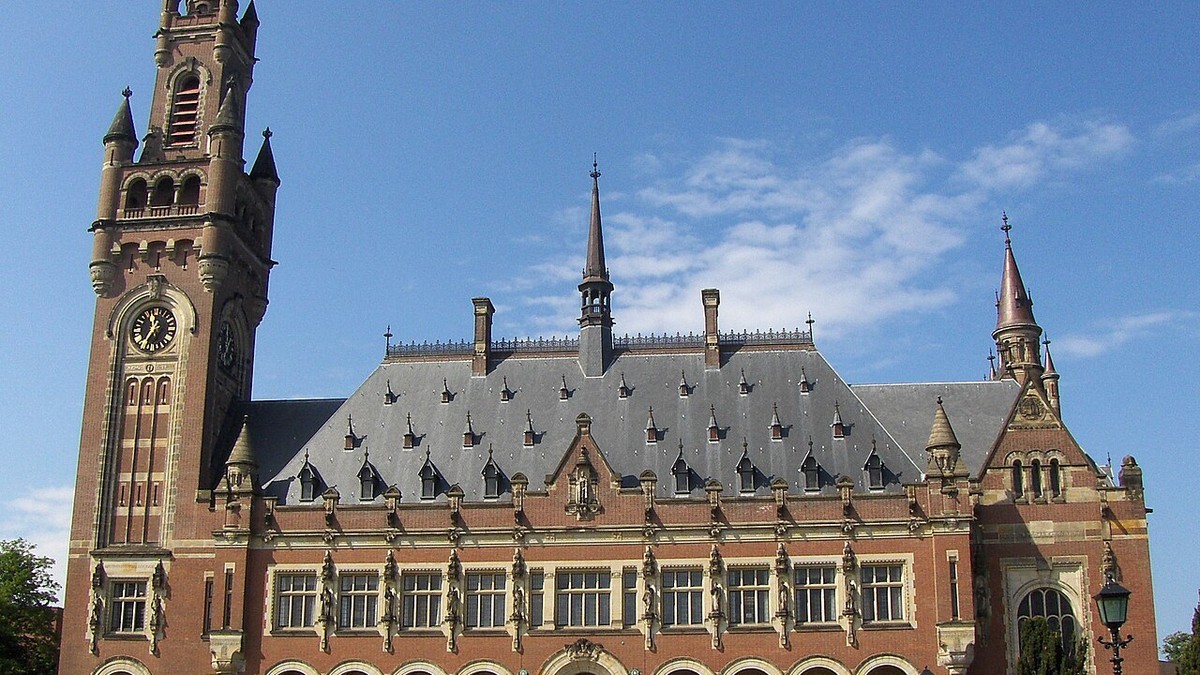
The Rwanda tribunal is where Pillay's legal legacy was forged. At the International Criminal Tribunal for Rwanda, her influence was "a significant factor" when the tribunal established that rape and sexual violence could constitute a crime against humanity, as well as genocide. That finding changed how courts everywhere treat sexual violence in conflict.
In the same case, she was instrumental in a separate breakthrough: for the first time, a defendant faced charges of incitement to commit genocide purely on the basis of spreading propaganda. The defendant, Jean-Paul Akayesu, became the first person convicted of genocide by an international court.
The tribunal sentenced 62 people over the 1994 genocide of more than half a million Rwandans. Pillay helped build the case that more than 200,000 Tutsi women were systematically targeted and raped. The numbers are the record. The legal principle is the inheritance.
From The Hague to the World's Top Rights Job
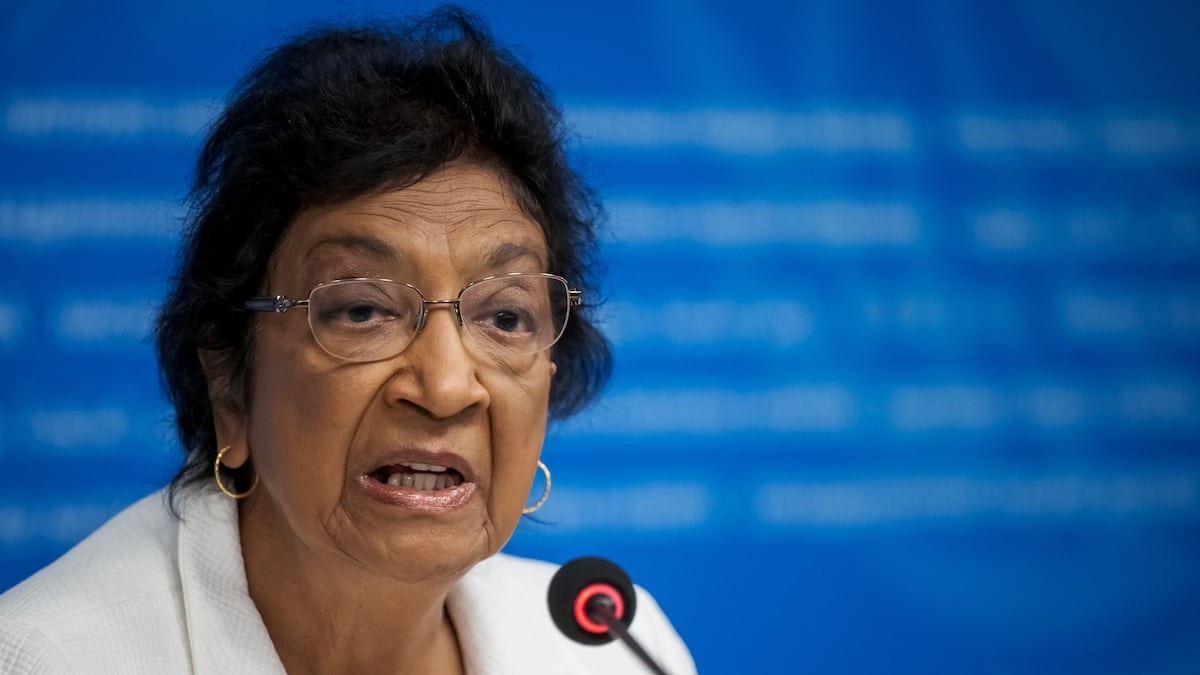
Pillay's career ran from national courts to international ones and then to the top of the United Nations human rights system. She served as a judge on South Africa's High Court, on the International Criminal Tribunal for Rwanda, and on the International Criminal Court. From 2008 to 2014 she was United Nations High Commissioner for Human Rights, running the office that monitors abuses governments would rather keep quiet.
She also chaired the UN Independent International Commission of Inquiry on the Occupied Palestinian Territory, including East Jerusalem, and Israel. The commission was created by the UN Human Rights Council, and she was appointed its chair in 2021. The commission does not speak on behalf of the world body and has no legal authority. Its findings carry weight because of the evidence behind them, not because of any enforcement power.
Today she is a judge at the International Court of Justice, hearing the case in which Myanmar stands accused of genocide over its treatment of the Rohingya. She has told reporters she wants to see that case through to its conclusion.
The Gaza Finding That Made Her a Target
In 2025, the commission Pillay chaired concluded that Israel has committed genocide in Gaza. Pillay called Israel's actions there "a moral outrage and a legal emergency." Writing in the New York Times, she said "the scale of the destruction is devastating" and that "our analysis found that starvation has been used as a weapon of war and that the medical system has been deliberately destroyed."
She said that to establish whether a genocide has taken place, the "intent" must be clear, and that the "evidence is clear" on that count. She told AFP her team had shared "thousands of pieces of information" with prosecutors at the International Criminal Court.
Her commission argued it would take too long for the ICJ to reach a verdict, and that states needed to act sooner to uphold their duty to prevent genocide. That argument is the heart of the backlash. It asks governments to act before a court says they must.
Israel's Rejection, and Who Gets to Declare Genocide
Israel's foreign ministry rejected the commission's report as "false and distorted" and accused Pillay and the other authors of "serving as Hamas proxies." It said: "The report relies entirely on Hamas falsehoods, laundered and repeated by others."
On the Nobel itself, Israel's Foreign Ministry said the award represents a "grotesque weaponization of an award to legitimize anti-Israel hatred and prejudice," adding that "her role in the relentless, politically motivated demonization of Israel and promotion of the genoLIE speaks volumes."
Only the International Court of Justice can formally declare genocide. South Africa's case against Israel at the ICJ, launched in December 2023, remains ongoing. The ICJ is not expected to rule on the genocide allegations until 2027 at the earliest. South Africa has until November 2027 to file its reply, and Israel until May 2029. In provisional orders in 2024, the ICJ directed Israel to take emergency action in Gaza. No final ruling has come.
Her First Words: 'It Must Be a Joke'
Pillay was at the Nuremberg Forum in Nuremberg, Germany, when the prize was announced. She was brought out into a hallway to speak to reporters. Her first reaction was disbelief. "It must be a joke," she said. Then the lawyer in her took over. "But, being a lawyer and a judge, I still want to verify this thing."
She also showed the dry humour that has carried her through decades of hostile rooms. "If you clap a little bit more I may share this prize with Trump," she said. And she acknowledged the room itself: "Firstly, at this venue, your applause means a great deal to me."
On Gaza, she did not soften. "The last thing I did is the delivery of the report on Gaza, naming what's happening there as genocide," she said. She noted the response: "One of the main reactions to that report is paying tribute to me for my courage, and you can imagine how surprised I was." Then the line that defines her. "Why would you need courage to speak the truth? You interpret the law, you look at all the facts, so it's an impartial decision." She added: "The institutions are under attack. Many judges are being sanctioned."
The Committee's Real Target
The Nobel committee did not pretend this was only about one person. "The system of international law is under tremendous pressure, and its institutions are under attack," it said. The committee went further: "We see a shift towards power politics at the expense of legal frameworks and global respect for law and justice. Whenever might overtakes right, it undermines stability, trust and peaceful co-existence."
Then came the shortest line, and the sharpest. "Peace requires justice."
That is the frame for this prize. The committee is not just honouring a jurist. It is defending a system that governments are openly testing, from sanctions on judges to attacks on courts. The award is a signal about what the committee thinks is at stake. It is also a bet that the rules still have defenders willing to pay a price.
The Prize Trump Wanted
President Donald Trump has repeatedly said he deserves the Nobel Peace Prize. Speaking on Wednesday, he said: "They have a reputation for maybe not giving it to people like me .. and I think it would be a great discredit to them."
AFP reported that "the prize for Pillay is sure to anger Trump, whose administration has repeatedly attacked international justice institutions." AFP also noted that Trump's war against Iran, his territorial expansion ambitions such as Greenland, his hard line on migrants and his attacks on multilateralism and the media have, according to experts in Oslo, disqualified him for the prize.
The 2025 winner was Venezuelan opposition leader María Corina Machado. She gave her Nobel gold medal to Trump last year, judging he deserved it after the US capture of Nicolás Maduro. This year the committee went a different way, toward a lawyer who has spent her life building the courts Trump's allies attack.
The World Reacts
South Africa's President Cyril Ramaphosa called the award a "profound tribute to the veteran jurist's courage, integrity and lifelong commitment to justice," saying Pillay "has served humanity with principle and the belief that the world can and should be a better place."
Volker Türk, the current UN High Commissioner for Human Rights and Pillay's successor, called it a "collective win for human rights." He said: "I really warmly congratulate my sister, my bigger sister, Navi Pillay ... To say it is well deserved is a total understatement, and especially at a time when human rights are under attack on so many fronts, including from those who wield enormous power."
European Commission President Ursula von der Leyen said Pillay has "looked the brutality of injustice in the eye and never looked away," that "she is the defender of the persecuted, the vulnerable, the voiceless and the excluded," and that "in a world that needs justice more than ever, her courage and moral clarity are a precious compass." The United Nations said the prize was testimony to the "value" of rights "more than ever."
What Happens Next
The prize is presented in Oslo on 10 December. Pillay has said she wants to see the Myanmar genocide case at the ICJ through to its conclusion. That work continues regardless of the medal.
The South Africa case against Israel grinds on, with a ruling on the genocide allegations not expected until 2027 at the earliest. For now, the Nobel committee has made its own judgment about where the pressure belongs: on the courts, and on the people who staff them while governments try to tear them down.
By Jessica Ali, Staff Writer
This article was produced with AI-assisted research and editorial support. Sources: NobelPrize.org, Reuters, AFP, AP, Al Jazeera, BBC, NPR, CBC, DW, The Telegraph and UN News.
What's Your Reaction?
 Like
0
Like
0
 Dislike
0
Dislike
0
 Love
0
Love
0
 Funny
0
Funny
0
 Wow
0
Wow
0
 Sad
0
Sad
0
 Angry
0
Angry
0

Editor-in-Chief at Global1.News. Atlanta-based journalist who cuts through the BS and tells it like it is. Lead anchor, host, and the voice you hear when the spin stops and the truth starts.











Comments (0)