
Mossad Chief Removes Top Officials Over Failed Iran Plan
Mossad Director Roman Gofman has removed two senior officials over an unimplemented plan to topple Iran's Islamic Republic through a Kurdish uprising. The shake-up, first reported by N12, comes amid Israel's covert war with Tehran and raises questions about accountability, precedent, and the future of Israel's Iran strategy as October elections loom.
In a recent i24NEWS English report, the spotlight fell on a dramatic shake-up within Israel's intelligence community: Mossad Director Maj. Gen. Roman Gofman has removed two of the agency's most senior officials — the head of the Intelligence Directorate and the head of the Iran Division — over a controversial, unimplemented plan to topple Iran's Islamic Republic through a Kurdish uprising. The moves, first reported by N12 and carried by the Jerusalem Post, signal a new, assertive era under Gofman, who took office just weeks ago, and come as Israel remains locked in a volatile post-war dynamic with Tehran.
Mossad Shake-Up: Gofman Ousts Top Officials Over Failed Iran Regime-Change Plan
Jerusalem, Israel – August 2026 — The removals, described by security officials as a "mutual agreement" following personality clashes with Gofman, mark the second major personnel decision since the new director's inauguration on June 2, 2026. The two unnamed officials — one of whom had helmed the Intelligence Directorate only since December — were the architects of a written operational blueprint to dismantle the Islamic Republic, a plan that was reportedly presented to US President Donald Trump but never executed on the ground.
A Shake-Up at the Top of Mossad
Maj. Gen. Roman Gofman, the 14th director of Mossad, has moved swiftly to reshape the agency's leadership. Within days of his swearing-in, he removed the deputy director, a veteran of more than two decades. Now, the heads of the Intelligence Directorate and the Iran Division are out, though N12 reported they may remain at Mossad in other capacities as part of a broader reorganization. Security officials emphasized that both men made "invaluable contributions" to Israel's security, but the friction with Gofman was deemed untenable.
The timing is critical. Israel is gearing up for October elections, and Iran policy is a central domestic political battleground. Gofman, who previously served as Military Secretary to Prime Minister Benjamin Netanyahu from 2024 to 2026, has signaled a break from the past, promising "new capabilities" for Mossad. Netanyahu, at Gofman's inauguration, reiterated that the struggle against Iran is central to the agency's mission.
The February 28, 2026 outbreak of hostilities followed months of escalating tensions after the June 2025 Israel-Iran clash ended in a fragile ceasefire brokered through regional intermediaries. According to N12's reporting, the initial American-Israeli strikes targeted leadership compounds in Tehran, killing Supreme Leader Ali Khamenei and several senior IRGC commanders amid what had been ongoing US-Iran nuclear negotiations. Within days, Iran and its regional allies responded with hundreds of ballistic missiles and thousands of one-way attack drones toward targets across Israel, while the conflict spread to the Strait of Hormuz, where Iranian fast-attack craft harassed commercial shipping and US Navy destroyers from the Fifth Fleet responded with defensive strikes. The war has drawn in Hezbollah from Lebanon and Houthi forces from Yemen, transforming a bilateral confrontation into a regional crisis directly linked to the unresolved Gaza war.
The Kurdish Uprising Plan That Never Was
At the heart of the dismissals lies a secret Mossad-CIA proposal that envisioned a dramatic regime-change scenario. The plan called for Kurdish ground forces to enter Iran under extensive Israeli and American air cover: Israeli fighter jets would strike IRGC positions along Iran's border with Iraq's Kurdistan Region, opening a corridor for Kurdish fighters to cross into Iranian Kurdistan and push into Kurdish cities in the country's northwest. Planners believed thousands of young Kurds would join, turning the operation into a wider uprising across northwestern Iran, with momentum spreading nationwide and millions taking to the streets to bring down the government in Tehran.
Prime Minister Netanyahu reportedly discussed the plan when persuading Trump to go to war against Iran in February 2026, framing it as the decisive blow that would collapse the Islamic Republic's leadership structure. The plan was presented to the US president but never implemented. It fell apart after details leaked to regional intelligence services, Kurdish political leaders expressed reservations about being used as proxies, and Turkey — which has its own Kurdish insurgency — actively opposed the scheme. US officials later advised Trump that Israeli assessments predicting the imminent collapse of Iran's government were "overly optimistic," citing the regime's resilience and the lack of a credible civilian alternative. The plan's failure became a point of contention between Israeli military intelligence and Mossad, with analysts arguing that the endgame modeling failed to account for the Revolutionary Guards' ability to consolidate power in a vacuum.
Ahmadinejad and the Unraveling of the Scheme
The plan's most audacious element was its endgame: installing former Iranian president Mahmoud Ahmadinejad as a post-collapse leader. The New York Times reported on July 13, 2026, that Israel pursued a years-long effort to recruit Ahmadinejad, with then-Mossad chief David Barnea meeting him on the sidelines of an academic conference in Budapest in 2024. The operation reportedly involved covert payments and a dramatic wartime extraction on February 28, when Ahmadinejad was led from his bombed Tehran compound to a Mossad safe house inside Iran. The operation began unraveling on the first day of the war, when Israeli Air Force jets reportedly struck his residence — intending to eliminate guards holding him under house arrest — leaving Ahmadinejad wounded and deeply distrustful of the entire arrangement.
Ahmadinejad's office dismissed the reports as "Hollywood-style claims," but Middle East Eye analysis raised serious questions about the operation's tradecraft. Hanan Geffen, a former Unit 8200 commander, questioned the feasibility of maintaining a safe house network for a high-profile political figure during an active war, while Haaretz reported that Israeli military intelligence viewed the endgame as unrealistic, warning that toppling Khamenei's regime without a civilian counterweight could hand power directly to the Revolutionary Guards. Ahmadinejad, who served as president from 2005 to 2013 and is known for Holocaust denial, was already distrusted by both reformists and hardliners, making him an unlikely unifying figure for a post-regime transition.
Gofman's New Era at Mossad
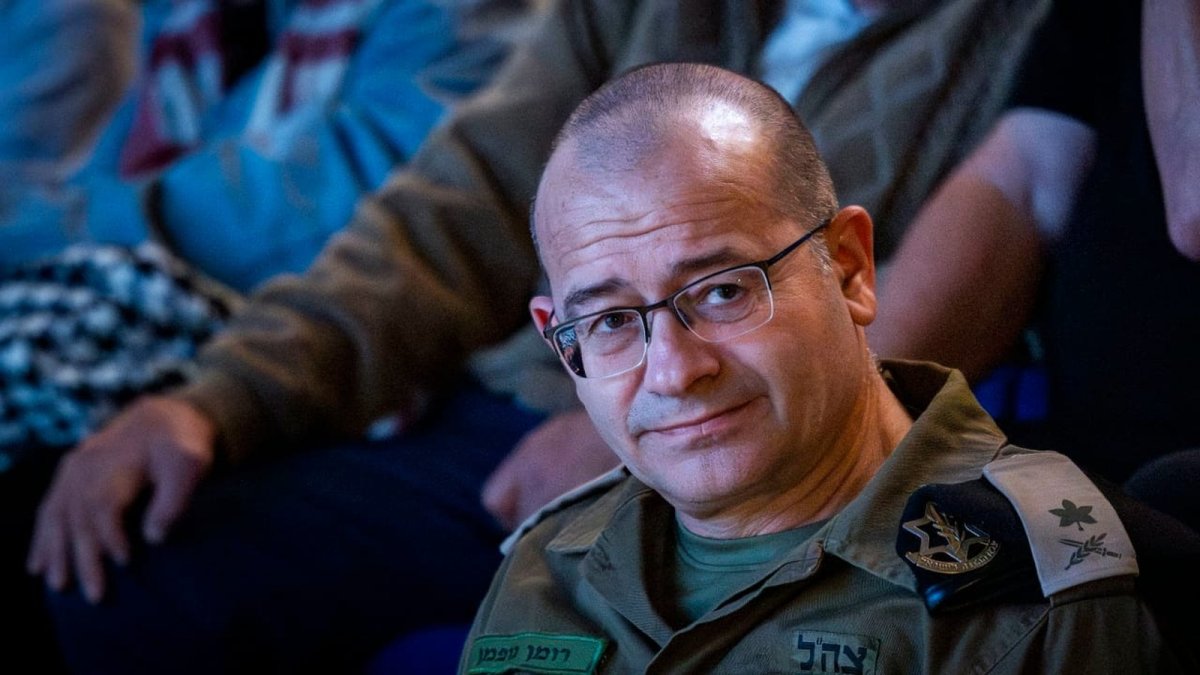
Roman Gofman's rapid ascent to the Mossad directorship on June 2, 2026 marked a departure from the agency's traditional career-intelligence trajectory. Born in Belarus in 1976, he emigrated to Israel at age 14 and enlisted in the armored corps in 1995, later rising to the rank of Aluf (Major General). His tenure as Military Secretary to Netanyahu from 2024 to 2026 placed him at the center of war cabinet deliberations, giving him direct exposure to the Iran file that would define his intelligence leadership. The legal process to replace David Barnea stretched over several months before Gofman's appointment was confirmed.
Gofman's rapid consolidation of power is unprecedented in recent Mossad history. His removal of the deputy director within days of taking office — with sources split between attributing the dismissal to the failed regime-change efforts and suggesting it was a loyalty test — followed by the ouster of two more senior officials, suggests a deliberate reshaping of Barnea-era leadership. At his inauguration, Gofman pledged to develop "new capabilities capable of surprising Israel's enemies," while Netanyahu publicly emphasized that the struggle against Iran remained the agency's central mission. The message is clear: Gofman intends to run a leaner, more loyal, and more aggressive Mossad.
Internal Criticism and a Question of Precedent
But the cost may be high. A former senior Mossad official, speaking on Israeli public television, described the removals as an "unprecedented breach of organizational standards" that threatens the agency's operational integrity. The official confirmed that the regime-change plan was requested by the political level as an accompanying measure to operational military actions and had been approved at all levels of the chain of command. "The operation did not fail, but was not fully executed for various reasons," the official said, emphasizing that the collapse stemmed from external factors — including Turkish opposition and Kurdish reservations — rather than internal incompetence. He could not recall any prior instance where a department head was removed over an operation that failed without intentional misconduct.
The warning was stark: if people fear expressing their opinions, the organization would become hollow. "It doesn't have tanks or planes, only people," the official said, arguing that Mossad's unique value lies in its human intelligence networks and analytical creativity — and that if the agency cannot plan using all the tools at its disposal, specifically people, it will become weak and mediocre. The criticism reflects deeper concerns that Gofman's purge, while establishing loyalty, may have damaged the agency's ability to conduct independent strategic assessment during a critical wartime period.
Tehran's Response and the Covert War Continues
Iran, meanwhile, is not standing still. The Ministry of Intelligence announced the arrest of 21 people accused of collecting information on sensitive military and air defence sites for Mossad in Kerman Province, a southeastern province home to significant military and air defense infrastructure. Four additional armed suspects were detained separately, with weapons and ammunition seized. Iranian authorities also linked recovered firearms to suspects previously detained over the "Dey 1404 coup" — anti-establishment protests earlier this year that Tehran claims were externally orchestrated. No evidence was disclosed, consistent with Iran's standard practice in espionage cases.
The Kerman arrests appear designed to demonstrate that Iran's internal security apparatus remains functional despite the war, while also serving to rally domestic support. The timing — coinciding with international scrutiny of the Mossad's failed regime-change plan — suggests Tehran is using the arrests to counter narratives of internal vulnerability and to justify continued crackdowns on dissent. The covert war between Israel and Iran continues unabated even as diplomatic efforts to stabilize the region falter: the June 2025 clash ended in a fragile ceasefire, but the 2026 war has proven far more destructive, and multiple ceasefire attempts have collapsed within days as both sides accused each other of violations.
Analysis: What This Means for Israel
The removal of these two senior officials is a defining moment for Gofman's tenure. It signals a break from the past and a willingness to make tough, unpopular decisions. But it also exposes the fault lines in Israel's Iran strategy. The regime-change plan was bold, creative, and ultimately unworkable — a metaphor for Israel's broader approach to Tehran. The war achieved tactical successes but failed to deliver strategic victory: it killed Khamenei, but Iran's regime did not collapse, and the ceasefire and negotiation cycles that followed have left Israel in a precarious position.
For Israeli citizens, the implications are immediate. The October elections will be fought in the shadow of this war and its aftermath, with opposition parties already criticizing Netanyahu's decision to escalate without a clear exit strategy. Netanyahu's role in promoting the plan, and Gofman's role in punishing its architects, will be scrutinized. The Mossad's reputation for operational excellence is on the line. As the former official noted, the agency's strength lies in its people — if they fear speaking up, Israel's ability to anticipate and counter threats from Iran, Hezbollah, and beyond will be severely diminished.
The coming months will test whether Gofman's shake-up strengthens Mossad or hollows it out. For now, the region watches, and Tehran takes notes.
By Hannah Berg, Staff Writer
This article was produced with AI-assisted research and editorial support. Reporting is based on sources cited in the article.
What's Your Reaction?
 Like
0
Like
0
 Dislike
0
Dislike
0
 Love
0
Love
0
 Funny
0
Funny
0
 Wow
0
Wow
0
 Sad
0
Sad
0
 Angry
0
Angry
0

Israel Correspondent at Global1.News. Based in Tel Aviv, covering Israeli politics, security, technology, and society. Provides balanced, deeply-sourced reporting on one of the most closely-watched regions in the world.













Comments (0)