
MND Local: Xochimilco neighborhoods go dry in September
As the calendar turns toward the final weeks of September, the rhythm of life in Xochimilco shifts from the lively splash of trajineras to a quieter, more regulated beat.
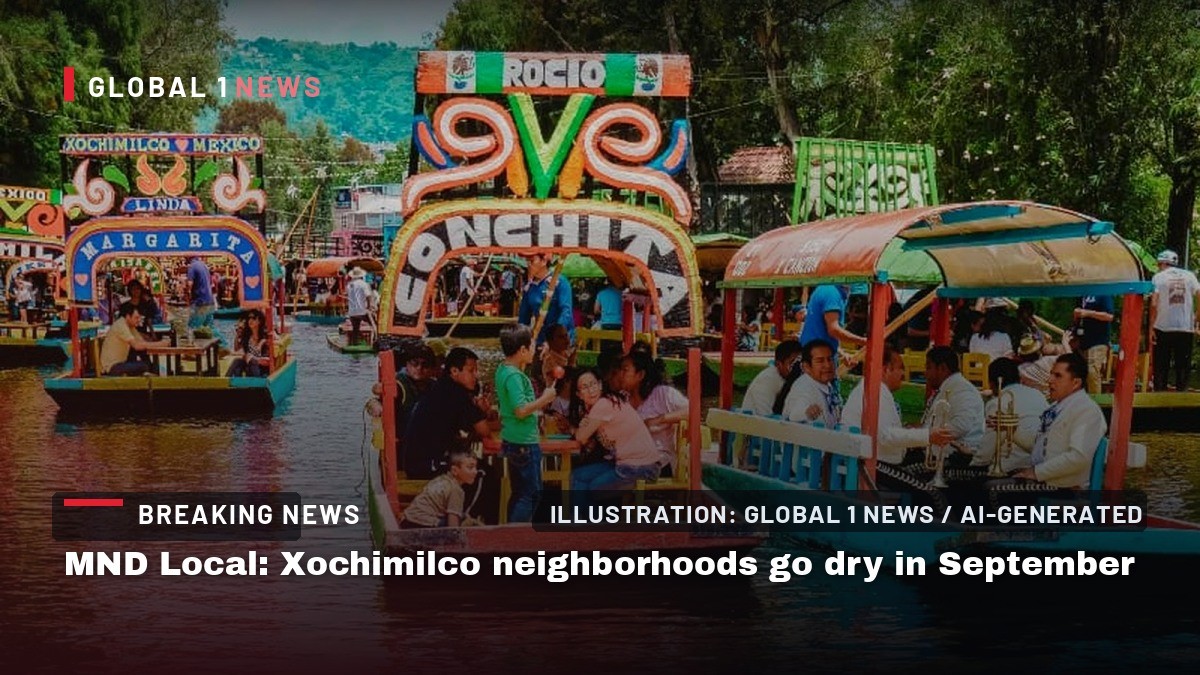
As the calendar turns toward the final weeks of September, the rhythm of life in Xochimilco shifts from the lively splash of trajineras to a quieter, more regulated beat. The borough’s mayor’s office announced that six neighborhoods will enforce a temporary “ley seca,” a dry law that bars the sale of alcohol in stores and convenience outlets. The move, timed to coincide with the nation’s Independence Day celebrations and the patron saint festivals that light up local plazas, reflects a long‑standing practice in Mexico City: invoking dry periods during major public gatherings to curb excess and protect public order.
What the dry law means for residents and visitors
In practical terms, the ley seca will affect grocery stores, abarrotes and other small retailers in the designated zones, while most restaurants can still serve alcoholic drinks when paired with food. The restrictions are not uniform across the borough; San Mateo Xalpa will observe the ban from September 17 through September 24, and Colonia San Jerónimo will follow from September 29 through October 1. For those unfamiliar with the policy, authorities sometimes apply it during elections, large festivals, or periods of heightened public safety concerns.
Businesses caught violating the prohibition risk fines that run into the thousands of pesos, and their stock may be seized. Individuals are not exempt: fines exceed 3,000 pesos and can be accompanied by arrest and mandatory community service. The enforcement underscores the city’s intent to balance celebration with responsibility, a tension that resonates in neighborhoods where the scent of fresh tortillas mingles with the roar of boat engines on the canals.
Community reactions: from fiesta to penance
Local families and vendors have mixed feelings about the temporary curtailment. Many see it as a necessary pause that protects public safety, especially during the bustling Independence Day weekend when crowds flood the streets, and the patron saint festivals draw crowds to the tianguis. Yet some small shop owners worry about lost revenue, particularly those whose livelihoods depend on daily sales of cerveza and mezcal. In the past, similar dry periods have prompted a surge in informal sales, a dynamic that authorities hope to deter through stricter enforcement.
Community leaders emphasize that the law does not aim to punish cultural traditions, but to channel them into safer expressions. “We want people to enjoy the music, the food, and the camaraderie without the hazards that come with over‑indulgence,” a local council member explained. This sentiment echoes the broader Mexican value of “familia primero,” where the well‑being of the collective often guides public policy.
Independence Day and patron saint festivals: a cultural backdrop
September’s celebrations are a tapestry of national pride and local devotion. The Independence Day festivities, marked by fireworks over the Zócalo and the waving of the tricolor, draw visitors from across the country and beyond. Simultaneously, each colonia honors its patron saint with processions, music, and food stalls that line the streets. In Xochimilco, the celebrations are especially vivid, with the canals becoming a stage for both religious reverence and the famed tequila‑fuelled boat rides that have become synonymous with the borough.
The timing of the ley seca aligns with these events, aiming to reduce alcohol‑related incidents while preserving the spirit of the celebrations. By limiting sales in stores but allowing restaurants to serve drinks with meals, authorities hope to maintain the festive atmosphere without the excesses that can lead to public disturbances or health emergencies.
The Jubilee Year at the Basilica of Our Lady of Guadalupe
While Xochimilco observes its temporary dry spell, the city at large prepares for a year‑long spiritual celebration. Pope Leo XIV declared October 2026 through October 2027 a Jubilee Year, commemorating the 50th anniversary of the Basilica of Our Lady of Guadalupe. The archdiocese, led by Cardinal Carlos Aguiar Retes, announced on September 9 that the festivities will begin on October 12 and continue for a full year.
The basilica, a pilgrimage magnet that draws roughly 20 million visitors annually according to Catholic media, will host a series of events aimed at grace, forgiveness, and renewal. The Pope’s proclamation, though traditionally reserved for every 25 years, was invoked for this special occasion, underscoring the shrine’s significance in Mexican Catholic identity. The Jubilee’s spiritual focus offers a counterpoint to the secular celebrations in Xochimilco, highlighting the dual nature of Mexican public life where faith and festivity often intersect.
Tourism and hospitality: Hyde’s boutique entry
Travelers planning to experience the Jubilee or the September festivals will find new accommodation options in the city’s evolving hospitality scene. Hyde Hotels, a boutique brand owned by Ennismore, opened its Mexico City Reforma location in Colonia Juárez, just steps from the Ángel de la Independencia. The hotel features 106 rooms, some offering views of the iconic monument, a sushi restaurant called Enzu, and a café‑turned‑cocktail lounge named Sun & Moon.
Hyde’s branding emphasizes a “festival spirit,” blending bohemian design with global flavors and wellness amenities. The property repurposes two towers from Mexico’s modernist era, preserving their facades while infusing contemporary interiors. A striking sculpture, “Vulcano” by Mexican architect Javier Senosiain, anchors the atrium. Rates start around 2,930 pesos per night, with a premium “Headliner King Suite” reaching 7,234 pesos. A grand‑opening promotion offers up to a 25 percent discount and free breakfast for bookings made by September 30 for stays through December 28, positioning Hyde as a stylish yet accessible option for visitors drawn by the Jubilee or the September festivities.
Smart Fit’s expansion: jobs and health for the working class
Amid the cultural and religious celebrations, Mexico’s fitness landscape is also undergoing a transformation. Brazilian chain Smart Fit announced plans to finish 2026 with 70 new gyms across the country, investing heavily in construction and real estate. While exact locations remain undisclosed, some of the new clubs are expected to open in Mexico City, expanding the chain’s presence in urban neighborhoods.
Smart Fit’s General Director Darío Coronado highlighted a strategic shift toward data‑driven growth, automation, and real‑estate efficiency, aiming to democratize access to high‑quality health services. The rollout will generate more than 1,000 construction jobs, with an additional 900 positions anticipated once the facilities become operational. Currently, Smart Fit runs over 500 locations nationwide, serving more than 1.3 million members. This expansion aligns with broader efforts to improve public health, especially as the city navigates the challenges of large‑scale gatherings during the dry law period and the upcoming Jubilee Year.
Looking ahead: balancing celebration, safety, and community
The convergence of a temporary alcohol ban, a year‑long religious Jubilee, new hospitality ventures, and a fitness boom paints a picture of a city in motion. For residents of Xochimilco, the ley seca serves as a reminder that public policy can shape everyday life, nudging communities toward safer celebrations while still honoring tradition. For visitors, the Jubilee at the Basilica offers a chance to partake in a historic pilgrimage, while boutique hotels like Hyde provide modern comforts that echo Mexico City’s blend of past and present.
Ultimately, the September dry law is more than a regulatory footnote; it reflects a broader Mexican ethos of collective responsibility. As families gather around the tianguis, as boatmen glide through the canals, and as worshippers light candles at the basilica, the city’s rhythm continues—tempered, vibrant, and ever‑watchful of the balance between festivity and public well‑being.
This article was produced with AI-assisted research and editorial support. Reporting is based on the source material cited below. Sources: Mexico News Daily; mexiconewsdaily.com; Global1.News (17 September 2026).
By Rosa Martinez, Staff Writer
What's Your Reaction?
 Like
0
Like
0
 Dislike
0
Dislike
0
 Love
0
Love
0
 Funny
0
Funny
0
 Wow
0
Wow
0
 Sad
0
Sad
0
 Angry
0
Angry
0
Latin America/Andes Correspondent at Global1.News. Based in Bogota, covering politics, environment, energy, and social movements across the Andean region. Passionate about environmental journalism and communities protecting their land.













Comments (0)