
An experimental tour-de-force: Entanglement between glass bead and light
In a field where the very notion of “spooky action at a distance” still makes most people squirm, a team of physicists has pulled off something that sounds like science‑fiction and feels like hard‑won engineering.
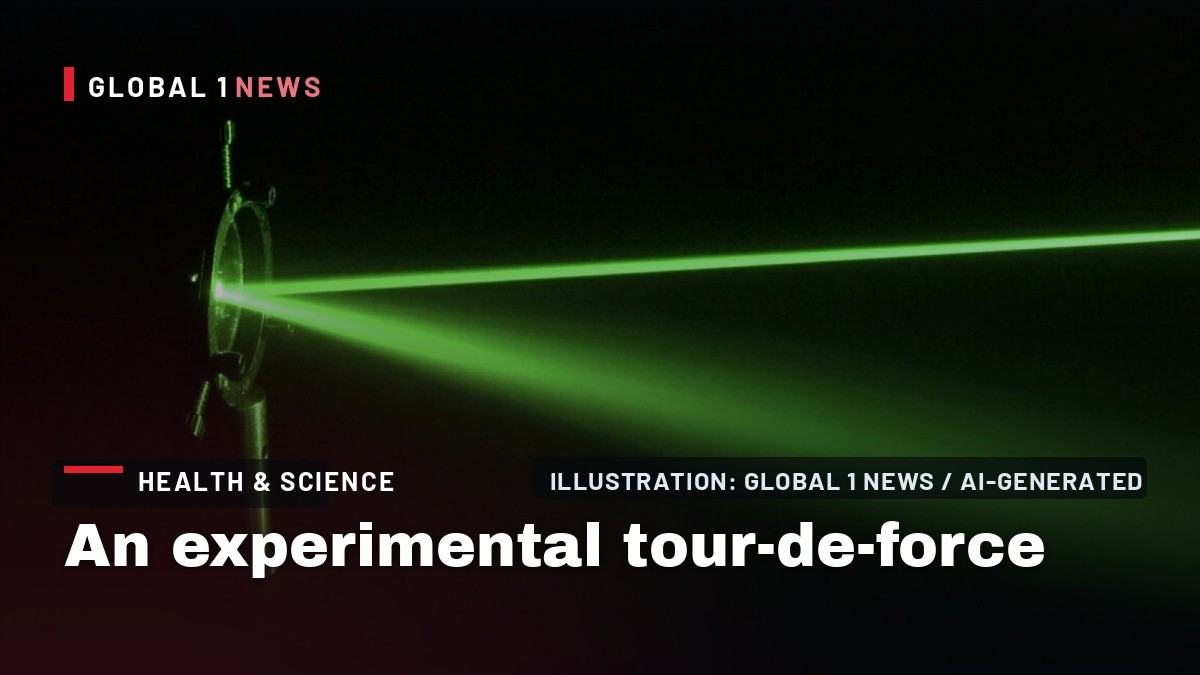
In a field where the very notion of “spooky action at a distance” still makes most people squirm, a team of physicists has pulled off something that sounds like science‑fiction and feels like hard‑won engineering. By coaxing a beam of laser light into a delicate dance with a single glass bead, they have demonstrated quantum entanglement between a macroscopic object and a light field—a feat that pushes the boundary of what we thought possible for quantum mechanics in the everyday world.
The entanglement breakthrough in plain terms
At its core, quantum entanglement is simply a correlation: when two systems become linked, a measurement on one instantly informs us about the state of the other. The Ars Technica piece makes this clear with a down‑to‑earth analogy—our own arm’s upper and lower sections move together because they’re part of the same limb. In the quantum realm, however, the link can exist between objects that seem fundamentally separate, like photons, and it can survive even when those objects are light‑years apart.
The new experiment takes that idea a step further. Instead of entangling two photons, the researchers have managed to entangle a light field with a glass bead that is large enough to be seen with the naked eye. Under normal circumstances, a bead of that size would interact with its environment so strongly that any quantum correlation would be washed out almost instantly. The team’s success hinges on a combination of optical trapping, precise cooling, and clever measurement techniques that keep the bead’s motion under tight control while allowing the light to “talk” to it.
Why entangling a bead matters
Entanglement is not just a curiosity; it underpins emerging technologies like quantum computing and ultra‑secure communications. Yet most demonstrations involve particles that are inherently quantum—photons, electrons, or atoms cooled to near absolute zero. A glass bead, by contrast, is a macroscopic object composed of countless atoms, each of which constantly interacts with its surroundings. The fact that the researchers could preserve quantum correlations in such a system demonstrates that the boundary between the quantum and classical worlds is more porous than we often assume.
The article points out that the larger an object, the more it “interacts” with the world, which in quantum‑mechanical language means it suffers decoherence. Decoherence is the process by which quantum superpositions collapse into classical mixtures due to unwanted measurements by the environment. By cooling the bead and confining it within an optical cavity, the team effectively shielded it from these disruptive influences long enough to observe entanglement—a clear illustration of how precise control can tame decoherence.
How the experiment was set up
The researchers used a pair of mirrors to form an optical cavity—a resonant space that defines the phase and frequency of the light inside. Within this cavity, a standing wave pattern emerges, much like the vibrating modes on a guitar string. The bead sits at the center of the cavity, where the intensity of the light field is well defined. This arrangement ensures that the bead’s interaction with the light is highly predictable, provided the bead remains relatively still.
To keep the bead still, the team employed a technique known as optical tweezers. A focused laser beam creates a trap that holds the bead in place, but the trap behaves more like elastic bands than rigid metal tweezers. The bead still vibrates within the beam, and that vibration is what the experimenters call “heat.” By adjusting the laser’s frequency to a slightly redder (lower) color, they coaxed the bead to give up energy to the light via the Doppler effect, thereby cooling its motion. This cooling is not absolute—the bead can never be perfectly still—but it reduces the vibration enough to make the quantum link observable.
The delicate balance of cooling and heating
Cooling alone would not have been sufficient. The bead’s residual motion is necessary for the entanglement process, because the light must exchange energy with the bead in a controlled way. After the cooling stage, the researchers introduced a second laser beam tuned slightly bluer (higher in frequency). This “heating” beam adds energy back to the bead at just the right moment, creating a push‑pull dynamic that ties the bead’s motion to the two light fields.
In effect, the two laser beams—one cooling, one heating—become correlated through the bead’s motion. When the bead moves, it shifts the frequency of the scattered light via the Doppler effect, and because the cooling and heating beams are applied in tandem, the fluctuations in one beam are mirrored in the other. This mutual dependence is what the scientists refer to as entanglement between the light fields and the bead.
Detecting the invisible link
Observing entanglement in such a system is no trivial matter. The experiment relies on a small amount of light that leaks out of one of the cavity’s mirrors. Once free from the cavity, this light carries tiny fluctuations in phase and amplitude that are directly tied to the bead’s motion. By measuring these fluctuations in the two leaking beams, the researchers can quantify the correlation between them and, by extension, the entanglement with the bead.
The measurement process is noisy and demands a sophisticated model of the entire system. Only by comparing the observed data against predictions for both entangled and non‑entangled states can the team confidently claim that they have witnessed genuine quantum entanglement. The article emphasizes that this modeling is essential; without it, the subtle signatures of entanglement would be indistinguishable from ordinary thermal noise.
Implications for quantum technologies
This demonstration opens a pathway toward integrating macroscopic mechanical systems into quantum networks. If a glass bead—a relatively simple, inexpensive object—can be entangled with light, then more complex mechanical resonators, sensors, or even tiny mirrors could be brought into the quantum fold. Such hybrid systems could serve as quantum transducers, converting information between optical photons and mechanical vibrations, a key step for building scalable quantum communication links that bridge different physical platforms.
Moreover, the experiment underscores the importance of precise control over decoherence. By showing that decoherence can be mitigated sufficiently to preserve entanglement in a larger object, the work suggests that future quantum devices might not need to be confined to ultra‑cold, ultra‑isolated environments. Instead, clever engineering—like the dual‑laser cooling/heating scheme—could enable robust quantum operations in more practical settings.
Looking ahead: the next frontier
While the current achievement is a milestone, the article hints at broader questions still unanswered. One lingering puzzle is why quantum effects, so ubiquitous at the microscopic scale, rarely manifest in everyday life. The answer, as the piece notes, lies in the relentless interaction of macroscopic objects with their surroundings—a process that quickly destroys delicate quantum correlations. Overcoming that barrier, as this experiment shows, requires both ingenuity and a deep understanding of how measurement and interaction shape quantum states.
Future experiments will likely push the size and complexity of entangled objects even further, testing the limits of quantum mechanics and perhaps shedding light on alternative theories that attempt to explain the quantum‑classical transition. For now, though, the successful entanglement of a glass bead and light stands as a testament to what can be achieved when theoretical insight meets experimental finesse—a reminder that the “spooky” world of quantum physics is not confined to the subatomic, but can reach out and touch the tangible world we live in.
This article was produced with AI-assisted research and editorial support. Reporting is based on the source material cited below. Sources: Ars Technica; arstechnica.com; Global1.News (09 October 2026).
By Jessica Ali, Staff Writer
What's Your Reaction?
 Like
0
Like
0
 Dislike
0
Dislike
0
 Love
0
Love
0
 Funny
0
Funny
0
 Wow
0
Wow
0
 Sad
0
Sad
0
 Angry
0
Angry
0

Editor-in-Chief at Global1.News. Atlanta-based journalist who cuts through the BS and tells it like it is. Lead anchor, host, and the voice you hear when the spin stops and the truth starts.














Comments (0)