
Mexico Overtakes Taiwan as Top AI Server Exporter to the US
Mexico Overtakes Taiwan as Top AI Server Exporter to the US In a historic shift for the Mexican economy, computer equipment has overtaken automobiles as the country's No. 1 export to the United States for the first time in modern history.
Mexico Overtakes Taiwan as Top AI Server Exporter to the US
In a historic shift for the Mexican economy, computer equipment has overtaken automobiles as the country's No. 1 export to the United States for the first time in modern history. During the first six months of 2026 (January-June), Mexico's computer-equipment exports to the US climbed 172 percent, reaching US $82.9 billion — a figure that surpassed the US $74.8 billion in vehicle and auto-parts exports over the same period. This milestone marks Mexico's ascension past Taiwan as the top supplier of AI servers and computing hardware to its northern neighbor.
For families in Guadalajara's tech corridors, workers in northern border maquiladoras, and small suppliers across Jalisco and Querétaro, this is more than a trade statistic. It represents the tangible arrival of the artificial intelligence boom on Mexican soil — a moment when the country's manufacturing muscle, honed over decades of automotive and electronics production, has found a new and powerful engine. The question now is whether this surge translates into lasting prosperity for ordinary Mexicans or simply another chapter in the long story of export dependency.
Tags: Mexico AI exports, AI servers, nearshoring, Jalisco tech, Guadalajara, Foxconn Mexico, USMCA, trade deficit, computer equipment exports, Mexican economy, data centers, Sheinbaum administration
AI Servers Overtake Cars: The Numbers
The scale of this transformation is difficult to overstate. Between January and May 2026 — the first five months of the year — Mexico's exports of AI and computing hardware reached a record US $105.8 billion, up 84.5 percent year-over-year. That figure surpassed Mexico's roughly US $60.5 billion in car exports during the same period — the first time in the country's modern export history that technology hardware has led the way. The trend was already visible in 2025, when computer and server equipment exports reached US $85.4 billion, growing 145 percent year-over-year and overtaking automobiles as Mexico's single largest export category.
The acceleration has been dramatic. Between January and April 2026 — the first four months of the year — Mexico exported more than US $50 billion in computer equipment to the United States, nearly three times the value recorded during the same period in 2025, according to official trade data. Imports of similar products totaled just US $2.23 billion, highlighting a substantial trade surplus in this sector. Advanced technology products now account for more than 30 percent of Mexico's exports to the United States, a share that has overtaken the automotive industry, which had long been the country's dominant export sector.
Taiwan's own AI server exports to the US grew from US $2.8 billion in 2017 to US $72.2 billion in the first half of 2026 — yet Mexico has now overtaken Taiwan as the top supplier. This is not a marginal shift but a fundamental reordering of the global technology supply chain, with Mexico emerging as the critical bridge between Asian component manufacturing and American data center demand.
How Mexico Won the AI Supply Chain
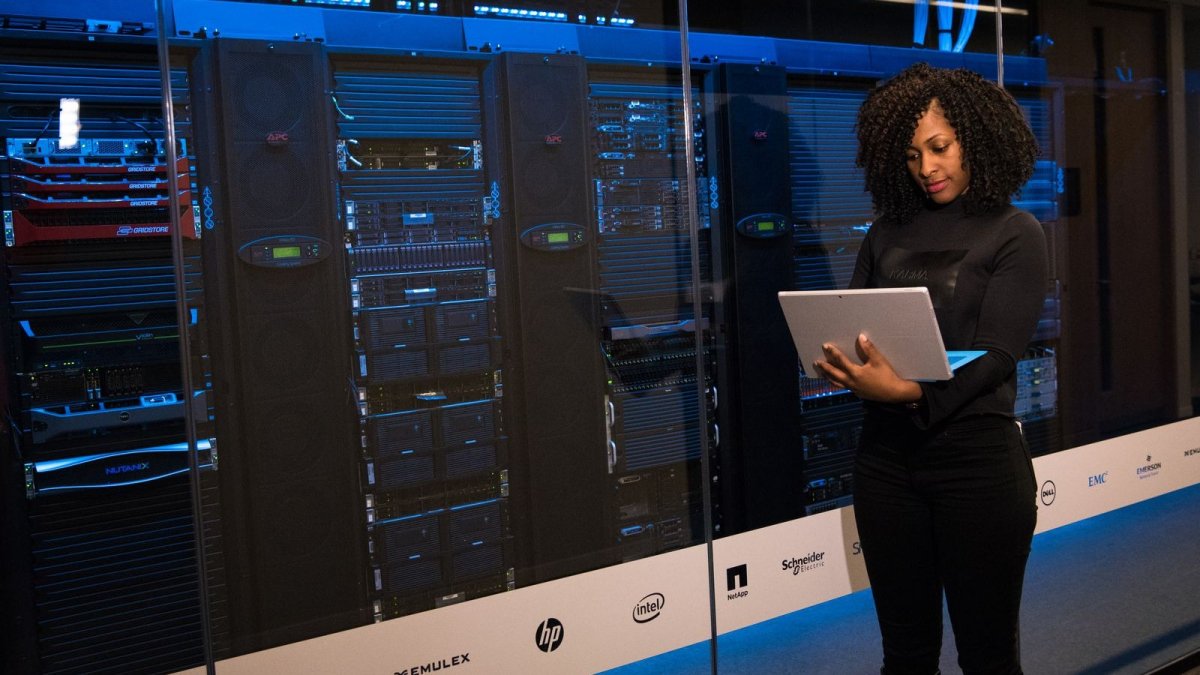
Diego Flores, head of Electronic and Digital Industries at Mexico's Ministry of Economy (Secretaría de Economía), said the increase is fueled largely by growing demand for infrastructure that supports artificial intelligence. One of the most sought-after products is specialized server racks that house the powerful processing cards used in AI systems. These components are essential for the expanding network of data centers being built in US states such as Texas and Arizona — facilities that require massive computing power to train and run AI models.
Jalisco remains at the center of Mexico's technology manufacturing industry. Often referred to as the country's "Silicon Valley," the state is home to a large concentration of electronics manufacturers, technology companies, and specialized suppliers. Guadalajara, the state capital, has become a genuine tech hub — a city where engineering students from the Universidad de Guadalajara and the Instituto Tecnológico y de Estudios Superiores de Occidente (ITESO) increasingly find themselves recruited by global firms before they even graduate.
The ecosystem extends beyond Jalisco. Querétaro has emerged as a digital economy hub, with KIO Data Centers — which has operated in Mexico for two decades — announcing a US $1.3 billion expansion plan in the state on August 14, 2026. Northern border states like Baja California, Sonora, Chihuahua, and Nuevo León have also positioned themselves as key nodes in the AI supply chain, leveraging their proximity to US markets and existing industrial infrastructure. The result is a national network of production that spans from the Pacific coast to the Gulf, connecting Mexican workers to the most dynamic sector of the global economy.
Foxconn and the Factories Powering the Boom
The corporate names behind this surge are global giants, but their impact is deeply local. Foxconn, the Taiwanese electronics company, assembles AI server equipment in Mexico through its partnership with Nvidia, a global leader in AI processor design. In March 2026, Foxconn announced investments totaling US $137 million in two of its Mexican subsidiaries and projected that its AI-related production could double during 2026. Company CEO Michael Chiang also said Foxconn plans to increase its investment in Mexico by approximately 30 percent compared with 2025.
Flextronics is also experiencing strong demand. According to the Ministry of Economy, the company expanded production by installing additional manufacturing lines in parking areas to keep pace with growing customer orders. That image — of production lines spilling out into parking lots — captures the urgency of this moment. Companies are not waiting for new facilities to be built; they are expanding wherever space allows, desperate to meet the insatiable demand for AI infrastructure.
Foxconn, Wistron, and Quanta are all building AI server assembly capacity in Mexico, creating thousands of new jobs in the process. For workers in the maquiladora sector, this represents a significant shift. While automotive jobs have long been the backbone of northern Mexico's manufacturing economy, electronics and AI hardware production often require different skills — soldering precision components, testing server racks, managing complex logistics. The transition is not always seamless, but it offers new opportunities for workers willing to adapt and for young Mexicans entering the workforce with technical training.

What This Means for Mexican Communities
For the families living in colonias near the new electronics plants, the AI boom means something concrete: paychecks. The expansion of Foxconn, Flextronics, Wistron, and Quanta facilities translates into hiring — not just for engineers and technicians, but for the support staff, security personnel, cafeteria workers, and transportation providers who serve these industrial complexes. Small suppliers — companies that provide packaging, metal components, cables, and logistics services — are also seeing increased orders, creating a multiplier effect that ripples through local economies.
In Guadalajara, the tech boom has transformed the city's identity. Young engineers and software developers now have options that didn't exist a decade ago — the choice between working for a multinational corporation or launching their own startup in the city's growing innovation districts. The presence of global tech firms has also spurred investment in education, with universities expanding their electronics and computer science programs to meet demand. For students in Jalisco's technical schools, the path from classroom to factory floor has never been shorter.
Yet the benefits are not evenly distributed. While Guadalajara and the northern border states thrive, communities in southern Mexico — where poverty rates remain highest — have yet to feel the effects of the AI boom. The Sheinbaum administration has emphasized the need to spread the benefits of nearshoring more equitably, but the reality is that the technology supply chain remains concentrated in the north and center of the country. For families in Oaxaca, Chiapas, or Guerrero, the AI revolution is still a distant rumor rather than a lived reality.
Trade Tensions and the USMCA Question
The rapid expansion comes as the United States seeks to strengthen its own technological leadership while reviewing trade policies under the United States-Mexico-Canada Agreement (USMCA). Negotiations aimed at updating the agreement began in Mexico City in late July 2026, with the US administration seeking to reduce its trade deficit with Mexico and Canada. The timing is no coincidence — Mexico's surging technology exports are a central topic in these discussions, and the outcome will shape the sector's future.
William Jackson, an economist with Capital Economics, said US officials will likely need to balance efforts to protect domestic industries with the goal of maintaining global leadership in AI. He noted that additional tariffs on AI-related products could increase costs, and that the sector may receive greater scrutiny because many components used in Mexico's factories originate in China and Taiwan. This is the central tension of the moment: Mexico's AI export boom is built on a supply chain that still depends heavily on Asian components, and any disruption to that chain — whether from tariffs, geopolitical conflict, or policy shifts — could have immediate consequences.
For the Mexican peso and the broader economy, the stakes are high. Technology exports have become a key driver of economic growth, and the Sheinbaum administration has pointed to the sector as proof of Mexico's manufacturing strength. But the same concentration that makes the boom powerful also makes it vulnerable. If US demand for AI infrastructure slows, or if trade policy turns hostile, the impact on Mexican employment and government revenues could be significant.
What to Watch For
The coming months will reveal whether the AI boom translates into better wages and stable jobs for Mexican workers, or whether it remains a high-volume, low-margin business that benefits global corporations more than local communities. The Sheinbaum administration has signaled its intention to move Mexico up the value chain — from simple assembly to design, engineering, and innovation — but that transition requires sustained investment in education, infrastructure, and research that has yet to materialize at scale.
The USMCA renegotiation will be a critical test. If the United States imposes new tariffs on AI-related products or tightens rules of origin requirements, Mexico's competitive advantage could erode quickly. Conversely, if the agreement is updated in ways that recognize the integrated nature of North American technology production, Mexico could cement its position as the indispensable manufacturing partner for the US AI industry.
For ordinary Mexicans, the promise of the AI boom is simple: good jobs, rising wages, and a more prosperous future. The risk is equally clear — dependency on a single market and a single industry, vulnerable to the whims of policymakers in Washington and the shifting strategies of global tech giants. As Mexico navigates this historic moment, the challenge is to ensure that the benefits of the AI revolution reach beyond the factory gates and into the homes, schools, and communities that have long powered the country's manufacturing engine. The opportunity is real, but so is the responsibility to build a future that works for everyone.
By Rosa Martinez, Staff Writer
This article was produced with AI-assisted research and editorial support. Sources: Mexico News Daily, Mexico's Ministry of Economy (Secretaría de Economía), Banderas News, remio.ai, Mexico Business News, Capital Economics.
What's Your Reaction?
 Like
0
Like
0
 Dislike
0
Dislike
0
 Love
0
Love
0
 Funny
0
Funny
0
 Wow
0
Wow
0
 Sad
0
Sad
0
 Angry
0
Angry
0

Latin America/Andes Correspondent at Global1.News. Based in Bogota, covering politics, environment, energy, and social movements across the Andean region. Passionate about environmental journalism and communities protecting their land.














Comments (0)