
Mexico's Battle Against Sargassum: Record Seaweed Season Tests the Riviera Maya
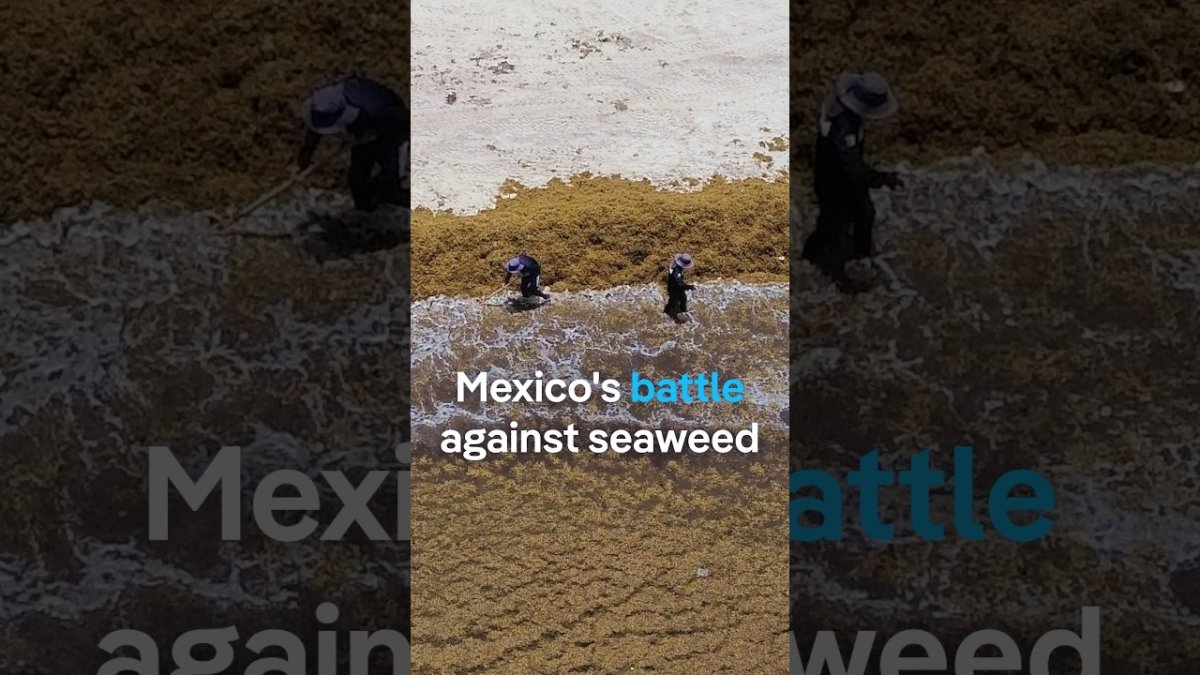
The images from the recent DW News report are hard to shake: the golden sands of Cancún, Tulum, and Playa del Carmen buried under mountains of foul-smelling, brown sludge. It is a sight that breaks the heart of any Mexican who knows the Riviera Maya not just as a tourist postcard, but as the livelihood of millions of families.
The images from the recent DW News report are hard to shake: the golden sands of Cancún, Tulum, and Playa del Carmen buried under mountains of foul-smelling, brown sludge. It is a sight that breaks the heart of any Mexican who knows the Riviera Maya not just as a tourist postcard, but as the livelihood of millions of families. As the record-breaking sargassum of 2026 continues to wash ashore, the question on every street corner in Quintana Roo—from the hotel kitchens of Playa del Carmen to the fishing docks of Mahahual—is not just about the environment, but about survival.
Mexico's Battle Against the Sargassum Surge: A Record Year Tests the Riviera Maya
Cancún, Quintana Roo – Mexico — The numbers this year are staggering, even for a region that has grown accustomed to the annual seaweed invasion. According to data released this week by officials in Quintana Roo, the state has already cleared more than 105,000 metric tons of sargassum in 2026—a figure that has already surpassed last year’s record of 92,783 tons, with months still left in the season. For the families who depend on the turquoise waters for their daily bread, this is more than a statistic; it is the smell of a crisis that threatens to redefine the Caribbean summer.
The Story Unfolds: A Season of Unprecedented Volume
This is not your typical sargassum season. NASA satellite data confirms that the Great Atlantic Sargassum Belt reached its second-highest level ever measured this June, with the western Caribbean and Gulf of Mexico basins breaking their own records. On the ground, the impact is visceral. Environmental officials report that up to 9,000 tons of sargassum are arriving daily on the coast of Quintana Roo—a staggering four times the daily amount from last year and 27 times the historic daily average.
The sheer scale has overwhelmed even the most prepared municipalities. By late June, a local monitoring network rated 92.5% of Quintana Roo's beaches as having "excessive" sargassum. Tulum and Mahahual have been the hardest hit, their once-pristine shores transformed into composting heaps that require constant mechanical raking and manual removal. While levels have begun to ease slightly in recent days, the consensus among scientists and local officials is clear: 2026 is on pace to be the worst year on record, and the season is far from over.
The Federal Response: Sheinbaum’s MX$2.64 Billion Strategy
In a decisive move that underscores the severity of the crisis, President Claudia Sheinbaum unveiled a MX$2.64 billion (roughly US$150 million) strategy on July 30 at Palacio Nacional. Flanked by Navy Secretary Raymundo Pedro Morales Ángeles, Environment Secretary Alicia Bárcena, and Tourism Secretary Josefina Rodríguez Zamora, the President presented a plan that shifts the priority from cleaning beaches to stopping the sargassum at sea. She had personally toured the coastline by helicopter from Tulum to Puerto Morelos, witnessing the scale of the problem firsthand.
The federal plan concentrates on five critical destinations—Cancún, Playa del Carmen, Puerto Morelos, Tulum, and Mahahual—covering 40 to 50 kilometers (about 25 to 31 miles) of coastline. The strategy includes the deployment of two new tugboats, six coastal harvesting vessels, expanded ocean barriers, and upgraded beach-cleaning equipment. A first phase will draw MX$768.7 million of the total budget, with the Secretaría de Marina (SEMAR) taking the operational lead. This represents the earliest and largest response in Mexican history, with the Navy installing about 9,500 meters of offshore floating barriers and mobilizing thousands of beach cleanup workers across the state.
The Economic Toll on the Riviera Maya
For Governor Mara Lezama, the crisis is not merely an environmental issue; it is an economic emergency that touches every corner of the state’s economy. Lezama has stated that sargassum management consumes about 11% of the state's economy, or roughly $2 billion a year. The Riviera Maya hotel association estimates its members spend about $150 million annually just removing algae from their beaches—money that could otherwise go to wages, maintenance, or lowering prices for visitors.
The tourism sector, the lifeblood of Cancún and Playa del Carmen, is feeling the pressure. While President Sheinbaum has encouraged travelers not to cancel their Quintana Roo trips, insisting that many beaches remain clean despite the surge, the optics of brown water and heavy machinery on the sand are hard to overcome. For the waiters, bartenders, and tour operators who rely on a steady stream of international visitors, every canceled reservation is a direct hit to their household income. The state’s economy is resilient, but the constant battle against the seaweed is draining resources that could be used for infrastructure, education, and healthcare.
Communities on the Front Line: The Human Cost
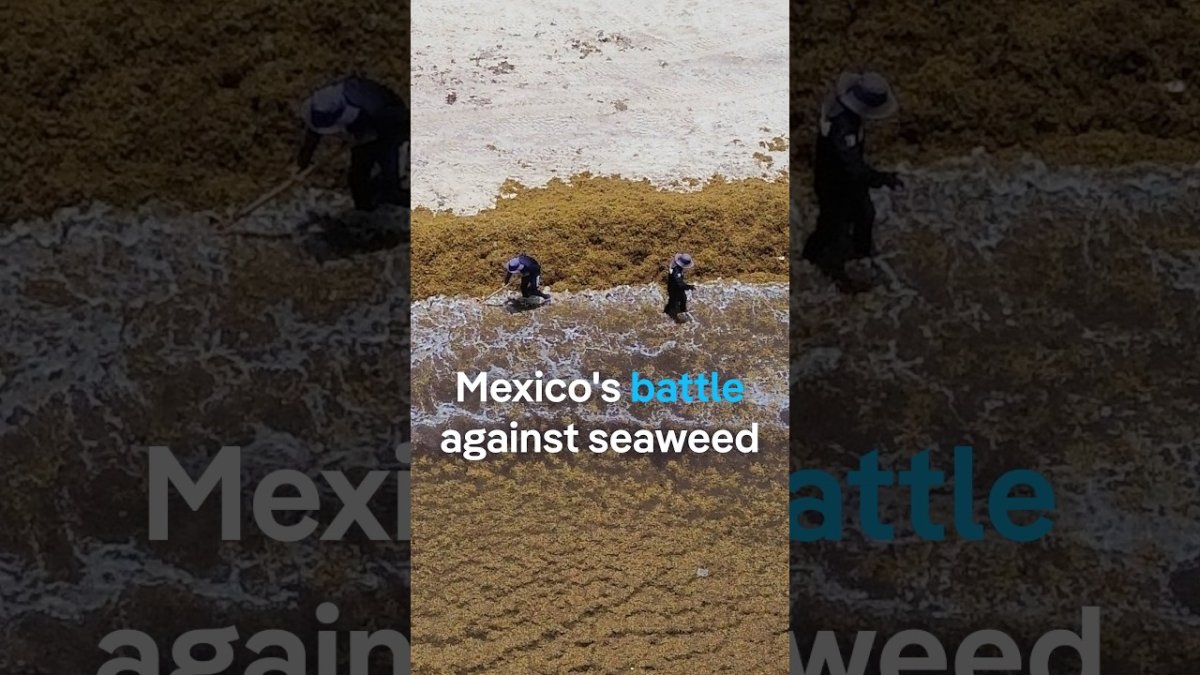
Behind the macro numbers are the stories of the people who live and work on these beaches. In the colonias of Playa del Carmen, the sargaceros—the workers hired to rake and haul the seaweed—start their shifts before dawn, battling the heat and the stench of decomposing algae. They are the unsung heroes of this crisis, performing back-breaking labor for daily wages, often with little protective gear. Their work is essential, but it is also a stark reminder of the fragility of the local economy.
Fishermen in Puerto Morelos and Mahahual report that the sargassum is not just a nuisance; it is destroying their livelihoods. The thick mats of algae clog boat engines, entangle fishing nets, and drive fish away from the coast. Beach vendors, or vendedores, who sell handmade crafts and fresh coconut water to tourists, have seen their daily earnings plummet as visitors avoid the affected stretches of sand. The crisis has also reached the ejidos and small communities that depend on the sea, where the smell of rotting seaweed has become a constant companion, affecting quality of life and even property values.
From Waste to Wealth: The Circular Economy Push
In the face of this adversity, Mexican ingenuity is shining through. Beyond collection, officials are outlining ambitious plans to turn the seaweed into a business. Nearly 200 initiatives nationwide are already working to convert sargassum into biofuel, fertilizer, bioplastics, paint, and other materials. Currently, 39 companies sell sargassum-based products such as biogas, bioethanol, and sodium alginate, a thickening agent used in food and cosmetics.
The government’s vision is to scale this up. Plans are underway to build a circular-economy hub on about 99 acres in Puerto Morelos to process the material at industrial scale. Tourism Secretary Josefina Rodríguez Zamora stated that the goal is to make Mexico an international reference point on sargassum management. This is not just about waste disposal; it is about creating new industries and jobs. The interest is already international: the Dominican Republic has expressed interest in buying Mexican-built collection vessels, and an international meeting is set for October 1 and 2, bringing together Caribbean nations affected by sargassum, along with Japan, to share technology and strategies.
What to Watch For: The Road Ahead
As the 2026 season continues, the immediate focus remains on mitigation. The levels of sargassum have begun to ease slightly in recent days, offering a glimmer of hope, but the consensus is that this will still be a record year. The October summit in Mexico will be a critical moment for regional cooperation, as Caribbean nations grapple with a problem that knows no borders. Scientists trace the modern crisis to 2011, when nutrient-rich currents pushed the algae out of the Sargasso Sea and into the tropical Atlantic, fueling blooms that now affect dozens of countries.
For the families of Quintana Roo, the hope is that the federal investment will yield results before the next season. The new harvesting vessels and expanded barriers are expected to make a difference, but the scale of the challenge is immense. The government’s commitment to a circular economy offers a long-term vision, but the immediate reality is that the sargaceros will be back on the beaches tomorrow, and the day after, doing the hard work of keeping the Riviera Maya beautiful. The world is watching, and Mexico is determined to lead the way in turning this ecological disaster into an opportunity for innovation and resilience.
By Rosa Martinez, Staff Writer
This article was produced with AI-assisted research and editorial support. Reporting is based on sources cited in the article.
What's Your Reaction?
 Like
0
Like
0
 Dislike
0
Dislike
0
 Love
0
Love
0
 Funny
0
Funny
0
 Wow
0
Wow
0
 Sad
0
Sad
0
 Angry
0
Angry
0

Latin America/Andes Correspondent at Global1.News. Based in Bogota, covering politics, environment, energy, and social movements across the Andean region. Passionate about environmental journalism and communities protecting their land.














Comments (0)