
Marcos Calls Garbage Problem 'Critical' But Stops Short of 'Crisis'
In a recent ANC 24/7 report, the question was posed plainly: is the Philippines facing a garbage crisis, or not? The video highlights how this exact debate has resurfaced for years, with the government seemingly unable to agree on a label, even as trash chokes the nation's waterways and threatens the daily lives of millions.
In a recent ANC 24/7 report, the question was posed plainly: is the Philippines facing a garbage crisis, or not? The video highlights how this exact debate has resurfaced for years, with the government seemingly unable to agree on a label, even as trash chokes the nation's waterways and threatens the daily lives of millions. For ordinary Filipinos in Metro Manila, the answer is not a matter of semantics—it is the smell in the air, the floodwater in their living rooms, and the mountains of waste piled along the very channels meant to protect them.
Marcos Calls Garbage Problem 'Critical' But Stops Short of 'Crisis' — As Manila Bay Chokes on Trash
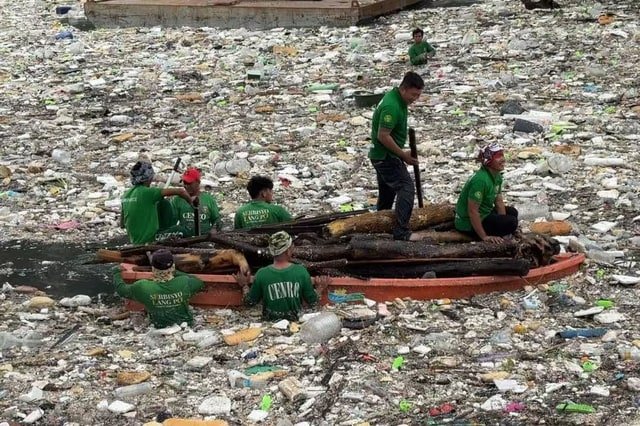
Manila, Philippines – this week — The enhanced southwest monsoon, or Habagat, did more than bring heavy rains to Metro Manila; it dragged a "sea of trash" into Manila Bay and its tributaries, clogging pumping stations and exposing a decades-old failure in waste management. President Ferdinand Marcos Jr. personally inspected the damage at the Diokno pumping station along Jose W. Diokno Avenue in Pasay City and the Redemptorist Water Channel in Baclaran, Parañaque City, where tons of garbage were being hauled out by workers in what has become a grim, recurring ritual.
The Semantics of a 'Critical' Problem
Standing before the debris, President Marcos acknowledged the severity of the situation but carefully avoided the term "crisis." "Just look at it. If that's not look critical to you, it does to me. So yes, I wouldn't call it a garbage crisis but that is the problem that we are facing," he told reporters. The distinction may seem trivial, but it carries weight in a nation where labeling something a "crisis" often triggers a different level of government response and international scrutiny.
Public Works Secretary Vince Dizon, however, was far more direct. "This is really a crisis. This is really severe," he insisted, describing how clean-up efforts are immediately undone. "Despite our efforts to clean our waterways, the garbage keeps coming back. In our experience, after conducting a clean-up effort, the next day, it is filled with garbage again, not just in Metro Manila, but in some areas in Bulacan, Pampanga." The contradiction between the President's cautious language and his own cabinet secretary's alarm underscores the very confusion the ANC report highlighted: the government cannot even agree on the nature of the problem, let alone the solution.
The Numbers Behind the Mess
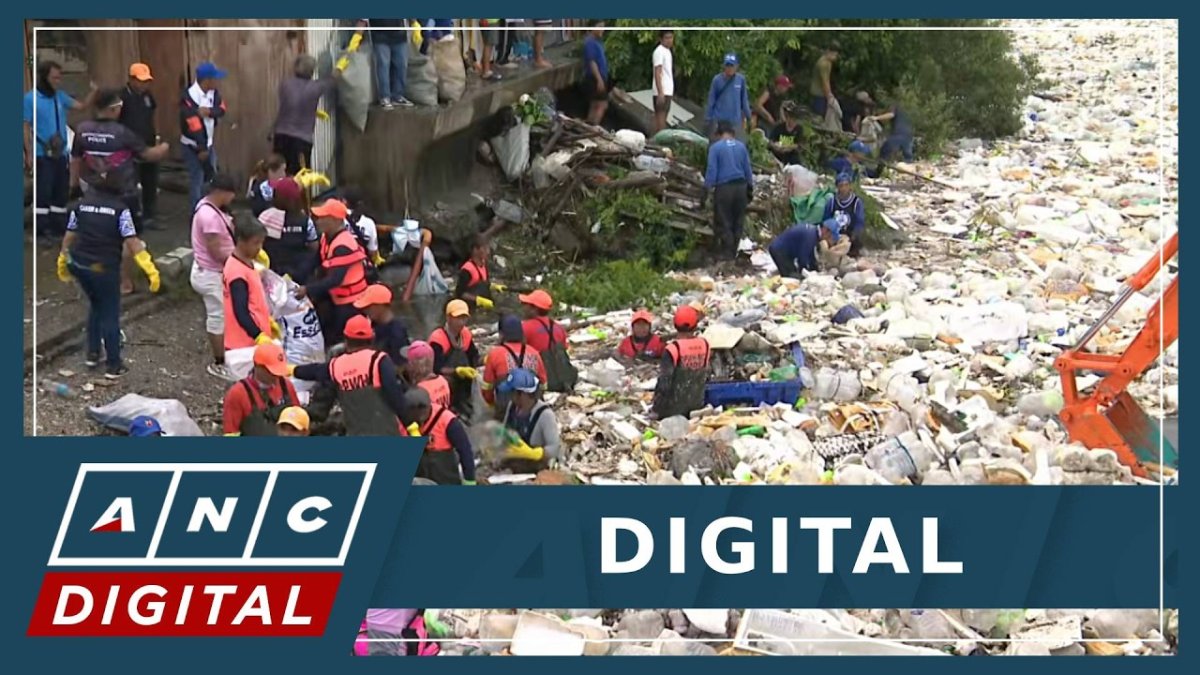
The scale of the recent clean-up is staggering. The Metropolitan Manila Development Authority (MMDA) has hauled nearly 750 metric tons of garbage and debris from the Redemptorist Water Channel in Parañaque since Monday alone—roughly 203 truckloads of waste. Earlier in the week, reports indicated 418.4 metric tons had been removed, equivalent to 96 dump trucks, but the figure has since climbed as workers continue to dig out the channel. This is not just unsightly litter; it is a direct threat to public safety and flood control.
Parañaque Mayor Edwin Olivarez offered a crucial detail that complicates the narrative of irresponsible citizens. He said a broken trash flap, or trash trap, allowed debris from Manila Bay to flow back into the channel. "The garbage did not come from inland," he explained. This admission reveals a systemic failure: even if every Filipino disposed of waste properly, the infrastructure designed to catch it is crumbling. The trash trap, meant to be a first line of defense, failed at a critical moment, turning the channel into a catch-all for the bay's floating garbage.
A History of Broken Promises and Tragedy
This is not a new problem, as the ANC report reminds us. The Philippines has been here before, with devastating consequences. On July 10, 2000, the Payatas dumpsite in Quezon City experienced a catastrophic trash slide that killed more than 200 people, most of them garbage pickers and their families who lived on the mountain of waste. That tragedy spurred the passage of the Ecological Solid Waste Management Act of 2000, or RA 9003, which mandated the closure of open dumpsites and a shift to sanitary landfills. Yet more than two decades later, enforcement remains weak, and a similar trash slide tragedy occurred again in early 2026, prompting renewed scrutiny of a law that has largely remained on paper.
The pattern is painfully familiar: heavy rains come, garbage clogs the waterways, flooding worsens, officials make promises, and the cycle repeats. The ANC report asks why it takes a disaster for the conversation to return. The answer lies in a combination of underfunded local governments, a powerful plastics industry, and a culture of convenience that prioritizes sachets and single-use plastics over long-term sustainability. For the urban poor, who often have no access to regular garbage collection, dumping waste into the nearest estero is not a choice but a survival mechanism.
The Human Cost of Clogged Waterways
The flooding connection is the most immediate and deadly consequence of this garbage problem. Clogged waterways worsen monsoon flooding in low-lying Metro Manila communities, and the recent rains have already left thousands of families in evacuation centers. In barangays along the Pasig River and Manila Bay, residents are no strangers to waist-deep floodwaters that carry not just water, but human waste, medical debris, and toxic chemicals. The health risks are immense—from leptospirosis to dengue—and the economic toll is equally severe, as workers miss days and homes are damaged.
For families in these communities, the debate over whether to call this a "crisis" is an academic exercise. They live it daily. A sari-sari store owner in Baclaran, whose livelihood depends on dry goods, watches helplessly as floodwaters ruin her inventory. A jeepney driver in Pasay navigates streets that turn into rivers, losing income with every hour of delay. The garbage is not just an environmental issue; it is a social justice issue that disproportionately affects the poorest Filipinos who have the least resources to adapt.
Fines, Facilities, and the Politics of Blame
President Marcos has been cool to the idea of stiffer littering fines, a proposal that the Metro Manila Council recently approved by raising the penalty from P500 to P5,000. "It's not useful to fine people for not throwing their garbage if there is no place to put their garbage," he argued. "We have to provide facilities where people can throw garbage." He cited Japan as a model, where citizens carry their trash home because a reliable collection system exists. The logic is sound, but it places the burden on infrastructure that has been neglected for decades.
Instead, Marcos is pushing for waste-to-energy plants, a technology he mentioned in his July State of the Nation Address. He claims that "the landfill is already full and it is becoming more costly," and the Department of Energy will hold an auction "in a couple of months." He optimistically suggested facilities might begin operating "in a year, a year and a half." But this timeline is ambitious, and the technology remains highly controversial. Greenpeace Philippines has called waste-to-energy a "dangerous, costly misstep," warning that incineration would "release carcinogenic dioxins, toxic ash, and greenhouse gases—all while creating an insatiable financial demand for the very disposable materials we need to eliminate."
Greenpeace and the Push for Real Solutions
Environmental groups are not just opposing waste-to-energy; they are offering concrete alternatives. Greenpeace is urging the government to declare sachets and problematic plastics as non-environmentally acceptable products (NEAP) under RA 9003. This would effectively ban the most common forms of single-use plastic that clog the nation's waterways. They also advocate for institutionalizing refill and reuse systems and strengthening the Extended Producer Responsibility Act, which would force corporations to take responsibility for the entire lifecycle of their products.
The battle is not just about policy; it is about power. The plastics industry is a powerful lobby in the Philippines, and sachets are deeply embedded in the economy. For millions of low-income Filipinos, buying a single sachet of shampoo or detergent is more affordable than buying a full bottle. Any solution must address this economic reality, not just moralize about consumer behavior. The government's role is to create systems that make the right choice the easy choice, not to punish individuals for systemic failures.
What to Watch For
The coming months will be critical. The Department of Energy's auction for waste-to-energy facilities will test whether the government can deliver on its promises or whether this becomes another stalled project. The implementation of the higher littering fines will reveal whether local governments have the capacity to enforce them fairly. And the continued operation of trash traps and pumping stations will determine whether the next monsoon season brings the same scenes of garbage-choked waterways.
But the deeper question remains: will the government finally treat this as the systemic crisis it is? Secretary Dizon's blunt assessment suggests that at least some officials understand the urgency. The President's refusal to use the word "crisis" may be politically motivated, but it does not change the reality on the ground. The ANC report's central question—why does this problem keep coming back?—has a simple answer: because the root causes have never been addressed. Until the Philippines invests in comprehensive waste management infrastructure, holds corporations accountable, and provides viable alternatives to single-use plastics, the garbage will keep coming back, and so will the floods.
For now, the workers in Baclaran and Pasay continue their exhausting task, hauling truckload after truckload of waste from channels that should be carrying water, not garbage. Their labor is a testament to the resilience of the Filipino spirit, but it is also a damning indictment of a system that has failed them. The next heavy rain is not a question of "if" but "when," and unless meaningful change happens, we will be having this same conversation again, with the same images of trash-filled waterways and the same empty promises from our leaders.
By Bella Reyes, Staff Writer
This article was produced with AI-assisted research and editorial support. Reporting is based on sources cited in the article.
What's Your Reaction?
 Like
0
Like
0
 Dislike
0
Dislike
0
 Love
0
Love
0
 Funny
0
Funny
0
 Wow
0
Wow
0
 Sad
0
Sad
0
 Angry
0
Angry
0

Philippines/Southeast Asia Correspondent at Global1.News. Manila-based journalist covering Philippine politics, environment, maritime security, and social issues. Passionate about marine conservation and the communities protecting the Philippines' natural heritage.











Comments (0)