
What Would Europe Do in a Taiwan Crisis?
In the wake of recent Chinese coast‑guard operations near Taiwan, the strategic calculus of the United States and its European partners demands renewed scholarly attention.
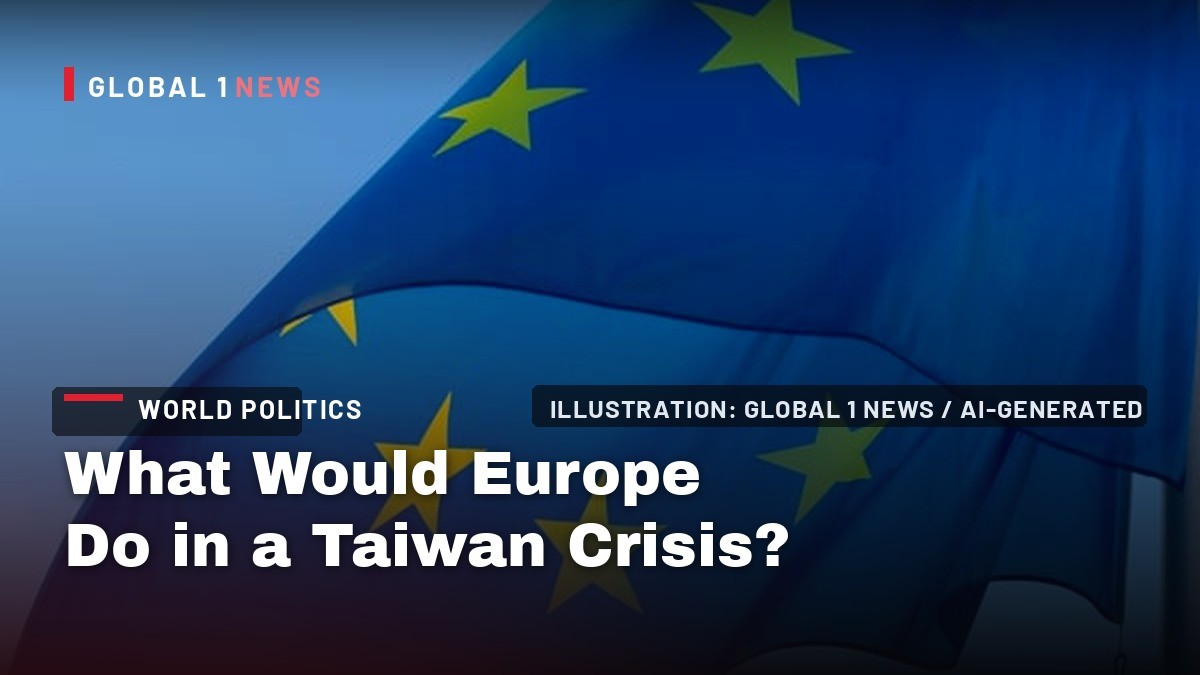
In the wake of recent Chinese coast‑guard operations near Taiwan, the strategic calculus of the United States and its European partners demands renewed scholarly attention. The incidents of June and July 2026—when Beijing described patrols east of the island as lawful maritime enforcement while Taiwan decried an attempt to assert jurisdiction over commercial shipping—have already illustrated how divergent narratives can fracture allied responses. As Washington contemplates how to marshal European economic leverage against a potential blockade, it must reckon with the structural realities of the European Union’s foreign‑policy architecture, the lingering ambiguities of international law, and the broader context of trans‑Atlantic security cooperation.
Legal Ambiguity and the Narrative Contest
The first dimension of any Taiwan contingency is the contested legal framing of Chinese actions. Beijing’s official explanation, as articulated during the June 2026 patrols, emphasizes customs regulation and maritime safety, explicitly denying that its vessels are imposing a blockade or engaging in hostilities. By contrast, Taipei interprets the same maneuvers as an attempt to restrict access to the island, a view that has been echoed by Washington. This divergence creates a “deliberate ambiguity” that Beijing can exploit, forcing potential allies to choose between competing legal narratives.
European governments, as observed in the diplomatic exchanges following the June and July incidents, have been split between calls for restraint and demands for a decisive Chinese withdrawal. The lack of a unified legal assessment hampers the ability of the EU to invoke collective measures such as sanctions, which under the Common Foreign and Security Policy (CFSP) require unanimity. Consequently, the legal ambiguity surrounding a possible blockade becomes a strategic lever for Beijing, complicating the coordination of a coherent Western response.
EU Institutional Constraints on Rapid Economic Action
The European Union’s institutional design, forged primarily around economic integration, imposes procedural hurdles on foreign‑policy initiatives. While the single market and, for many members, the euro facilitate internal cohesion, foreign and security policy remain largely intergovernmental. The CFSP’s unanimity requirement for sanctions—one of the most potent tools in a Taiwan crisis—means that any decision to impose economic costs on Beijing must first navigate divergent national interests.
Even as the European Parliament has formally called for contingency planning against scenarios such as an economic blockade of Taiwan, the translation of such preparatory measures into an actionable, collective response remains uncertain. The Parliament’s resolutions signal political will, yet the decision‑making process still rests with national governments, whose assessments of the trigger thresholds for sanctions may differ markedly from Washington’s expectations.
Strategic Leverage and Beijing’s Counter‑Measures
Beijing’s capacity to exploit European disunity extends beyond diplomatic rhetoric. The People’s Republic retains a near‑monopoly on critical minerals and rare‑earth elements, assets it can wield as economic coercion against individual European states or corporations. By threatening targeted restrictions or offering selective incentives, China can sow hesitation within the EU, prompting some members to prioritize national economic interests over collective security commitments.
This lever is amplified by the EU’s ongoing efforts to diversify supply chains away from China—a trend noted in recent reporting on European attempts to reduce reliance on Chinese technology and raw materials. While diversification mitigates long‑term vulnerability, it does not eliminate the immediate risk that Beijing could impose sector‑specific sanctions, thereby fracturing consensus on broader punitive measures.
Trans‑Atlantic Dynamics and the Shifting Burden of Security
The broader context of NATO’s 2026 summit underscores a recalibration of the trans‑Atlantic security burden. European allies and Canada have acknowledged that they now finance the vast majority of security assistance to Ukraine, reflecting a gradual shift in the allocation of defense responsibilities. Simultaneously, reports indicate a growing European interest in developing indigenous defense capabilities, partly driven by concerns over the reliability of U.S. commitments.
These developments suggest that, in a Taiwan crisis, Europe may be less inclined to automatically align with Washington’s strategic preferences. While many European governments continue to affirm the importance of the alliance, the evolving fiscal and political calculus could lead some to adopt a more cautious stance, weighing the economic and political costs of confronting China against the perceived reliability of U.S. support.
Contingency Planning Horizons: The 2028 Election Cycle
Looking ahead, the timing of Taiwan’s next presidential election in 2028 provides a useful planning horizon for both Washington and its European partners. The election follows the regular four‑year cycle established after the January 2024 vote, and a new administration in Taipei could adopt policies that heighten tensions with Beijing. While the source material cautions against predicting a crisis in 2028, it emphasizes the importance of having robust contingency plans in place before any new political configuration in Taiwan materializes.
Strategic foresight therefore requires that the United States encourage European allies to develop pre‑emptive response frameworks that can be activated swiftly, should Beijing’s actions cross the threshold that triggers collective sanctions or other economic measures. Such frameworks must account for the EU’s unanimity requirement, the potential for Chinese counter‑leverage, and the internal debates that may arise within member states.
Policy Recommendations for Washington and Europe
Given the structural constraints identified, a pragmatic approach for Washington is to engage in sustained diplomatic outreach that emphasizes shared strategic interests while respecting the EU’s decision‑making processes. This includes encouraging European ministries—such as the Ministry of Foreign Affairs and the Ministry of Economic Affairs—to conduct joint scenario‑planning exercises, and to develop clear criteria for what constitutes an “armed attack” or “blockade” under international law.
Simultaneously, the United States should consider offering targeted support that aligns with European priorities, such as technology sharing in maritime domain awareness or joint research on supply‑chain resilience. By providing tangible incentives, Washington can help offset the temptation for individual European states to prioritize national economic concerns over collective security actions.
Future Outlook: Balancing Unity and Autonomy
The interplay between legal ambiguity, institutional constraints, and strategic competition will shape the efficacy of any Western response to a potential Taiwan blockade. Europe’s capacity to impose economic costs on Beijing hinges on its ability to reconcile national divergences and to translate parliamentary resolutions into actionable policy. Meanwhile, Beijing’s exploitation of supply‑chain leverage underscores the need for diversified procurement strategies across the EU.
In sum, the coming months will be decisive for calibrating trans‑Atlantic coordination. If Washington can successfully nudge European governments toward pre‑emptive contingency planning—while acknowledging the EU’s procedural realities—it may preserve the credibility of a unified front in the face of Beijing’s calculated ambiguity. The scholarly imperative, therefore, is to monitor how these diplomatic and institutional dynamics evolve, and to assess whether the alliance can maintain both unity of purpose and respect for the distinct decision‑making architectures that define European foreign policy.
This article was produced with AI-assisted research and editorial support. Reporting is based on the source material cited below. Sources: The Diplomat; thediplomat.com; Global1.News (09 October 2026).
By Prof. David Park, Staff Writer
What's Your Reaction?
 Like
0
Like
0
 Dislike
0
Dislike
0
 Love
0
Love
0
 Funny
0
Funny
0
 Wow
0
Wow
0
 Sad
0
Sad
0
 Angry
0
Angry
0

East Asia/Technology Correspondent at Global1.News. Seoul-based voice covering Korean politics, technology, business, and culture. Analyzes how technology and geopolitics intersect across East Asia.













Comments (0)