
MPs seek to overturn ruling that stops police being sued for failings
Backbench MPs are rallying to overturn a 2025 Court of Appeal judgment that grants police officers sweeping civil‑immunity for actions taken during criminal investigations.
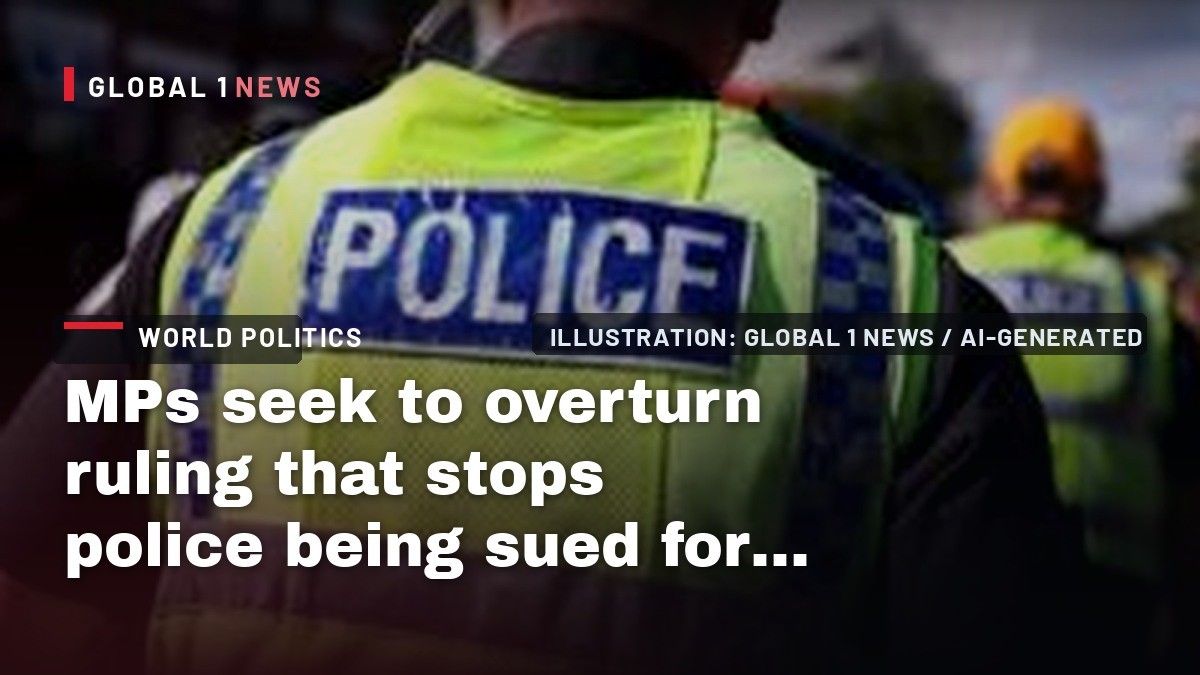
Backbench MPs are rallying to overturn a 2025 Court of Appeal judgment that grants police officers sweeping civil‑immunity for actions taken during criminal investigations. The ruling, which applies across England and Wales, bars victims of serious police failings from suing the force, even where evidence has been fabricated, confidential information disclosed recklessly, or negligent conduct has placed lives at risk. The proposed amendment, tabled by Conservative Andrew Mitchell and Labour MP Jess Phillips, seeks to carve out a narrow exception to this immunity, arguing that the current legal shield creates an “accountability gap” for victims of domestic abuse, sexual violence and other grave offences.
What the Court of Appeal decided
The 2025 judgment extended the doctrine of “core immunity” – traditionally reserved for witnesses speaking in court – to encompass a far broader swathe of police activity. The court held that officers are immune from civil litigation not only when they give evidence, but also for any conduct or statements made as part of an investigation that could lead to prosecution. This expansive reading means that most civil claims, including those alleging serious human‑rights breaches or data‑protection failures, are blocked.
Criminal prosecution of individual officers and internal misconduct procedures remain available, but the ruling effectively bars victims from seeking civil redress for the harms caused by investigative missteps. The decision was prompted by a case involving a domestic‑violence survivor whose safe address, supplied to Sussex Police, was carelessly passed to the Crown Prosecution Service and then disclosed in open court, exposing her to her abuser once more.
The survivor’s case that sparked the controversy
The victim, who fled an abusive partner to a secret refuge, found her new address entered into a Sussex Police file sent to the CPS without a clear confidentiality flag. During a bail hearing, a CPS lawyer read the address aloud, enabling the abuser to locate her again. The woman testified that the breach stripped her sanctuary of safety and left her living with ongoing fear and trauma.
She pursued claims against both the police and the CPS, alleging that their failures forced her to flee, caused loss of earnings, and inflicted a psychiatric injury. After an initial rejection, her claim was reinstated on appeal, only to be struck out again following the Court of Appeal’s immunity ruling. The case highlights the practical consequences of the legal shield: victims are left without a civil avenue to hold authorities accountable for exposing them to further danger.
Parliamentary response: Mitchell and Phillips’ amendment
Conservative MP Andrew Mitchell and Labour MP Jess Phillips have jointly submitted an amendment to a forthcoming bill, slated for debate next week. Their proposal would preserve immunity only while officers act as witnesses, removing it for any preparatory actions linked to criminal proceedings, especially where “specified grave failings” occur. Mitchell warned that the current “police misconduct immunity” threatens “devastating consequences for victims” and urged legislators to close the loophole.
The amendment reflects a cross‑party concern that the judiciary’s expansion of immunity undermines the very purpose of civil redress – to provide a remedy when criminal sanctions are insufficient. By limiting the shield, MPs hope to restore a route for victims to seek compensation and to signal that police forces cannot operate without the prospect of civil accountability.
Human‑rights implications and the Kololo case
Mitchell cited the wrongful conviction of Ali Kololo, a Kenyan woodcutter who spent eleven years in prison after being implicated in a 2011 attack on British tourists in Kenya. A senior Metropolitan Police officer, called as a prosecution witness, omitted crucial evidence, contributing to Kololo’s conviction and a death sentence. Kololo, represented by the human‑rights charity Reprieve, is now suing the Met, which intends to rely on core immunity – a stance bolstered by the Court of Appeal’s ruling.
The Kololo case underscores how the immunity doctrine can extend beyond domestic policing to affect overseas investigations where UK officers testify. If the principle remains unchallenged, it could shield officers from civil liability even when their testimony directly contributes to miscarriages of justice abroad, raising profound questions about the UK’s commitment to international human‑rights standards.
Voices from civil‑society: the risk of an accountability gap
Kate Ellis of the Centre for Women’s Justice warned that the ruling could enable police forces to evade responsibility for “serious mistakes” in investigations of rapists, stalkers and domestic abusers. She argued that without the threat of civil claims, forces may feel less pressure to adhere to robust investigative standards, potentially endangering vulnerable victims.
Ellis’s concerns echo broader anxieties within victim‑support organisations that the legal shield creates a de‑facto exemption for police misconduct, eroding public confidence in the criminal justice system. The fear is that, absent civil liability, the only recourse for victims will be internal disciplinary processes, which have historically been criticised for their lack of transparency and effectiveness.
Government and police responses
A government spokesperson noted that the Home Secretary and the Lord Chancellor have commissioned a review into police accountability, citing longstanding concerns from policing leaders, officers, victims and families that the current system is “not fit for purpose”. The spokesperson stressed that any legislative changes will be considered alongside the findings of this review, suggesting a broader, systemic examination of police accountability mechanisms.
Both Sussex Police and the National Police Chiefs Council declined to comment on the amendment or the Court of Appeal ruling. The Metropolitan Police, while refusing to comment on the ongoing civil claim by Kololo, expressed sympathy for the claimant and the victims of the original crime, indicating a cautious approach to public statements while the legal battle unfolds.
What lies ahead: Supreme Court appeal and parliamentary debate
The Court of Appeal decision may be subject to a further challenge at the Supreme Court later this month, offering another judicial avenue to potentially reverse or narrow the immunity scope. Simultaneously, the amendment proposed by Mitchell and Phillips will be debated in the House of Commons on Tuesday, placing the issue at the centre of parliamentary scrutiny.
Should the Supreme Court uphold the Appeal court’s broad immunity, the onus will fall on Parliament to legislate a statutory carve‑out. Conversely, a Supreme Court reversal could render the amendment redundant but would still signal parliamentary intent to protect victims’ rights. Either outcome will shape the balance between police operational freedom and civil accountability, a tension that sits at the heart of the UK’s criminal‑justice reform agenda.
This article was produced with AI-assisted research and editorial support. Reporting is based on the source material cited below. Sources: BBC News UK; bbc.co.uk; Global1.News (12 October 2026).
By Erica Thornton, Staff Writer
What's Your Reaction?
 Like
0
Like
0
 Dislike
0
Dislike
0
 Love
0
Love
0
 Funny
0
Funny
0
 Wow
0
Wow
0
 Sad
0
Sad
0
 Angry
0
Angry
0

US Politics and Policy Correspondent at Global1.News. Based in Washington DC, covering American politics, policy, elections, and the courts. Knows how the system works and tells you what it actually means.












Comments (0)