
Land or Death: A Colombian Grandmother's Unarmed Stand Against the Drug War
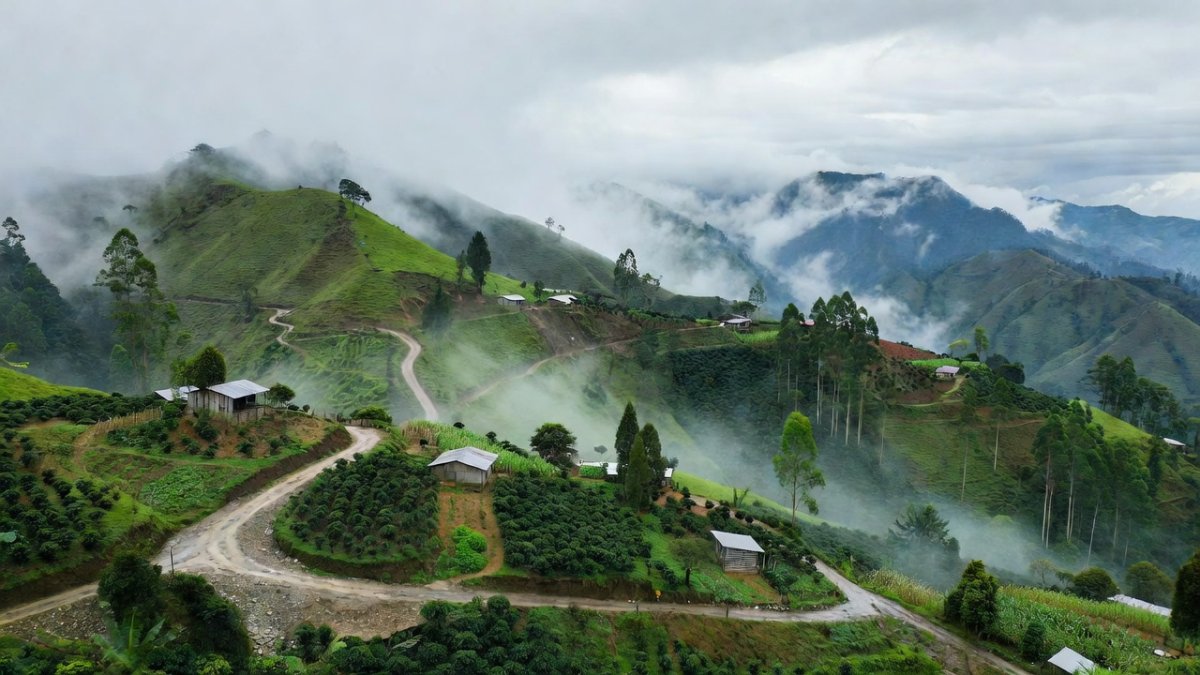
In the mist-covered mountains of northern Cauca, Colombia, a grandmother carrying a wooden staff has become one of the most formidable defenders of Indigenous land in the Western Hemisphere. Celia Umenza Velasco leads the Nasa people’s unarmed Indigenous Guard against heavily armed groups fighting for control of the world’s largest cocaine-producing region — and 2026 data shows the stakes have never been higher, with record coca cultivation and at least 90 social leaders killed in seven months.
In the mist-covered mountains of northern Cauca, Colombia, a grandmother carrying a wooden staff has become one of the most formidable defenders of Indigenous land in the Western Hemisphere. Celia Umenza Velasco leads the Nasa people’s unarmed Indigenous Guard against heavily armed groups fighting for control of the world’s largest cocaine-producing region — and 2026 data shows the stakes have never been higher, with record coca cultivation and at least 90 social leaders killed in seven months.
Land or Death: A Colombian Grandmother’s Unarmed Stand Against the Drug War
Bogotá, Colombia – August 28, 2026 — Al Jazeera English’s Witness documentary “Land or Death: Colombia’s Indigenous Land Wars” captures a fierce grandmother defending her community in the dangerous Cauca region, where the post-peace vacuum has turned land defense into a matter of survival.
The Grandmother Who Stands Unarmed
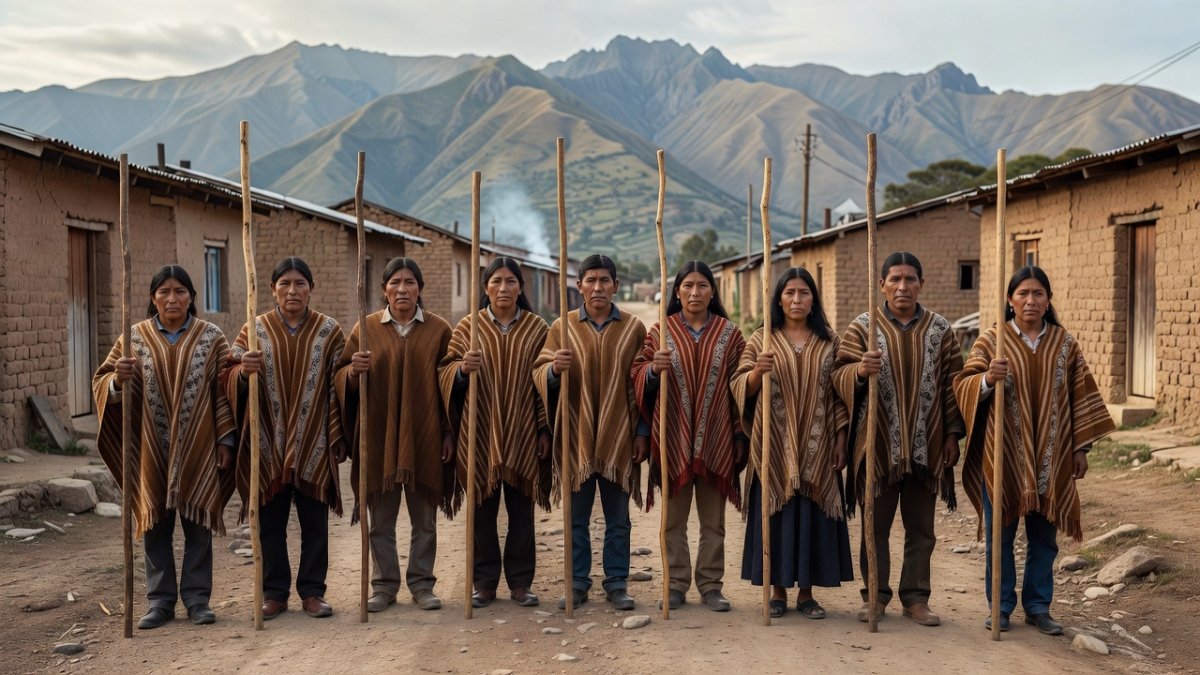
Celia Umenza Velasco does not carry a rifle. She does not wear a flak jacket, nor does she command a battalion of soldiers. Instead, the fierce Colombian grandmother walks the muddy, mountain roads of northern Cauca with a wooden staff—a bastón—clutched in her weathered hand. That staff is her weapon, her shield, and her badge of authority. As one of the highest-ranking members of the Nasa people’s Indigenous Guard, an unarmed civilian defense force, Celia stands between her community and the heavily armed groups that fight for control of the world’s largest cocaine-producing region. She is a leader of the Nasa, the largest Indigenous group in Colombia, hailing from the northern Cauca region. Her work is rooted in the Cxhab Wala Kiwe—"Great People’s Territory" in Nasa Yuwe—and the ACIN, the Association of Indigenous Councils of the North of Cauca. For generations, the guardia indígena has exercised authority under Indigenous customary law, using only wooden staffs to confront guerrillas, paramilitaries, and drug cartels. They do not seek to kill; they seek to expel. They do not wage war; they wage peace. But in a country where the state has ceded vast territories to armed actors, peace is a dangerous occupation.
The documentary "Land or Death: Colombia’s Indigenous Land Wars," aired by Al Jazeera English’s Witness program on May 30, 2022, and directed by Sebastian Pena and Jesper Klemedsson Sotomayor, captures Celia’s daily reality. She is not a symbolic figurehead; she is on the front lines, negotiating with armed commanders, dismantling illegal checkpoints, and recovering kidnapped community members. The film’s title is not hyperbole. For Celia and the Nasa, the choice is stark: defend the land or die trying. The documentary shows her walking into guerrilla camps unarmed, her staff held high, demanding that fighters leave Nasa territory. It shows her organizing community assemblies where thousands of Indigenous people gather to collectively decide their next move. This is not passive resistance; it is active, organized, and deeply rooted in a worldview that sees land not as property, but as the source of life, culture, and spiritual identity. The guardia indígena is a standing army of peace, and Celia is one of its most formidable generals.
Land or Death: Coca, Power Vacuums and the Post-Peace War
The 2016 peace agreement between the Colombian government and the Revolutionary Armed Forces of Colombia (FARC) was supposed to end a five-decade conflict. Instead, it created a lethal power vacuum. When the FARC demobilized, they left behind vast swaths of territory—particularly in the rural, resource-rich departments of Cauca, Nariño, and Chocó—that were immediately contested by a patchwork of successor groups. The National Liberation Army (ELN), dissident FARC factions, and various drug cartels moved in to fill the void, fighting for control of coca cultivation and the trafficking routes that lead to the Pacific coast. The result has been a catastrophic surge in violence against civilians, particularly Indigenous communities who occupy these strategic lands. The United Nations Office on Drugs and Crime (UNODC) released its 2024 coca report in June 2026, after significant government delays, confirming the worst fears: Colombia ended 2024 with 261,000 hectares of coca under cultivation, a 3.5% increase over the 253,000 hectares recorded in 2023. This is a record level, surpassing the previous peak of 2017. The drug trade is not just a criminal enterprise; it is the engine driving the land wars that Celia Umenza Velasco confronts daily.
The documentary "Land or Death" captures this post-peace reality with chilling precision. The armed groups are not distant threats; they are embedded in the communities, coercing young people into their ranks, taxing local farmers, and using Indigenous territories as transit corridors for cocaine. The Nasa’s response is to assert their territorial sovereignty. They do not ask permission to defend their land; they simply do it. The guardia indígena sets up checkpoints, patrols the mountains, and uses community radio to broadcast warnings. They have also developed a sophisticated early-warning system, using a network of lookouts and messengers to track armed group movements. But this resistance comes at a staggering cost. The power vacuum has turned Cauca into one of the most violent regions in the Western Hemisphere. The state’s presence is minimal, and its security forces are often viewed with suspicion by Indigenous communities who have historically been victims of military abuse. In this vacuum, the guardia indígena is the only functioning authority, a parallel government that provides security, justice, and a sense of collective identity. But they are doing so with wooden sticks against men with assault rifles.
The World's Deadliest Place to Defend Land
Colombia has become a graveyard for those who dare to defend their land. The statistics are staggering and paint a picture of systematic state failure. Global Witness, in its 2025 annual report, documented that at least 146 land and environmental defenders were killed or disappeared globally in 2024. Of those, more than 80%—120 individuals—were killed in Latin America. Colombia alone accounted for roughly one-third of the global total, with 48 defenders murdered. This is not a random occurrence; it is a pattern of targeted violence designed to silence opposition to extractive industries, drug trafficking, and land grabbing. The Defensoría del Pueblo and Indepaz, a Colombian think tank, have tracked the carnage into 2026 with alarming precision. In the first seven months of 2026 alone, at least 90 social leaders and human rights defenders were assassinated, including 71 men and 19 women. During that same period, there were 77 massacres—defined as the killing of three or more people in a single event—and five peace accord signatories were killed. Since January 2016, the cumulative death toll has reached 1,755 cases. These are not just numbers; they are the physical elimination of Colombia’s civic leadership.
The case of Ferney Pacho illustrates the brutal reality. On August 17, 2026, Pacho, an Indigenous Guard member in Paez, Cauca, was killed at an illegal checkpoint by armed men. He was counted as the 90th social leader killed in 2026. His crime was not that he was a combatant; it was that he was a guardian. He was part of the unarmed civilian defense force that Celia Umenza Velasco leads, and he was murdered for it. The killers are rarely identified, and even more rarely prosecuted. The Colombian government’s protection programs for social leaders are notoriously underfunded and slow to respond. Many leaders receive a bodyguard or a satellite phone, but these measures are often symbolic. The armed groups operate with impunity, knowing that the state cannot or will not hold them accountable. The documentary "Land or Death" shows Celia attending funerals of fellow guards, her face a mask of grief and determination. She knows that she could be next. But she also knows that if she stops, the community will be overrun. The guardia indígena is not a job; it is a calling, and for many, it is a death sentence.
2026: Bombings, Bloodshed and Broken Trust
The year 2026 has been particularly brutal for Cauca and its surrounding regions. On April 25, 2026, a bomb exploded along the Pan-American Highway in Cajibio, Cauca, killing 20 civilians and wounding 36 others. The attack, which targeted a busy stretch of road, was a stark reminder that the conflict is not confined to remote mountain paths. It is hitting civilians in their daily lives, disrupting commerce, and sowing terror. The Pan-American Highway is a vital artery for the region, and its closure or insecurity has a cascading effect on local economies and food security. The bombing was widely attributed to dissident FARC factions seeking to demonstrate their control over the territory. But the violence is not only directed outward at the state or civilians; it is also internal. In May 2026, a violent land dispute erupted between the Misak and Nasa peoples in Silvia, Cauca. The conflict, which involved overlapping territorial claims and historical grievances, left seven people dead and more than 100 injured. This inter-community violence is a tragic consequence of the broader pressure on land. As armed groups and drug crops expand, Indigenous communities are being squeezed, and sometimes they turn on each other.
The Human Rights Watch World Report 2025 documented the scale of displacement caused by this violence. In Chocó, Cauca, and Nariño, fighting among the military and armed groups displaced more than 34,000 people between January and July 2024. These are not people who want to leave; they are people who are forced to flee or be killed. The displacement is often temporary, but it is devastating. Families lose their homes, their crops, and their connection to their ancestral land. The Office of the United Nations High Commissioner for Human Rights (OHCHR) in Colombia has issued stark warnings that the violence in Chocó threatens the physical and cultural survival of Indigenous and Afro-descendant peoples. This is not hyperbole. When a community is displaced, its language, its traditions, and its governance structures are all at risk. The Nasa, the Misak, and other groups are fighting not just for territory, but for their very existence as distinct peoples. The bombings, the massacres, and the forced displacement are all tools of a war that seeks to erase them from the map. Celia Umenza Velasco’s struggle is a microcosm of this larger battle for survival.
What This Means for Latin America
The situation in Colombia is not an isolated tragedy; it is a regional pattern. Across Latin America, the drug war frontier is expanding, and Indigenous communities are on the front lines. In Mexico, cartels have moved into avocado-growing regions and Indigenous territories in Michoacán and Guerrero, displacing communities and killing local leaders. In Brazil, the Amazon is a battleground between illegal gold miners, loggers, and Indigenous defenders, with the murder rate for environmental activists among the highest in the world. In Ecuador, the conflict between the state, extractive industries, and Indigenous communities over oil drilling in the Yasuní National Park has led to decades of litigation and periodic violence. The common thread is that these communities are sitting on valuable resources—coca, gold, timber, oil, water—and they are being targeted for it. The state’s response is often inadequate, either because of corruption, lack of capacity, or a deliberate policy of prioritizing extractive industries over human rights. The result is that Indigenous self-governance, like the Nasa’s guardia indígena, becomes a last line of defense.
The Nasa model offers a powerful, if fragile, alternative. It demonstrates that unarmed civilian defense can be effective, at least in the short term. The guardia indígena has successfully expelled armed groups from certain territories, negotiated the release of hostages, and deterred massacres through sheer presence and community mobilization. But this model is under immense strain. The violence is escalating, and the human cost is unsustainable. The 2026 data shows that the guardia is taking casualties, and the psychological toll on its members is immense. Celia Umenza Velasco is a symbol of resilience, but she is also a symbol of the failure of the Colombian state to protect its citizens. The regional implications are clear: if Colombia cannot solve this, other countries facing similar pressures will likely follow the same path. The international community, including the United States and the European Union, has poured billions of dollars into Colombia’s peace process and drug war. Yet the coca crop is at a record high, and the murder rate for defenders is climbing. This is a policy failure of epic proportions, and it demands a fundamental rethink of the war on drugs and the approach to post-conflict stabilization.
The Bottom Line — What Comes Next
The Colombian government’s "Total Peace" policy, launched by President Gustavo Petro, has so far failed to deliver. The negotiations with the ELN and other armed groups have stalled, and the violence has continued unabated. The 2026 data suggests that the security situation is deteriorating, not improving. The government’s protection mechanisms for social leaders are overwhelmed, and the military’s presence in rural areas is often counterproductive, leading to clashes with Indigenous communities who view them as an occupying force. The bottom line is that the state has lost control of significant portions of its territory, and the vacuum is being filled by criminal actors. The Indigenous communities are paying the price. The question is what comes next. There are no easy answers. A military solution is unlikely to work, as the history of the past 50 years has shown. A purely negotiated solution is also difficult, given the fragmentation of armed groups and their economic interests in the drug trade.
What is clear is that the international community and the Colombian government must do more to support Indigenous self-governance. This means providing direct funding to the guardia indígena, strengthening their early-warning systems, and ensuring that attacks on them are investigated and prosecuted. It also means addressing the root causes of the conflict: poverty, inequality, and the lack of economic alternatives to coca cultivation. The UNODC report showing record coca cultivation is a damning indictment of the current approach. As long as there is a market for cocaine, there will be armed groups fighting to control its production. The Nasa people are not asking for charity; they are asking for the right to live in peace on their ancestral land. Celia Umenza Velasco’s story is a testament to the power of human courage, but it is also a warning. If the world does not act, the "Land or Death" ultimatum will become a reality for more and more communities. The grandmother with the wooden staff is holding the line, but she cannot hold it alone. The future of Colombia’s Indigenous peoples—and the credibility of the global peace and human rights agenda—hangs in the balance.
By Elena Vasquez, Staff Writer
This article was produced with AI-assisted research and editorial support. Reporting is based on sources cited in the article.
What's Your Reaction?
 Like
0
Like
0
 Dislike
0
Dislike
0
 Love
0
Love
0
 Funny
0
Funny
0
 Wow
0
Wow
0
 Sad
0
Sad
0
 Angry
0
Angry
0
Latin America Correspondent at Global1.News. Based in Mexico City, covering politics, economics, energy, and culture across the region. Brings an on-the-ground perspective to stories spanning from the Rio Grande to Patagonia.















Comments (0)