
Drone Attack Kills One, Sparks Fire at Yaroslavl Oil Refinery
A Ukrainian drone attack killed one person and injured 27 in Yaroslavl after debris struck an intercity bus, as Kyiv hit the Slavneft-Yanos oil refinery that fuels Russia's military. Moscow said it intercepted 512 drones overnight across 19 regions.
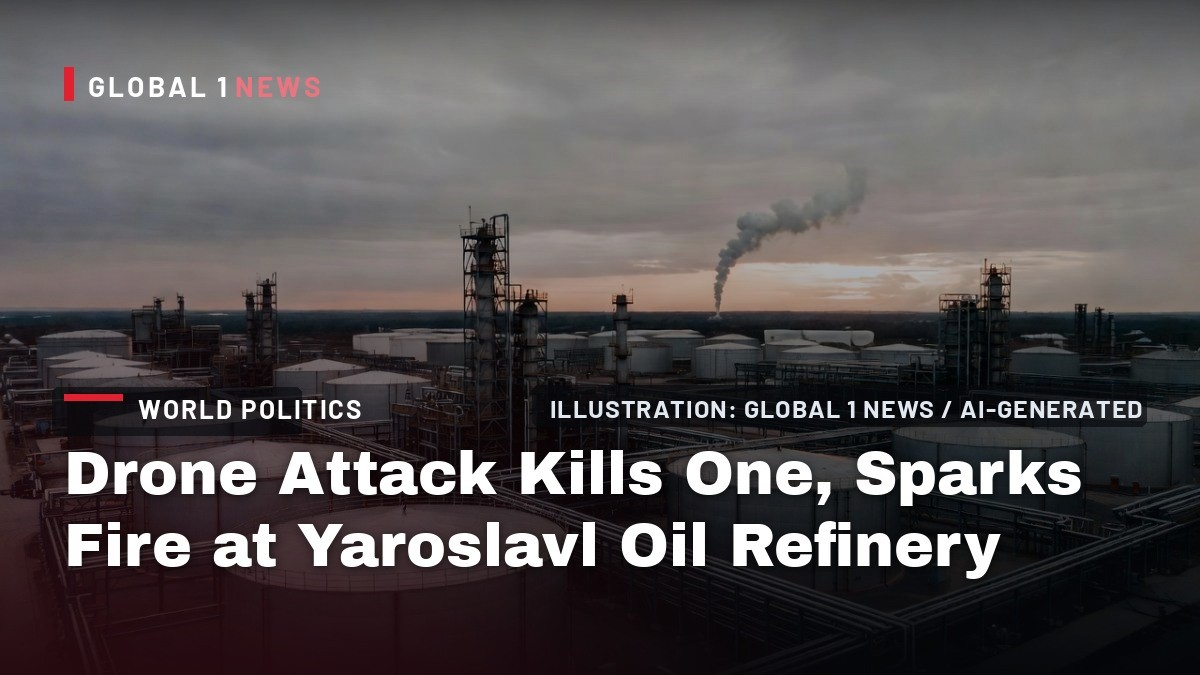
The death of a civilian in Yaroslavl on Friday marks a grim escalation in Ukraine's long-range drone campaign against Russia's energy infrastructure, as debris from a downed Ukrainian drone struck an intercity bus, killing one person and injuring 27 others. The attack on the Slavneft-Yanos refinery, one of Russia's largest, underscores the vulnerability of the country's fuel production network, which has become a primary target for Kyiv's forces throughout this year. As Russian authorities report intercepting hundreds of drones across the country overnight, the human and economic toll of this strategic campaign is becoming increasingly visible.
Deadly Debris in Yaroslavl
Yaroslavl region Governor Mikhail Yevrayev said on Friday that one civilian was killed and 27 others were injured after falling drone debris hit an intercity bus in the regional capital. The governor claimed that all 67 Ukrainian drones were downed over the region, but acknowledged that the debris fell on residential areas, commercial properties, and what he described as "industrial infrastructure." The admission that a successful interception resulted in civilian casualties highlights the inherent danger of the drone war, even when air defenses function as claimed.
The Slavneft-Yanos Refinery Target
Ukraine's military confirmed it struck the Slavneft-Yanos refinery, a joint venture between Russian oil giants Gazprom Neft and Rosneft, stating that the facility provides fuel and lubricants to the Russian military. The refinery, located on the Volga River approximately 250 kilometers northeast of Moscow, is a critical component of Russia's fuel supply chain, processing over 15 million tons of crude oil annually. The Ukrainian military's statement framed the attack as a direct strike on the logistical backbone of Russia's armed forces, a narrative that has become central to Kyiv's strategy of degrading Moscow's war-fighting capability.
Zelensky Confirms Strike and Announces Engels Attack
President Volodymyr Zelensky later confirmed the attack on the refinery and added that Ukraine's SBU security service had struck a Tu-95MS missile-carrying aircraft in the Saratov region city of Engels. The Engels airbase, located deep inside Russian territory, has been a recurring target for Ukrainian forces throughout the conflict, serving as a home base for Russia's strategic bomber fleet. The Tu-95MS aircraft are capable of launching cruise missiles at Ukrainian cities, making them a high-value target for Kyiv's military planners. Zelensky's confirmation of both strikes signals a coordinated, multi-front approach to Ukraine's long-range strike capabilities.
A Pattern of Repeated Attacks
Exiled news outlet Astra reports that Ukrainian drones had already attacked Slavneft-Yanos at least seven times this year before Friday's attack. This repeated targeting suggests a deliberate strategy to inflict cumulative damage on a facility that is difficult to fully repair between strikes. The refinery's continued operation despite these attacks speaks to the resilience of Russian industrial infrastructure, but the frequency of the strikes raises questions about the long-term sustainability of the country's fuel production capacity. Each attack forces repairs, diverts resources, and creates vulnerabilities that can be exploited in subsequent operations.
Collateral Damage in Pavlovsky Posad
In the Moscow region town of Pavlovsky Posad, a drone slammed into a Magnit grocery store, blowing out 46 windows at a neighboring medical clinic. Governor Andrei Vorobyov said the clinic remained open, but the incident illustrates the indiscriminate nature of drone warfare when interceptions fail or debris falls unpredictably. The strike on a civilian commercial establishment in the Moscow region, relatively close to the capital, will likely heighten public anxiety about the reach of Ukrainian drones and the effectiveness of Russian air defenses in protecting civilian areas.
Belgorod Casualties Mount
Separate Ukrainian attacks in the southwestern Belgorod region have killed two people and injured nine others over the last 24 hours, according to the local governor. The Belgorod region, which borders Ukraine, has been subjected to near-daily cross-border shelling and drone attacks throughout the conflict. The civilian casualties there have become a recurring feature of the war, with local authorities regularly reporting deaths and injuries from Ukrainian strikes. The region's proximity to the front lines makes it particularly vulnerable, and the constant threat has led to periodic evacuations and disruptions to daily life.
Russia's Air Defense Claims
Russia's Defense Ministry claimed that air defense systems intercepted 512 Ukrainian drones overnight across 19 Russian regions and annexed Crimea. If accurate, this figure would represent one of the largest single-night drone barrages of the conflict, demonstrating the scale of Ukraine's long-range strike campaign. The ministry's claim of a 100% interception rate in Yaroslavl, despite the civilian casualties from debris, highlights the challenges of defending against swarms of drones that can overwhelm even sophisticated air defense systems. The sheer number of drones involved suggests that Ukraine has significantly expanded its production capacity and is willing to expend large numbers of munitions to achieve its objectives.
Analysis: Energy Infrastructure Under Siege
The sustained campaign against refineries like Slavneft-Yanos represents a calculated effort by Ukraine to undermine Russia's war economy and its ability to fuel its military operations. Analysts suggest this signals a shift in Ukrainian strategy toward targeting the economic foundations of Russia's war effort, rather than focusing solely on battlefield engagements. The repeated strikes on fuel production facilities could eventually lead to fuel shortages in Russia, affecting both military logistics and civilian life. While Russia has thus far managed to maintain fuel supplies through a combination of repairs, imports, and export restrictions, the cumulative effect of these attacks may become increasingly difficult to manage.
The targeting of the Tu-95MS aircraft in Engels is particularly significant, as it directly threatens Russia's strategic bombing capability. By striking these aircraft on the ground, Ukraine is attempting to reduce the number of cruise missiles that can be launched against its cities. This dual-pronged approach—hitting both fuel production and strategic bombers—suggests a sophisticated understanding of the interconnected nature of Russia's military infrastructure. The fact that Ukraine is willing to expend significant resources on these deep-strike missions, despite the risks and the uncertain outcomes, indicates that Kyiv views them as a critical component of its overall strategy.
For ordinary Russians, the increasing frequency of drone attacks on civilian areas represents a new reality of the conflict. The deaths and injuries in Yaroslavl and Belgorod, the damaged grocery store in Pavlovsky Posad, and the constant threat of further strikes have brought the war home to communities far from the front lines. While Russian authorities emphasize the effectiveness of air defenses, the casualties and property damage demonstrate that no region is entirely safe. The psychological impact of these attacks, combined with the economic strain of repairing damaged infrastructure, may test public support for the war in ways that battlefield losses have not.
The coming months will reveal whether Ukraine can sustain this pace of long-range strikes and whether Russia can continue to absorb the damage. The refinery attacks, in particular, will be closely watched for their impact on fuel prices and availability in Russia. If the strikes succeed in disrupting fuel supplies, the consequences could ripple through the Russian economy, affecting everything from military operations to agricultural harvests. For now, the drone war continues to escalate, with both sides demonstrating a willingness to accept civilian casualties and infrastructure damage in pursuit of their strategic objectives.
By Irina Volkov, Staff Writer
This article was produced with AI-assisted research and editorial support. Sources: The Moscow Times.
What's Your Reaction?
 Like
0
Like
0
 Dislike
0
Dislike
0
 Love
0
Love
0
 Funny
0
Funny
0
 Wow
0
Wow
0
 Sad
0
Sad
0
 Angry
0
Angry
0

Russia/Eastern Europe Correspondent at Global1.News. Covering Russian politics, energy, security, and the shifting dynamics of the post-Soviet space. Provides clear-eyed analysis on one of the world's most opaque regions.














Comments (0)