
Kursk Anniversary: Russia Raises Civilian Death Toll to 640 as Occupation Revisited
Two years after Ukraine's incursion into Russia's Kursk region, Moscow's Investigative Committee has raised the civilian death toll to at least 640 killed and 561 wounded, with 320 civilians still unaccounted for and damage estimated at 505 billion rubles.
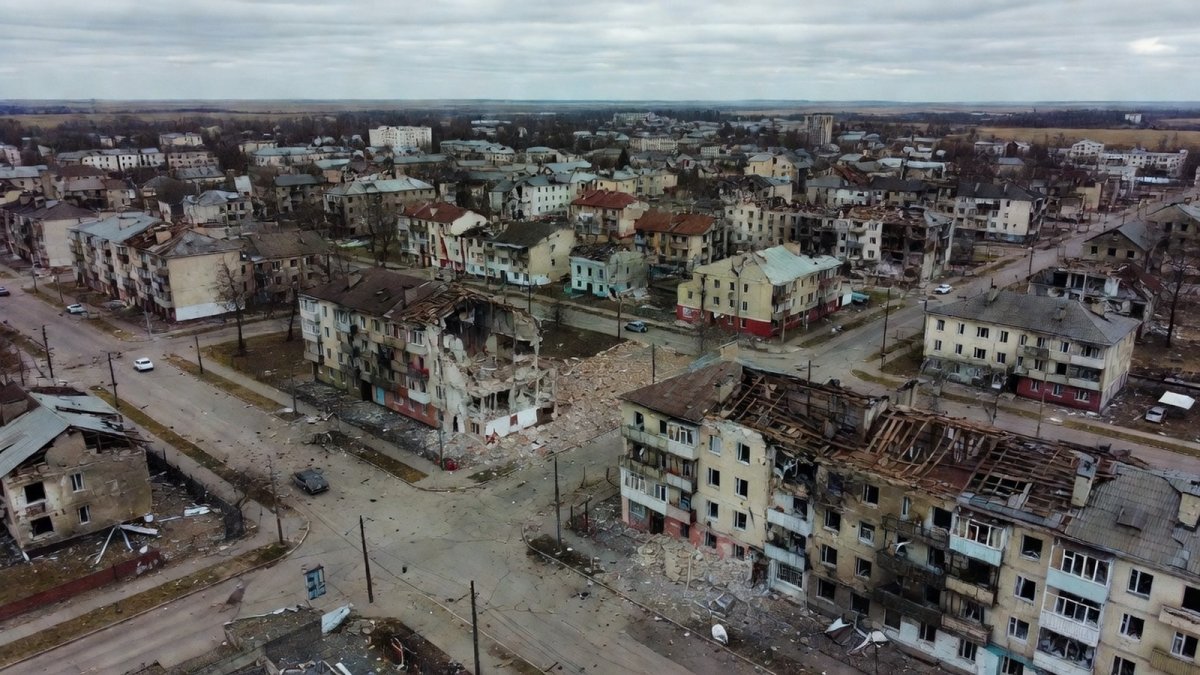
Two years after Ukrainian forces swept across the border into Russia's Kursk region in a surprise incursion that stunned the Kremlin, Moscow's Investigative Committee has raised the civilian death toll of the seven-month occupation to at least 640 killed and 561 wounded. The updated figures, released on the second anniversary of the August 2024 offensive, mark a sharp increase from earlier estimates and underscore the enduring human cost of the first foreign occupation of Russian territory since World War II.
Kursk Anniversary: Russia Raises Civilian Death Toll to 640 as Occupation Revisited
Moscow, Russia — The Investigative Committee announced the revised toll on Thursday as it continues a wide-ranging probe into alleged war crimes during Ukraine's months-long control of the southwestern border region.
Investigative Committee Updates Civilian Death Toll on Anniversary
Russia's Investigative Committee announced on Thursday that at least 640 civilians were killed and 561 others wounded during Ukraine's occupation of parts of the Kursk region. The updated figures were released on the second anniversary of the incursion that began in August 2024. Previous estimates had ranged from around 350 to more than 500 deaths. The committee described the probe as ongoing and said it continues to collect testimonies from civilians who returned after the occupation ended.
Ukraine's August 2024 Incursion and Occupation of Sudzha
Ukrainian forces launched a surprise cross-border operation into Russia's Kursk region in August 2024. The advance led to the occupation of the town of Sudzha and surrounding areas for roughly seven months. This marked the first time since World War II that foreign troops had occupied Russian territory. Russian authorities have described the events as a major security breach along the border.
Background: The Surprise Incursion
The August 2024 offensive stunned the Kremlin as Ukrainian forces crossed into Russia's Kursk region, capturing Sudzha and surrounding areas in the first foreign occupation of Russian soil since World War II. The seven-month control of border territory shifted war dynamics by forcing Russia to divert resources to the frontier and exposing vulnerabilities in defensive lines. Fighting intensified over months until the early 2025 retreat.
Over 150,000 residents evacuated from 186 settlements amid the advance, while property damage reached 505 billion rubles. The operation highlighted Ukraine's willingness to extend combat into Russian territory, altering the border conflict's scope and prompting reinforced countermeasures supported by North Korean troops.
Evacuations and Widespread Property Damage
More than 150,000 people were ordered to evacuate towns and villages near the border as fighting intensified. Law enforcement estimates placed total property damage at 505 billion rubles, equivalent to $6.2 billion, across 186 towns and villages. At least 53 cultural heritage sites, including churches and museums, sustained damage during the months of occupation and subsequent combat operations.
The updated death toll of 640 civilians killed and 561 wounded underscores the severe impact of the seven-month occupation on border communities in Kursk. These figures, released on the second anniversary, exceed earlier estimates of 350 to 500 deaths and reflect ongoing investigations that incorporate new testimonies from returned residents. The numbers highlight how prolonged fighting in populated areas amplified risks to noncombatants beyond initial projections.
Evacuations ordered for more than 150,000 people from towns and villages near the border illustrate the massive scale of displacement triggered by the incursion. With property damage assessed at 505 billion rubles across 186 settlements, the human cost extends to widespread loss of homes and livelihoods. At least 53 cultural heritage sites also suffered harm, compounding the disruption for families forced to flee.
Fate of 320 Civilians Remains Unknown
Russia's human rights ombudswoman stated in June that the fate of 320 civilians is still unknown. Russian authorities reported that all residents known to have been held in Ukrainian captivity have since been returned following the Ukrainian retreat in early 2025. Investigators continue to examine cases involving civilians who went missing during the occupation period.
The fate of 320 civilians remains unknown according to Russia's human rights ombudswoman, pointing to persistent gaps in accountability even after Ukrainian forces withdrew in early 2025. Authorities confirmed that all known captives held during the occupation have been returned, yet investigators continue gathering evidence on those who disappeared amid the fighting. This uncertainty fuels demands for thorough probes into the occupation period.
Hundreds of criminal cases have been opened, including one resulting in a life sentence for a Ukrainian serviceman convicted of terrorism involving the deaths of 14 civilians and the rape and killing of eight women. The Investigative Committee emphasizes ongoing collection of testimonies from civilians who returned post-occupation. Such efforts aim to document alleged violations while the broader inquiry into missing persons advances.
Mass Graves and Forensic Probes
January 2026 reporting detailed 524 bodies recovered from mass graves in Kursk, prompting expanded forensic work by the Investigative Committee. Investigators continue gathering testimonies from civilians who returned after the occupation, building hundreds of criminal cases tied to the seven-month period. These efforts document alleged violations across affected settlements.
The scale of the probe reflects ongoing collection of evidence on missing persons, with 320 civilians still unaccounted for according to Russian authorities. All known captives held during the occupation were later returned following the early 2025 withdrawal, yet the inquiry into disappearances persists alongside broader documentation of events.
Criminal Case Involving Ukrainian Serviceman
The Investigative Committee highlighted a case in which a Ukrainian serviceman was convicted of terrorism and sentenced to life in prison. The conviction involved allegations that the individual collaborated with fellow soldiers to kill 14 civilians and to rape and kill eight women. The Moscow Times could not independently verify those specific claims. Hundreds of criminal cases have been opened in connection with the occupation.
The Wider War Context
The Kursk campaign exemplified the border war dynamic, with Ukraine pursuing a strategy of carrying operations onto Russian territory to relieve pressure on its own front lines. The seven-month occupation and subsequent North Korean-backed counteroffensive demonstrated how cross-border actions could reshape resource allocation and defensive priorities for both sides.
On the second anniversary, the events underscore stalled negotiations and persistent fighting along multiple fronts. The early 2025 retreat restored Russian control but left lasting questions about the sustainability of such incursions amid evolving battlefield conditions.
Russian Counteroffensive and Ukrainian Retreat
Ukrainian forces were forced to retreat from the Kursk region in early 2025 after Russian troops, supported by North Korean soldiers, launched a counteroffensive. Russian officials have stated that the operation restored control over the affected border areas. The fighting lasted several months and involved significant military resources on both sides.
Ukraine's surprise incursion into Kursk began in August 2024, marking the first foreign occupation of Russian territory since World War II and leading to control of Sudzha and surrounding areas for roughly seven months. Russian officials described the advance as a significant border security breach that required substantial resources to address. The operation shifted the conflict dynamics along the frontier.
Russian forces, backed by North Korean soldiers, launched a counteroffensive that compelled Ukrainian troops to retreat in early 2025. The fighting spanned several months and involved intense combat operations on both sides before control was restored to the affected regions. This sequence demonstrated the challenges of sustaining cross-border gains against reinforced defenses.
Ukraine's Claims and Report on Russian Conscript Casualties
Ukraine has stated that thousands of its own civilians have remained in Russian-occupied territory since the full-scale invasion began in 2022. Separately, a joint report by the exiled outlets IStories and Vyorstka, published on Thursday, estimated that at least 77 conscripted Russian soldiers died during the Kursk fighting and that more than 30 others remain missing. The report drew on available records of mobilized personnel deployed to the region.
Accountability and the Propaganda Battle
Russia's Investigative Committee has documented alleged Ukrainian abuses through hundreds of cases, including one life sentence for terrorism involving civilian deaths, to present evidence domestically and internationally. These efforts frame the occupation as a major security breach with widespread impact on 186 settlements and 53 heritage sites.
Ukraine maintains that thousands of its civilians remain in Russian-occupied territory since 2022, creating competing narratives around accountability. Casualty figures, such as the updated 640 killed and 561 wounded alongside reports of 77 conscript deaths and 30 missing, have become central to information efforts on both sides.
Two Years On: What It Means
The revised civilian death toll of 640 signals the enduring consequences of the 2024 incursion two years later, as updated figures surpass prior estimates and reflect expanded evidence collection. Released on the anniversary, these numbers underscore how initial assessments underestimated the occupation's toll amid ongoing probes. They also highlight the propaganda value both sides attach to casualty reporting in the wider conflict.
Accountability efforts, including hundreds of criminal cases and convictions tied to civilian deaths, illustrate Russia's focus on documenting alleged Ukrainian actions for domestic and international audiences. This fits into the broader war by emphasizing border vulnerabilities and the human impact of territorial shifts, while Ukraine's claims about its own civilians in occupied areas add layers to mutual accusations of violations.
By Irina Volkov, Staff Writer
This article was produced with AI-assisted research and editorial support. Reporting is based on sources cited in the article.
What's Your Reaction?
 Like
0
Like
0
 Dislike
0
Dislike
0
 Love
0
Love
0
 Funny
0
Funny
0
 Wow
0
Wow
0
 Sad
0
Sad
0
 Angry
0
Angry
0
Russia/Eastern Europe Correspondent at Global1.News. Covering Russian politics, energy, security, and the shifting dynamics of the post-Soviet space. Provides clear-eyed analysis on one of the world's most opaque regions.











Comments (0)