
Kremlin-Linked Businessman Helped Pay for Donald Trump Jr.’s Wedding – ProPublica
New investigative reporting by ProPublica, corroborated by financial records and three informed sources, reveals that a Russian businessman with close Kremlin ties financed a portion of Donald Trump Jr.’s wedding earlier this year.
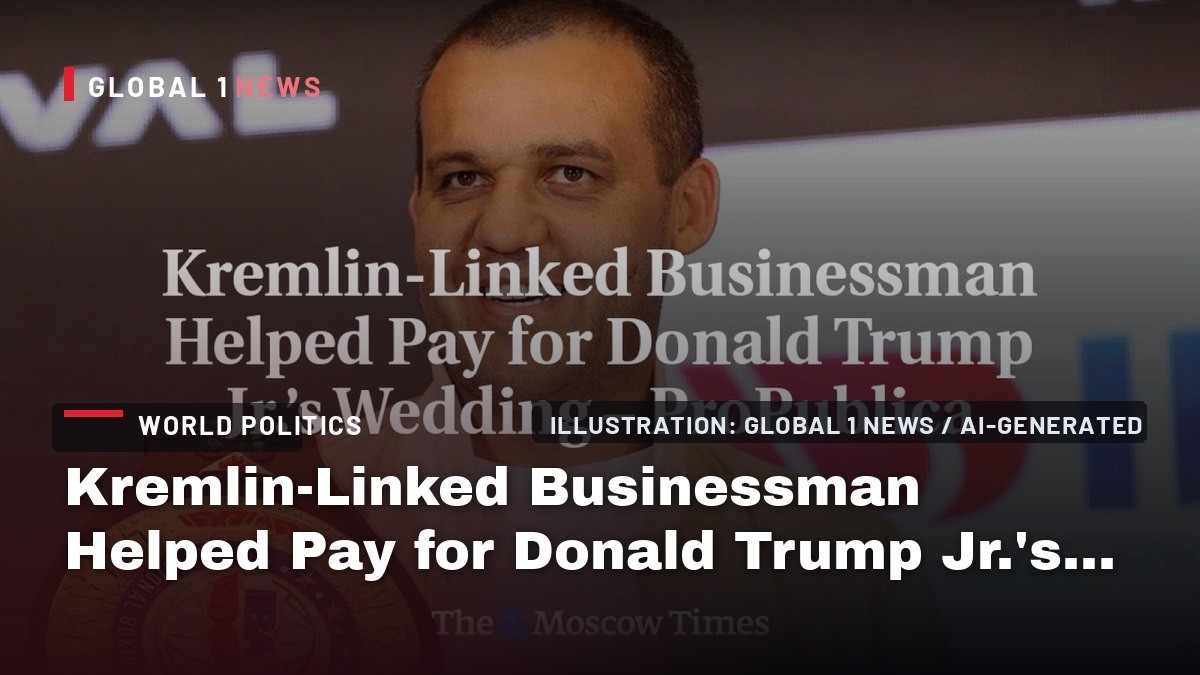
New investigative reporting by ProPublica, corroborated by financial records and three informed sources, reveals that a Russian businessman with close Kremlin ties financed a portion of Donald Trump Jr.’s wedding earlier this year. The payments, routed through a Dubai‑based firm, covered the rental of a private island and a fireworks display, raising alarm among U.S. national‑security experts about the potential for Russian influence over the president’s family.
Financial Trail of the Wedding Payments
The ProPublica report details that approximately $100,000 was paid to rent a private island for the three‑day celebration, while an additional $70,000 funded a fireworks display on the first day. These sums were transferred through IB Challenger, a firm based in Dubai that serves as a financial conduit for Umar Kremlev’s operations related to the International Boxing Association (IBA). The use of a Dubai entity mirrors Kremlev’s practice of moving IBA funds from Switzerland after Russia’s full‑scale invasion of Ukraine.
The IBA itself denied any direct involvement, stating it incurred no wedding expenses and declined to comment on the specific payments made by IB Challenger. Nonetheless, the financial records traced through the Dubai firm provide a clear link between Kremlev’s corporate resources and the Trump Jr. wedding.
Kremlev’s Kremlin Connections
Umar Kremlev is identified as a Russian businessman whose influence stems from close ties to President Vladimir Putin. He heads the International Boxing Association, a position that has allowed him to cultivate relationships within the Kremlin’s inner circle. According to the source material, Kremlev is subject to Ukrainian sanctions because of his connections to Putin through Alexei Rubezhny, the chief of the president’s personal security service.
These sanctions underscore the perception that Kremlev operates as a conduit for Kremlin interests abroad. His ability to mobilize significant financial resources for a private event in the United States illustrates the breadth of his network and the willingness of Russian-linked actors to leverage personal relationships for strategic purposes.
U.S. Counterintelligence Concerns
National‑security experts interviewed by ProPublica expressed grave concerns about the implications of a member of Putin’s circle gaining intimate access to the Trump family. Retired FBI official Frank Montoya Jr., who held senior counterintelligence roles, warned that “if I’m paying for your wedding, at some point, you’re going to owe me something.” He characterized the arrangement as “unthinkable for the son of the president,” emphasizing the potential for coercive leverage.
Montoya’s remarks reflect a broader apprehension within the intelligence community that financial patronage can translate into political influence. The fact that the payments were routed through a corporate vehicle rather than a direct personal transfer adds a layer of plausible deniability, complicating any immediate legal or diplomatic response.
Trump Jr.’s Relationship with Kremlev
Both parties have publicly downplayed the significance of the financial assistance. Kremlev’s press office stated that he met Donald Trump Jr. “a couple of years ago” and that the two have maintained a “friendly relationship” since then. A spokesperson for Trump Jr. described Kremlev as a “personal friend” met through a mutual acquaintance in the hunting world, and did not dispute the existence of the wedding payments.
The mutual‑friend narrative situates the connection within a social sphere that often overlaps with elite business and political circles. While the spokesperson’s refusal to contest the payments may be intended to defuse scrutiny, it also confirms the personal nature of the relationship, which is precisely what counterintelligence officials find troubling.
Implications for U.S.–Russia Relations
The revelation arrives at a time when diplomatic ties between Washington and Moscow remain strained over Ukraine, sanctions, and cyber‑espionage. The use of a Russian‑linked businessman to finance a high‑profile American wedding could be interpreted as a soft‑power maneuver aimed at cultivating goodwill within the inner circle of the U.S. president.
If such financial gestures are part of a broader pattern, they may signal an attempt by the Kremlin to embed influence agents in the social fabric of American political elites. While no direct quid pro quo has been proven, the mere perception of indebtedness could be leveraged in future diplomatic or political negotiations.
Legal and Ethical Dimensions
From a legal standpoint, the payments do not appear to violate U.S. campaign‑finance laws, as they were directed toward a private family event rather than a political campaign. However, the involvement of a sanctioned individual raises questions about compliance with U.S. sanctions regimes, particularly given Kremlev’s designation under Ukrainian sanctions linked to his Kremlin ties.
Ethically, the episode underscores the vulnerability of political families to foreign financial overtures. The Trump Jr. spokesperson’s acceptance of the description “personal friend” without contesting the payments may reflect a broader cultural norm among political elites to overlook the potential foreign‑influence risk posed by personal relationships.
Broader Context of Russian Influence Operations
The Kremlin has long employed a variety of tools—media, cyber‑operations, and financial patronage—to shape foreign perceptions and gain leverage. The use of a Dubai‑based firm to channel funds mirrors previous strategies where Russian actors have employed offshore entities to obscure the origin and purpose of money flows.
In this case, the financial conduit was tied to Kremlev’s management of the International Boxing Association, an organization that itself has been subject to scrutiny for governance issues. By leveraging an existing corporate structure, the Kremlin‑linked businessman could discreetly allocate resources without attracting immediate attention from regulators or the public.
Overall, the ProPublica findings add a new chapter to the ongoing narrative of Russian attempts to embed influence within the United States. While the immediate impact on policy may be limited, the symbolic significance of a Kremlin‑connected figure financing a presidential son’s wedding cannot be dismissed. It serves as a reminder that personal relationships remain a potent vector for foreign influence, especially when backed by substantial financial resources.
This article was produced with AI-assisted research and editorial support. Reporting is based on the source material cited below. Sources: The Moscow Times; themoscowtimes.com; Global1.News (16 September 2026).
By Irina Volkov, Staff Writer
What's Your Reaction?
 Like
0
Like
0
 Dislike
0
Dislike
0
 Love
0
Love
0
 Funny
0
Funny
0
 Wow
0
Wow
0
 Sad
0
Sad
0
 Angry
0
Angry
0

Russia/Eastern Europe Correspondent at Global1.News. Covering Russian politics, energy, security, and the shifting dynamics of the post-Soviet space. Provides clear-eyed analysis on one of the world's most opaque regions.










Comments (0)