
Korea Sends Rescue Team to Nepal After Trishuli Flood
SEOUL, South Korea — South Korea has dispatched an emergency response team to Nepal following the catastrophic flash floods and mudslides that devastated the Trishuli River valley on Aug 26, 2026, an event triggered by a massive glacier collapse near Langtang Lirung in the Himalayas. With nine South Korean nationals still missing and the death toll surpassing 579, Seoul has mobilized diplomatic, police, and firefighting resources while pledging US$1 million in humanitarian assistance.
Korea Sends Rescue Team to Nepal After Trishuli Flood
The Disaster: A 72-Kilometre Corridor of Destruction
The flood struck a 72-kilometre stretch of the Trishuli River in Nepal's Rasuwa and Nuwakot districts with almost no warning. The initial collapse destroyed the Gyirong Port complex on the China-Nepal border, the principal gateway for trade and tourism between the two countries, including the vital Mount Kailash pilgrimage route. Eyewitness accounts and preliminary assessments indicate floodwaters reached settlements up to 80 metres above the river's normal level, with debris traveling at roughly 50 metres per second. The sheer force of the event carried some bodies 240 kilometres downstream, as far as Nepal's Nawalparasi district and into India's Uttar Pradesh.
As of Aug 28, the toll stands at least 579 dead, 1,473 injured, and 1,924 missing in Nepal, with an additional 5 dead and 558 missing in China's Tibet Autonomous Region. The international dimension of the tragedy is profound: at least 668 tourists from 34 countries are among the missing, including 288 Indians, 90 Americans, 53 Ukrainians, 51 Malaysians, 35 Australians, and 33 UK nationals, plus nearly 100 Chinese citizens. The International Federation of Red Cross and Red Crescent Societies estimates 93,000 people have been affected by the disaster, which has also inflicted severe damage on Nepal's energy infrastructure.
Seoul's Response: Mobilizing All Available Resources
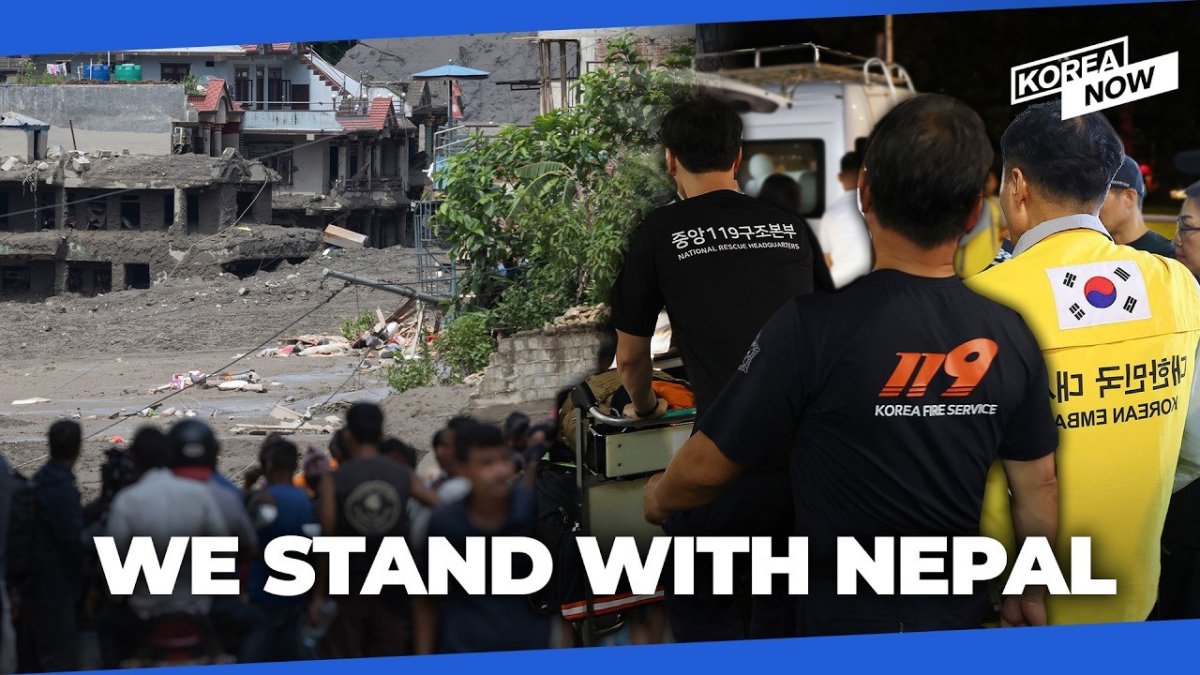
South Korea's reaction was swift and coordinated. Foreign Minister Cho Hyun presided over an emergency meeting of the Overseas Citizens Protection Headquarters at the foreign ministry in Seoul late on Aug 26, hours after the disaster unfolded. President Lee Jae Myung ordered authorities to "mobilize all available resources" for an urgent search and rescue operation, according to senior presidential spokesperson Kang Yu-jung. The presidential directive signaled that this was not merely a consular matter but a national priority requiring whole-of-government engagement.
A government response team including officials from the foreign ministry, police, and fire authorities departed from Incheon International Airport for Nepal on Thursday, Aug 27. The composition of the team — combining diplomatic coordination with specialized search-and-rescue expertise — reflects Seoul's assessment that the situation requires both high-level negotiation with Nepali authorities and practical field capability. South Korea also announced US$1 million (approximately 1.38 billion won) in humanitarian assistance to Nepal, with plans to send an additional disaster relief team pending Kathmandu's approval.

The Missing South Koreans: A Corporate Tragedy
The nine missing South Korean nationals were employees of Korea South-East Power Co. and plant builder Doosan Enerbility Co., working on construction of a hydropower plant in Nepal's Rasuwa district — the Upper Trishuli-1 project. The involvement of major Korean industrial players in the affected region underscores the deep economic ties between the two nations, which have strengthened considerably since establishing diplomatic relations in 1974. Ten other South Koreans affiliated with Doosan Enerbility had evacuated the area with approximately 200 foreign employees, including Nepalese nationals, and were confirmed safe, along with the South Korean consul dispatched to the site.
The corporate response has been substantial. Doosan Group pledged US$5 million in aid, a significant commitment from a conglomerate whose involvement in the Upper Trishuli-1 hydropower station construction has made it a central stakeholder in the disaster's aftermath. The tragedy highlights the risks inherent in Korea's expanding infrastructure footprint in South Asia, where ambitious energy projects increasingly place Korean workers in geologically volatile high-mountain environments. For the families of the missing, the wait for information continues, with Korean authorities maintaining direct communication channels with Nepali counterparts.
Nepal's Reluctance Toward Foreign Teams
One of the most delicate aspects of the international response has been Nepal's position on foreign rescue teams. Nepal's foreign ministry turned down offers from several countries to send search-and-rescue teams, citing mismanagement and poor coordination in the joint rescue effort following the 2015 earthquake. That decision, rooted in painful institutional memory, has created friction with nations eager to assist. South Korea's foreign ministry said it would keep negotiating with Nepal on the matter, indicating that Seoul views the current refusal as a starting point for dialogue rather than a final answer.
Nepal has mobilized more than 9,000 security personnel and rescued over 3,700 people, declaring the area a disaster-hit zone for three months and launching the Prime Minister's Natural Disaster Relief Fund. Prime Minister Balen Shah visited Nuwakot District on Aug 27, signaling the government's commitment to a visible, domestically led response. Preliminary government estimates put damage at roughly Rs 200 billion, while the Nepal Electricity Authority reported that six major hydropower and transmission facilities were damaged, removing an estimated 431 MW from the grid, with a further 470 MW of projects under construction damaged. The energy losses alone represent a significant setback for a nation heavily dependent on hydropower exports.
Geopolitical and Climate Context
The Trishuli disaster must be understood within a broader pattern of Himalayan cryospheric instability. The 2015 Langtang valley debris avalanche, triggered by the April-May 2015 Nepal earthquakes, killed more than 350 people near the same mountain, establishing a grim precedent for catastrophic mass movement in this region. Scientists remain divided on direct climate attribution, but Alton C. Byers of the University of Colorado's Institute of Arctic and Alpine Research has noted that permafrost has been "the cryospheric glue" holding rock, ice, and glaciers together — glue now weakened by warming trends. A senior fellow at the Stimson Center has called the region a monitoring "blind spot," highlighting the inadequacy of current early warning systems.
The failure of existing monitoring infrastructure is particularly troubling. A flash flood early warning system run by Chinese and Nepali scientists failed to catch this event because its water-level monitors were optimized for monsoon floods, and upstream stations in Nepal were swept away before alerts could be sent. This systemic gap raises profound questions about the adequacy of international investment in high-mountain monitoring, particularly as glacial retreat accelerates across the Hindu Kush-Himalaya region. For South Korea, which has positioned itself as a responsible stakeholder in regional disaster response, the Trishuli disaster may prompt renewed attention to preventive investments in early warning technology.
Looking Ahead: Korea's Evolving Role in Himalayan Disaster Response
As the immediate rescue phase continues, South Korea faces a complex set of challenges. The negotiation with Nepal over the deployment of additional disaster relief teams will test Seoul's diplomatic agility, particularly given Kathmandu's sensitivity to foreign involvement. The fate of the nine missing Korean workers remains the paramount concern, with every hour reducing the probability of survival. Beyond the immediate crisis, the disaster raises strategic questions about the safety protocols governing Korean infrastructure projects in geologically hazardous regions and the adequacy of consular crisis management for overseas Korean workers.
South Korea's response to the Trishuli disaster reflects its maturation as a middle power with global responsibilities. The combination of rapid consular mobilization, substantial humanitarian assistance, and sustained diplomatic engagement demonstrates a capacity for crisis response that was less evident in earlier decades. Yet the disaster also reveals the limits of national response in the face of climate-amplified natural catastrophes. The glacier that collapsed near Langtang Lirung was not merely a local phenomenon; it was a symptom of planetary-scale changes that no single nation can address alone. For Korea, for Nepal, and for the international community, the Trishuli flood is a stark reminder that the costs of climate inaction are measured not only in economic terms but in human lives, cultural heritage, and the stability of entire regions.
The coming weeks will be critical. Nepal's three-month disaster zone declaration provides a framework for sustained response, but the reconstruction of damaged infrastructure — particularly the six hydropower facilities — will take years. For the families of the 1,924 missing in Nepal and 558 missing in Tibet, the uncertainty is agonizing. South Korea's commitment to continue negotiating for the deployment of additional relief teams suggests that Seoul views its role as extending well beyond the immediate rescue phase. The Upper Trishuli-1 project, now a site of tragedy, will eventually need to be rebuilt, and Korean firms will likely play a central role in that reconstruction.
The Trishuli disaster of August 2026 will be studied for years as a case study in the intersection of climate change, infrastructure vulnerability, and international crisis response. For South Korea, it represents both a test of its diplomatic capabilities and an opportunity to demonstrate leadership in a region where its economic footprint continues to expand. The nine missing workers are more than statistics; they are reminders of the human cost embedded in the complex web of economic interdependence that connects Seoul to Kathmandu. As the search continues and the recovery begins, the international community watches to see how Korea navigates this delicate moment — balancing the imperative to act with the necessity of respecting Nepal's sovereignty and institutional memory.
By Prof. David Park, Staff Writer
This article was produced with AI-assisted research and editorial support. Reporting is based on sources cited in the article.
What's Your Reaction?
 Like
0
Like
0
 Dislike
0
Dislike
0
 Love
0
Love
0
 Funny
0
Funny
0
 Wow
0
Wow
0
 Sad
0
Sad
0
 Angry
0
Angry
0

East Asia/Technology Correspondent at Global1.News. Seoul-based voice covering Korean politics, technology, business, and culture. Analyzes how technology and geopolitics intersect across East Asia.












Comments (0)