
Japan Watches Quietly as the US-South Korea Alliance Adjusts Course
The abrupt truncation of the South Korea-United States Ulchi Freedom Shield (UFS) exercise in August 2026, followed by the cancellation of the biennial Ssangyong amphibious drills, has sent a tremor through the trilateral security architecture of Northeast Asia. While the immediate focus has rightly been on Seoul’s reaction to Washington’s unilateral decision, the perspective of Japan—the third vertex of this strategic triangle—offers a more complex and arguably more consequential layer of analy
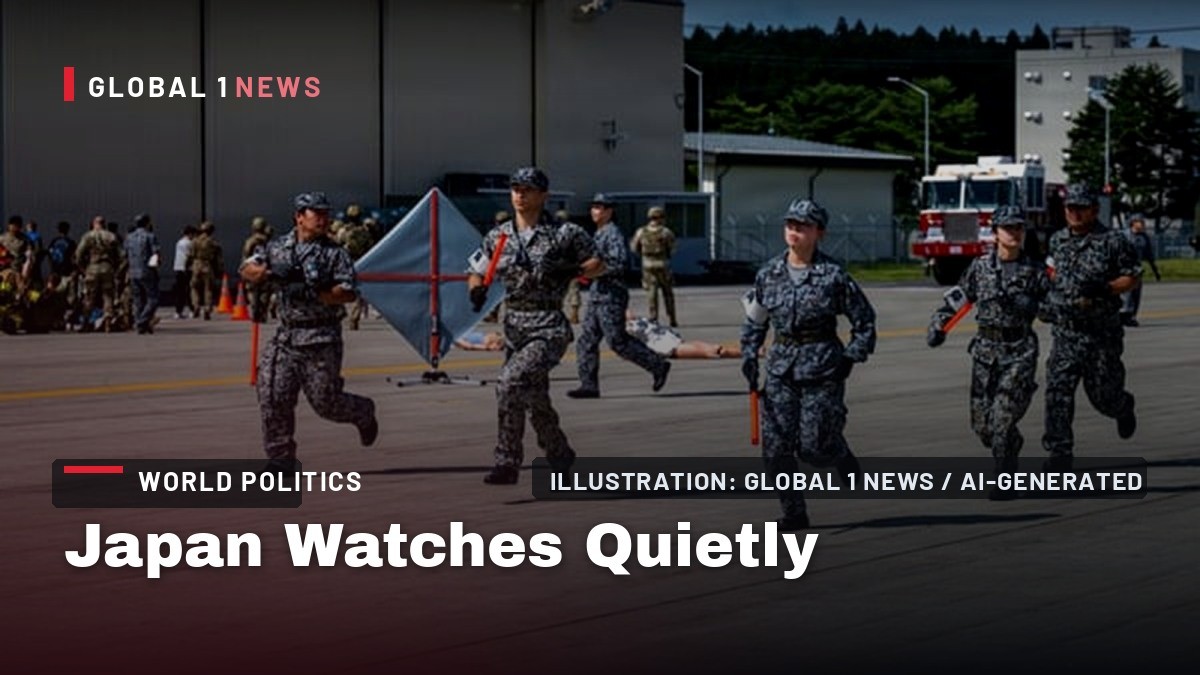
A Muted Public Response and a Deliberate Silence
Japan’s initial official reaction to the scaled-back exercises has been characterized by a careful, deliberate absence of criticism. Defense Minister Koizumi Shinjiro’s response to the announcement of the upcoming trilateral Freedom Edge exercise was a model of diplomatic restraint. He stated that “as Japan faces the most severe and complicated security environment in the post-war era, the cooperation among Japan, the United States, and South Korea is critical to the peace and stability of the region.” The statement, however, notably refrained from any direct commentary on the U.S. decision to curtail its bilateral drills with Seoul.
This silence is telling. In a parallel engagement, Minister Koizumi and Australian Deputy Prime Minister Richard Marles met in Canberra and similarly side-stepped direct questions regarding President Trump’s intervention. Instead, they reaffirmed their shared concern over North Korea’s “coercive and unilateral challenge to the status quo.” This strategic ambiguity suggests that Tokyo is carefully calibrating its position, avoiding any public rupture with Washington while privately registering the gravity of the shift. The Japanese government appears to be in a mode of assessment, not confrontation, as it evaluates the durability of the U.S. security guarantee.
The Specter of a US-North Korea Deal
Beyond the immediate operational impact, the most significant concern for Tokyo is the potential for a resumption of U.S.-North Korea diplomacy. President Trump’s social media post, which cited his “friendly relations” with Kim Jong Un as a rationale for the drill cutback, has revived deep-seated anxieties in Japan about being sidelined in a bilateral deal. The core of the Japanese fear is a hypothetical agreement that addresses U.S. security concerns—such as limiting intercontinental ballistic missiles capable of reaching American soil—while leaving intact the substantial arsenal of short-range missiles that directly threaten Japan.
This is not a theoretical concern. North Korea fired ten short-range ballistic missiles on August 20, marking its third such test in the month. The persistence of this threat underscores the asymmetry of interests between Washington and Tokyo. A deal that freezes or eliminates the long-range threat to the United States without addressing the short-range threat to Japan would be a strategic nightmare for Tokyo. Furthermore, Japanese conservative leaders have a vested political interest in the abduction issue, a humanitarian file that could easily be jettisoned in the pursuit of a grand bargain between Washington and Pyongyang.
Strategic Document Revisions and the Nuclear Question
The uncertainty generated by Washington’s actions is likely to have a direct impact on Japan’s ongoing defense policy review. Tokyo is currently in the process of revising its three key strategy documents: the National Security Strategy, the National Defense Strategy, and the Defense Buildup Program, with an intended completion date by the end of the year. The signals emanating from the White House regarding North Korea and the value of allied exercises will be factored into these revisions, potentially accelerating a shift toward a more autonomous defense posture.
More quietly, the events of August may also fuel a debate that has long been considered taboo in Japanese political discourse: the question of nuclear weapons. If the credibility of the U.S. nuclear deterrent begins to erode in the eyes of Japanese policymakers—a direct consequence of a perceived weakening of alliance commitments—Tokyo could, in theory, begin to consider its own nuclear options. While this remains a highly unlikely and politically explosive path, the very fact that the question could gain traction in policy circles is a measure of the deep unease caused by the current trajectory of U.S. policy.
The Iran War as a New Conditionality
A second, equally troubling signal from President Trump’s post is the explicit linkage between allied support for the U.S. war effort against Iran and the continuation of security commitments. The cancellation of the Ssangyong exercise was officially attributed to force availability constraints caused by the Iran conflict, a justification that had been communicated to Seoul as early as June. However, the President’s social media post went further, expressing displeasure over a perceived lack of South Korean support for the war effort, thereby establishing a new and dangerous precedent of conditionality.
Japan is acutely aware that it is not immune to this logic. While Tokyo has long relied on its constitutional and legal framework to avoid entanglement in U.S. wars, the Trump administration may be far less sympathetic to such justifications. If Japan cannot be compelled to provide direct military support in the Strait of Hormuz, Washington may seek concessions in other areas. These could manifest as demands for reduced joint exercises, increased host-nation support payments, or other forms of burden-sharing that would fundamentally alter the nature of the U.S.-Japan alliance.
Freedom Edge as a Barometer of Trilateral Solidarity
In this context of uncertainty, the announcement that South Korea, the United States, and Japan will proceed with the annual Freedom Edge exercise from September 7 to 11 takes on outsized significance. According to the South Korean Joint Chiefs of Staff, the exercise will be held in international waters east and south of Jeju Island and is “defensive in nature.” It will feature enhanced real-time data sharing, synchronized coordination, and expanded trilateral interoperability, including air defense scenarios and maritime interdiction operations. A JCS official has stated that the scale will be “roughly on par with previous years.”
The decision to proceed with Freedom Edge, a key outcome of the August 2023 Camp David summit, provides a crucial, if partial, reassurance. It demonstrates that despite the turbulence in the bilateral U.S.-South Korea relationship, the trilateral framework retains some momentum. However, the fact that its continuation was even a point of attention—given last year’s exercise ran without a U.S. aircraft carrier due to Middle East deployments—highlights the fragility of the current security environment. The exercise serves as a barometer, but it does not resolve the underlying strategic questions that have been raised.
Implications for the Regional Order
The events of August 2026 represent more than a simple adjustment to a training schedule; they signal a potential inflection point in the U.S. commitment to the Indo-Pacific. For Japan, the immediate concern is not the loss of a few days of training but the erosion of the foundational assumptions upon which its post-war security policy has been built. The alliance with the United States has been the cornerstone of Japanese defense, and any indication that this cornerstone is being renegotiated under duress is a cause for profound strategic anxiety.
Tokyo’s muted response should not be misread as complacency. Rather, it reflects a government that is carefully navigating a volatile geopolitical landscape, preserving its options while it assesses the intentions of its primary ally. The coming months, as Japan finalizes its new defense strategy documents, will be critical. The decisions made in Tokyo will not only determine Japan’s own defense trajectory but will also send a powerful signal about the cohesion of the trilateral alliance and the future stability of the region. The quiet in Tokyo is the calm before a period of significant strategic decision-making.
This article was produced with AI-assisted research and editorial support. Sources: The Diplomat, Yonhap News Agency, ABC News (Australia), Al Jazeera. By Prof. David Park, Staff WriterWhat's Your Reaction?
 Like
0
Like
0
 Dislike
0
Dislike
0
 Love
0
Love
0
 Funny
0
Funny
0
 Wow
0
Wow
0
 Sad
0
Sad
0
 Angry
0
Angry
0

East Asia/Technology Correspondent at Global1.News. Seoul-based voice covering Korean politics, technology, business, and culture. Analyzes how technology and geopolitics intersect across East Asia.












Comments (0)