
Korea Scraps Goshiwon Bathtub Rule After Youth Backlash
The South Korean government has abruptly withdrawn a proposed revision to building standards that would have allowed bathtubs to be installed in goshiwon — the notoriously tiny, low-cost study rooms that have become de facto permanent housing for many young people.
The South Korean government has abruptly withdrawn a proposed revision to building standards that would have allowed bathtubs to be installed in goshiwon — the notoriously tiny, low-cost study rooms that have become de facto permanent housing for many young people. The Ministry of Land, Infrastructure and Transport (MOLIT) canceled the amendment on August 23, 2026, ten days into a 20-day public comment period, following a wave of social media mockery and civic criticism that exposed a deepening chasm between the political class and the lived reality of Korea's youth.
The episode, which unfolded over a single week in August, is the latest in a series of tone-deaf youth housing proposals that have fueled a sense among young Koreans that policymakers are fundamentally out of touch. It also carries significant political weight ahead of the 2027 presidential election, with both the conservative People Power Party (PPP) and the liberal Democratic Party (DP) scrambling to claim the mantle of credible youth policy reform.
The Policy Reversal
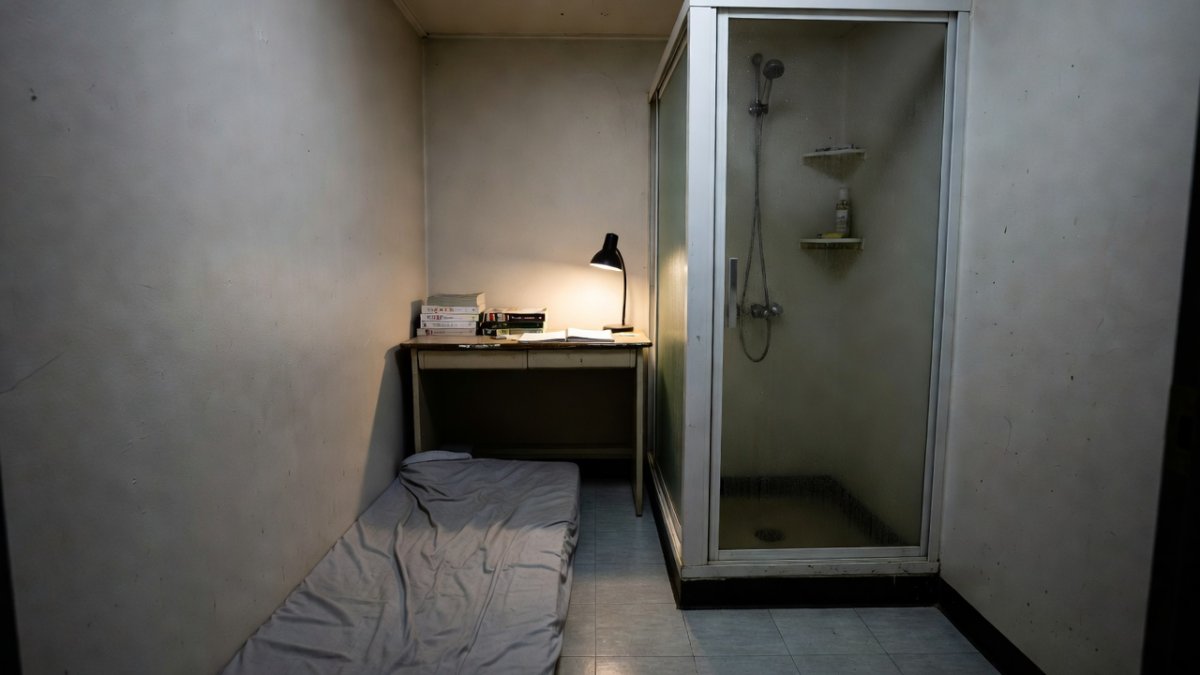
On August 12, 2026, MOLIT pre-notified a revision to the construction standards for multi-user living facilities — the regulatory category that covers goshiwon. The proposed change would have deleted the long-standing rule requiring each goshiwon room to include "facilities for a learner to study," effectively waiving the mandatory desk requirement. It would also have permitted bathtubs on an optional basis, a notable shift given that current regulations allow only a shower booth and explicitly ban both cooking facilities and bathtubs.
MOLIT framed the proposal as a pragmatic update to reflect changing usage patterns. "In view of the fact that goshiwon are used as housing for one-person households, we will reasonably improve certain criteria unrelated to safety," the ministry said in its pre-notification. The ministry planned to accept public opinions until August 31.
The backlash was swift and severe. By August 20, The Korea Herald was reporting that young Koreans in their 20s and 30s had flooded online communities and social media with ridicule. Satirical images spread rapidly, depicting goshiwon rooms with a bathtub plunked in the middle of the already minuscule floor space, and apartment-style dwellings constructed by stacking scrapped buses. The mockery reached such heights that Seoul Mayor Oh Se-hoon was among the politicians who publicly cited the satirical images.
On August 23, a Sunday, the People Power Party called for a complete overhaul of the government's youth housing policy. MOLIT announced it would reexamine the provision, stating: "As various opinions have been raised on the eased rule for bathtub installation through goshiwon users, related associations, and media reports, we will reexamine the provision." The ministry canceled the amendment before completing the 20-day pre-notification period, adding: "Going forward, we will continue to ease regulations that the public can feel by reflecting diverse opinions from all walks of life in the policy process."
Why the Proposal Touched a Nerve
To understand the intensity of the backlash, one must understand the goshiwon. Originally designed as combined study-and-lodging spaces for young people preparing for the civil service exam — the "gosi" from which the name derives — goshiwon rooms are extremely small, often only a few square meters. Many lack windows and private bathrooms. They were never intended as permanent housing.
Yet over time, goshiwon have become de facto permanent residences for a generation priced out of Seoul's rental market. For many young Koreans, the goshiwon is not a temporary study arrangement but a long-term housing solution — one that reflects the profound affordability crisis gripping the capital. The proposal to allow bathtubs in these spaces struck many as a grotesque misreading of the problem.
"A goshiwon room is about the size of a bathtub — I had to rub my eyes when I read they want to put one in," one young Korean wrote in an online community. Another asked pointedly: "What does installing a bathtub actually have to do with improving living conditions?" A third noted the absurdity of the premise: "It's not like people can't wash because there's no bathtub."
Civic groups were equally critical, though from a more policy-oriented angle. On August 13, organizations including Homeless Action and the Public Interest Human Rights Law Foundation Gonggam issued a joint statement. "Even when there is already a shower booth indoors, there are countless people who cannot use it because humidity cannot be vented," they said, calling for minimum housing standards that would also apply to substandard housing such as goshiwon. The groups argued that the real issue was not the absence of bathtubs but the absence of basic habitability — ventilation, natural light, and adequate space.
The Political Backdrop
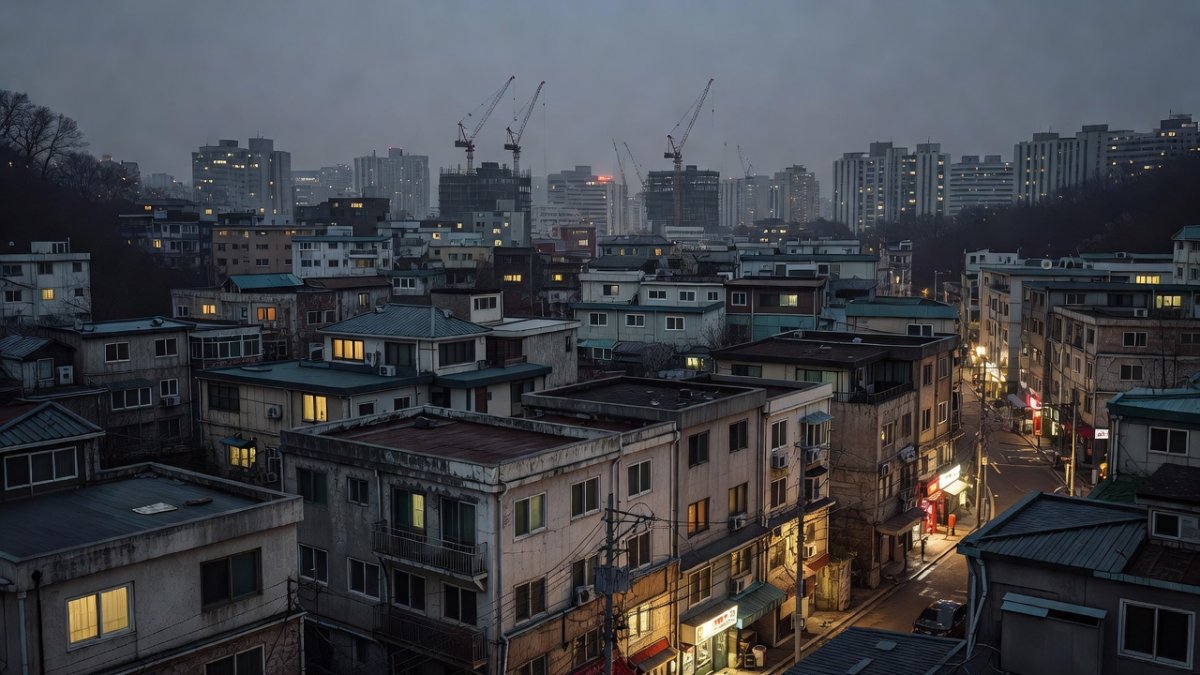
The bathtub controversy did not occur in a vacuum. Just days earlier, on August 7, Democratic Party lawmaker Hwang Hee had proposed converting decommissioned buses into temporary housing for young people — a plan immediately dubbed "scrapped-bus housing" and widely mocked across social media. The ruling People Power Party responded with sarcasm, saying it hoped the Democratic Party headquarters would move into scrapped buses first.
The two episodes, taken together, paint a picture of a political class struggling to respond credibly to a generational crisis. The PPP's call on August 23 for a "complete overhaul" of youth housing policy was as much an attempt to distance itself from the MOLIT misstep as it was a genuine policy statement. For their part, Democratic Party lawmakers seized on the bathtub proposal as evidence of conservative incompetence, while the PPP pointed to Hwang Hee's bus scheme as proof that the opposition was equally out of ideas.
The political stakes are considerable. With the current president's term ending in 2027, youth policy has emerged as a contested battleground between the two major parties. Young voters — particularly those in their 20s and 30s — have shown themselves to be volatile and disillusioned, swinging between parties or abandoning electoral politics altogether. Both the PPP and the DP recognize that credible youth housing policy is essential to winning the next election, yet both have struggled to produce proposals that resonate with the actual experiences of young Koreans.
Seoul Mayor Oh Se-hoon's decision to cite the satirical images was itself a political signal. As a prominent PPP figure with national ambitions, Oh's engagement with the online mockery suggested an attempt to position himself as attuned to youth sentiment — even as his own city grapples with a housing crisis that shows no signs of abating.
Korea's Youth Housing Crisis
The goshiwon bathtub episode is a symptom of a deeper structural problem: South Korea's housing market has become fundamentally unaffordable for young people, particularly in the Seoul metropolitan area where over half the population resides. Soaring jeonse (deposit-based rental) prices, stagnant wages for entry-level workers, and a chronic shortage of small-unit housing have pushed many young Koreans into goshiwon and other substandard accommodations as permanent residences rather than temporary study arrangements.
The demographic dimension compounds the crisis. South Korea has one of the world's lowest birth rates, and the housing situation is both a cause and a consequence of this decline. Young people who cannot afford stable housing are less likely to form households, marry, or have children. The goshiwon, once a rite of passage for ambitious exam-takers, has become a symbol of a generation trapped in a holding pattern — unable to transition to the independent adult lives that previous generations took for granted.
The debate over minimum housing standards is central to this issue. Currently, goshiwon are classified as multi-user living facilities, a category that exempts them from many of the housing quality requirements that apply to standard apartments. Civic groups have long argued that this classification allows substandard living conditions to persist — rooms without windows, inadequate ventilation, shared bathrooms, and no cooking facilities. The MOLIT proposal, by focusing on bathtubs and desks rather than on these fundamental habitability issues, seemed to many young Koreans to be a deliberate distraction from the real problems.
Demographic and Strategic Stakes
The youth housing crisis is not merely a social welfare issue; it has profound implications for South Korea's long-term economic and national security resilience. The country's demographic decline — driven by one of the world's lowest fertility rates — is already shrinking the labor force and straining the social safety net. As the working-age population contracts, the economy faces slower growth, reduced innovation capacity, and increased fiscal pressure from an aging population.
The military dimension is equally concerning. South Korea maintains one of the world's largest standing armies, but conscription relies on a steady supply of young men. As the youth population shrinks, the military faces mounting challenges in maintaining manpower levels, a fact that has direct implications for the country's ability to deter North Korea and maintain regional security. The housing crisis, by discouraging family formation and childbearing, indirectly undermines the demographic base on which these strategic capabilities depend.
Regional competitiveness adds another layer of urgency. South Korea competes with other advanced economies — Japan, Taiwan, Singapore — for talent and investment. A generation of young people living in goshiwon, unable to plan for the future, is a poor advertisement for the country's long-term viability. The bathtub episode, trivial as it may seem, signals to the world that South Korea's political class is struggling to address the most fundamental challenges facing its society.
Looking Ahead
The withdrawal of the bathtub proposal is a small but significant victory for the young Koreans who mobilized online to mock it. Yet the underlying problems remain unaddressed. The MOLIT reversal does nothing to improve ventilation in windowless goshiwon rooms, nor does it make Seoul's rental market more affordable, nor does it create a pathway for young people to transition from substandard housing to stable, dignified homes.
What the episode does reveal is the power of public opinion — particularly youth opinion — to force policy reversals. The speed and ferocity of the backlash caught MOLIT off guard, and the ministry's statement acknowledging "various opinions" from "goshiwon users, related associations, and media reports" suggests a new awareness that policy cannot be made in isolation from the people it affects. Whether this awareness translates into more responsive policymaking remains to be seen.
Civic groups have called for minimum housing standards that would apply to all substandard housing, including goshiwon. Such standards would address the fundamental habitability issues — ventilation, natural light, space, and sanitation — that the bathtub proposal conspicuously ignored. The question is whether the political will exists to implement them, particularly given the resistance from property owners and the fiscal constraints facing local governments.
For young Koreans, the bathtub episode is a reminder that their voices can shape policy — but also that the political class remains dangerously disconnected from their daily realities. The 2027 presidential election will be a test of whether either major party can offer a credible vision for youth housing that goes beyond symbolic gestures and addresses the structural roots of the crisis. Until then, the goshiwon remains what it has become: a symbol of a generation's frustration, and a challenge that South Korea's leaders have yet to meet.
By Prof. David Park, Staff Writer
This article was produced with AI-assisted research and editorial support. Sources: KOREA NOW (YouTube), The Chosun Daily, The Korea Herald, Kyunghyang Shinmun.
What's Your Reaction?
 Like
0
Like
0
 Dislike
0
Dislike
0
 Love
0
Love
0
 Funny
0
Funny
0
 Wow
0
Wow
0
 Sad
0
Sad
0
 Angry
0
Angry
0

East Asia/Technology Correspondent at Global1.News. Seoul-based voice covering Korean politics, technology, business, and culture. Analyzes how technology and geopolitics intersect across East Asia.














Comments (0)