
8.1 Million Filipinos Hit by Habagat Floods; Families, Farmers, and Students Bear the Brunt as Government Races to Respond
Enhanced southwest monsoon floods affect 8.1 million Filipinos across Luzon, causing P1.25B agricultural losses in Pampanga, displacing thousands, and prompting government rescue and rehabilitation efforts.
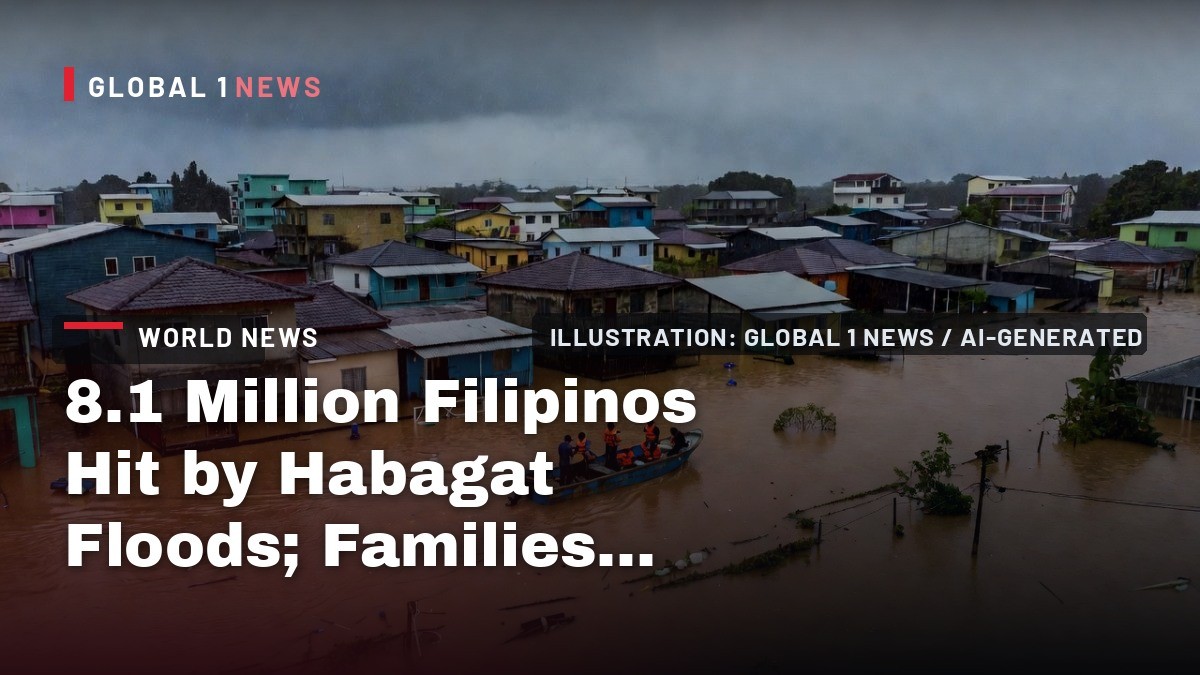
The relentless fury of the enhanced southwest monsoon, known locally as habagat, has transformed the lives of over 8.1 million Filipinos this week, submerging entire barangays, displacing families, and drowning livelihoods under murky floodwaters. As of Monday, August 31, 2026, the Office of Civil Defense (OCD) reported that the widespread flooding has touched nearly every corner of Luzon, forcing a massive, whole-of-government response even as the rains continue to pour.
For many, the scene is a painful replay of past tragedies. In Pasig City, 2,058 families from 10 barangays are currently housed in 19 evacuation centers, their homes rendered uninhabitable by the rising waters. In Meycauayan City, Bulacan, the habagat’s urgency was punctuated by a moment of raw humanity: a pregnant woman gave birth inside a police patrol vehicle as officers navigated flooded streets to rush her to a hospital. These are the faces of a disaster that has spared no one—from the urban poor in Metro Manila’s low-lying districts to the farmers of Central Luzon’s vast plains.
Habagat’s Toll: A Nation Under Water
The numbers coming from the OCD paint a stark picture of the devastation. A total of 646 areas across seven regions have been reported as flooded, with Central Luzon (Region 3) bearing the heaviest brunt. In that region alone, 450 areas are submerged, including 48 in Bataan, 61 in Bulacan, 7 in Nueva Ecija, and numerous towns in Pampanga and other provinces. The flooding has also severely impacted Mimaropa (Region 4B), Metro Manila, Western Visayas (Region 6), Ilocos (Region 1), Calabarzon (Region 4A), and the Zamboanga Peninsula.
In the capital, the cities of Malabon, Valenzuela, Muntinlupa, and Quezon City have reported significant flooding. The San Juan River swelled to 11.91 meters as of 10 a.m. Monday, triggering the alarm level at which flooding is considered imminent in surrounding communities. The Department of the Interior and Local Government (DILG) has released a list of 88 roads in Bulacan that remain impassable to traffic as of yesterday, isolating communities and hampering relief efforts.
The scale of the disaster extends beyond the immediate flooding. The combined effects of the enhanced southwest monsoon and recent Tropical Cyclones Luis, Maymay, and Neneng have affected approximately eight million people, or 2.3 million families, across 10 regions. The weather disturbances have tragically claimed the lives of 32 people, while an estimated 25,800 individuals have been displaced and are seeking refuge in evacuation centers. Nineteen persons have also been reported injured, underscoring the physical dangers that accompany the deluge.
Bayanihan in the Barangays: Evacuations and Rescue Operations
In the face of such overwhelming odds, the spirit of bayanihan has been on full display, with government agencies and ordinary citizens working side-by-side to save lives. The DILG has issued a stern directive to all Local Government Units (LGUs) to enforce preemptive and forced evacuations, particularly in areas prone to floods and landslides. The message is clear: early action is critical, and LGUs must prioritize the safety of the most vulnerable—children, older persons, pregnant women, and persons with disabilities.
The protocols are specific and life-saving. In barangays susceptible to moderate flooding, evacuation is initiated when floodwaters are about to reach 0.5 meters. For communities living in landslide-prone areas, barangays are instructed to coordinate closely with upstream communities to monitor water levels and soil saturation. In highly susceptible zones, preemptive evacuation is immediately recommended, and residents are strictly prohibited from returning until authorities declare the areas safe.
On the ground, the response has been swift. The Armed Forces of the Philippines (AFP) deployed personnel, vehicles, and other assets to Tarlac, Pampanga, and Bataan on Saturday to support LGUs and disaster response agencies. Thousands of personnel from the Philippine National Police (PNP) and the Bureau of Fire Protection (BFP) have also been mobilized to assist in evacuation centers and flood-affected areas. The Philippine Coast Guard has been conducting several evacuation and rescue operations across different areas in Luzon, navigating the treacherous waters to reach stranded residents.
Agricultural Heartbreak: Pampanga’s Farmers Face P1.25B in Losses
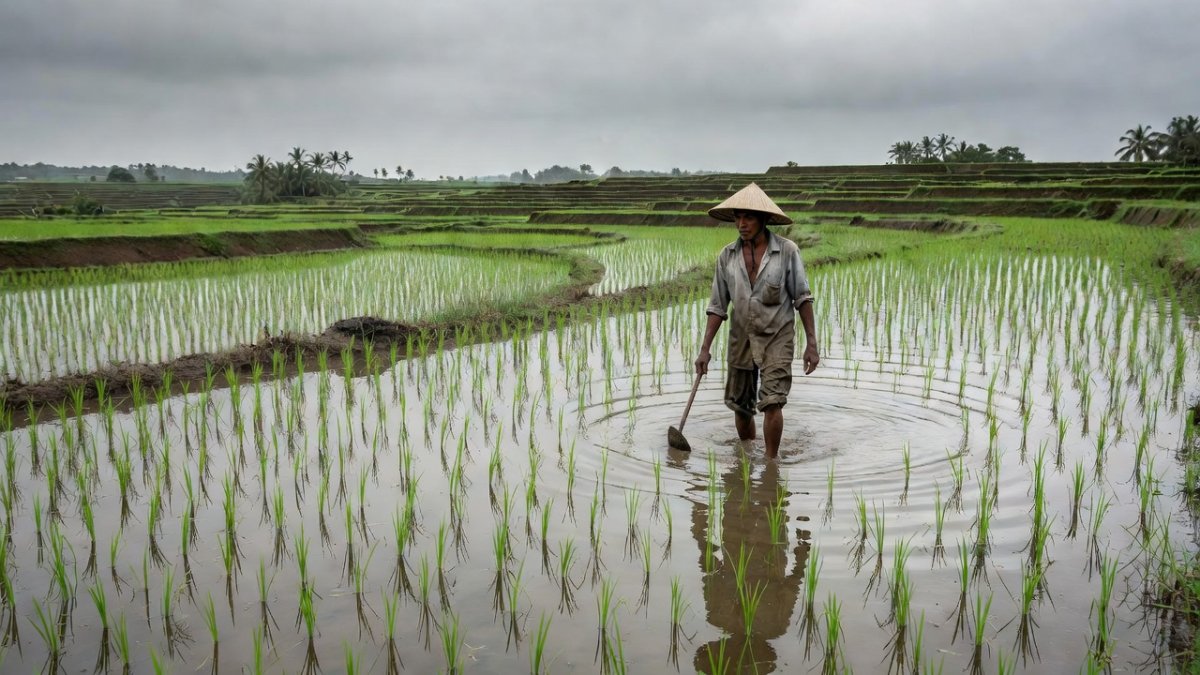
Beyond the immediate danger to life and limb, the flooding has dealt a crippling blow to the nation’s food security and rural economy. In Pampanga, one of the country’s agricultural powerhouses, the floodwaters have caused an estimated P1.25 billion in agricultural losses, affecting more than 40,000 farmworkers. Governor Lilia Pineda has ordered a round-the-clock provincial response to address the crisis, but for many farmers, the damage to their rice paddies and vegetable plots represents a loss of their entire season’s income.
The impact on the agricultural sector is a national concern. The southwest monsoon and cyclones have damaged P2.32 billion worth of agricultural products across the affected regions. This translates to empty tables and uncertain futures for thousands of farming families who rely on their harvests to feed their children and send them to school. The road to recovery will be long, and the need for government support, from financial assistance to the provision of new seeds and farming inputs, will be critical in the coming weeks.
Education at Risk: DepEd Estimates P6.6B Needed for School Repairs
The disaster has also placed the education of millions of Filipino children in jeopardy. The Department of Education (DepEd)’s Disaster Risk Reduction and Management Service has estimated that a staggering P6.6 billion will be needed for the repair, clean-up, and reconstruction of 1,630 schools damaged by the floods. Of this amount, approximately P47.063 million is required for immediate clean-up and clearing operations to make the schools safe and usable again.
With the school year already underway, the flooding threatens to disrupt classes for thousands of students. Classrooms are caked in mud, learning materials have been destroyed, and in many cases, school buildings are still being used as evacuation centers. The DepEd’s challenge is twofold: to rehabilitate the physical infrastructure and to ensure that students do not fall behind in their studies. The agency will need to work closely with LGUs and parent-teacher associations to organize clean-up drives and implement alternative learning modalities where necessary.
Government Rallies: Marcos Directs Swift Aid, Senate Pushes for Accountability
At the highest levels of government, the response is being coordinated with a sense of urgency. President Marcos has directed all agencies to ensure the timely delivery of aid to communities hit by the floods. Palace press officer Claire Castro confirmed that the President has been constantly monitoring the situation, stating, “In the middle of the heavy rains, he continued to monitor and to issue directives to agencies to ensure the safety of our countrymen and the prompt delivery of assistance.”
Meanwhile, the DILG, in coordination with the Philippine Institute of Volcanology and Seismology (PHIVOLCS), has called for heightened vigilance in communities within identified lahar hazard zones, particularly around the Pinatubo area. The concern is that the heavy rains could remobilize volcanic debris, creating dangerous lahar flows that threaten downstream communities.
In the Senate, the focus is shifting toward long-term solutions and accountability. Senate finance committee chairman JV Ejercito has issued a firm challenge to the Department of Public Works and Highways (DPWH): finish the flood control projects you have started before starting new ones. “Close the gaps, complete the uncompleted flood control projects. No new projects. Finish what needs to be finished,” Ejercito said, warning that abandoning current projects only exacerbates flooding. He emphasized that the DPWH must base its budget requests on a national master plan, ensuring that any funded intervention strictly targets the country’s top 10 flood-prone provinces and the 18 major river basins.
Ejercito also vowed to restore public trust following the recent flood control scandal by ending the practice of inserting unvetted projects into the budget at the last minute. To ensure transparency, he said civil society organizations and watchdog groups like the People’s Budget Coalition will be invited to participate in budget hearings and the bicameral conference committee. He dismissed rumors about a “leadership fund” allegedly being offered to senators, signaling a push for a more accountable and transparent budgeting process.
A Call for Resilience: Remembering the Floods at the Polls
As the nation grapples with this immense tragedy, the call for resilience is echoed by leaders from all walks of life. Bishop Daniel Presto of the Diocese of San Fernando, La Union, has asked the public not to forget the devastating effects of the heavy flooding when they cast their votes in the 2028 elections, reminding everyone that climate resilience and disaster preparedness must be at the forefront of the national agenda. For now, the immediate priority remains clear: to reach every affected family, provide them with food, water, and shelter, and begin the long, arduous process of rebuilding lives and communities.
This article was produced with AI-assisted research and editorial support. Sources: Philippine Star (philstar.com), Office of Civil Defense, DILG, DepEd, Senate of the Philippines.
By Bella Reyes, Staff Writer
What's Your Reaction?
 Like
0
Like
0
 Dislike
0
Dislike
0
 Love
0
Love
0
 Funny
0
Funny
0
 Wow
0
Wow
0
 Sad
0
Sad
0
 Angry
0
Angry
0

Philippines/Southeast Asia Correspondent at Global1.News. Manila-based journalist covering Philippine politics, environment, maritime security, and social issues. Passionate about marine conservation and the communities protecting the Philippines' natural heritage.











Comments (0)