
Kolkata School Illness Cluster: 25 Hospitalised, India's Meal Safety Gaps Resurface
At least 25 girl students from Park Institution for Girls, a government-run school in Kolkata's Bagmari area, were admitted to RG Kar Medical College and Hospital on Monday night after complaining of fever, abdominal pain, and vomiting. The cluster, which emerged between 2 pm and 8 pm on August 10, has triggered an investigation into possible food or water-borne contamination, with an infectious cause yet to be ruled out. Kolkata School Illness Cluster: 25 Hospitalised,...
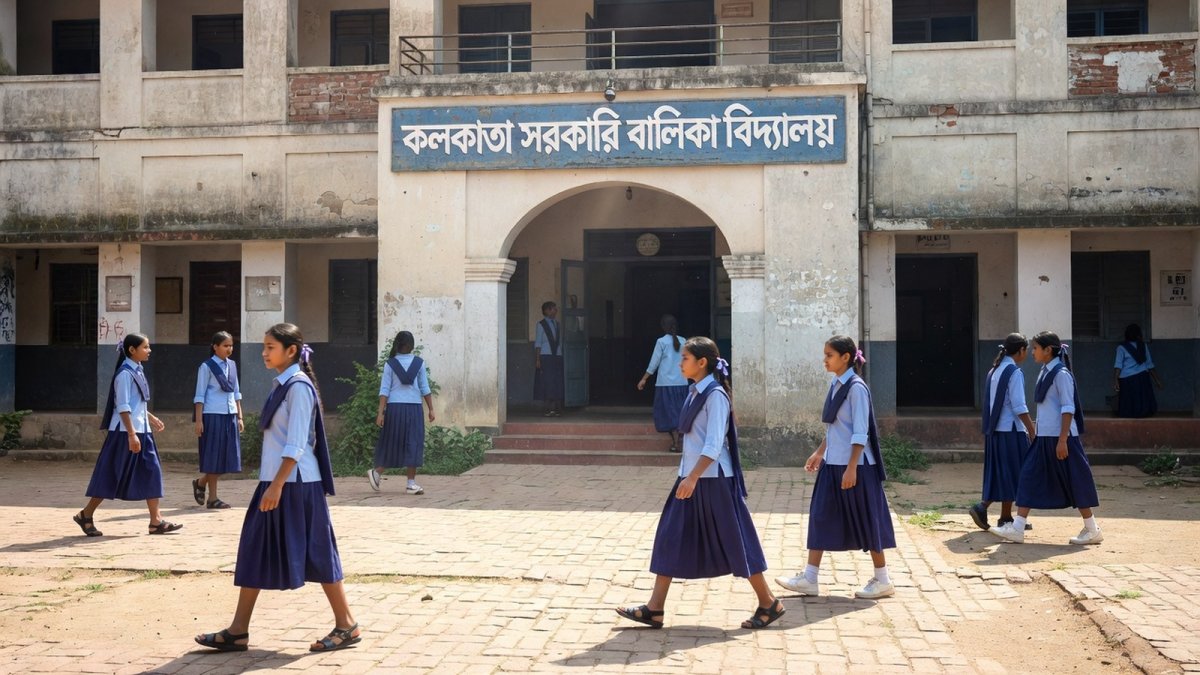
At least 25 girl students from Park Institution for Girls, a government-run school in Kolkata's Bagmari area, were admitted to RG Kar Medical College and Hospital on Monday night after complaining of fever, abdominal pain, and vomiting. The cluster, which emerged between 2 pm and 8 pm on August 10, has triggered an investigation into possible food or water-borne contamination, with an infectious cause yet to be ruled out.
Kolkata School Illness Cluster: 25 Hospitalised, India's Meal Safety Gaps Resurface
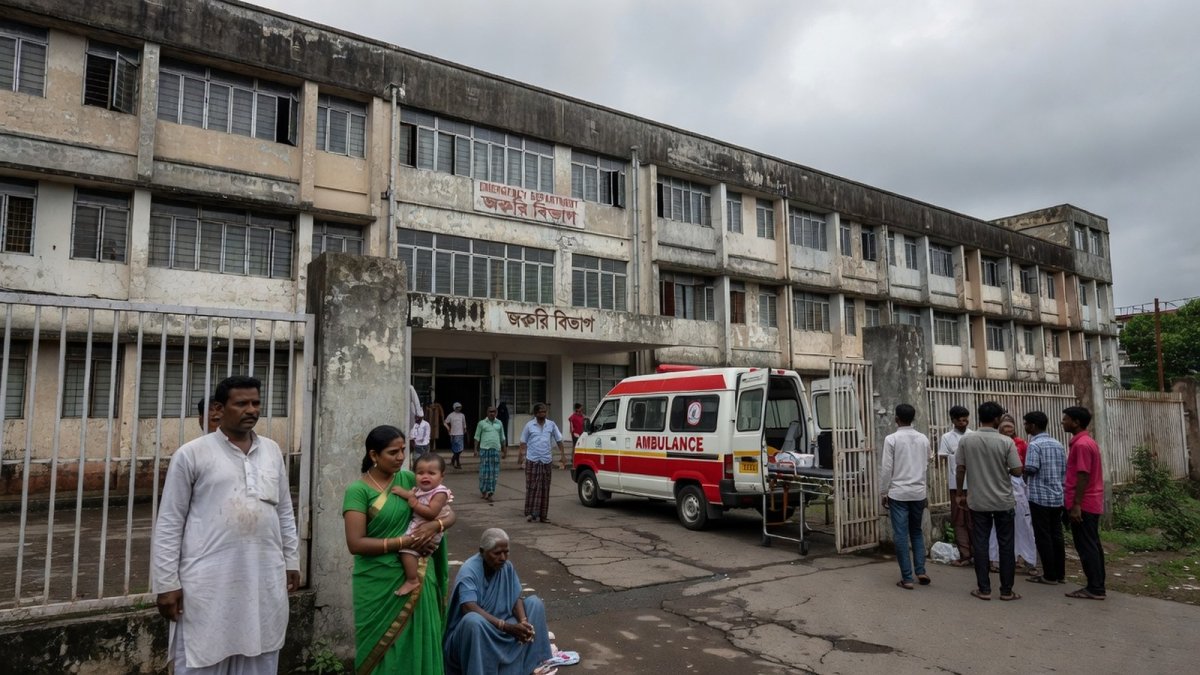
Kolkata, West Bengal – August 11 — The emergency department of RG Kar Medical College and Hospital, one of the state's premier government medical institutions, received the students in batches through Monday evening. A hospital official confirmed to PTI that the girls' conditions are stable, with symptomatic medication administered and observation ongoing. "The possibility of a food or water-borne problem is being examined, while an infectious cause has also not been ruled out," the official said.
A Recurring Pattern: India's School Meal Safety Record
This incident is not an isolated anomaly. It fits a troubling statistical pattern across Indian schools. In February 2026, 20 children in Karnataka were hospitalised after a suspected midday-meal poisoning. In January 2026, 22 students in Telangana's Sangareddy district fell ill following a midday meal, and 21 were affected in Maganoor, also in Telangana. Tamil Nadu's Tiruchirappalli reported 15 students sickened after a school meal in the same period. The deadliest precedent remains the July 16, 2013, tragedy in Gandaman village, Saran district, Bihar, where 23 children died after consuming a midday meal contaminated with pesticide. The school principal in that case was later sentenced to 17 years in prison.
These recurring episodes underscore a systemic vulnerability in India's school nutrition programme. The Pradhan Mantri Poshan Shakti Nirman (PM POSHAN), formerly the Mid-Day Meal scheme, covers approximately 11.8 crore children in Classes 1 through 8 across government and government-aided schools. Approved in September 2021 and running through 2026, it is the world's largest school feeding programme. Yet, as a Times of India investigation noted, the Centre has not disclosed how many of the 19,557 schools in Punjab and 14,210 in Haryana covered under PM-POSHAN are registered with the Food Safety and Standards Authority of India (FSSAI). No deadline has been set for mandatory food-safety registration.
What Happened at Park Institution for Girls
Park Institution for Girls, established in 1955 and managed by the Department of Education, is located in Ward 12 of the Kolkata Municipal Corporation. The school has no official statement as of Tuesday morning, leaving parents in the Bagmari area anxious. West Bengal Health Minister Dr Sharadwat Mukherjee visited RG Kar Medical College and Hospital overnight to personally assess the students' condition, signalling the state government's sensitivity to the incident. News18's reporting has highlighted that food and water contamination is the primary line of investigation.
The timing of the admissions — spread over a six-hour window between 2 pm and 8 pm — suggests a common-source exposure rather than person-to-person transmission, though the hospital has not ruled out an infectious cause. Doctors gave the students medication for fever, abdominal pain and vomiting, and advised that they be kept admitted for observation. Hospital sources said their conditions were being monitored and remained stable.
The Regulatory Gap: FSSAI and PM POSHAN Disconnect
The core issue lies in the disconnect between the PM POSHAN framework and FSSAI enforcement. While FSSAI sets food safety standards for school meal providers and canteens, state food safety departments are responsible for inspections and sample collection. However, the scale of the challenge is immense. With 11.8 crore children covered, the programme operates through a decentralised network of cooks, helpers, and school management committees. In many states, particularly in eastern India, the supply chain for ingredients — rice, dal, vegetables, and cooking oil — lacks robust cold-chain infrastructure and quality testing at the point of delivery.
West Bengal is no stranger to such incidents. In July 2018, worms were found in the mid-day meal served at a government primary school in Murshidabad district — an episode that drew national attention after a teacher allegedly told students the worms were cumin seeds. Similar episodes of students falling ill after school meals have been reported in the district in the years since, underscoring that food-safety lapses are not confined to any single state.
Surveillance Systems: Why This Cluster Matters
India's Integrated Disease Surveillance Programme (IDSP), now operating through the Integrated Health Information Platform (IHIP), is designed to detect and respond to disease clusters precisely like this one. A school-based outbreak of gastrointestinal illness is a classic signal for the early-warning system. The fact that 25 students presented to a single hospital within six hours should trigger an immediate epidemiological investigation, including stool sample collection, food sample retrieval, and water quality testing.
However, the effectiveness of IDSP depends on timely reporting from hospitals and schools. In this case, RG Kar Medical College and Hospital has reported the cluster to the state health department, and the minister's overnight visit suggests political attention is focused. The question is whether the investigation will extend beyond symptomatic treatment to identify the root cause — and whether corrective action will follow.
What This Means for Indian Parents and Taxpayers
For parents, this incident is a reminder that school meals, while nutritionally essential, carry inherent risks when safety protocols lapse. For taxpayers, the economics are stark: the overall allocation for PM POSHAN in 2025-26 is more than ₹30,000 crore, including the Centre's contribution of over ₹21,500 crore and 24.15 lakh metric tonnes of foodgrains costing around ₹9,000 crore. Every hospitalisation due to food poisoning represents a failure of that investment — not just in medical costs, but in lost school days and parental productivity.
The broader policy implication is that India needs a mandatory FSSAI registration and inspection regime for all PM POSHAN schools, with a defined deadline. The current voluntary or ambiguous status leaves millions of children exposed. The Ministry of Health and Family Welfare, along with the Ministry of Education, must issue joint guidelines that make food-safety audits a precondition for PM POSHAN funding disbursement.
The Way Forward: Data-Driven Accountability
West Bengal's response to this incident will be closely watched. The state has the institutional capacity — RG Kar is a teaching hospital with a strong community medicine department — to conduct a rigorous investigation. The state food safety department should collect samples from the school's kitchen, water source, and any food remnants within 24 hours. The results should be made public within a week.
Nationally, the Ministry of Health should use this cluster to audit IDSP reporting compliance across all states. If school-based outbreaks are being under-reported, the surveillance system is failing its primary purpose. The FSSAI, for its part, should publish state-wise data on school meal inspections, creating a transparency dashboard that parents can access.
The Bottom Line
The hospitalisation of 25 girls at Park Institution for Girls is a preventable event that has nonetheless occurred. With 11.8 crore children dependent on PM POSHAN meals daily, the margin for error is zero. The 2013 Saran district tragedy, which killed 23 children, was supposed to be a turning point. Thirteen years later, the same vulnerabilities persist. The difference now is that India has the data infrastructure — IHIP, FSSAI registration, and state food safety labs — to prevent these incidents. What is missing is the political will to enforce compliance. The students of Park Institution for Girls deserve more than symptomatic treatment; they deserve a system that ensures their meal is safe before it reaches their plate.
— By Dr. Raj Patel, Staff Writer
This article was produced with AI-assisted research and editorial support. Sources: PTI, NDTV, ETV Bharat, Bhaskar English, school records.
What's Your Reaction?
 Like
0
Like
0
 Dislike
0
Dislike
0
 Love
0
Love
0
 Funny
0
Funny
0
 Wow
0
Wow
0
 Sad
0
Sad
0
 Angry
0
Angry
0

India/South Asia Correspondent at Global1.News. Analytical voice with a background in science and health journalism. Based in New Delhi, covering Indian politics, education, healthcare, technology, and policy. Breaks down complex data into clear, actionable reporting.













Comments (0)