
Keiko Fujimori Sworn In as Peru President After Narrow Win
In a recent DW News report, the political earthquake that has reshaped Peru's landscape takes center stage: Keiko Fujimori, the 51-year-old daughter of a former authoritarian leader, has been sworn in as Peru's president after a razor-thin electoral victory that has left the nation deeply divided. For Latin America — and for Mexico, which watches its Andean neighbor closely — this is a moment of profound consequence. Fujimori's ascent marks not just the return of a...
In a recent DW News report, the political earthquake that has reshaped Peru's landscape takes center stage: Keiko Fujimori, the 51-year-old daughter of a former authoritarian leader, has been sworn in as Peru's president after a razor-thin electoral victory that has left the nation deeply divided. For Latin America — and for Mexico, which watches its Andean neighbor closely — this is a moment of profound consequence. Fujimori's ascent marks not just the return of a controversial political dynasty, but a decisive shift to the right in a region grappling with insecurity, economic instability, and democratic fragility. The question on everyone's mind, as the DW News report makes clear, is whether she can govern a fractured nation — and at what cost to Peru's democratic institutions.
Keiko Fujimori Sworn In: Perus New President Faces a Divided Nation
Lima, Peru — Keiko Fujimori took the oath of office before Congress on Tuesday, July 28, becoming Peru's first female president elected by popular vote and the ninth person to hold the office in a decade of dizzying political turmoil. But her inauguration came amid protests, deep skepticism, and a nation evenly split between those who see her as a necessary strong hand against crime and those who fear the return of her father's iron-fisted rule.
The Narrowest of Mandates
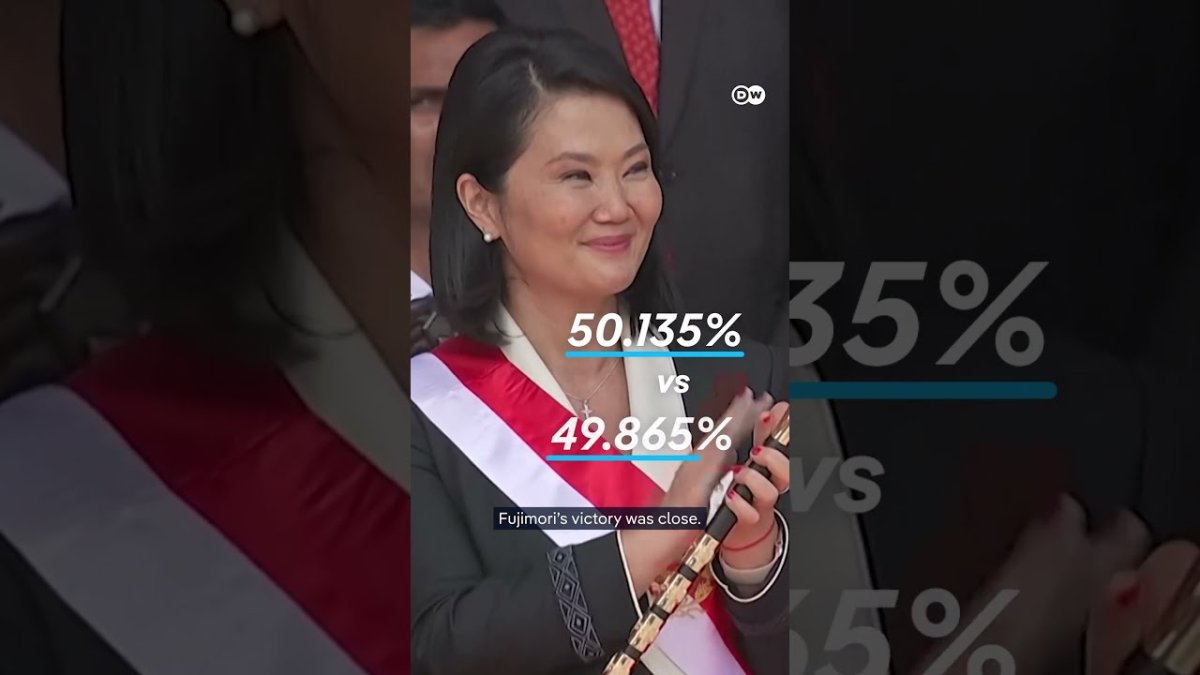
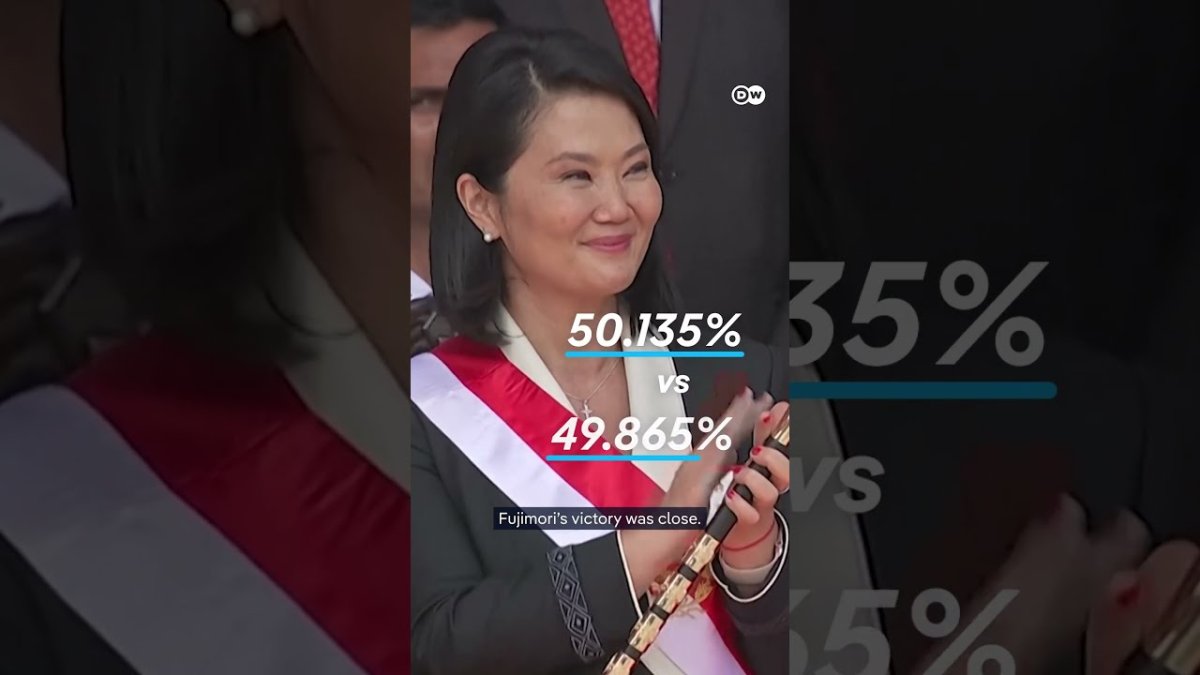
Fujimori's victory was decided by just 49,641 votes — fewer than the capacity of Lima's Estadio Nacional. Out of more than 17 million ballots cast in the June 7 runoff, she secured 50.135% against leftist congressman Roberto Sánchez's 49.865%. The result was so close that it took nearly a month for Peru's National Elections Jury to certify it, as accusations of irregularities and allegations of electoral fraud swirled. Marked ballots were discovered in at least eight polling stations, and poll watchers were detained in the Lima districts of La Molina and Los Olivos on suspicion of tampering with electoral materials.
"This is not a victory that inspires confidence," said María Teresa Zegarra, a political analyst at the Universidad del Pacífico in Lima, in an interview this week. "Fujimori enters office with the smallest possible mandate. She will need to build bridges immediately, but her campaign was built on division."
The Fujimori Dynasty Returns
Keiko Fujimori is not a newcomer to Peruvian public life. At just 19 years old, she stepped into the role of first lady after her parents' separation, standing beside her father, Alberto Fujimori, during his controversial authoritarian rule in the 1990s. Alberto Fujimori is credited by supporters with defeating the Shining Path insurgency and stabilizing Peru's hyperinflated economy through harsh neoliberal reforms. But he was later convicted of corruption and crimes against humanity — including the 1992 massacre of 15 people at a Lima barbecue, carried out by a death squad operating under his orders — and served 16 years in prison before his release in 2023.
That legacy is both a sword and a shield for Keiko. It propelled her to victory among voters who remember her father's era as one of order and economic growth. But it also mobilized tens of thousands of Peruvians into the streets. On the eve of her inauguration, relatives of victims of state violence gathered in Lima's Plaza San Martín to reject her incoming government, holding photographs of loved ones killed during the internal conflict of the 1990s.
"I cannot stand by and watch the daughter of a convicted criminal take power as if nothing happened," said Elena Quispe, whose brother was among the disappeared during the Fujimori era. "This is a wound that has not healed."
Iron Fist Against Crime: A Campaign Built on Fear
Fujimori's winning campaign was laser-focused on one issue: security. Peru is experiencing its worst public safety crisis in decades. Extortion has become a daily reality for small business owners in Lima and Trujillo. Contract killings, once rare outside the cocaine-producing valleys of the Upper Huallaga, now occur with grim regularity in middle-class neighborhoods. Criminal gangs — some local, others with tentacles reaching into Mexico and Colombia — have turned once-peaceful districts into battlegrounds.
Fujimori promised an "iron fist" response. Her flagship proposal: a mega-prison modeled on El Salvador's Cecot facility, capable of holding 40,000 inmates under maximum-security conditions. She has called for anonymous judges to hear organized crime cases, protecting magistrates from cartel intimidation. She has proposed deporting undocumented migrants convicted of crimes — a policy that would disproportionately affect Venezuelan refugees, hundreds of thousands of whom have settled in Peru during the regional migration crisis. And she has insisted that prisoners should work for their food, a measure she says would restore discipline and deterrence to a system critics call overcrowded and dysfunctional.
"The people of Peru have cried out for security, and we will deliver it," Fujimori said in her inaugural address. "There will be no impunity for criminals. We will recover our streets, our neighborhoods, and our peace."
But human rights organizations have sounded the alarm. Amnesty International's Peru director, Miguel Salazar, warned this week that "the security package proposed by Fujimori echoes the worst excesses of her father's era, when due process was suspended and extrajudicial executions were state policy."
Peru's Political Instability: A Decade of Chaos
Fujimori is Peru's ninth president in ten years — a staggering rate of turnover that reflects the deep institutional dysfunction at the heart of the country's politics. Her predecessors were removed, resigned, or replaced in dizzying succession: Pedro Pablo Kuczynski resigned under corruption allegations in 2018; Martín Vizcarra was impeached in 2020; Manuel Merino lasted barely a week after protesters killed two demonstrators; Francisco Sagasti served a transitional term; Pedro Castillo was arrested after attempting to dissolve Congress in 2022; Dina Boluarte took over amid deadly protests; and the cycle continued.
Fujimori's own Fuerza Popular party was a key driver of much of this instability, leading impeachment efforts against multiple presidents and blocking legislative agendas through strategic alliances. Now, with Fuerza Popular as the largest bloc in Congress and its right-wing allies controlling half the newly installed Senate, Fujimori has a stronger institutional position than any Peruvian president in years. But that strength is a double-edged sword: her opponents warn that the same legislative muscle used to destabilize previous governments could now be used to concentrate power and weaken checks and balances.
"The irony is painful," wrote columnist Ricardo Vargas in Lima's El Comercio this week. "The party that spent years paralyzing Peru's government now claims to be the only force capable of stabilizing it."
Latin America's Rightward Shift — And What It Means for Mexico
Fujimori's victory is the latest data point in a clear regional trend. Latin America, which experienced a leftist "pink tide" in the early 2000s, has swung decisively toward the right. In Argentina, Javier Milei's libertarian shock therapy has reshaped that country's economy. In El Salvador, Nayib Bukele's iron-fisted security policies have made him the most popular president in the hemisphere — and a model for Fujimori's own approach. In Ecuador, Daniel Noboa has governed as a pragmatic conservative. In Chile, the rightward shift has been more measured but unmistakable.
For Mexico, the implications are significant. The government of President Claudia Sheinbaum — a progressive who succeeded Andrés Manuel López Obrador — has pursued an independent foreign policy, maintaining ties across the ideological spectrum. But Fujimori's presidency introduces new friction points. Fujimori has been a vocal critic of Mexico's security policies, which she has characterized as soft on organized crime. During her campaign, she questioned the effectiveness of Mexico's "hugs not bullets" strategy and suggested that Peru would look to El Salvador and the Philippines for inspiration instead.
"Fujimori's victory presents a challenge for the Palacio Nacional," said Dr. Ana Lucía Hernández, a Mexico City-based analyst specializing in Latin American politics. "Sheinbaum's government will need to navigate carefully. Trade between Mexico and Peru is robust — our countries are part of the Pacific Alliance — but ideological differences on security and governance could strain the relationship."
Fujimori also crossed rhetorical swords with Mexico during the campaign, calling for a "re-evaluation of diplomatic relations" with countries she accused of harboring authoritarian tendencies. While the remark was widely seen as targeting Venezuela and Nicaragua, Mexican diplomats took note. In her first public statement as president-elect, Fujimori walked back the criticism, saying she wanted to "restore and strengthen ties" with Mexico.
What This Means for Ordinary Peruvians and Their Latin American Neighbors
For the millions who voted for Fujimori — including many in working-class districts of Lima and the northern coastal regions that benefited from her father's infrastructure programs — her presidency represents a chance at order. Pedro Huamán, a market vendor in Lima's sprawling Gamarra commercial district, told DW News that he voted for Fujimori because "we cannot live like this anymore, with extortion every week and the police doing nothing. My son was threatened for 50 soles a week — 50 soles! I am tired."
But for the millions who did not vote for her — and for the 49.9% of voters who chose Sánchez — the inauguration is a source of anxiety. Indigenous communities in the Andean highlands, which supported Sánchez overwhelmingly, fear that Fujimori's government will roll back environmental protections and criminalize social protest. Union leaders worry that her promised labor flexibility reforms will erode hard-won workers' rights. And Afro-Peruvian and LGBTQ+ activists, already on edge after years of political instability, have warned that Fujimori's alliance with socially conservative evangelical parties could produce a backlash on civil rights.
"Mexico has its own struggles with insecurity and governance," said Dr. Hernández. "But Mexican readers should understand that what happens in Peru does not stay in Peru. If Fujimori's iron-fist model succeeds — if crime drops significantly and the economy responds — it will embolden similar voices in our own country who argue that democracy must take a back seat to security. And if it fails, it will be a cautionary tale for the entire hemisphere."
Reactions Across the Region
Regional reactions to Fujimori's inauguration have been mixed. Argentina's President Milei sent a congratulatory message, praising "a leader who understands that freedom and security go hand in hand." Brazil's government issued a measured statement expressing hope for "constructive bilateral relations." Chile's President Gabriel Boric, a leftist, offered public congratulations but privately expressed concern about the direction of Peruvian democracy, according to diplomatic sources quoted in Chilean media.
In Mexico, the Secretaría de Relaciones Exteriores (SRE) issued a brief statement recognizing Fujimori's election and expressing a desire for continued cooperation within the Pacific Alliance framework. But behind the diplomatic language, officials at the SRE are watching closely. Mexico and Peru have historically been competitors for influence in South America, and Fujimori's more conservative, US-aligned foreign policy could shift the regional balance.
Civil society organizations across Latin America have been less restrained. The Washington Office on Latin America (WOLA) warned that "Fujimori's security proposals raise serious concerns about due process and human rights." The Inter-American Commission on Human Rights (IACHR) called on the new government to "ensure that the fight against crime does not come at the expense of fundamental freedoms." In Mexico, the Comisión Nacional de los Derechos Humanos (CNDH) issued a solidarity statement with Peruvian human rights defenders, urging Fujimori to respect international obligations.
What to Watch For
The first 100 days of Fujimori's administration will be critical. She is expected to send her mega-prison legislation to Congress within the first month, along with a package of security measures that includes expanding the role of the military in domestic policing — a move that requires careful constitutional navigation. The economic picture is equally challenging: Peru's economy, while resilient, faces headwinds from falling copper prices and reduced Chinese demand.
For Mexican readers, the key indicators will be: whether Fujimori pursues the diplomatic reset she promised toward Mexico; whether her security policies produce measurable results without triggering a human rights crisis; and whether Peru's polarized society can begin to heal under a leader who won the support of only half the electorate.
In a DW News report that captures the mood of a nation at a crossroads, Fujimori's own words may offer the best summary of the challenge ahead: "The doors to dialogue will always be open." Whether those doors remain open — and whether her opponents choose to walk through them — will define not just Peru's future, but the trajectory of a region watching closely.
By Rosa Martinez, Staff Writer
This article was produced with AI-assisted research and editorial support. Reporting is based on sources cited in the article.
What's Your Reaction?
 Like
0
Like
0
 Dislike
0
Dislike
0
 Love
0
Love
0
 Funny
0
Funny
0
 Wow
0
Wow
0
 Sad
0
Sad
0
 Angry
0
Angry
0
Latin America/Andes Correspondent at Global1.News. Based in Bogota, covering politics, environment, energy, and social movements across the Andean region. Passionate about environmental journalism and communities protecting their land.










Comments (0)