
Stingless Bees Restore Peru's Mining-Scarred Amazon
Deep in southeastern Peru, where illegal gold mining has torn scars across the Amazon, an unlikely army of restoration workers is taking flight. Stingless Melipona bees — among the oldest pollinators on Earth — are helping bring the rainforest back, one native tree at a time, and their honey carries centuries of Indigenous wisdom with it.
Deep in southeastern Peru, where illegal gold mining has torn scars across the Amazon, an unlikely army of restoration workers is taking flight. Stingless Melipona bees — among the oldest pollinators on Earth — are helping bring the rainforest back, one native tree at a time, and their honey carries centuries of Indigenous wisdom with it.
Stingless Bees Restore Peru's Mining-Scarred Amazon
Puerto Maldonado, Peru – August 10, 2026 — In the Madre de Dios region, one of the areas hardest hit by illegal gold mining and logging, beekeepers are turning to stingless Melipona bees to help restore the Amazon. More than 40,000 bees are kept at a single sanctuary, pollinating native trees essential for natural regeneration. Their honey also holds deep cultural significance, used by Indigenous Shipibo communities as traditional medicine for generations.
Tiny Architects of the Forest's Comeback
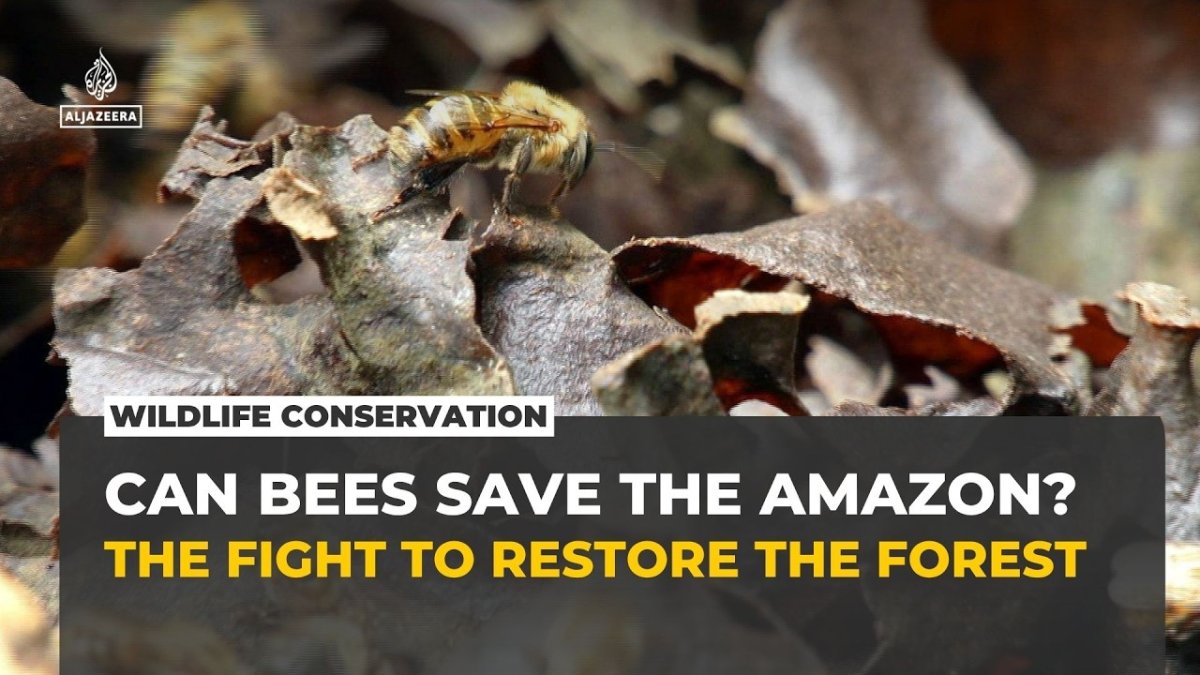
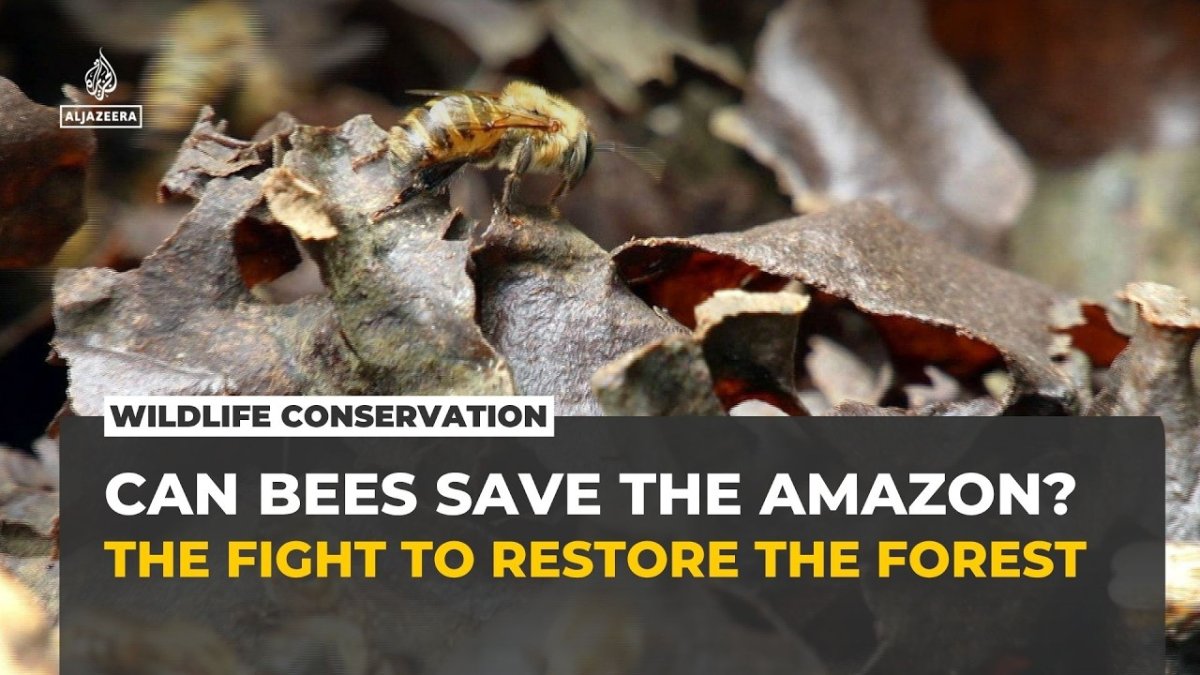
The numbers are small, but the impact is outsized. At one sanctuary in Madre de Dios, more than 40,000 stingless bees tend the forest daily, moving pollen between the native trees that anchor the region's regeneration after decades of destruction. Every flower they visit is a step toward closing the wounds opened by dredges, bulldozers and chainsaws.
Stingless bees are not newcomers to this work. They are among the oldest bee lineages on the planet, and some of the Amazon Rainforest's most important pollinators — responsible for pollinating more than 80 percent of Amazonian flora. When a gold mine abandons a stretch of forest, the bees become the first responders of the ecosystem, cross-pollinating pioneer species whose seeds and shade make life possible for the trees that follow.
Beekeepers in the region describe the sanctuary as a living nursery: native seedlings germinate faster and survive better where bee activity is dense. The natural regeneration they trigger is cheaper and more durable than any industrial replanting program — and it restores the forest's genetic integrity along with its canopy.
Madre de Dios: A Wounded Frontier
The stakes could not be higher. Madre de Dios has been transformed into one of the Amazon's most devastating deforestation hotspots, driven overwhelmingly by illegal gold mining. La Pampa, the largest illegal mining zone in the department, has grown relentlessly since its first detection in 2008, swallowing forest and riverbanks in equal measure.
The scale of the dependency is staggering: roughly 35.4 percent of Madre de Dios' population — about 50,000 people — is directly involved in gold mining, whether informal or illegal. That economic entanglement helps explain why enforcement has been so difficult. Government operations like "Operation Mercury" in 2019 and 2020 briefly reduced deforestation, but research showed the gains were not sustained once the pressure lifted.
Beyond the lost trees, the mining economy has poisoned the water. Mercury used to extract gold contaminates riverine sediments and fish, and Duke University research confirms the toxic metal poses health threats miles downstream of the mines. Add rampant logging to the equation, and the region becomes a case study in everything the Amazon is fighting against — which is precisely why the bee sanctuaries matter.
Meliponiculture: Ancient Knowledge Meets Modern Restoration
Stingless beekeeping, or meliponiculture, is not a new technique — even if scientists are only beginning to appreciate it. "Stingless beekeeping is not a new technique," said Stefanie Torres, president of the Asociación de Meliponicultores de la Región Loreto, reflecting a sentiment shared across the Peruvian Amazon.
For centuries, Indigenous communities have stewarded stingless bees, weaving them into food systems, medicine, ceremony and forest management. The bees' unique biology — no stinger, complex social structure, and a symbiotic relationship with specific nesting trees — makes them exquisitely sensitive indicators of ecosystem health. Where they thrive, the forest thrives.
Modern meliponiculture builds on that ancestral foundation with rational hives: managed wooden boxes that let beekeepers harvest honey sustainably without destroying the colony. Conservation groups like Amazon Research Internacional (ARI) have installed more than 350 sustainable hives and mapped over 400 wild hives across the Peruvian Amazon, protecting an estimated 22 million bees while documenting the species richness that makes the region a global biodiversity treasure.
Shipibo Medicine and the 'Miracle Liquid'
The honey these bees produce is far more than a sweetener. For the Shipibo people of Peru's Amazon, stingless bee honey has been used as traditional medicine for generations — treating respiratory ailments, infections and fatigue. National Geographic called it the "miracle liquid," and the New York Times made the bees and their honey a cover story in 2024.
Science is now catching up with the tradition. In 2024, researchers completed the first chemical analysis of Peruvian stingless bee honey alongside German scientist Dr. Fabien Schultz, and the work is expanding into the bioactive molecules hidden in honey and propolis. Studies of species like Scaptotrigona polysticta, Melipona illota and Tetragonisca angustula confirm the honeys are recognized for their medicinal properties.
The pandemic brought the knowledge into stark relief. During COVID-19, Indigenous communities in different regions of Peru relied heavily on stingless bee honey to treat symptoms — a living example of what Peruvian scientist Vásquez Espinoza calls the connection between biodiversity, traditional knowledge and conservation. Protecting the bees, she argues, is inseparable from protecting the cultures that know them best.
World-First Laws: Peru's Bees Gain Legal Rights
Peru has responded with legal innovation that made global headlines. In 2025, national Law No. 32235 formally recognised stingless bees as native Peruvian species and a matter of national interest. Then, on October 21, 2025, the Provincial Municipality of Satipo approved Municipal Ordinance No. 33-2025 — the world's first legal rights for insects — covering at least 175 stingless bee species.
The ordinance shields bees inside the Avireri-Vraem Biosphere Reserve, a UNESCO-designated area of nearly 16,000 square miles — larger than the state of Maryland — stretching from the Amazon rainforest to the Andes. It grants bees the right to exist, to maintain healthy populations, and to live in a sustainable, pollution-free environment, complete with legal standing to sue on their behalf. The municipality of Nauta followed with its own recognition in 2025.
The Guardian, CNN, People Magazine and Smithsonian Magazine all covered the milestone, which legal experts describe as a landmark of the emerging Rights of Nature movement. Vásquez Espinoza argues environmental protection can no longer focus exclusively on responding to damage after it occurs — the Satipo ordinance is a rare attempt to protect an ecosystem's architects before the next disaster strikes.
A Pan-Amazon Movement Led by Women
The legal breakthroughs are the visible tip of a much larger movement. In 2024, ARI launched Las Meliponicultoras — the first female-led stingless beekeeping training program in Peru — alongside a multilingual beekeeping manual written with Indigenous communities. The program is building sanctuaries and sustainable livelihoods for women, youth and community leaders across the region.
The results are measurable: more than 22 million bees protected, 350-plus sustainable hives installed, 400-plus wild hives mapped, 50,000 hectares of habitat surveyed, and more than 650 community members benefiting directly. Four Indigenous schools now integrate bees into their curricula, and three Peruvian laws protect stingless bees at different levels of government.
The vision is expanding beyond Peru's borders. In 2026, the idea of a Pan-Amazon stingless bee corridor was discussed across Peru, Bolivia, Colombia and Brazil — a connected network of biocultural landscapes with the long-term potential to link more than 200,000 hectares. ARI works alongside Ashaninka, Kukama-Kukamiria and Shipibo communities, treating the bees as a flagship species for the entire basin.
The Bottom Line — What Comes Next
For the people of Madre de Dios, the choice is becoming clearer by the season. One path leads back to the dredges and mercury ponds; the other leads through meliponiculture, restored forest and honey that carries both medicinal value and a market premium. Organizations like Pure Earth are already working with women miners in the region to build a mercury-free future with restored landscapes, including the first Fairmined-certified gold mining association in Madre de Dios.
The economics are beginning to favor the bees. Stingless bee honey commands premium prices in Lima and export markets, and the pollination services the bees provide to coffee, cacao and medicinal gardens make them directly valuable to farmers — not just conservationists. A three-minute film produced with Peru's Ministry of Environment for the UN's COP16 made the case that stingless bees are a flagship species for the Amazon basin, pairing modern science with Indigenous knowledge.
The Amazon has spent decades losing ground. In Madre de Dios, the most wounded corner of the Peruvian rainforest, the comeback is being organized by creatures barely a centimeter long — carrying pollen, carrying medicine, and carrying the hopes of the communities that have stewarded them for centuries. For Latin America, the lesson is profound: sometimes the smallest allies build the biggest futures.
By Elena Vasquez, Staff Writer
This article was produced with AI-assisted research and editorial support. Sources: Al Jazeera English; Amazon Research Internacional; Mongabay; Earth Law Center.
What's Your Reaction?
 Like
0
Like
0
 Dislike
0
Dislike
0
 Love
0
Love
0
 Funny
0
Funny
0
 Wow
0
Wow
0
 Sad
0
Sad
0
 Angry
0
Angry
0

Latin America Correspondent at Global1.News. Based in Mexico City, covering politics, economics, energy, and culture across the region. Brings an on-the-ground perspective to stories spanning from the Rio Grande to Patagonia.













Comments (0)