
Kaczyński Floats EU Exit Talks as Tusk Puts Membership on the Ballot
Jarosław Kaczyński told the Krynica Forum that if EU reform fails, Poland should begin negotiations on withdrawal terms. Donald Tusk called it an exit announcement and said the coming election will decide whether Poland stays. The same week, a minister walked out of the ruling coalition.
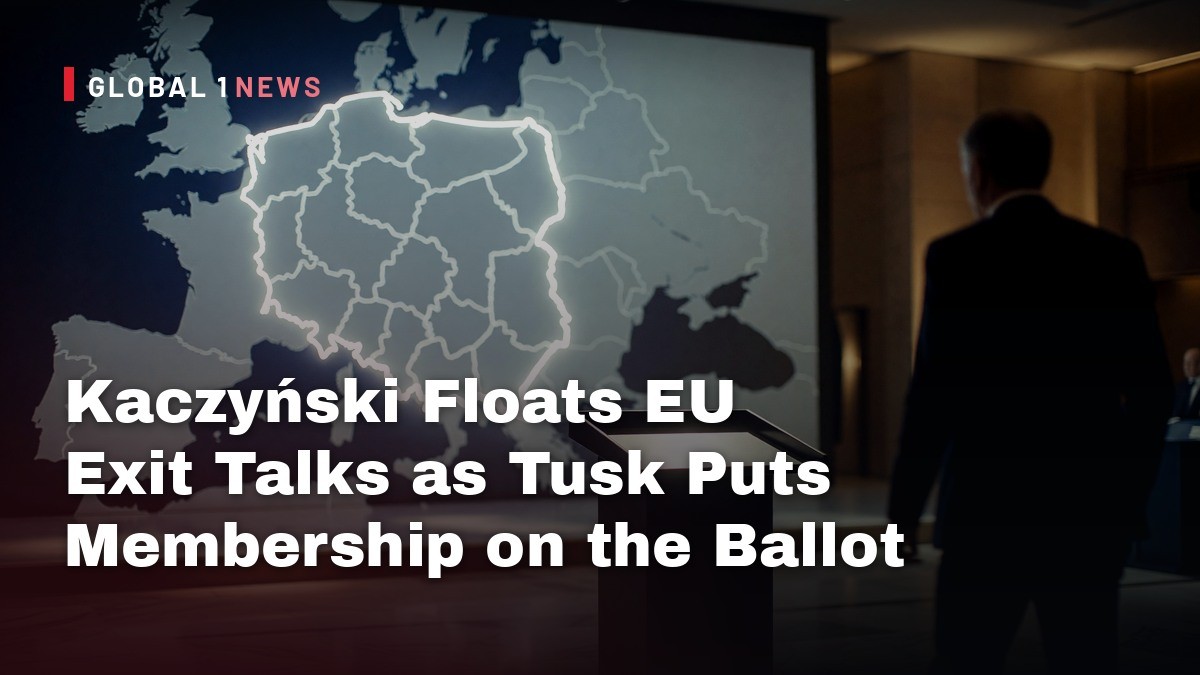
Jarosław Kaczyński used a conference stage in southern Poland to float talks on the terms of leaving the European Union, and Donald Tusk answered by putting membership itself on the ballot. In two days, 28 and 29 October, a speech became the opening argument of Poland's next election campaign.
Kaczyński Floats EU Exit Talks as Tusk Puts Membership on the Ballot
Warsaw, Poland — The Law and Justice leader told the Krynica Forum the bloc must be remade, and that if reform fails, Warsaw should start negotiating its way out. The Prime Minister said the coming election will decide whether Poland stays or goes.
What Kaczyński Said at Krynica
On Wednesday 28 October 2026, Jarosław Kaczyński, leader of the national-conservative Law and Justice party and of Poland's largest opposition grouping, delivered an hour-long speech at the Krynica Forum 2026, the annual political and economic conference in southern Poland, setting out his vision for remaking the European Union.
"The European Union must be changed. This is my deep conviction, shared by my party and, I believe, very many Poles," he said, in the account carried by the Associated Press.
He warned of a "consistent drive to transform the EU into a centralised state", said the European Commission carries too much influence over national governments, and called the European Parliament in its current form a "parody".
His ladder of pressure: shape public opinion, have national parliamentarians monitor treaty breaches, build a blocking minority in the European Council, then try to change the treaties. If that fails, he said, states wanting change "could conclude a new treaty with the elements we are seeking, but with a delayed entry into force".
Then came the passage that started the row. The treaties "include provisions specifying the terms under which a state may withdraw from the EU", he noted, and added: "It all starts with negotiations, and we should simply begin those negotiations. A tough method, a risky one, but things are really so bad, so very bad, that it is worth using this method too if the others fail to produce results."
Tusk's Answer, in One Sentence
Prime Minister Donald Tusk did not wait for the weekend. On the morning of Thursday 29 October he posted on X: "Jarosław Kaczyński has just announced that Poland should begin negotiations on the conditions of leaving the European Union. This is precisely what is at stake in today's fierce struggle in Poland. A tough battle—and I do not intend to lose it, even if not everyone plays on my side."
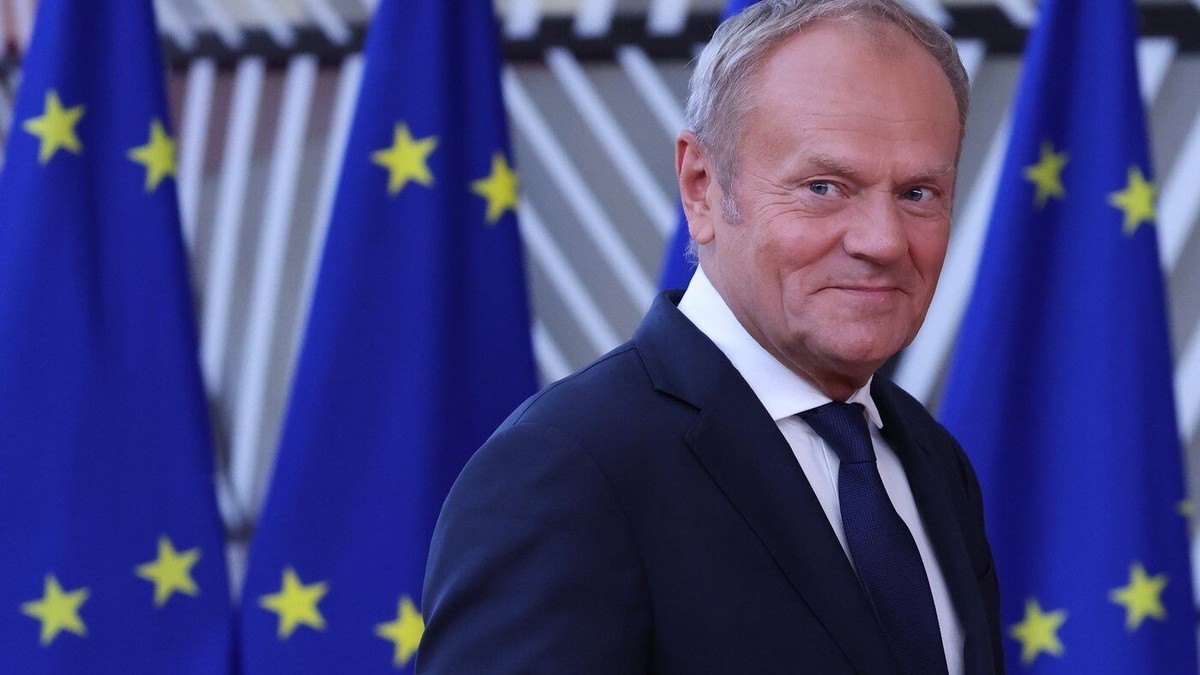
Later on Thursday, in a video, he framed the next parliamentary election as a referendum in all but name: the vote would help decide "whether Poland remains in the European Union or leaves it".
That is the line that matters, folks. Not a committee, not a white paper, not a treaty annex. The head of government is telling voters that membership itself is on the ballot, and he is saying it before the campaign has formally begun.
"Tusk, as Usual, Is Lying"
Kaczyński fired back on X later on Thursday. "Tusk, as usual, is lying," he wrote.
His version is that he never proposed an exit. "The European Union is needed, but it requires thorough reform," he said, blaming the bloc's crisis on the past governance of former German Chancellor Angela Merkel and on Tusk himself during his term as European Council President.
Law and Justice wants an EU focused on lowering energy prices, strengthening security and cutting unnecessary bureaucracy for ordinary citizens, he said. "We will restore the European Union to its citizens," he wrote, adding that letting the systemic crisis run on is what genuinely threatens Europe's future. To the Associated Press he put it as: "We want the union to benefit not the elites, but the ordinary citizens."
Read the two statements side by side and the gap is the story. One man described a pressure tactic. The other heard an exit announcement. Both are locked into their versions now, and the voters get to referee.
His Own Party Stops Short
Here is what matters: the leader's own deputies would not walk the last mile with him.
Przemysław Czarnek, the party's deputy leader, said Law and Justice was not planning to "take Poland out of the EU", though he said it weighed all scenarios, including the EU "destroying itself". Earlier that day he said the party has no plans for a Polexit and that Kaczyński's remarks were aimed entirely at the need to reshape the bloc.
Mateusz Morawiecki, the former Law and Justice prime minister who now leads the Development Plus grouping, drew his own line at a press conference in Warszawice near Warsaw: "The EU needs reform, and that reform must happen much faster. What is happening today is far from sufficient, but we are not a political group that calls for a Polexit. On the contrary, Poland's place is in the European Union."
Two senior figures, two denials, one day. A party accused all week of wanting out spent the same week insisting it wants in, on better terms.
A Customs Border With Germany
Foreign Minister Radosław Sikorski did not hedge. "So they do want Polexit after all," he wrote on X.
To the Associated Press he added a line that reads like a campaign gift accepted with both hands: "I thank Jarosław Kaczyński for his honesty."
Then he spelled out the bill. Leaving, he warned, would mean "a customs border with Germany, the Czech Republic, Slovakia, and Lithuania, passport controls at airports, and an end to EU subsidies for farmers and investments".
That is the concrete version of the argument Tusk's camp intends to run for the next year. Not sovereignty in the abstract. Queues at the German border. Passport checks before a flight. Farmers losing their payments, in a country the Associated Press describes as one of the bloc's fastest-growing economies.
Expect that list again, and again, until polling day.
The Kremlin Line
The government did not treat this as a domestic policy spat. It treated it as a security question.
Tomasz Siemoniak, the minister coordinating the special services, criticised Kaczyński for entertaining exit talks "at such a sensitive moment for our security", adding that "even Kremlin dreamers would not have predicted a significant Polish politician speaking directly against Poland's interests".
Government spokesman Adam Szłapka said: "Kaczyński is implementing Braun's agenda, and we all know whose agenda Braun implements."
Włodzimierz Czarzasty, Speaker of the Sejm and leader of the New Left, said Kaczyński was making the idea of Poland leaving the EU "seem more acceptable", accused President Karol Nawrocki of normalising "pro-Russian Braun", and wrote: "They are heading East. We are staying."
Cezary Tomczyk put it shorter on X on 29 October: "Kaczyński pomylił Krynicę z Kremlem" — Kaczyński has confused Krynica with the Kremlin.
Grzegorz Braun leads the far-right, Eurosceptic Confederation of the Polish Crown, and the row lands amid friction over whether Nawrocki should invite his faction to the National Security Bureau meeting on 3 November.
The 150 Billion Euro Argument
Deputy Prime Minister and Defence Minister Władysław Kosiniak-Kamysz tied the rhetoric to votes already cast.
It follows, he said, the opposition's recent votes against the EU's SAFE programme, a loan fund worth up to 150 billion euros for defence industry investment, which President Nawrocki vetoed in March. The EU must be reformed "where improvement is needed, not threatened with an exit", Kosiniak-Kamysz said, and he demanded that Law and Justice and Confederation state plainly before the election whether they want a Polexit.
New Left MEP Joanna Scheuring-Wielgus and Infrastructure Minister Dariusz Klimczak echoed him, Klimczak warning that the UK's severe post-Brexit national losses should serve as a stark warning to Poland.
Context worth holding onto: Law and Justice governed from 2015 to 2023 through running conflicts with EU institutions over the rule of law and human rights. A year out from the election, polls cited by the Associated Press indicate Kaczyński could return to power allied with smaller far-right groups that have been rising.
The Other Fire: A Minister Walks Out
While the EU row burned, the governing coalition was putting out its own fire.
On the evening of Thursday 22 October, Katarzyna Pełczyńska-Nałęcz announced she was leaving Tusk's government as minister of funds and regional policy, and stepping down as leader of Poland 2050, the party founded by former Sejm Marshal Szymon Hołownia. Her stated reason was a Sejm vote on local-election rules, including whether mayors should stay subject to a two-term limit.
The coalition, "including unfortunately a considerable part of Poland 2050 deputies, has turned against the people and sided with political fixers", she wrote. "I am leaving Donald Tusk's government because values are more important to me than seats." She left the party "in the hands of its founder", telling Hołownia: "I wish you would remember in whose name of values you came to power." She was subsequently expelled.
Tusk, speaking during a trip to India, called her "politically very lost". She answered on X: "I have been sentenced to exile for a thoughtcrime. I promise to reoffend with more free thinking."
A Majority of Eight
Polish media count about 239 of the Sejm's 460 seats for the governing 15 October Coalition: Civic Coalition 156, Polish People's Party 32, The Left 21, Poland 2050 15, and the Centrum club, which split from Poland 2050 in February, another 15. A majority needs 231 votes. Without Poland 2050's deputies the bloc falls to 224.
Eight seats. That is the cushion the government has been sitting on.
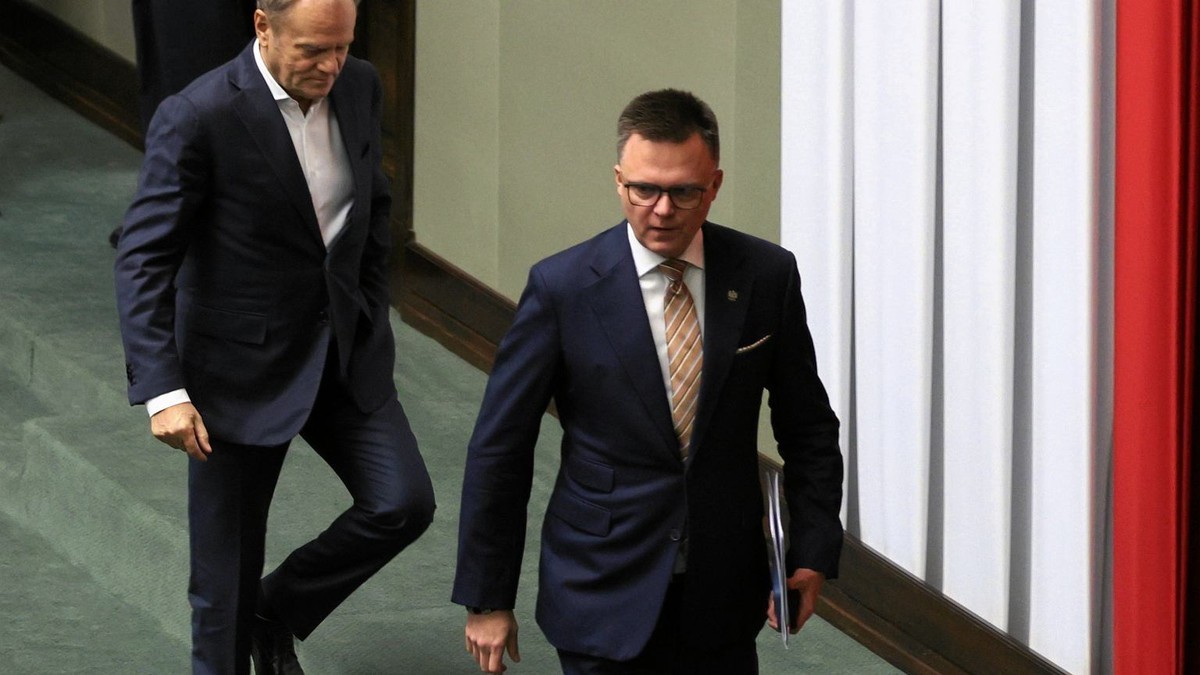
On Thursday 29 October Tusk named Agnieszka Bartol, Poland's permanent representative to the EU in Brussels and a career official rather than a politician, to replace Pełczyńska-Nałęcz. Her deputy and close collaborator Jan Szyszko left with her.
Hołownia, who is also Sejm deputy marshal and Poland 2050's club chief, had said on X on 27 October that he had "received assurances that Poland 2050 will retain influence and its share of responsibility". On Friday 30 October his MP Paweł Śliz told Polskie Radio the talks were finished and "we are hours away from that information", adding that Hołownia is not joining the government and that "there were never plans for him to become culture minister".
Also on Friday morning, Siemoniak said on RMF FM that Thursday's Tusk-Hołownia meeting had taken place, and that "the coalition's cohesion is not at risk".
What to Watch Before Autumn 2027
Poland elects the Sejm for four years, and the last vote was on 15 October 2023, so the next election is due by autumn 2027. Because Polish elections fall on Sundays, Notes From Poland lists 17, 24 or 31 October, or 7 November 2027, as the possible dates.
Three things to watch before then.
First, whether Law and Justice and Confederation answer Kosiniak-Kamysz and say plainly whether they want a Polexit. Czarnek and Morawiecki have denied it. The leader has not withdrawn a word.
Second, whether the repair holds. At Krynica, Hołownia said: "In the current situation of the country there is no room for toppling the coalition and the majority outside the electoral process. It is not a thing that serves Poland." He added: "We are not in peacetime. Poland 2050 should be in the coalition."
Third, the 3 November security meeting, and whether the President's guest list tells Poles which direction that camp is facing.
By Jessica Ali, Staff Writer
This article was produced with AI-assisted research and editorial support. Sources: PAP (Polish Press Agency), Polskie Radio, Notes From Poland, Associated Press, TVP World, Gazeta.pl, Onet, Wirtualna Polska, The Rio Times. Photographs: AP/Omar Havana; Sławomir Kamiński/Agencja Wyborcza.pl. Cover: Global 1 News editorial image.
What's Your Reaction?
 Like
0
 Dislike
0
 Love
0
 Funny
0
 Wow
0
 Sad
0
 Angry
0

Editor-in-Chief at Global1.News. Atlanta-based journalist who cuts through the BS and tells it like it is. Lead anchor, host, and the voice you hear when the spin stops and the truth starts.











Comments (0)