
Japan and South Korea Renew Frigate Rivalry in U.S. Navy's Foreign Design Review
The reported inclusion of Japanese and South Korean frigate designs in a U.S. Navy review has reignited a familiar competition between the two allies, but the contours of this contest are more complex than initial assessments suggest. According to a September 1 report from USNI News, the White House and Navy are weighing three allied designs for potential foreign construction: Japan's upgraded Mogami class, known as the New FFM or 06FFM; South Korea's Chungnam class; and Turkiye's Istanbul class.
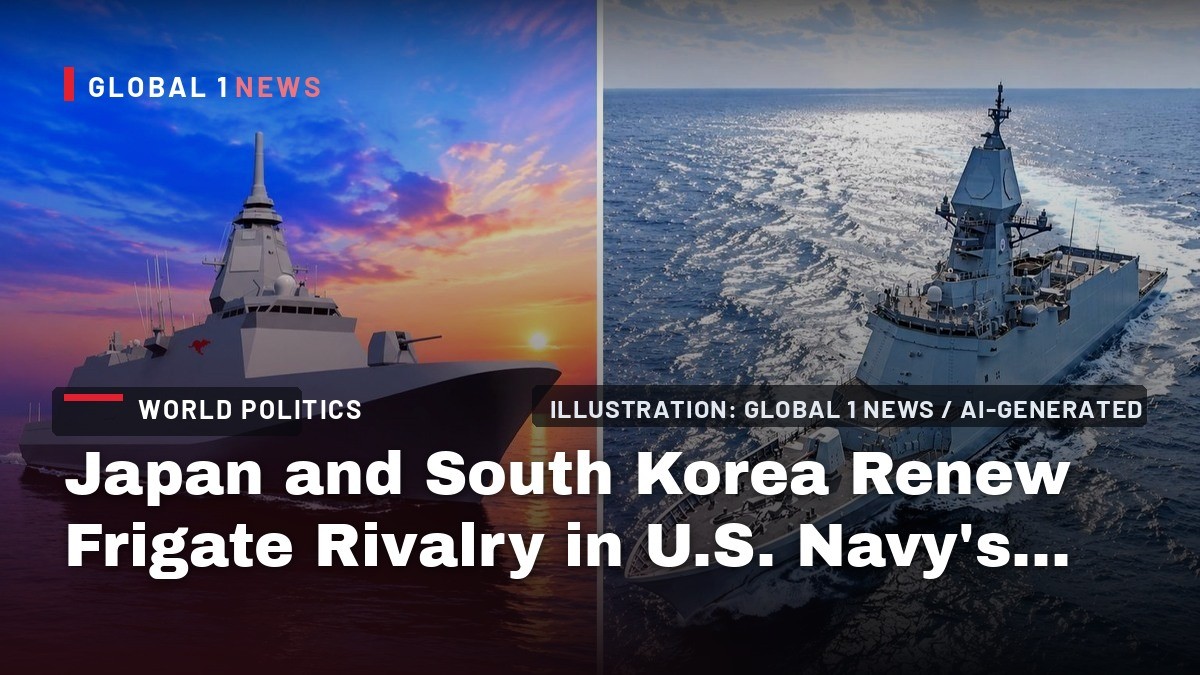
The reported inclusion of Japanese and South Korean frigate designs in a U.S. Navy review has reignited a familiar competition between the two allies, but the contours of this contest are more complex than initial assessments suggest. According to a September 1 report from USNI News, the White House and Navy are weighing three allied designs for potential foreign construction: Japan's upgraded Mogami class, known as the New FFM or 06FFM; South Korea's Chungnam class; and Turkiye's Istanbul class. The proposal, which could see up to two ships built overseas before production shifts to American yards, marks a significant departure in U.S. naval procurement strategy—and places Seoul and Tokyo on a collision course that echoes their 2024-2025 rivalry for Australia's frigate program.
The Genesis of the U.S. Review and Its Strategic Rationale
The foreign frigate review did not emerge in a vacuum. As Naval News reported in June, the Pentagon's fiscal year 2027 budget proposal included $1.85 billion earmarked for an effort involving foreign warship designs, with Japan and South Korea identified as central to the discussion. This allocation signals a pragmatic acknowledgment within the U.S. defense establishment that American shipyards, beset by delays and capacity constraints, cannot alone meet the Navy's ambitious fleet expansion targets. The "Finland model"—initial construction overseas followed by investment and production in the United States—has gained traction as a template for accelerating delivery while nurturing domestic industrial capacity.
The strategic logic is compelling. The U.S. Navy seeks a frigate capable of relieving Arleigh Burke-class destroyers of lower-end missions such as escort duty, patrol, and presence operations. Both the New FFM and the Chungnam class offer attributes relevant to that requirement: stealth-oriented design features, reduced manning, and, in the Japanese case, a planned 32-cell vertical launch system. Yet the review also reflects a deeper anxiety about the U.S. shipbuilding industrial base, which has struggled to maintain timelines for submarine and surface combatant construction alike. By opening the door to allied designs, Washington is effectively testing whether its closest partners in Northeast Asia can help solve a problem that has resisted domestic solutions for decades.
Japan's Public Endorsement and the Diplomatic Signal
Japan's top naval officer has now publicly welcomed the reported U.S. interest, offering a rare glimpse into Tokyo's strategic posture. Asked by The Diplomat at a September 8 press conference about the New FFM's reported inclusion in the U.S. review, Japan Maritime Self-Defense Force (MSDF) Chief of Staff Adm. Saito Akira stressed that he was not in a position to comment on individual U.S. Navy shipbuilding plans. But if the United States or other countries were considering adopting platforms used by the MSDF, he said, "We see this as reflecting a high level of trust in and appreciation for equipment that embodies the advanced technologies of our ships."
"I am frankly pleased," Saito added, indicating that if Japan received requests for cooperation on such matters, "we would respond proactively." The admiral's remarks, while carefully hedged, carry considerable diplomatic weight. They signal that Tokyo views the U.S. review not merely as a commercial opportunity but as a validation of Japan's defense industrial capabilities. For a country that has long operated under self-imposed restrictions on arms exports, the prospect of supplying warships to its foremost security ally represents a profound strategic shift—one that Saito's public endorsement helps normalize within Japanese domestic politics.
The Case for South Korea's Industrial Head Start
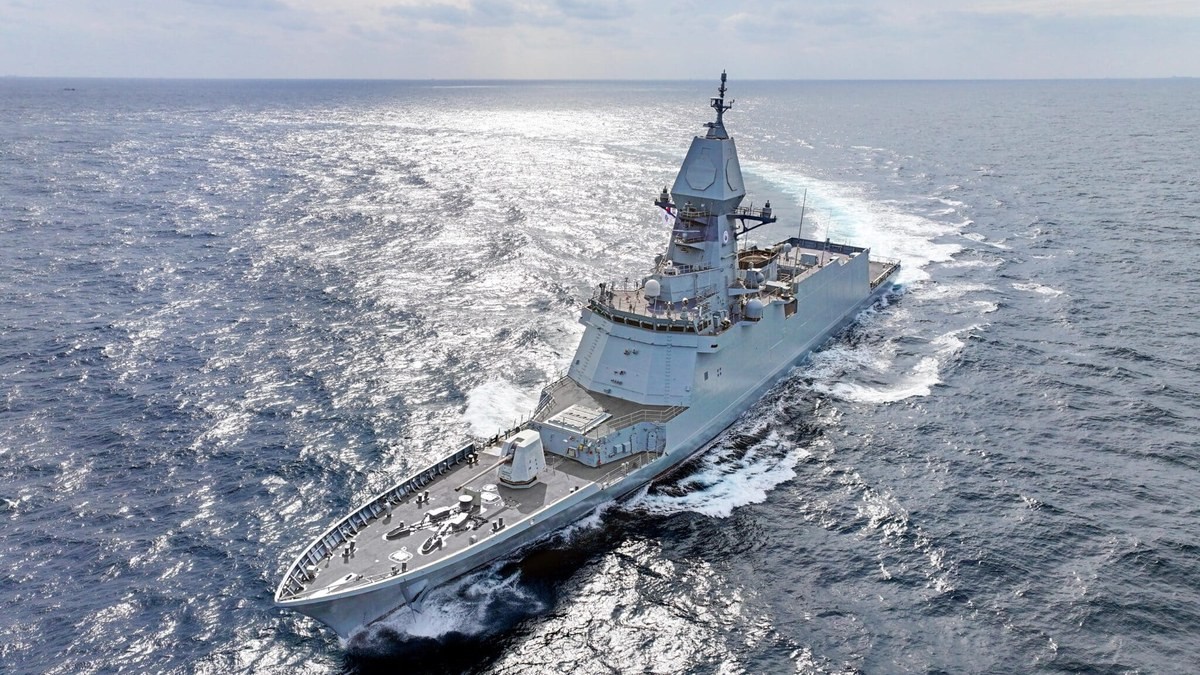
The reported competition has encouraged a view that Seoul is the real front-runner and Japan's New FFM merely a stalking horse. That assessment rests on several concrete factors. Hanwha acquired Philly Shipyard in 2024, giving a South Korean company a direct U.S. shipbuilding foothold at a time when Washington faces serious capacity constraints. U.S. officials have repeatedly visited South Korean yards, and in December 2025 U.S. President Donald Trump said the Navy would work with Hanwha on a new frigate. This combination of physical presence and high-level political engagement creates an impression of momentum that is difficult for Japan to match.
South Korea's major shipbuilders also possess substantial production capacity, a critical advantage given the U.S. Navy's urgent need to accelerate delivery schedules. The country's shipbuilding industry, which has weathered global downturns through diversification into naval and specialized vessels, offers a scale of output that Japanese yards, focused more narrowly on JMSDF requirements, may struggle to replicate. Moreover, Hanwha's U.S. footprint aligns neatly with the administration's stated preference for foreign investment in American shipbuilding capacity, a political selling point that could resonate in congressional debates.
Why the Stalking Horse Narrative Oversimplifies the Contest
Yet the conclusion that South Korea holds an insurmountable advantage does not necessarily follow. Trump's December 2025 remarks referred to cooperation on the U.S. Navy's FF(X), a U.S.-designed frigate concept based on the Coast Guard's National Security Cutter. That was not a decision to adopt South Korea's Chungnam design. USNI News' September 1 report described a separate review of foreign designs and identified no favorite. The distinction matters: political enthusiasm for South Korean shipbuilding capacity does not automatically translate into a procurement decision favoring a specific Korean hull design.
Moreover, Hanwha is not the company most closely associated with the Chungnam class. The detailed design and lead ship were handled by HD Hyundai Heavy Industries, while Hanwha Ocean and SK Oceanplant are building follow-on ships. Thus, Hanwha's U.S. shipyard investment does not automatically translate into an advantage for the Chungnam design. The corporate landscape is more fragmented than the stalking horse narrative suggests, and the U.S. Navy's procurement decisions will be driven by technical requirements, combat system integration, and lifecycle costs—factors that do not necessarily favor the company with the most visible American footprint.
Nor has Washington's shipbuilding outreach been limited to South Korea. Then-Navy Secretary John Phelan visited Japan in April 2025, meeting Saito and other Japanese defense officials and touring Japan Marine United. The U.S. Navy said Phelan visited JMU to learn about industry best practices and encourage investment in American shipyards. Asked whether Phelan or other U.S. Navy officials had previously expressed specific interest in or praise for the Mogami class or New FFM, Saito declined to disclose details, saying only that he regularly exchanges views with U.S. Navy counterparts on a broad range of issues, including defense equipment, capability enhancement, and operational cooperation.
The Australian Precedent and Japan's Export Momentum
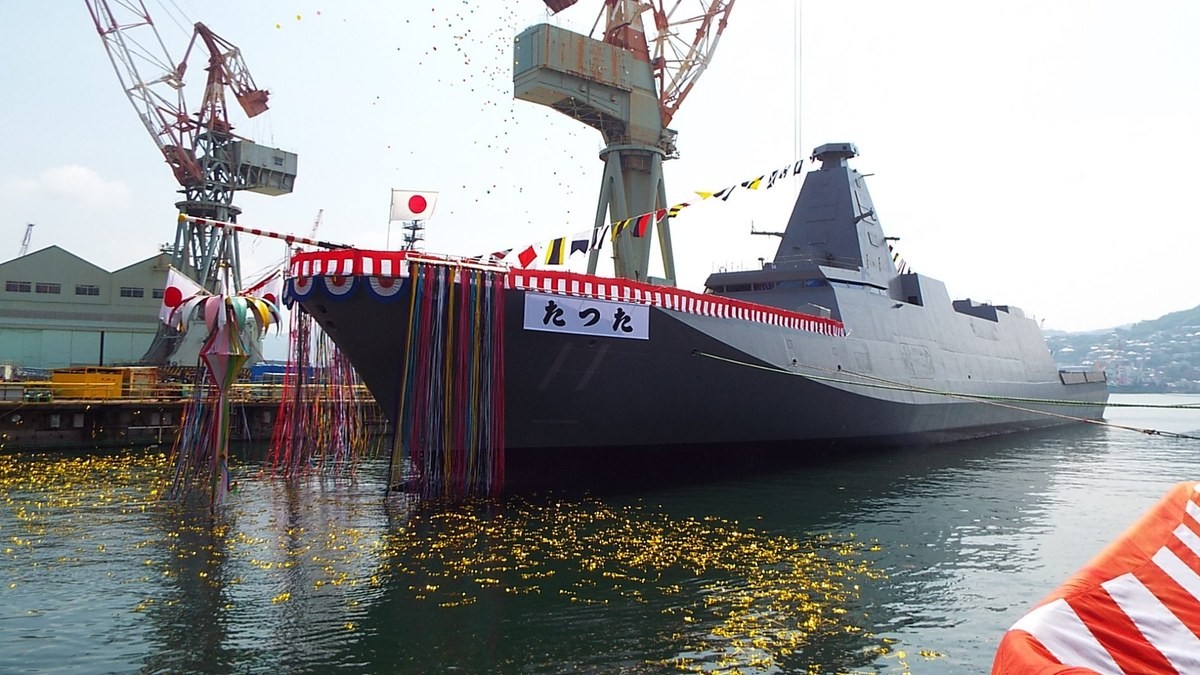
Japan's New FFM should not be dismissed, and the most compelling reason lies in recent history. In 2024, Australia identified Japan's Mogami class and South Korea's FFX Batch II and III, among other designs, as exemplars for its future general-purpose frigate. Canberra later narrowed the field to Mitsubishi Heavy Industries and Germany's TKMS before selecting the upgraded Mogami—the New FFM—in August 2025. That decision gave Japan a major naval export success with a close U.S. ally and demonstrated that the New FFM can meet the demanding requirements of a Western-aligned navy operating in the Indo-Pacific.
The Australian precedent carries particular weight for the U.S. review. Canberra's selection process subjected the New FFM to rigorous evaluation against competing designs, including South Korea's offerings, and the Japanese platform emerged victorious. The New FFM's expected features—a 32-cell vertical launch system, long range, stealth-oriented design, and reduced manning—align closely with the attributes the U.S. Navy has articulated for its future frigate force. Japan's ability to deliver a proven, exportable design with a track record of successful foreign selection is a significant advantage that the stalking horse narrative overlooks.
Integration Challenges and Congressional Wariness
Neither design, however, guarantees a Japanese or Korean win. Both would require adaptation to U.S. Navy combat systems, weapons, communications, cybersecurity, and information-security requirements. The integration challenge is substantial: any foreign hull would have to accommodate U.S. combat management systems, weapons, communications, and the Navy's stringent cybersecurity protocols. These adaptations can consume time and cost, potentially eroding the schedule advantages that foreign construction is meant to deliver.
Congress also remains wary of building U.S. warships overseas. Lawmakers from shipbuilding states have historically resisted any move that could shift construction work abroad, and the political sensitivity of the issue is unlikely to diminish. Even if the executive branch proceeds with a foreign design review, congressional appropriators may impose conditions, require domestic production of lead ships, or restrict funding for overseas construction. The path from design review to actual procurement is fraught with political obstacles that neither Seoul nor Tokyo can control.
Weighing Industrial Capacity Against Design Fit
The better reading of this competition is that South Korea has an industrial head start, not a guaranteed design victory. Hanwha's U.S. footprint and South Korea's shipbuilding capacity make it a formidable contender on the question of rebuilding the U.S. shipbuilding industrial base. But those factors do not prove that the Chungnam class is the Navy's preferred frigate, nor that Japan's New FFM is merely a stalking horse. Washington is effectively weighing two distinct questions: which ally can best help rebuild U.S. shipbuilding capacity, and which frigate design best fits the fleet's operational requirements.
South Korea's investments give it important advantages on the first question. Japan's Australian export success and the New FFM's design attributes give it credibility on the second. The competition remains very much open, and the outcome will depend on factors that extend beyond industrial footprint—including combat system integration costs, congressional politics, and the strategic calculus of which ally Washington wishes to elevate in the defense industrial domain. For observers of Northeast Asian security dynamics, the frigate review offers a rare window into how the U.S.-Japan-South Korea trilateral relationship is evolving from a purely security alliance into a more complex industrial partnership, with all the opportunities and frictions that such a transformation entails.
By Prof. David Park, Staff Writer
This article was produced with AI-assisted research and editorial support. Sources: The Diplomat, September 8, 2026; USNI News, September 1, 2026; Naval News, June 2026.
What's Your Reaction?
 Like
0
Like
0
 Dislike
0
Dislike
0
 Love
0
Love
0
 Funny
0
Funny
0
 Wow
0
Wow
0
 Sad
0
Sad
0
 Angry
0
Angry
0

East Asia/Technology Correspondent at Global1.News. Seoul-based voice covering Korean politics, technology, business, and culture. Analyzes how technology and geopolitics intersect across East Asia.














Comments (0)