
Japan's 2026 Defense White Paper Signals Military Expansion
Japan's Cabinet approved the Defense of Japan 2026 white paper on August 4, again calling China its greatest strategic challenge while elevating defense production and easing export rules. Beijing hit back, calling the report full of false narratives.
Japan's Cabinet approved the Defense of Japan 2026 white paper on August 4, 2026, repeating the assessment of China as an unprecedented strategic challenge while outlining steps to strengthen the defense production base and ease export rules.
Japan's Cabinet Approves Defense of Japan 2026
Japan's Cabinet approved the 2026 edition of the annual defense white paper, Defense of Japan 2026, on Tuesday, August 4, 2026. The document again described China as an unprecedented and the greatest strategic challenge to Japan's peace and security. This language repeats phrasing first adopted in the 2022 National Security Strategy, National Defense Program Guidelines, and Medium-Term Defense Program. The Ministry of Defense prepared the report for Cabinet review, and it will guide JSDF planning in the coming year. The Diplomat notes that the white paper explicitly states repeated joint activities by China with Russia are obviously intended as demonstration activities against Japan and pose a grave concern for Japan's security, underscoring the continuity with 2022 assessments. NHK adds that the report flags growing military cooperation between North Korea and Russia as a development that must be closely monitored, reflecting heightened attention to trilateral dynamics in the region.
The white paper warns that China is steadily expanding its military reach into the Pacific beyond the First Island Chain. This strategic arc links Japan's southwestern islands, Taiwan, and the Philippines. It notes repeated joint activities by China with Russia that are obviously intended as demonstration activities against Japan and pose a grave concern for Japan's security. The report also flags growing military cooperation between North Korea and Russia as a development that must be closely monitored. These assessments appear in the section covering regional security trends. The emphasis on monitoring such coordination signals Japan's intent to integrate these observations into updated contingency planning under the Medium-Term Defense Program.
Beyond the 'China Threat' Narrative
The white paper places its China assessment within Japan's broader security policy evolution. The CGTN Frontline Story broadcast on August 7, 2026, features a Chinese analyst who argues the document should be viewed in the context of Japan's changing defense posture. The analyst states that the white paper lays the groundwork for revising the three key security documents later this year and for further military expansion. The video frames the central question as what the document really signals beyond the repeated China threat language. This framing highlights how the 2026 edition serves as a bridge document that links observable military trends to forthcoming policy adjustments.
Japanese officials maintain that the assessments reflect observable Chinese military activities. The report cites concrete examples of expanded operations beyond the First Island Chain and increased coordination with Russia. At the same time, the document emphasizes the need for Japan to maintain an exclusively defense-oriented policy while building stronger deterrence with allies. This dual emphasis appears throughout the 2026 edition. The repetition of 2022 language on China thus functions both as continuity and as preparation for incremental capability enhancements.
New Ways of Warfare Reshape the Defense Agenda
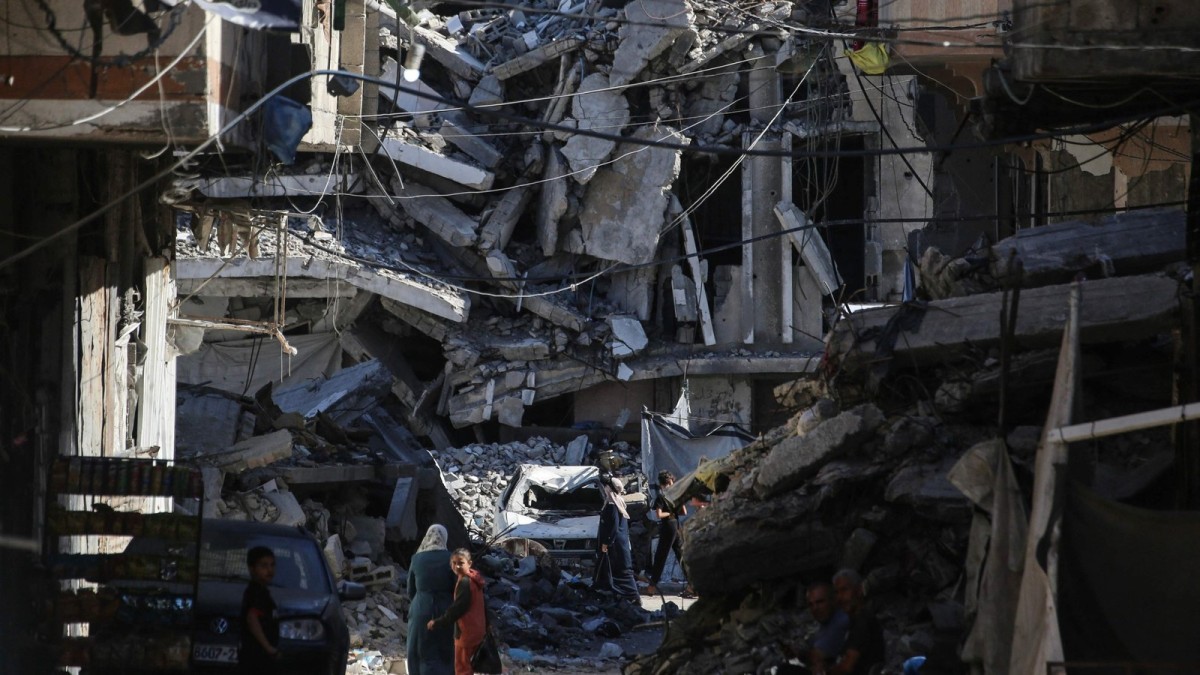
Drawing lessons from the wars in Ukraine and the Middle East, the white paper highlights the growing role of drones, artificial intelligence, and adequate stockpiles in future warfare. NHK reports that the paper includes a new section on the latest military technologies, including inexpensive drones increasingly used in conflicts in Ukraine and elsewhere. The report states that a number of countries are stepping up efforts to secure the capability to fight for prolonged periods and are actively applying AI, semiconductors, and other advanced technologies to national security. This new section directly ties battlefield observations to Japan's need for resilient supply chains and technology integration.
The Ministry of Defense notes that these trends require Japan to adjust its own procurement and operational concepts. The white paper stresses the importance of maintaining sufficient munitions and spare parts to sustain operations over extended periods. It also calls for accelerated integration of AI and related technologies into JSDF systems. These observations directly inform the updated priorities listed in the Medium-Term Defense Program. The focus on prolonged conflict readiness therefore shapes both near-term budget allocations and longer-term research priorities.
Defense Production Elevated to a Strategic Pillar
The white paper elevated the section on Japan's defense production and technological base from a chapter to a full part of the report. This change underscores the growing importance of the domestic industrial base to national defense. The report notes that Japan will encourage more startups to enter the defense industry to expand capacity and innovation. The Ministry of Defense views this step as essential for sustaining the JSDF over the long term. Elevating the topic signals that industrial capacity is now treated as a core element of deterrence rather than a supporting function.
The document also refers to the easing of Japan's defense equipment export rules earlier this year. It argues that defense exports can strengthen the deterrence capabilities of partner countries while helping build an environment for mutual support among allies and like-minded nations. Tokyo plans to strategically promote overseas transfer of defense equipment, including lethal weapons, following the recent policy adjustment. The white paper links these measures to the overall goal of reinforcing regional deterrence. NHK reports that the eased rules now allow export of lethal weapons in principle, enabling Tokyo to pursue air-launched and ship-launched variants of the Type 25 missile along with hypersonic research.
Beijing Hits Back: 'A Thief Crying Stop Thief'
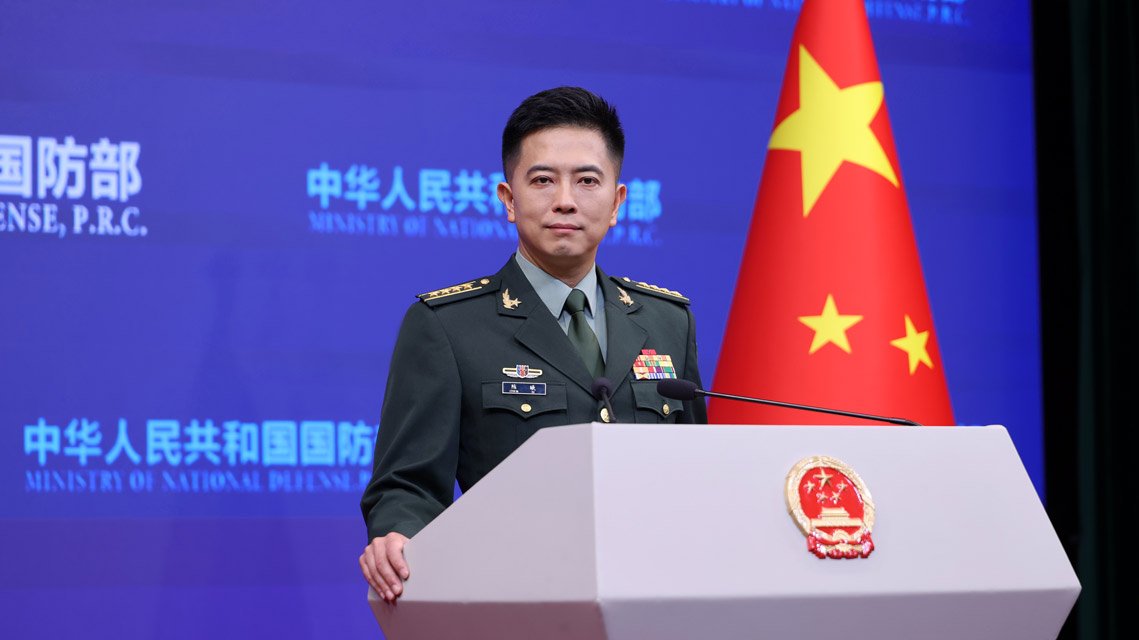
Chen Xi, a spokesperson for the Chinese Ministry of National Defense, slammed the white paper on August 4, 2026. Chen said it is full of false narratives and deliberately hypes a so-called security crisis in the region and the China threat. Chen described Japan's actions as a thief crying Stop thief so as to create a pretext for its own military buildup. China is strongly dissatisfied with and firmly opposes such moves, Chen stated. The phrasing underscores Beijing's view that the white paper serves domestic political purposes beyond security analysis.
Chen added that under the pretext of an exclusively defense-oriented policy, the Japanese government is accelerating revisions to its three key security documents, continuously increasing defense spending, developing long-range offensive capabilities, and advancing the weaponization and militarization of space and the battlefield. Chen said Japan is even portraying the expansion of its defense industry as a driver of economic growth in an attempt to deeply embed military expansion into its national institutions, economy, industry, and public discourse. Chen warned that Japan's new militarism has become increasingly entrenched and poses a serious challenge to the postwar international order. This response frames the white paper as part of a broader institutional shift rather than an isolated assessment.
Taiwan and the Red Line in China-Japan Relations
Chen Xi stated that the Taiwan question concerns China's sovereignty and territorial integrity and constitutes the political foundation of China-Japan relations. Chen described it as a red line that must not be crossed. Chen urged Japan to deeply reflect on its history of aggression, stop interfering in China's internal affairs, and stop misleading the Japanese public and the international community. Japan should not go further down the wrong path of remilitarization, Chen said. The red-line language directly ties the white paper's regional analysis to core bilateral sensitivities.
Times of India reported that China lodged serious representations with Japan, accusing Tokyo of making brazen comments on Taiwan. The Chinese response ties the white paper directly to ongoing tensions over Taiwan. Japanese officials have not altered their stated position that the Taiwan question should be resolved peacefully, yet the white paper's language on regional contingencies remains unchanged from previous editions. The exchange highlights the continuing sensitivity of Taiwan in bilateral relations. The accusations of brazen comments reflect Beijing's effort to link the document to perceived interference.
What to Watch For: Security Document Revisions
The CGTN analyst notes that the 2026 white paper prepares the ground for revisions to Japan's three key security documents later this year. Observers will watch whether the National Security Strategy, National Defense Program Guidelines, and Medium-Term Defense Program receive updated language on China, defense production, and export policy. The Ministry of Defense has already signaled that further integration of advanced technologies and expanded industrial capacity will feature in those revisions. The analyst's remarks indicate that the white paper functions as an advance signal of policy direction.
Additional attention will focus on how Japan implements the eased export rules and whether new missile variants, including air-launched and ship-launched Type 25 missiles and hypersonic systems, advance as planned. The white paper's emphasis on prolonged conflict readiness and AI integration will likely shape budget requests and JSDF exercises in the months ahead. These developments will indicate the pace of Japan's ongoing security policy adjustments. The combination of export promotion and technology integration will test the practical reach of the new strategic pillar.
By Kenji Tanaka, Staff Writer
This article was produced with AI-assisted research and editorial support. Reporting is based on sources cited in the article.
What's Your Reaction?
 Like
0
Like
0
 Dislike
0
Dislike
0
 Love
0
Love
0
 Funny
0
Funny
0
 Wow
0
Wow
0
 Sad
0
Sad
0
 Angry
0
Angry
0

Japan Correspondent at Global1.News. Tokyo-based voice covering Japanese politics, technology, economy, and culture. Tracks the intersection of tradition and innovation in one of the world's most dynamic societies.













Comments (0)