
Israel vows retaliation after UK sanctions firms for West Bank settlements
Britain’s recent decision to sanction eight Israeli construction and property‑development firms for their role in West Bank settlement expansion has sparked a swift and forceful response from Jerusalem.
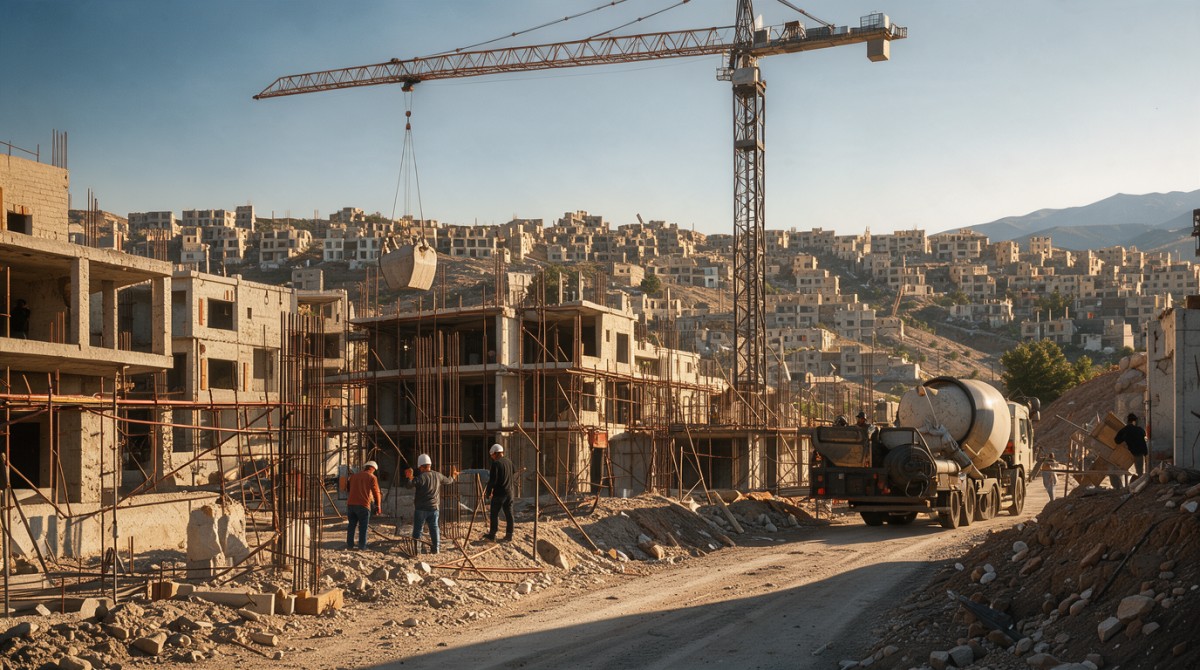
Britain’s recent decision to sanction eight Israeli construction and property‑development firms for their role in West Bank settlement expansion has sparked a swift and forceful response from Jerusalem. The move, announced by British Foreign Secretary Ed Miliband on 17 November 2026, is framed by London as a step to protect the two‑state solution, yet it arrives amid a broader shift in UK policy that has grown increasingly critical of settlement activity since the centre‑left Labour Party assumed power in mid‑2024. The sanctions, which freeze assets and disqualify directors, have already prompted Israeli officials to vow retaliation and settlement leaders to double down on building plans, underscoring how tightly the settlement enterprise is linked to both domestic politics and Israel’s international diplomatic calculations.
British sanctions: scope and stated objectives
In a statement to the press, Foreign Secretary Miliband described the sanctions as part of a concerted effort to “protect the so‑called two‑state solution” and to curb the “destruction” of that vision. The eight firms targeted are identified as construction and property‑development companies that, according to the UK Foreign Office, are directly involved in expanding settlements in the occupied West Bank. The measures freeze the companies’ assets, restrict their ability to secure financing, and bar their directors from holding positions in UK‑registered entities.
The British announcement also extended to the activist group Tzav 9, which London accused of obstructing aid deliveries to Gaza. By linking settlement expansion to humanitarian concerns, the UK is signalling that it views settlement activity not only as a political obstacle but also as a factor that exacerbates the humanitarian crisis in Gaza, especially in the wake of recent floods that have destroyed tens of thousands of tents and left nearly four thousand households without shelter.
Israeli reaction: diplomatic warning and counter‑measure vows
Within hours of the sanctions being unveiled, Israeli caretaker foreign minister Gideon Saar took to X to describe the UK’s action as being taken “with the utmost gravity.” Saar warned that, “as in the past, Israel will take countermeasures against the British move,” echoing a pattern of reciprocal diplomatic pressure that has characterised Israel‑UK relations when settlement issues surface. The language of the response underscores Israel’s perception of the sanctions as a direct challenge to its sovereignty and its settlement policy, which it continues to frame as a security and demographic necessity.
Beyond the diplomatic warning, Israeli officials have hinted at practical steps that could affect British interests. While no specific retaliatory measures have been detailed, the precedent set by previous Israeli counter‑actions—ranging from trade restrictions to limiting access to Israeli ports for British‑registered vessels—suggests that Jerusalem may look to leverage economic levers to signal its displeasure.
Settlement leadership’s defiant response
Yossi Dagan, head of the Samaria Regional Council in the northern West Bank, responded to the UK sanctions with a stark declaration: “we will build even more.” Dagan’s statement, delivered shortly after the British announcement, frames the sanctions as an external attempt to impede settlement growth, and positions the settlement movement as resilient and ready to intensify its building activities. This rhetoric aligns with a broader narrative among settlement leaders that portrays international pressure as an affront to Israeli national interests and the “right to live” in Judea and Samaria.
The defiant stance is further reinforced by the reputation of one of the sanctioned firms, Harey Zahav, which has been noted for constructing “wildcat” outposts without formal Israeli government authorisation. Harey Zahav’s earlier controversy in 2023—when it posted a slogan expressing hopes of returning settlers to Gaza—illustrates the ideological fervour that underpins many settlement enterprises and explains why the group perceives sanctions as an attempt to curb a movement it sees as integral to Israel’s future.
Political context in Britain: a hardening line on settlements
The UK’s sanctions must be understood against the backdrop of a shifting British political landscape. Since Labour’s ascent to power in 2024, the government has taken a more assertive stance against settlement activity, sanctioning individuals and organisations deemed complicit in what it terms “illegal” settlement expansion. The policy trajectory accelerated after Andy Burnham succeeded Keir Starmer as prime minister in July 2026, with the new administration adopting a more confrontational tone.
Foreign Secretary Miliband’s recent remarks that the Israeli government turns a “blind eye” to “ethnic cleansing” by settlers reflect an increasingly moralised framing of the settlement issue within British foreign policy. By coupling settlement sanctions with an import ban on goods originating from settlements, the UK is signalling a willingness to employ both financial and trade tools to exert pressure on Israel.
Humanitarian dimensions: Gaza floods and aid blockades
The UK’s statement also highlighted ongoing humanitarian concerns in Gaza, where recent heavy rains have destroyed over 150,000 tents and 300,000 tarpaulins, according to UN‑cited figures. The floods left nearly 4,000 households without shelter and forced 1.4 million people to rely on makeshift accommodations. Britain accused Israeli authorities of impeding the delivery of timber and other shelter kits, thereby deepening civilian suffering.
By linking settlement sanctions to the blockade of aid, the UK is attempting to broaden the diplomatic narrative, suggesting that settlement expansion not only undermines a political solution but also contributes to a humanitarian crisis. This framing could resonate with international audiences and potentially galvanise further pressure on Israel to ease restrictions on aid flows.
Implications for Israeli tech and innovation sectors
While the sanctions target construction firms, the broader diplomatic fallout could ripple through Israel’s innovation ecosystem. Companies that rely on international financing—particularly those with ties to the construction and real‑estate sectors—may face heightened scrutiny from foreign investors wary of secondary sanctions risk. The Israel Innovation Authority and the Ministry of Economy have historically championed a diversification away from settlement‑linked projects, but the current climate may accelerate that shift.
Moreover, the heightened diplomatic tension could affect joint‑venture opportunities with European partners, especially in sectors such as clean‑tech and agri‑tech where Israeli firms have been expanding into the EU market. Companies may need to reassess risk exposure and reinforce compliance frameworks to avoid inadvertent entanglement with sanctioned entities.
Prospects for escalation and diplomatic pathways
The immediate future is likely to see a tit‑for‑tat pattern of diplomatic statements, with Israel signalling possible counter‑measures and Britain maintaining its stance. However, the broader strategic calculus for both sides includes considerations beyond the settlement issue. For Israel, preserving access to critical technology markets and maintaining security cooperation with the United Kingdom remain paramount. For Britain, balancing domestic political pressures to act on human rights with the desire to retain a strong security partnership with Israel will shape its next moves.
Potential diplomatic pathways could involve back‑channel negotiations aimed at limiting the economic impact of the sanctions while securing Israeli commitments to ease settlement expansion in sensitive areas such as the E1 zone, which the UN secretary‑general has described as posing an “existential threat” to a contiguous Palestinian state. Whether such negotiations can bridge the widening gap between Jerusalem’s settlement agenda and London’s increasingly assertive policy remains an open question, but the current episode underscores how settlement activity continues to serve as a flashpoint in Israel’s broader diplomatic and economic landscape.
This article was produced with AI-assisted research and editorial support. Reporting is based on the source material cited below. Sources: Al-Monitor; al-monitor.com; Global1.News (18 November 2026).
By Hannah Berg, Staff Writer
What's Your Reaction?
 Like
0
 Dislike
0
 Love
0
 Funny
0
 Wow
0
 Sad
0
 Angry
0

Israel Correspondent at Global1.News. Based in Tel Aviv, covering Israeli politics, security, technology, and society. Provides balanced, deeply-sourced reporting on one of the most closely-watched regions in the world.













Comments (0)