
Jamaica Petitions King Charles III for Privy Council Ruling on Slavery Reparations
A Jamaican government delegation in London will formally petition King Charles III on Monday to refer questions about slavery reparations to the Judicial Committee of the Privy Council, the country's highest court of appeal, in a landmark legal move that officials say is the...
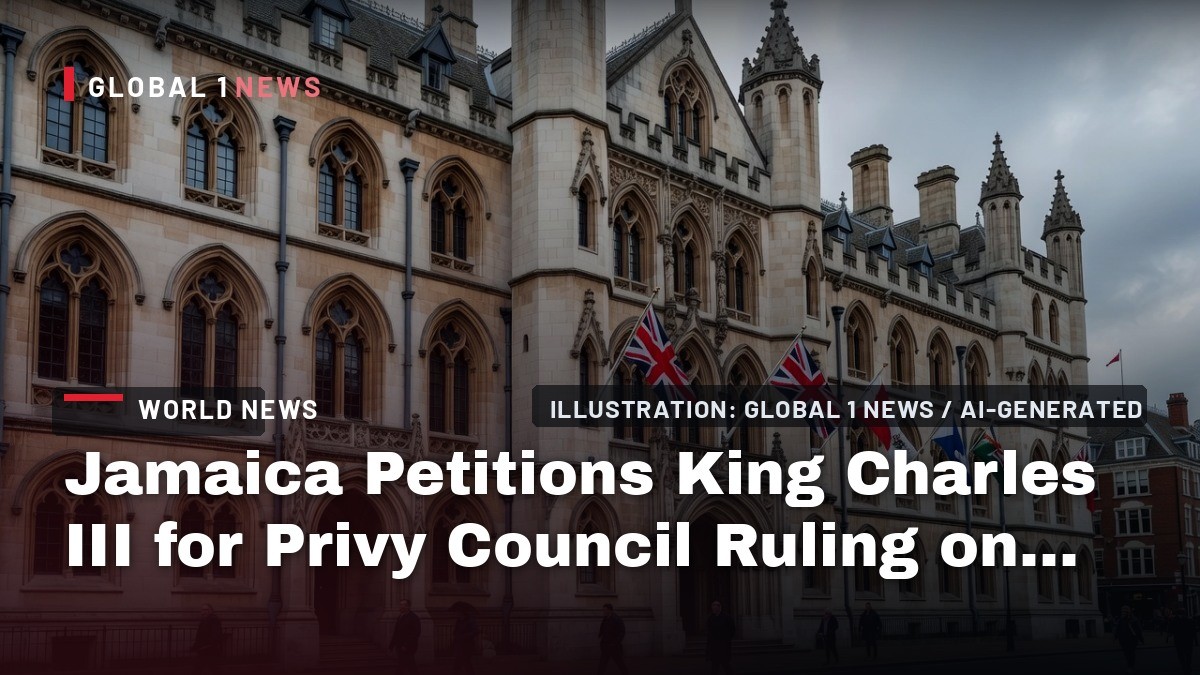
A Jamaican government delegation in London will formally petition King Charles III on Monday to refer questions about slavery reparations to the Judicial Committee of the Privy Council, the country's highest court of appeal, in a landmark legal move that officials say is the first of its kind by a Commonwealth state.
The petition, filed on the anniversary of the Zong massacre, asks the King to seek an advisory opinion from the Privy Council on whether the forced transport and enslavement of African people was lawful, whether it constituted crimes against humanity, and whether the United Kingdom now bears an obligation to provide a remedy to the Jamaican people.
A historic legal route for reparatory justice
The filing marks the first time a Commonwealth nation has used this legal avenue "for the cause of reparatory justice," according to the Jamaican delegation. The petition is addressed to the King in his capacity as Jamaica's head of state, invoking the Judicial Committee Act of 1833, which grants the British monarch authority to refer legal matters to the Judicial Committee for an advisory opinion.
Olivia Grange, Jamaica's Minister of Culture, Gender, Entertainment and Sport, is leading the delegation in London. She has asked why Jamaica should not seek a remedy when Britain was still paying off debt linked to slavery just 11 years ago.
The petition puts three specific questions to the King for referral to the Privy Council: whether the forced transport of African people to Jamaica and their subsequent enslavement was lawful under English common law; whether it constituted crimes against humanity under international law for which the UK bears responsibility; and whether the UK has an obligation to provide a remedy to the Jamaican people for the unlawful transportation and enslavement of their ancestors and its continuing consequences.
Grange previously told Jamaica's Parliament that the petition is made "to His Majesty the King in his capacity as head of State of Jamaica and from whom we expect protection."
Palace responds cautiously
Buckingham Palace has acknowledged the filing, with a spokesperson confirming that the palace understands the Jamaican government is seeking a petition to be heard before the Judicial Committee of the Privy Council. The spokesperson noted that the process for seeking a petition is to lodge it with the Judicial Committee so that referral under section four of the 1833 Act can be considered.
The palace was careful to clarify that King Charles has no role in deciding the substance of the claim. He acts on the advice of the relevant authorities and government, meaning the monarch has no personal say over whether the petition is referred.
However, the palace added that the King "has on many occasions expressed his personal and wholehearted commitment to promoting greater understanding around the issue of slavery and finding ways to address historic wrongs for the benefit of communities today."
The King has stopped short of endorsing reparations, but in a 2024 speech to Commonwealth leaders he acknowledged that "the most painful aspects of our past continue to resonate."
Timing tied to the Zong anniversary
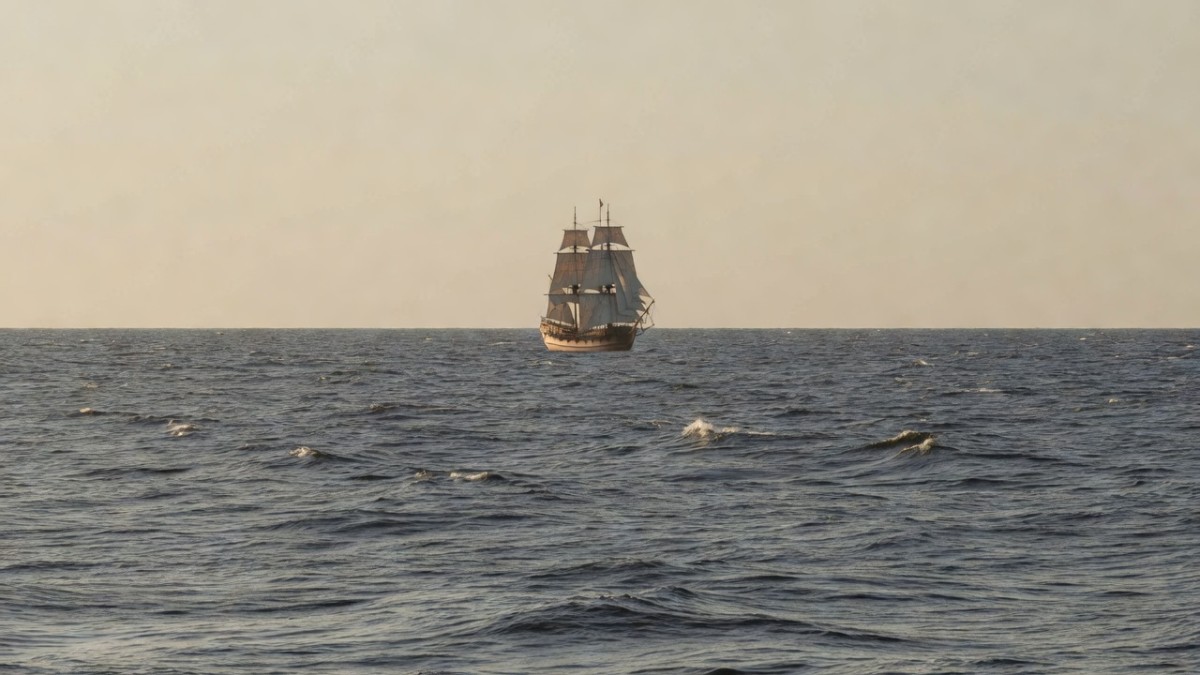
The filing was deliberately timed to coincide with the anniversary of a dark chapter in the trans-Atlantic slave trade. On 6 September 1781, the Liverpool-registered slave ship Zong set sail from West Africa for Jamaica with 442 enslaved Africans on board.
When water supplies ran low during the voyage, the crew threw an estimated 132 men, women and children overboard, calculating it would be more profitable to claim insurance for the lost "cargo" than to sell weakened captives. The ship eventually reached Black River, St Elizabeth, Jamaica on 21 December 1781.
Publicity about the Zong massacre helped fuel the campaign to end slavery in the British Empire. Britain abolished the slave trade in 1807 and outlawed enslavement on 1 August 1834, the date now observed as Emancipation Day across the Caribbean, including in Trinidad and Tobago, where enslaved Africans were also transported and forced to labour on plantations.
The long shadow of the 1833 compensation loan
The petition arrives against a backdrop of continuing financial entanglement between Britain and its colonial past. The 1833 Slavery Abolition Act included a £20 million compensation loan to slave owners, a sum equivalent to about 40 per cent of the British government's annual budget at the time.
Historians, including Sir Hilary Beckles, chair of the CARICOM Reparations Commission and Vice-Chancellor of the University of the West Indies, have established that the British Treasury made the final payments on that loan on 15 February 2015. That means British taxpayers were servicing a debt taken to compensate enslavers, not the enslaved, for 180 years.
Beckles has called the British position on reparations dishonest, and Jamaica's government estimates the country is owed about US$10 billion in reparations.
The British government, while acknowledging slavery was "abhorrent," has so far rejected demands for an apology or reparations.
A clever constitutional manoeuvre
Craig Prescott, a constitutional law expert at Royal Holloway, University of London, has called the move "quite clever" because it uses an obscure constitutional procedure to address one of the biggest issues in Jamaican society.
Prescott expects the petition to be referred to the Judicial Committee, where a panel of UK Supreme Court justices would review it. If the Privy Council rejects the petition, Prescott said, it would underscore the gulf between British and Jamaican interests and could strengthen the case of Jamaicans who question why their head of state does not share positions widely held in Jamaica, potentially boosting the republican movement.
The Jamaican delegation will also be received by the UK Foreign, Commonwealth and Development Office for bilateral discussions during their visit.
A regional cause with Caribbean resonance
Jamaica remains a leader in the CARICOM reparations campaign, which has pressed Britain and other European nations to apologise and pay reparations for the trans-Atlantic slave trade and its continuing impact on descendants. The Caribbean Community, the regional bloc, has endorsed the petition.
For ordinary Caribbean people watching from Port of Spain to Kingston, this is not an abstract legal exercise. The region's history is written in the sugar plantations, the port towns and the family lineages that trace back to the horrors of the Middle Passage. Trinidad and Tobago shares that inheritance, having been a British colony where enslaved Africans were transported and forced to labour on plantations across the island.
The reparations campaign has long been a unifying cause for CARICOM nations, which have argued that the legacy of slavery persists in economic inequality, social marginalisation and the psychological wounds carried by descendants of the enslaved.
Monday's petition represents a new chapter in that campaign, moving the demand from diplomatic statements and parliamentary resolutions into the realm of constitutional law. Whether the Privy Council agrees to hear the questions or not, Jamaica has succeeded in placing the issue squarely before the British establishment in a formal, legal manner.
The delegation's choice of the Zong anniversary is itself a powerful statement. Two hundred and forty-five years after that ship left African shores, a Caribbean nation is asking the British Crown to confront the legal and moral questions that the Zong massacre so brutally exposed.
The answers, whatever they may be, will resonate far beyond the courtrooms of London.
By Sharon Sahatoo, Staff Writer
This article was produced with AI-assisted research and editorial support. Sources: Caribbean360, The Associated Press, Al Jazeera, The Independent, Jamaica Observer.
What's Your Reaction?
 Like
0
Like
0
 Dislike
0
Dislike
0
 Love
0
Love
0
 Funny
0
Funny
0
 Wow
0
Wow
0
 Sad
0
Sad
0
 Angry
0
Angry
0

Caribbean Correspondent at Global1.News. Based in Port of Spain, Trinidad, covering Caribbean politics, economy, energy, climate, and culture. Amplifying the voices and stories of the Caribbean region.












Comments (0)