
Two Italian Technicians Killed in Kuwait Drone Strike as Iran Calls It a 'Precooked Recipe for War'
Two Italian technicians working for Rheinmetall Italia were killed when drones struck a Kuwaiti military site on Thursday. Kuwait and Italy blame Iran, which denies involvement and calls the attack a precooked recipe for war.
Two Italian technicians are dead because drones came out of the Gulf sky over Kuwait on Thursday afternoon, and Kuwait and Rome still cannot agree on what those drones actually hit. Kuwait calls it Iranian aggression. Tehran calls it a setup. What nobody disputes is that the dead were not soldiers. They were civilians servicing the antennas of an air-defense system.
Two Italian Technicians Killed in Kuwait Drone Strike as Iran Calls It a 'Precooked Recipe for War'
Kuwait City — Kuwait's army announced Thursday that the two Italian nationals wounded in what its defense ministry called "heinous Iranian aggression" against a vital site had died of their injuries. Within hours Italy's foreign minister had named their employer, their trade and the exact equipment they were maintaining. And Iran's foreign minister, on the phone with his Italian counterpart, had already denied it: the drone, he said, was "absolutely not launched by Iranian armed forces, nor did it originate from Iran."
What Kuwait's Army Said, and When
Start with the record, because it moved in steps and the steps are on the clock. Kuwait's army general staff issued Statement No. 83 at 12:57 UTC on Thursday: hostile drones had been detected in Kuwaiti airspace and "dealt with," a "vital site" was targeted, and falling shrapnel wounded four people — a Kuwaiti, two Italians and a Pakistani. Defense ministry spokesman Staff Col Saud Al-Atwan attributed the attack to what he called "Iranian aggression." Seventy-two minutes later, at 14:09 UTC, Statement No. 84 delivered the worst of it: "Regarding the targeting of a vital site in the country as a result of the heinous Iranian aggression, the two injured Italian nationals have died as a result of their injuries." The ministry reported unspecified "material damage" and said the wounded had been taken to hospital. Kuwait's foreign ministry condemned "continued Iranian aggression" in the strongest terms. The site has never been named. The army described it only as "a vital site in the country."
The Two Men From Formia and Rome
ANSA and Adnkronos named the dead as Antonio Saccoccio, 65, from Formia, and Emanuele Lo Russo, 36, from Rome. The two agencies split on the surname — Adnkronos writes "LoRusso," ANSA writes "Lo Russo" — and nobody has released a photograph of either man. Both were civilian technicians for Rheinmetall Italia, the Rome-based Italian unit of the German defense group Rheinmetall. Italy's foreign ministry said an explosion caused by a drone attack "occurred at a site where two Italian technicians from the company Rheinmetall Italia were working," servicing the detection antennas of the Skyguard air-defense system used by the Kuwaiti Armed Forces. Rheinmetall declined to comment. Its shares closed 4.06 percent higher in Frankfurt at 765.70 euros, according to MarketScreener and dpa-AFX. Foreign Minister Antonio Tajani told the Senate that a Pakistani national and a captain in the Kuwaiti army were wounded alongside them.

Rome's Answer: A Complaint, Not a War
Rome's response was a diplomatic complaint, not a military one, and the language Tajani chose is worth reading twice. He told AGI, in remarks carried by Reuters and CBC: "We will lodge a complaint with the Iranian embassy regarding what has happened. They must also bear in mind that it is not just Kuwaitis or Americans [who are present]. We urge everyone to exercise caution." Then the part aimed squarely at Tehran's calculations: "There is no need to ignite new flashpoints at this time. Just as we have said regarding the Western Mediterranean, there is likewise no reason to attack the Arab countries that face Iran, as they are not involved in the war." In the Senate he said the foreign ministry's Crisis Unit, Italy's embassy in Kuwait and the defense ministry were monitoring developments, and that he had just spoken with Ambassador Lorenzo Morini, "who is following developments minute by minute and is in the process of informing the families." Prime Minister Giorgia Meloni, writing on X from a European Council meeting in Brussels, offered "heartfelt condolences to the victims' families."
Tehran Says It Was a False Flag
Iran's denial came fast and in layers. Brig. Gen. Abolfazl Shekarchi, senior spokesperson for Iran's armed forces, said on Iranian state media: "No military or offensive operations whatsoever have been conducted by the Armed Forces of the Islamic Republic of Iran in the region." He went further: "Given the history of hostile actions and the role of the Zionist regime and American forces in using false flags and regional adventures, these accusations are considered a cover for continuing evil and an attempt to increase insecurity in the region." AFP, via Dawn, noted that he blamed false-flag operations by Israel and the United States without providing evidence. Foreign Minister Abbas Araghchi put it in one sentence: "The incident is suspicious and looks like a precooked recipe for war." Iran's embassy in Rome said it "categorically rejects the allegation," suggested the attack could be a false flag designed to drag Europe into the US-Israel war, and added: "The Embassy urges all parties to remain vigilant."
The Disagreement Buried in the Evidence
Folks, put the two official accounts side by side and they are not describing the same event. Kuwait's defense ministry says hostile drones were detected and engaged inside Kuwaiti airspace, that they were shot down there, and that falling shrapnel wounded four people. Italy's foreign ministry statement did not characterize the target at all — it said only that an explosion occurred at a site where the two technicians were working. Tajani described the air-defense detection station itself as what the drones targeted, and said a powerful explosion followed. ANSA's first flash said the men were hit by falling shrapnel after drones attacking a "vital facility" were intercepted. So the host government describes interception debris and the visiting ally's minister describes a strike on the station where its citizens stood. Corriere della Sera's Rome edition went further, describing the target as a desalination plant near Kuwait City and saying a swarm of drones, "perhaps Iranian," triggered the Skyguard system. No official statement has described the site that way.
The Month That Led Here
This did not land in a quiet month. Al Jazeera reported that Kuwait activated its air defenses on 18 November to counter Iranian drone strikes — the first time since early September. Earlier in November, Iran targeted a Kuwaiti air base hosting US forces after the US military hit what it said was a missile launch site in Iran, CNN reported. UPI reported that Iran "last week resumed attacks on Kuwait following two months of relative calm in Kuwait." Bloomberg's copy, carried by the Miami Herald, called Thursday's strike the second Iranian drone attack on Kuwait this month. Bahrain logged three drone attacks in recent days; on Saturday 21 November it said an Iranian strike hit a civilian industrial facility at Sitra and started a fire, while interceptions caused shrapnel and minor damage with no casualties. The IRGC said it targeted US positions at the al-Riffa and Awali bases, claimed two US Patriot radars destroyed, and called it retaliation for a US strike on a radar site on Iran's Hengam Island.
The Strait Was Burning the Same Day
On the day the technicians died, the waterway that carries the region's oil was under fire too. The UK Maritime Trade Operations office reported two tankers hit by unknown projectiles — one on Wednesday afternoon east of Oman, one early Thursday 93 kilometers west of Dubai — with all crew safe and accounted for in both cases. The IRGC said the two tankers tried to transit without its authorization and caught fire after hitting naval mines; Iranian state television showed thick smoke, and the AP could not independently verify the claim. Al Jazeera reported on 22 November that at least 25 tankers had been hit in and around the Strait of Hormuz in the previous seven days, causing Gulf oil flow to drop sharply. Before the war, about a fifth of the world's traded oil and natural gas moved through that strait. Iran's President Masoud Pezeshkian has described his country's position as a "silent economic war" under US sanctions and a naval blockade.
Rome's People Were Already in the Room
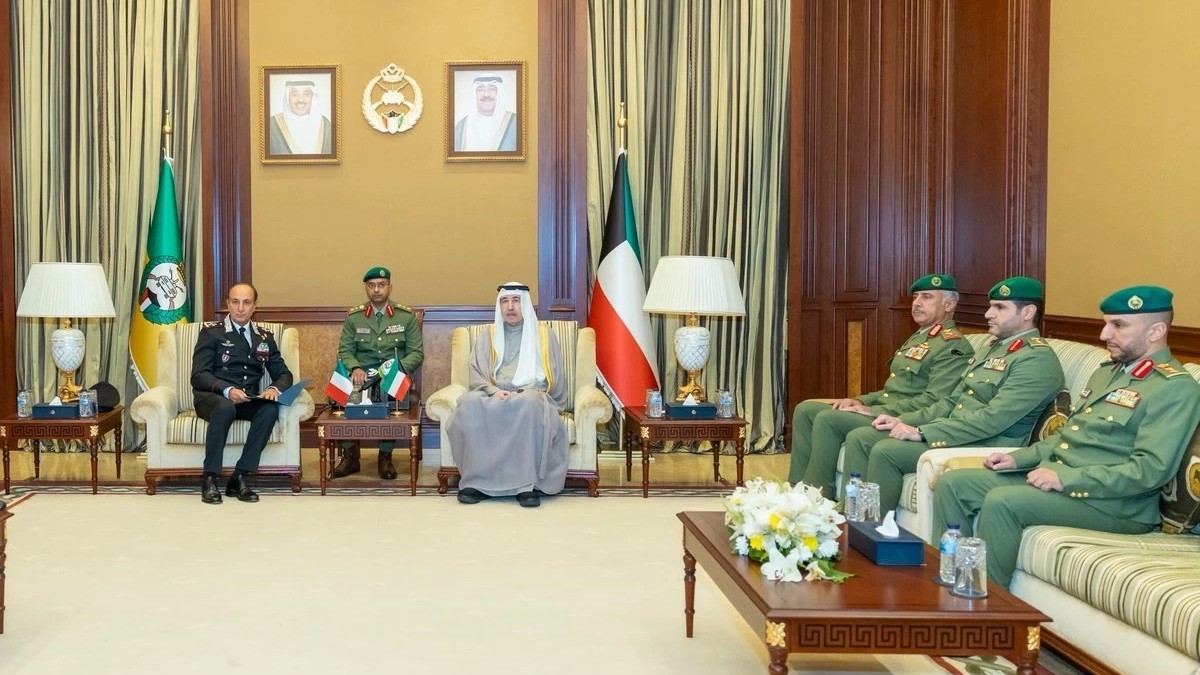
Here is the detail that reframes the Italian deaths. Al Jazeera's Zein Basravi reported that the attack happened while Kuwait's National Guard and military were meeting a visiting Italian delegation that included the commander general of the Italian Carabinieri, Lieutenant-General Salvatore Lungo, and Italy's ambassador to Kuwait. Kuwait Times and Arab Times reported that National Guard Chief Sheikh Mubarak Humoud Al-Jaber Al-Sabah received Carabinieri Commander General Salvatore Luongo that day, with National Guard Undersecretary Lt Gen Hamad Salem Al-Bargis and Ambassador Lorenzo Morini present, and that the two sides discussed expanding military and security cooperation. The outlets spell the general's surname two ways. Kuwait's foreign minister, Sheikh Jarrah Jaber Al-Ahmad Al-Sabah, also called Tajani to express Kuwait's solidarity with and support for Italy. Two things remain unestablished: no official has said the Carabinieri general was anywhere near the site, and no Italian military contingent has been described as involved in the incident.
Washington's Message, Hours Later
President Donald Trump addressed the wider war on Thursday evening, in Thanksgiving calls with US service members from Mar-a-Lago, and he did not mention Kuwait. He said "we have victory at hand" and that Washington was giving Tehran "every chance to make a deal and save a lot of lives." He added: "We're trying to give them a chance to be smart." Trump claimed Iran's air force, navy and air defenses had been wiped out, and that Tehran had been unable to resume work at nuclear sites the US had struck. Then the threat with a name attached: "We would absolutely hit Pickaxe Mountain, but we haven't seen any real activity there." He did not announce a decision to strike again. Pickaxe Mountain sits near Iran's Natanz enrichment site. Trump also told Marines in the United Arab Emirates that the US had launched 150 missiles "to stop enemy missiles and drones from striking commercial ships in the Strait" — a figure he offered without a time period, and one that could not be independently verified.
What to Watch Now
Watch three things. First, whether the investigation is real. Araghchi said Tehran was ready to join a joint investigative commission "to determine who was responsible for launching the drone that led to the deaths of two of our fellow citizens," according to Tajani's account of their call; Reuters and CBC, citing Araghchi's Telegram post, said Iran was prepared to work with Kuwait "to identify the origin of the incident and parties involved in it." Whether that panel ever sits is the test of whether Tehran wants the facts found. Second, the site: Kuwait has not named it, and Rome and Kuwait City still describe two different mechanisms. Third, the pressure. European Commission President Ursula von der Leyen said Europe must step up pressure on Iran "to put an end to these unacceptable attacks" on its neighbors and partners in the Gulf. Israel's foreign minister, Gideon Sa'ar, said Iran's "unchecked aggression threatens stability and security in the Middle East and beyond." Watch the strait, watch the commission, and watch whether European civilians keep being sent into a war both sides now call no war, no peace.
By Jessica Ali, Staff Writer
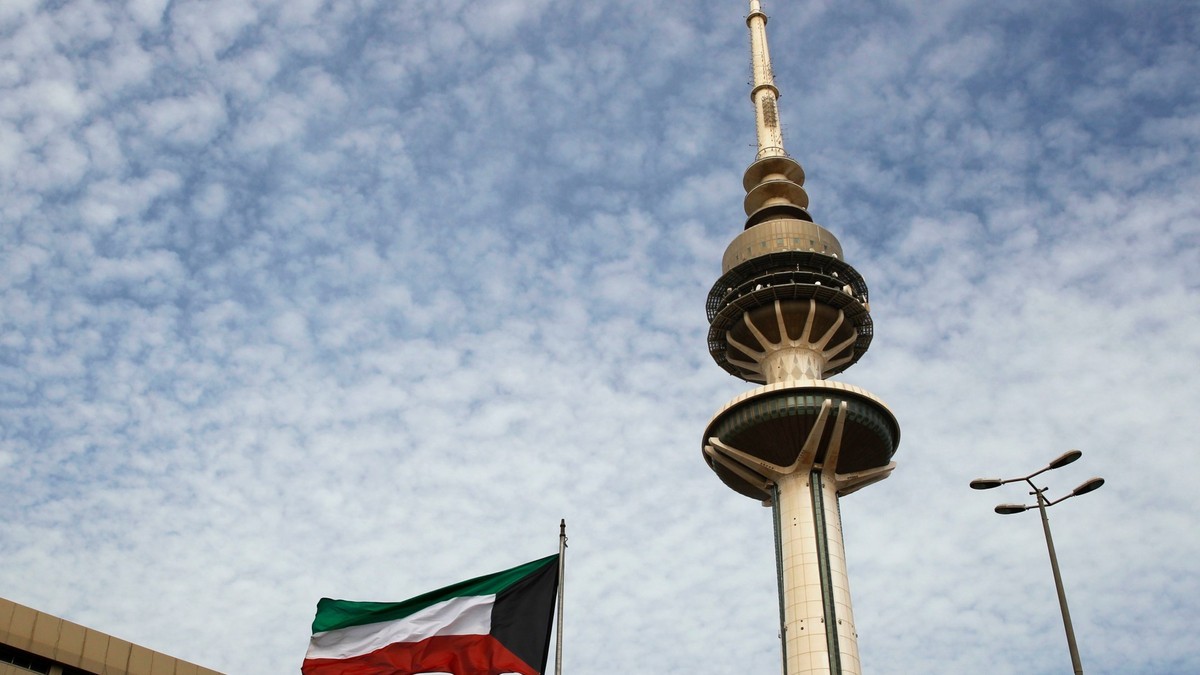
This article was produced with AI-assisted research and editorial support. Sources: Reuters, BBC, CNN, Al Jazeera, AFP, ANSA, UPI, CBC, Kuwait Times, Arab Times, Corriere della Sera, MarketScreener, Bloomberg and The Jerusalem Post. Cover: the Liberation Tower and the Kuwaiti national flag in Kuwait City (file photo). Photo: AP Photo/Jon Gambrell via Al Jazeera.
What's Your Reaction?
 Like
0
 Dislike
0
 Love
0
 Funny
0
 Wow
0
 Sad
0
 Angry
0

Editor-in-Chief at Global1.News. Atlanta-based journalist who cuts through the BS and tells it like it is. Lead anchor, host, and the voice you hear when the spin stops and the truth starts.











Comments (0)