
New Zealand's ruling coalition falls short of parliamentary majority by one seat
The latest election results in New Zealand have left the incumbent National‑led coalition just one seat short of a clear majority in the 130‑member House of Representatives.
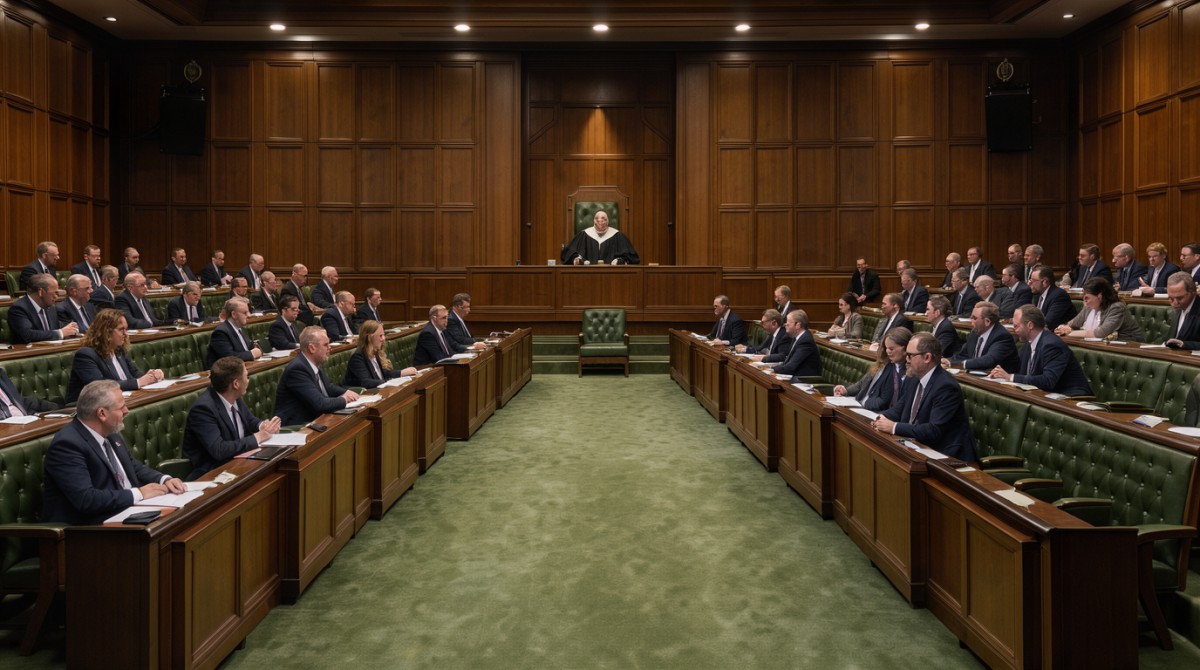
The latest election results in New Zealand have left the incumbent National‑led coalition just one seat short of a clear majority in the 130‑member House of Representatives. This narrow deficit has thrust the centrist Opportunity Party into the role of kingmaker, as the governing bloc seeks to secure enough support to avoid a second election. The outcome reflects a broader mood of economic unease and voter disillusionment that has characterised the campaign, and it raises questions about the stability of the forthcoming government and the policy direction it may pursue.
The parliamentary arithmetic
National, led by Prime Minister Christopher Luxon, secured 40 seats. Its two coalition partners, ACT and New Zealand First, added 13 and 12 seats respectively, bringing the right‑leaning bloc to a total of 65 seats. The opposition Labour Party won 36 seats, while the Greens took 17 and Te Pāti Māori secured five. Opportunity, with seven seats, now holds the balance of power.
Because the coalition’s total falls short of the 66 seats required for an outright majority, Luxon has indicated that negotiations with Opportunity will be necessary. He warned that any rushed agreement could be unstable, and he emphasized the need for a “stable government” that would not force New Zealand back to the polls.
Opportunity’s pivotal position
Opportunity’s leader, Qiulae Wong, described her party’s role as a responsibility shared by all seven parties in parliament. She signalled openness to talks with National while keeping “all options … on the table.” This stance underscores the party’s strategic leverage: its seven seats can tip the balance either toward a National‑led administration or, if a coalition were somehow formed with Labour, toward a centre‑left government.
However, the official results show that even with Opportunity’s support, Labour would still lack a majority. The combined seats of Labour, the Greens, and Te Pāti Māori total 58, leaving a gap that Opportunity’s seven seats cannot fill. Consequently, the only realistic path to a functional government appears to be a deal with National.
Economic backdrop and voter sentiment
The election was fought against a backdrop of a sluggish economy, rising living costs, and high unemployment. Voters expressed frustration in BBC interviews, describing a “kind of apathy and a bit of dread.” One 21‑year‑old voter noted a pervasive sense of gloom, while a 40‑year‑old man admitted he abstained because he could not identify with any party.
A survey by the Helen Clark Foundation found that more than half of the population no longer views New Zealand as a land of opportunity. This sentiment is reflected in the record‑high emigration rates, with former prime minister Jacinda Arden among those relocating to Australia. The economic discontent appears to have translated into a tighter election than anticipated, with National losing two seats on special votes that traditionally lean left.
Policy contrasts between the contenders
National’s platform emphasized lower taxes, cheaper energy, increased renewable generation, and a stronger defence posture. These promises aim to address cost‑of‑living pressures while positioning the party as a pro‑business force.
Labour, by contrast, campaigned on cutting healthcare, public transport, and fuel costs, alongside expanding government support for social housing. While Labour won the popular vote, the party’s inability to convert that into a parliamentary majority limits its leverage in the upcoming negotiations.
Implications for New Zealand’s political stability
The necessity of a post‑election coalition agreement introduces a period of uncertainty. Luxon has acknowledged that negotiations “may be challenging” and will take time. The stakes are high: a prolonged stalemate could erode public confidence further and potentially trigger a second election, an outcome both parties have indicated they wish to avoid.
Opportunity’s claim that “everyone is responsible for making sure we do everything we can to deliver a stable government” suggests an awareness of the broader ramifications. A fragile coalition could struggle to pass legislation, especially on contentious issues such as tax cuts or renewable energy targets, where the support of smaller parties may be required.
Historical context of New Zealand’s coalition politics
New Zealand’s mixed‑member proportional (MMP) system, which allocates two votes per voter—one for a party and one for a local representative—has traditionally produced coalition governments. The current scenario, however, is notable for its tightness: preliminary results on election day suggested a slim lead for the National bloc, but the final tally revealed a one‑seat shortfall after special votes were counted.
This election is described as the “tightest … in years,” underscoring the increasing volatility of voter preferences under MMP. The system’s design ensures that smaller parties like Opportunity can wield disproportionate influence, a factor that parties must navigate carefully in forming stable administrations.
Looking ahead: potential policy outcomes
If National secures Opportunity’s backing, the resulting government will likely pursue its core pledges: tax reductions, energy affordability measures, and a push for renewable generation. The presence of ACT and New Zealand First in the coalition may reinforce a market‑oriented agenda, while also demanding concessions on defence spending.
Conversely, if negotiations falter and a second election is called, the political landscape could shift dramatically. Voter fatigue, already evident in the expressed apathy, might lead to even lower turnout or further fragmentation of the vote. In any case, the immediate priority for both the ruling bloc and the opposition will be to convey a credible plan for economic recovery, as the electorate’s disillusionment appears to be a decisive factor in the current stalemate.
This article was produced with AI-assisted research and editorial support. Reporting is based on the source material cited below. Sources: BBC News Asia; bbc.co.uk; Global1.News (27 November 2026).
By Kenji Tanaka, Staff Writer
What's Your Reaction?
 Like
0
 Dislike
0
 Love
0
 Funny
0
 Wow
0
 Sad
0
 Angry
0

Japan Correspondent at Global1.News. Tokyo-based voice covering Japanese politics, technology, economy, and culture. Tracks the intersection of tradition and innovation in one of the world's most dynamic societies.













Comments (0)