
Israel’s Election Results Reveal a Democracy in Name Only
In a recent episode of the David Hearst Podcast, Middle East Eye’s editor‑in‑chief David Hearst laid bare a stark assessment of Israel’s political system.
In a recent episode of the David Hearst Podcast, Middle East Eye’s editor‑in‑chief David Hearst laid bare a stark assessment of Israel’s political system. He argued that the country’s liberal façade has been stripped away by an expanding settler agenda and a collective drive for retribution against Palestinians. Hearst’s commentary, recorded on 29 October 2026, forms the backbone of this analysis, which examines how the latest election results expose the limits of Israeli democracy and what that means for the Palestinian people.
The Election Outcome and Its Symbolic Promise
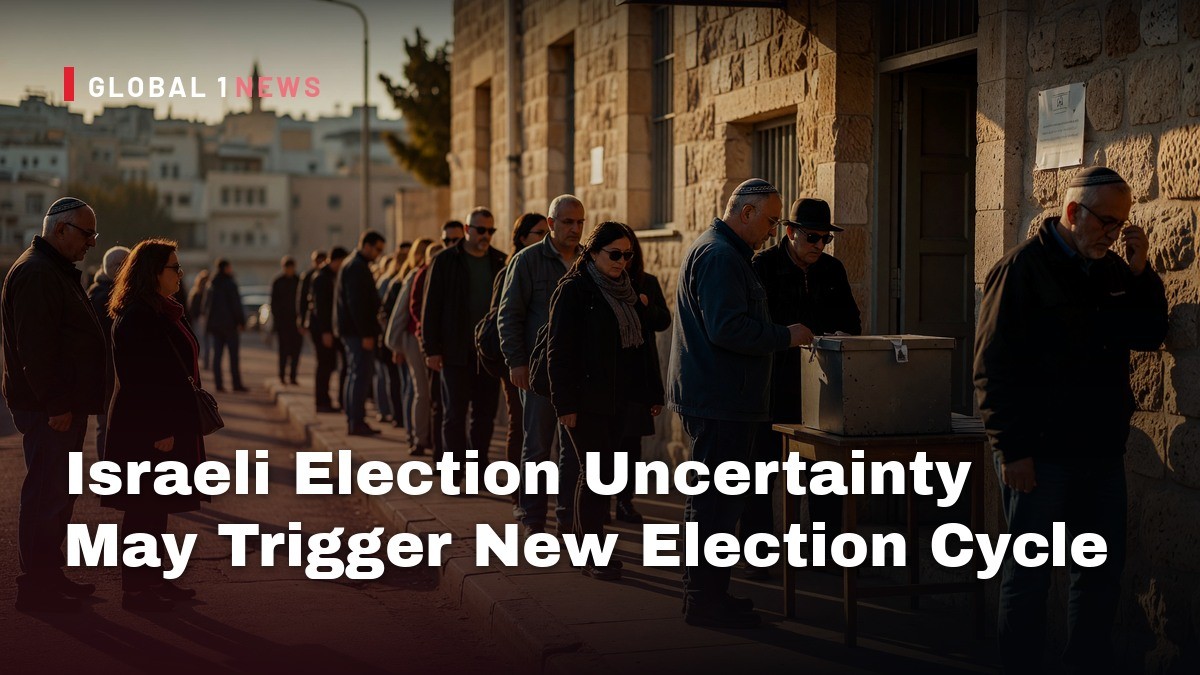
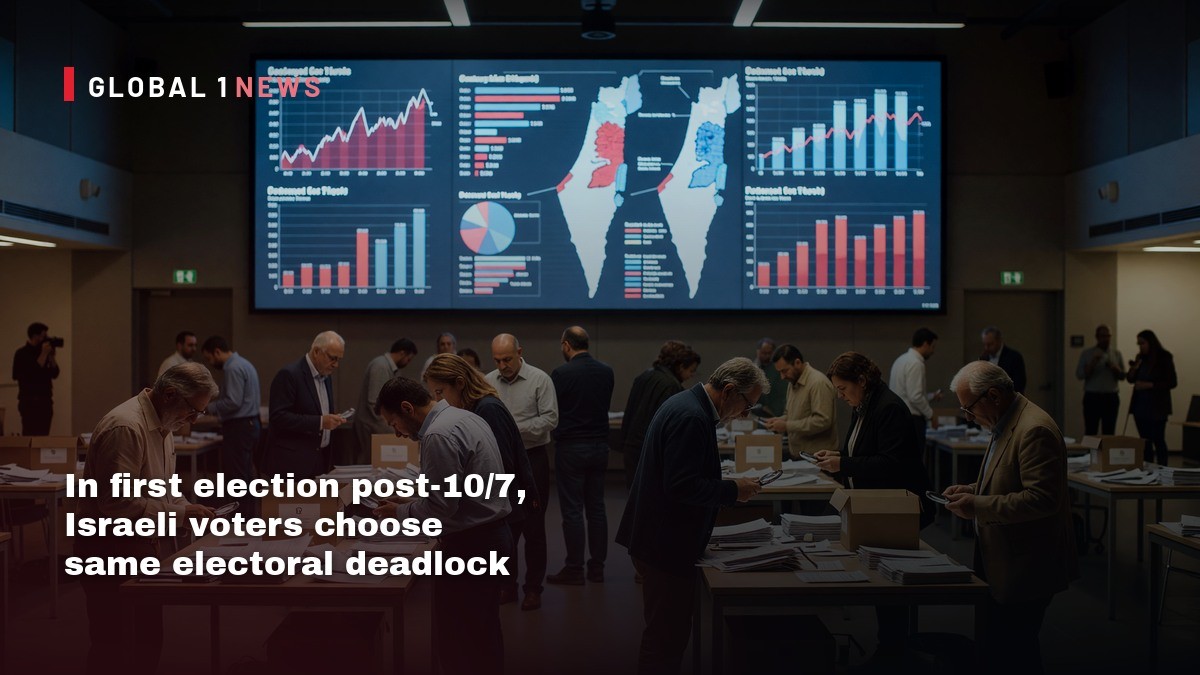
Tuesday’s election produced a clear mandate for a new administration, according to Hearst. The results, he notes, would have allowed a government led by Gadi Eisenkot, a figure positioned to head either a majority or a minority coalition. In a fully democratic system, this outcome would have been the decisive factor in forming the next cabinet.
Hearst emphasizes that the electoral process itself is not the problem; rather, it is the structural reality that prevents the elected will from translating into a governing reality. He points out that even if Eisenkot’s party secured the most seats, the broader political architecture of Israel excludes meaningful Palestinian participation.
In his view, a truly democratic outcome would have required the formal or informal inclusion of the two Palestinian blocs that contested the election. Their presence in the coalition would have signaled a willingness to share power and address the grievances of the occupied population. The absence of such inclusion, Hearst argues, underscores a decisive gap between the form of elections and the substance of democratic governance.
Settler State Logic Over Democratic Norms
Hearst describes Israel as a “settler state” that has increasingly moulded its institutions around the identity and views of what he calls “Jewish fascists.” This language reflects his assessment that the state’s policies are driven less by liberal democratic ideals and more by an expansionist agenda that prioritises settlement growth and security measures aimed at suppressing Palestinian resistance.
The term “settler state” is used to highlight the ongoing reality of land appropriation and demographic engineering. Hearst’s analysis suggests that these policies are not peripheral but central to the state’s identity, shaping everything from legislation to military strategy. This framing challenges the narrative that Israel’s democracy is comparable to Western liberal democracies.
By positioning the state’s identity around a singular ethno‑national vision, Hearst argues that Israel systematically marginalises non‑Jewish citizens and residents. The result, he contends, is a political system where the rule of law is applied unevenly, and where the rights of Palestinians—whether within Israel’s borders or in the occupied territories—are routinely subordinated to security imperatives.
The Human Cost of Excluding Palestinian Voices
Beyond the abstract political critique, Hearst’s commentary underscores the tangible human impact of Israel’s exclusionary politics. When Palestinian blocs are barred from meaningful participation, policies that affect daily life—such as movement restrictions, land confiscations, and resource allocation—are crafted without Palestinian consent.
This dynamic fuels a cycle of dispossession and resistance. Hearst notes that the collective desire for vengeance against Palestinians, embedded in state policy, perpetuates a climate of fear and oppression. The human cost is evident in the continued expansion of settlements, the demolition of homes, and the restriction of access to basic services for Palestinians.
By linking the political structure directly to these outcomes, Hearst frames the denial of democratic participation not merely as a constitutional flaw but as a driver of ongoing human rights violations. The Palestinian experience, therefore, is inseparable from the broader critique of Israel’s political identity.
International Law and the Democratic Deficit
Hearst’s analysis implicitly raises questions about Israel’s compliance with international legal standards. The exclusion of Palestinian representation from governance structures runs counter to principles of self‑determination enshrined in the UN Charter and other human‑rights instruments.
When a state claims democratic legitimacy while systematically denying a significant portion of its population a voice in decision‑making, it creates a democratic deficit that challenges its standing under international law. Hearst’s description of Israel as a settler state aligns with legal arguments that view the occupation as a breach of the Fourth Geneva Convention, which protects civilian populations under military occupation.
By foregrounding these legal dimensions, Hearst invites a re‑examination of how the international community engages with Israel. The democratic façade, he suggests, can no longer shield the state from scrutiny over its settlement policies and treatment of Palestinians.
The Role of Palestinian Political Blocs
Hearst highlights the potential role of the two Palestinian blocs that participated in the election. While they did not secure a formal place in government, their very presence indicates a willingness to engage with the electoral process, even under constrained conditions.
In a scenario where these blocs were incorporated—formally or informally—into Eisenkot’s administration, they could have acted as a conduit for Palestinian concerns within the highest echelons of power. Their exclusion, however, reinforces a pattern where Palestinian political agency is limited to opposition rather than partnership.
The absence of Palestinian representation also underscores the broader political isolation imposed on Palestinian leaders. It reflects a systemic barrier that prevents the development of a shared political future, perpetuating a status quo where Israeli decisions are made without Palestinian input, further entrenching mistrust and hostility.
Looking Forward: What Democracy Means for the Region
Hearst’s stark assessment forces a reconsideration of what democracy entails in the Israeli‑Palestinian context. If democracy is defined merely by the holding of elections, then Israel meets a superficial criterion. Yet, as Hearst argues, true democracy requires inclusive governance, protection of minority rights, and accountability to all citizens and residents.
The 2026 election, therefore, becomes a litmus test for Israel’s democratic credentials. The fact that the results could have produced a government led by Eisenkot, yet still fail to incorporate Palestinian voices, reveals a structural flaw that cannot be remedied by electoral cycles alone.
For the Palestinian people, the path forward remains fraught. The exclusion from formal political power means that their grievances continue to be addressed, if at all, through protest and international advocacy rather than through institutional channels. Hearst’s commentary suggests that any meaningful change will require a fundamental reshaping of Israel’s political identity—a shift away from a settler‑state model toward a system that genuinely respects democratic principles and the rights of all its inhabitants.
By Fatima Al-Rashid, Staff Writer
This article was produced with AI-assisted research and editorial support. Reporting is based on the source material cited below. Sources: Middle East Eye video report (29 October 2026); Middle East Eye; Global1.News
What's Your Reaction?
 Like
0
 Dislike
0
 Love
0
 Funny
0
 Wow
0
 Sad
0
 Angry
0
Gulf/MENA Correspondent at Global1.News. Based in Doha, covering Gulf politics, energy markets, diplomacy, and development across the Middle East and North Africa. Tracks the economic transformation of the Gulf states.









Comments (0)