
Quad vows to ensure open maritime corridors
In Manila, as the Association of Southeast Asian Nations (ASEAN) Summit gathered leaders from across the region, the Quadrilateral Security Dialogue—commonly known as the Quad—held a high‑profile meeting on the sidelines.
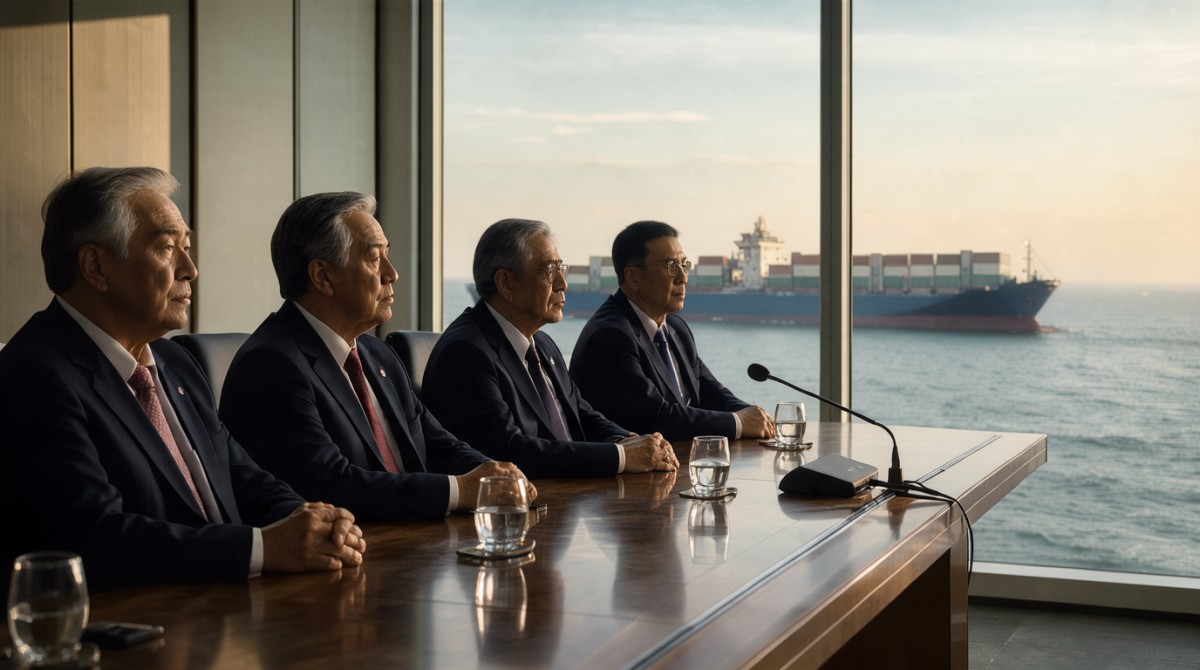
In Manila, as the Association of Southeast Asian Nations (ASEAN) Summit gathered leaders from across the region, the Quadrilateral Security Dialogue—commonly known as the Quad—held a high‑profile meeting on the sidelines. The gathering brought together the presidents and prime ministers of the United States, Australia, India and Japan, all of whom used the platform to denounce what they termed “destabilizing or unilateral actions” that threaten peace and stability in the Indo‑Pacific. Their joint statement underscored a shared commitment to keep maritime corridors open, safe and resilient, while also warning against economic coercion that could disrupt the status quo.
Quad’s Core Message: Defending the Status Quo
The Quad leaders—President Donald Trump, Prime Minister Anthony Albanese, Prime Minister Narendra Modi and Prime Minister Takaichi Sanae—presented a united front, describing their alliance as “a force for good and a partnership of action, committed to peace, stability and prosperity.” They explicitly opposed any actions that seek to change the status quo by force or coercion, emphasizing that such moves “escalate tensions and undermine regional peace and stability.” By invoking “economic coercion” and “arbitrary export restrictions,” the statement signaled concern over tactics that could pressure smaller economies, including the Philippines, into political concessions.
For ordinary Filipinos, the Quad’s stance translates into a reassurance that the seas surrounding our archipelago will remain open for trade, fishing and travel. The promise of “open, safe and resilient maritime transit corridors” is especially pertinent for barangays that depend on coastal commerce and for OFWs who rely on stable shipping routes for the transport of goods and remittances.
Maritime Security and the South China Sea
The Quad’s emphasis on maritime security cannot be divorced from the ongoing disputes in the South China Sea, where China’s assertive actions have drawn “widespread condemnation.” While the joint statement did not name any specific country, the context of the meeting—held just days before President Trump’s trilateral talks with President Vladimir Putin and President Xi Jinping in Shenzhen—suggests a clear alignment against what the Quad perceives as Beijing’s aggressive moves. By pledging to protect “freedom of navigation and overflight,” the Quad signals a willingness to challenge any attempts to restrict movement through these vital waterways.
For Filipino fishermen and coastal communities, the assurance of unhindered access to the sea is a matter of livelihood. The Quad’s commitment to “open, safe and resilient maritime transit corridors” could bolster the Philippines’ own efforts to assert its sovereign rights, especially as the Department of Foreign Affairs and the Department of National Defense continue to navigate diplomatic pressures.
Technology Cooperation: AI and Cybersecurity
Beyond the traditional security realm, the Quad highlighted cooperation in emerging technologies. The leaders reaffirmed support for the AI Accelerator, a program announced earlier by their foreign ministers in Atlanta, intended to coordinate and fund trusted artificial intelligence across the Indo‑Pacific. By emphasizing “trusted AI access, deployment and technical assistance,” the Quad seeks to shape the digital landscape in a way that aligns with democratic values and safeguards against misuse.
Equally pressing is the Quad’s acknowledgment of a “rapid increase” in cyber incidents throughout the region. The announcement of an enhanced Quad Cybersecurity Cooperation aims to foster an “open and secure cyberspace.” For the Philippines, where the Department of Information and Communications Technology has been working to strengthen national cyber defenses, this partnership offers a channel for technical assistance, capacity‑building and shared threat intelligence that could protect everything from government networks to the data of sari‑sari store owners.
Economic Initiatives: Business Leaders’ Forum
In a move that blends security with commerce, the Quad unveiled plans for an inaugural Quad Business Leaders’ Forum slated for next year. The forum will bring together business leaders, government officials and policy experts from the four nations to deepen private‑sector ties. While the source material does not detail specific projects, the intent is clear: to create economic opportunities that complement the security agenda.
For Filipino entrepreneurs, especially those operating small enterprises in barangays, the prospect of greater market access and investment from Quad economies could translate into new avenues for growth. The Department of Trade and Industry has long advocated for diversified trade partnerships, and this forum may serve as a catalyst for more robust economic engagement with Australia, India, Japan and the United States.
Disaster Response and Humanitarian Assistance
The Quad also pledged to respond to disasters with “life‑saving assistance,” a commitment that resonates deeply in a country prone to typhoons, earthquakes and volcanic eruptions. By aligning disaster response capabilities, the Quad signals a willingness to mobilize resources quickly, whether through military logistics, humanitarian aid or technical expertise.
Such cooperation could augment the Philippines’ own disaster risk reduction efforts led by the National Disaster Risk Reduction and Management Council (NDRRMC). In the wake of recent calamities, the promise of rapid, coordinated assistance from Quad partners offers a safety net for vulnerable communities, from remote mountain barangays to densely populated urban districts.
Support for ASEAN Centrality
Despite their strong stance on regional security, the Quad leaders reaffirmed “unwavering” support for ASEAN centrality and unity. By emphasizing that their actions are “working with regional partners to tackle shared challenges,” they position themselves as allies rather than antagonists to the Southeast Asian bloc.
This reassurance is significant for the Philippines, whose foreign policy traditionally leans on ASEAN as the primary diplomatic platform. The joint statement’s emphasis on “uphold[ing] a free and open Indo‑Pacific” while respecting ASEAN’s role helps balance external security partnerships with regional solidarity, a delicate dance that the Department of Foreign Affairs must continue to navigate.
Implications for the Filipino People
At its core, the Quad’s Manila meeting is about more than geopolitics; it is about how global power dynamics affect everyday Filipinos. The promise of secure maritime routes safeguards the flow of goods that fill local markets and the livelihoods of fishermen. Technological cooperation in AI and cybersecurity promises a safer digital environment for students, entrepreneurs and government services. Economic initiatives could open new markets for barangay‑level producers, while disaster‑response pledges offer hope for quicker relief when nature strikes.
As the Philippines watches these developments unfold, the onus remains on our national institutions—Congress, the Senate, the Department of National Defense, and the Office of the Ombudsman—to ensure that any partnership with the Quad translates into tangible benefits for our people. The spirit of bayanihan calls for vigilance, transparency and a steadfast commitment to democracy, so that foreign alliances strengthen, rather than compromise, the rights and welfare of every Filipino.
This article was produced with AI-assisted research and editorial support. Reporting is based on the source material cited below. Sources: Philstar.com; Global1.News (18 November 2026).
By Bella Reyes, Staff Writer
What's Your Reaction?
 Like
0
 Dislike
0
 Love
0
 Funny
0
 Wow
0
 Sad
0
 Angry
0

Philippines/Southeast Asia Correspondent at Global1.News. Manila-based journalist covering Philippine politics, environment, maritime security, and social issues. Passionate about marine conservation and the communities protecting the Philippines' natural heritage.













Comments (0)