
Israeli Settler Faces Reckless Manslaughter Charge in Killing of Palestinian Activist Awdah Hathaleen
In a recent Middle East Eye report, video footage from the day of the shooting shows settler Yinon Levi firing toward buildings and a group of Palestinians in Umm al-Khair, with another clip capturing the moment the bullet struck activist Awdah Hathaleen as he documented the scene.
In a recent Middle East Eye report, video footage from the day of the shooting shows settler Yinon Levi firing toward buildings and a group of Palestinians in Umm al-Khair, with another clip capturing the moment the bullet struck activist Awdah Hathaleen as he documented the scene. The indictment marks the first time since October 7, 2023, that an Israeli has faced charges for killing a Palestinian in the occupied West Bank.
Israeli Settler Faces Reckless Manslaughter Charge in Killing of Palestinian Activist Awdah Hathaleen
Umm al-Khair, occupied West Bank – 7 August 2026 — Israeli prosecutors filed an indictment on August 6 charging settler Yinon Levi with reckless manslaughter in the July 28, 2025, killing of Palestinian activist Awdah Hathaleen, along with armed trespassing and malicious property damage. The Southern District Prosecutor's Office submitted the charges in Beersheba District Court, where a hearing to read them is scheduled in the coming weeks. Levi remains free and not under arrest.
Details of the Indictment
The indictment states that the first shot struck Hathaleen while he stood in a courtyard about 20 metres away documenting the events. The bullet punctured his lung and chest, causing him to collapse and bleed heavily before he was pronounced dead on arrival at hospital from hypovolemic shock and respiratory failure. Reckless manslaughter carries a maximum sentence of 12 years.
Levi responded to prosecutors that he would fight the charges and accused them of penalising acts of self-defence while providing de facto support for terrorism. His lawyer Avichay Hajbi described the prosecution as a mistaken decision. Eitan Peleg, lawyer for Hathaleen's family, expressed hope that the case could mark a turning point for stronger enforcement against violence in the West Bank.
The central role of video evidence in the indictment underscores how visual documentation by activists has begun to pierce long-standing patterns of unaccounted violence in the South Hebron Hills. Footage described in the filing places Awdah Hathaleen roughly twenty metres from the scene, capturing the moment before the recording cuts while his voice remains audible. Separate clips circulated by Yuval Abraham and retained by the family show Yinon Levi brandishing a firearm and directing shots toward those filming, offering a timeline that investigators appear to have cross-referenced with witness statements.
The decision to file charges through the Southern District Prosecutor’s Office in Beersheba, rather than a military court, signals an attempt to frame the case within civilian criminal procedure. A spokesperson confirmed Levi remains at liberty pending an upcoming meeting where charges will be formally presented. This procedural step follows the February 2026 Haaretz report indicating the State Attorney’s Office had already prepared an indictment for reckless homicide, suggesting internal deliberations stretched over several months before public confirmation.
Yet the absence of immediate arrest raises questions about enforcement priorities when the accused is a settler with documented prior confrontations. The reliance on footage recorded by the victim and bystanders illustrates how Palestinian and international activists have supplied the evidentiary foundation that state mechanisms have historically failed to generate on their own.
Sequence of Events on July 28, 2025
Earlier that day, settlers from the Havat Meitarim outpost created earthworks in an area they described as state land and installed water and electricity pipelines. A settler drove an excavator through a private olive grove, damaging property and knocking unconscious villager Ahmad al-Hathaleen with the excavator hammer. Residents threw stones in response, after which Levi advanced and began shooting.
Witness Alaa Hathaleen reported that Levi immediately fired randomly at everyone present despite warnings that children were nearby and later slapped Hathaleen's mother to the ground when she protested. Israeli-American activist Mattan Berner-Kadish, who was at the scene, recounted that the shooter said he was glad he had done it and that three IDF soldiers present wished one of them had fired instead.

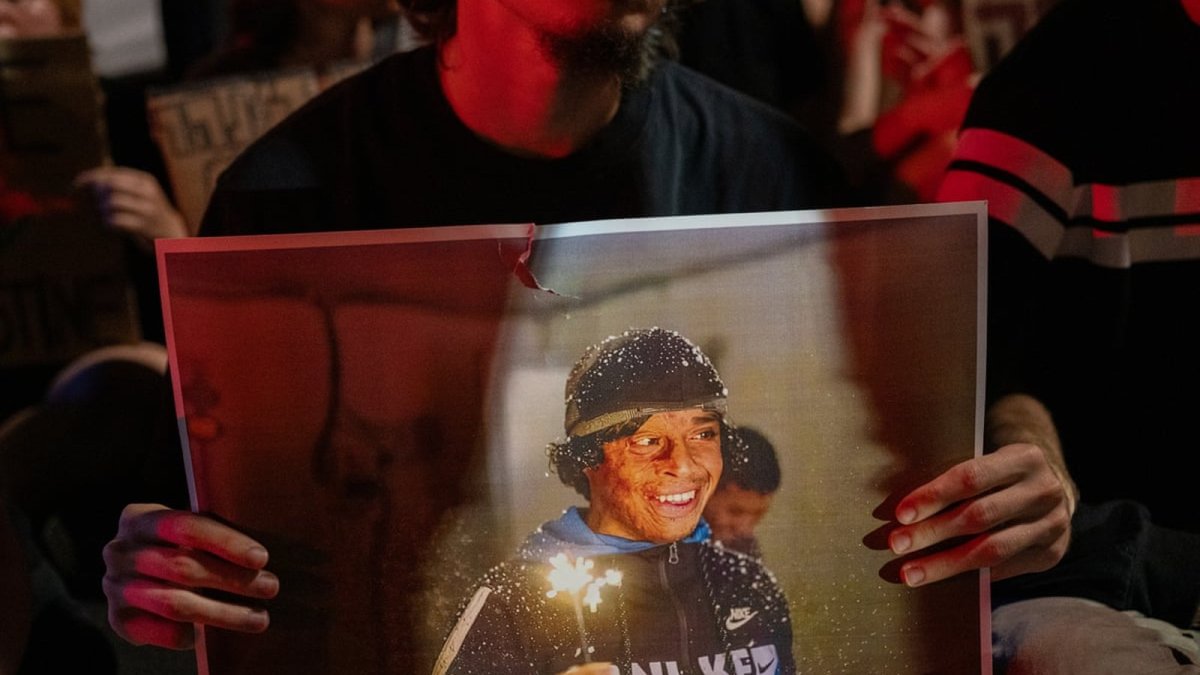
Awdah Hathaleen's Life and Activism
Born in 1994 in Umm al-Khair to a Bedouin tribe expelled from Beersheba in 1948, Hathaleen worked as an English teacher at Al-Saray'a Secondary School in Badia after earning a BA in English from Hebron University in 2016. He had been an activist since age 17 and served as a spokesperson for his community, hosting foreign diplomats, journalists and activists while volunteering with B'Tselem and contributing to +972 Magazine since 2021.
His activism was intertwined with the Oscar-winning documentary No Other Land, which chronicled his community's struggle in Masafer Yatta. He married Hanady in 2019 and was father to three children at the time of his death. A Real Madrid fan who played football locally, he viewed sport as a form of peaceful resistance. His uncle Suleiman was killed in 2022 when run over by an Israeli police tow truck, with no conviction resulting.
The film won the 2025 Oscar for Best Documentary Feature and amplified voices from the area, yet Hathaleen continued his work as a teacher and host to international visitors, integrating advocacy into daily routines of hospitality and education. His prevented travel to the San Francisco Bay Area in June 2025 for an interfaith speaking tour, followed by deportation from the airport to Qatar, highlighted the additional barriers activists encounter when attempting to share testimony abroad.
His engagement with football as a form of nonviolent resistance reflected a broader belief that shared community activities could counter isolation. Local clubs in Masafer Yatta and Susiya provided spaces where young people could gather, and the subsequent construction of a pitch in Umm al-Khair in his memory extended that vision. In February 2026, the Israeli government issued a demolition order for the pitch after settler petitions described it as a security threat to the nearby Carmel settlement.
Family and Community Reactions
Tariq Hathaleen, the victim's cousin and lifelong friend, stated that while the indictment would not bring his relative back, the family viewed it as something really big that could teach settlers they should not shoot at Palestinians. He emphasised that the killing was not an accident and that Levi must be held fully accountable, though the family believes first-degree murder charges would have been appropriate.
The day after the killing, an Israeli court upheld Levi's self-defence claims and placed him under three days of house arrest before releasing him. Police later stormed the funeral, declared a closed military zone, seized the body, threw stun grenades, raided homes and made 14 arrests while beating residents. Hathaleen's body was returned only after three days following a hunger strike by about 70 local women, including his wife Hanady, mother Khadra and sister Sara.
Historical Context of Impunity
B'Tselem documented at least 1,100 Palestinians killed by settlers and soldiers in the West Bank since October 7, 2023, including 240 children. Levi is the first person indicted over any of those deaths, with about 93.6 percent of settler attacks ending without prosecution. The last civilian prosecution for a settler killing came in 2018, and the last military prosecution in 2019.
Yair Dvir, B'Tselem spokesperson, described the indictment as the exception that proves the rule, noting that impunity for those who harm Palestinians forms a central component of policy rather than a system failure. Ziv Stahl of Yesh Din added that the charges reflect media exposure and public critique tied to Hathaleen's prominence as a well-known activist rather than a broader shift toward accountability.
Previous cases illustrate the narrow range of outcomes when Israelis are accused of killing Palestinians. The soldier responsible for the 2019 shooting of Ahmad Manasrah, who had stopped to assist traffic-accident victims, ultimately received a sentence equivalent to three months of community service after pleading to negligent homicide. Eight years after the 2018 killing of Aisha Rabi, a mother of eight struck by a stone while driving, a court identified a settler as responsible yet declined to issue a conviction or sentence, citing the perpetrator’s age of sixteen at the time, with no further public resolution.
B’Tselem data cited by the Guardian records more than 1,500 Palestinian deaths at the hands of settlers and soldiers this decade, yet Levi’s indictment marks the first formal charge arising from any of those incidents. Statements from B’Tselem’s Yair Dvir and Yesh Din’s Ziv Stahl frame this record not as isolated lapses but as a deliberate policy architecture that sustains violence through selective enforcement.
The pattern shows that when prosecutions occur, they frequently involve reduced charges, minimal penalties, or procedural delays that erode public confidence. Levi’s case therefore arrives against a backdrop where the rarity of indictment itself becomes part of the story, testing whether sustained documentation and external scrutiny can shift outcomes beyond symbolic gestures.
International and Domestic Reactions
Levi, founder of the Havat Meitarim outpost, was under sanctions by the UK, EU, Canada and Australia for violence toward Palestinians at the time of the killing, with the US having sanctioned him under the Biden administration before those measures were lifted. He spent the past year free and continued establishing illegal outposts.
Former Israeli Prime Minister Ehud Olmert has called for the International Criminal Court to bring charges against Jewish terrorists. An American nurse who attempted CPR on Hathaleen was detained for 24 hours and deported to Jordan, while Italian citizen Micol Hassan faced similar detention and deportation.
Analysis and Implications
The indictment arrives amid a documented surge in settler violence and forcible displacement across the occupied West Bank since October 7, 2023, coinciding with far-right ministers holding key security and finance portfolios. Even if the case proceeds to trial, any verdict remains years away, and Israeli courts have a consistent record of lenient outcomes for Israelis who attack Palestinians. The charges against Levi, who spent the year after the killing establishing illegal outposts, underscore how exceptional any prosecution remains in a system where most settler attacks never reach court.
Family members have stated that formal charges alone cannot address the loss, describing Hathaleen as both cousin and childhood companion whose absence creates enduring pain that legal proceedings cannot fully repair. "Awdeh was not only my cousin. He was my childhood friend and someone very dear to me. His absence has left a pain that will never go away," Tariq Hathaleen said, as the family continues to press for a full trial.
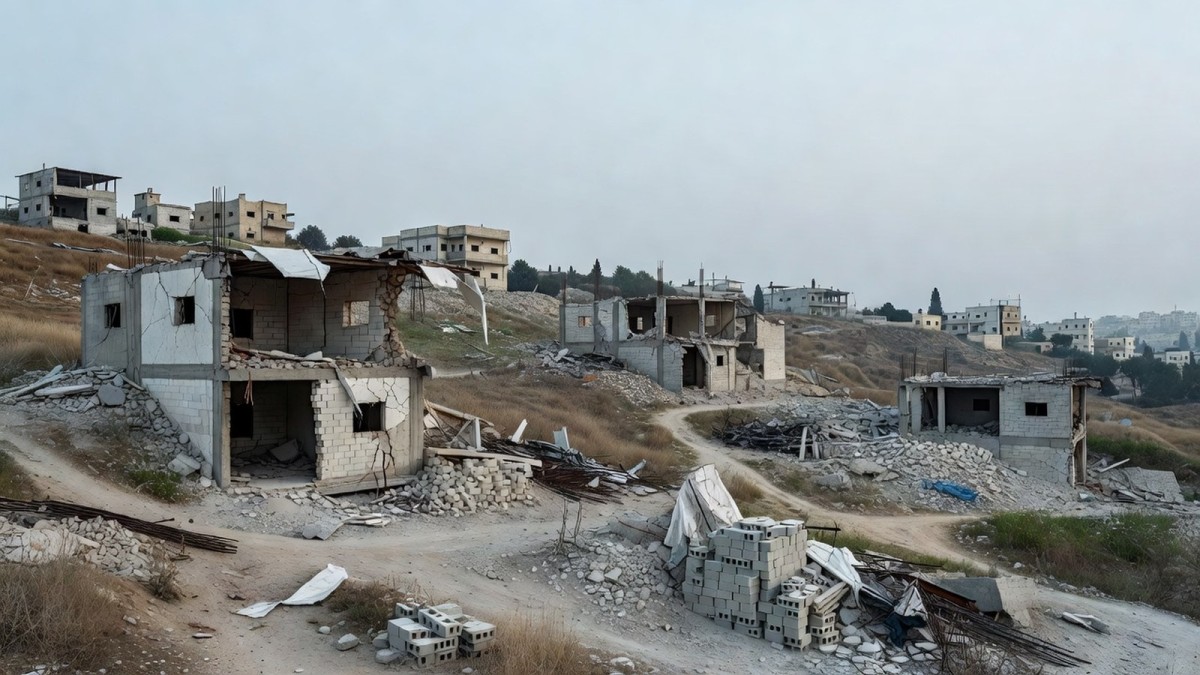
Communities such as Umm al-Khair continue to experience repeated property damage, severed water lines and displacement threats that form the daily backdrop against which individual cases unfold. Palestinian residents emphasise that accountability requires addressing the policies enabling such violence, not merely prosecuting one actor. The case may therefore serve as a limited test of whether international attention and local advocacy can produce more consistent enforcement within existing structures.
Looking ahead, sustained monitoring of the case will reveal whether this indictment marks a departure from prior patterns or remains an exception that leaves the broader framework of impunity intact. Palestinian voices continue to emphasise that justice requires not only individual prosecutions but an end to policies enabling such violence to persist.
By Fatima Al-Rashid, Staff Writer
This article was produced with AI-assisted research and editorial support. Reporting is based on sources cited in the article.
What's Your Reaction?
 Like
0
Like
0
 Dislike
0
Dislike
0
 Love
0
Love
0
 Funny
0
Funny
0
 Wow
0
Wow
0
 Sad
0
Sad
0
 Angry
0
Angry
0
Gulf/MENA Correspondent at Global1.News. Based in Doha, covering Gulf politics, energy markets, diplomacy, and development across the Middle East and North Africa. Tracks the economic transformation of the Gulf states.











Comments (0)