
Plant Based Treaty: Latin America's Food Climate Fight
Food systems now stand at the center of the climate fight, and Latin America is ground zero. The Plant Based Treaty campaign argues that shifting away from animal agriculture offers one of the fastest routes to cutting global emissions — and the region's cattle herds, soy plantations, and threatened rainforests make it the decisive battleground.
Food systems now stand at the center of the climate fight, and Latin America is ground zero. The Plant Based Treaty campaign argues that shifting away from animal agriculture offers one of the fastest routes to cutting global emissions — and the region's cattle herds, soy plantations, and threatened rainforests make it the decisive battleground.
Eating Our Way Out of Climate Collapse: Latin America's Food Revolution
Sao Paulo, Brazil – August 7, 2026 — A new international campaign is placing food systems at the center of climate negotiations, arguing that shifting away from animal agriculture offers one of the fastest routes to cutting global emissions. The Plant Based Treaty, backed by coordinators Juan Pablo Casadiego and Anita Krajnc, calls on governments to treat diet and land use with the same urgency as fossil fuels under the Paris Agreement.
Eating Our Way Out of Climate Collapse
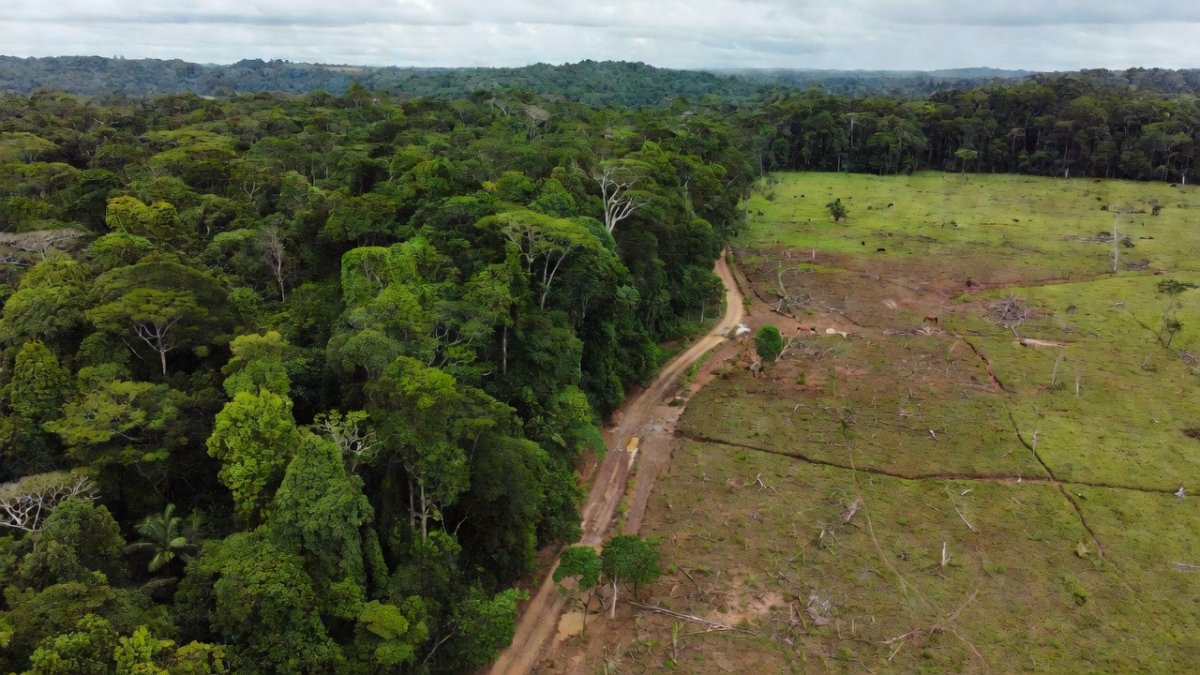
Food systems now stand as one of the largest yet least addressed drivers of planetary heating, and Latin America sits at the epicenter of this crisis. The Amazon, Cerrado, and Gran Chaco forests are being cleared at accelerating rates to expand cattle herds and soy plantations that feed global meat demand. This expansion threatens not only biodiversity but also the rainfall patterns that sustain agriculture across South America. Indigenous communities in Brazil, Colombia, Peru, and Bolivia face direct displacement as land is converted for pasture. The Plant Based Treaty campaign, coordinated by Juan Pablo Casadiego and Anita Krajnc, insists that without rapid dietary shifts, the region’s water cycles and food security will collapse. Cities across the continent are beginning to respond by endorsing plant-based policies that could free land for reforestation. These local actions signal a broader political realignment in Latin American food governance. The stakes extend beyond emissions to the survival of entire ecosystems that regulate climate for the entire hemisphere.
The urgency stems from the sheer scale of land devoted to livestock. Humans already use 4.6 billion hectares for food production, covering 31 percent of Earth’s land surface, with 70 percent of that area dedicated to pasture. In Latin America this pattern is especially pronounced, as vast Pampas grasslands in Argentina and Uruguay, arid zones in northern Mexico, and Central American savannas all experience parallel conversion pressures. The treaty’s call to rewild freed land directly addresses these regional vulnerabilities. Without intervention, continued beef expansion will lock in irreversible deforestation and methane releases that accelerate warming. Latin American voices within the campaign emphasize that solutions must originate from the affected territories rather than distant capitals.
The Third of Emissions on Our Plates
Food systems generate roughly one-third of all human-caused greenhouse gas emissions, totaling approximately 17.3 billion metric tons of CO2-equivalent annually. Within this total, the global livestock sector alone accounts for 12 to 19 percent of overall emissions, with beef representing 25 percent of food-system emissions, cow milk 8 percent, and pork 7 percent. Latin America contributes disproportionately because its cattle herds graze on newly cleared tropical lands that release stored carbon. The Amazon rainforest, which absorbs carbon and regulates rainfall across the continent, loses this function when converted to pasture. Indigenous and riverside populations in Brazil, Colombia, Peru, and Bolivia stand on the front lines of this land conversion. The Plant Based Treaty, advanced by coordinators Juan Pablo Casadiego and Anita Krajnc, demands that governments redirect subsidies toward plant-based production to cut these emissions rapidly. Raising animal-based foods already consumes six times as much land as plant-based alternatives, a ratio that amplifies pressure on Latin American ecosystems. Shifting diets therefore offers a direct lever for protecting the continent’s water cycle and agricultural base. Without such changes, methane from cattle, which comprises roughly one-third of global methane emissions, will continue driving near-term temperature spikes.
These figures reveal why food policy must align with the Paris Agreement. The treaty explicitly links dietary transitions to ecosystem restoration, freeing land currently used for feed and grazing. In Latin America, where beef production dominates export economies, this shift challenges entrenched interests yet offers long-term resilience against climate shocks. Cities endorsing the treaty demonstrate that local governments can lead where national policies lag.
Beef: The Amazon's Quietest Bulldozer
Beef production drives 41 percent of global deforestation, clearing approximately 2.1 million hectares each year, an area roughly half the size of the Netherlands. In Brazil this activity accounts for nearly three-quarters of emissions from deforestation, with cattle grazing and feed crops replacing primary forest at record speed. The Amazon’s role in absorbing carbon and stabilizing rainfall across South America is directly undermined by this expansion. Indigenous communities and riverside populations in Brazil, Colombia, Peru, and Bolivia experience the immediate consequences through land grabbing and disrupted water supplies. The Plant Based Treaty, coordinated by Juan Pablo Casadiego and Anita Krajnc, targets this driver by advocating an end to subsidies that support animal agriculture. Latin American cities that have endorsed the treaty recognize that continued pasture expansion threatens the continent’s food security and climate stability. Argentina’s Pampas, Mexico’s arid north, and Central American lowlands face similar conversion pressures, showing the regional scope of the problem. Rewilding land freed from livestock offers a pathway to restore carbon sinks and rainfall patterns essential for the entire hemisphere. The data make clear that beef remains the dominant force behind forest loss in the world’s largest rainforest.
Trase analysis shows pasture on recently cleared Brazilian land rose from 5.3 million hectares in 2020 to 7.5 million hectares in 2023, a 36 percent increase in four years. This acceleration directly contradicts global climate goals and places Latin America at the center of the deforestation crisis. The treaty’s emphasis on plant-based incentives aims to reverse these trends before tipping points are crossed.
Record Exports, Record Clearing: Brazil's Cattle Paradox
Brazil exported 3.50 million tons of beef in 2025, generating US$18.03 billion in revenue, a 40.1 percent increase from the prior year, with China as a major buyer. The country also earned US$11 billion from beef exports in 2024, underscoring its position as the world’s largest exporter. Yet these record figures coincide with intensified clearing, as 7.5 million hectares of pasture now cover recently deforested land. Mato Grosso leads in export volume while contributing heavily to Amazon and Cerrado loss. Roughly 20 percent of soy exports and at least 17 percent of beef exports to the EU may be linked to illegal deforestation, according to BBC research. The EU deforestation regulation, effective from December 30, 2025, will impose new compliance requirements that could reshape Latin American supply chains. The Plant Based Treaty, supported by Juan Pablo Casadiego and Anita Krajnc, argues that export-driven expansion must be curtailed to meet climate targets. Indigenous territories in Brazil, Colombia, Peru, and Bolivia continue to face encroachment as herds grow. The paradox of rising revenue alongside ecological destruction highlights why food systems require the same binding commitments as energy sectors under the Paris Agreement.
Latin American governments face mounting pressure to reconcile export earnings with forest protection. The treaty provides a framework for redirecting incentives toward plant-based production that reduces both emissions and land demand.
The Plant Based Treaty: A Companion to Paris
The Plant Based Treaty urges governments to adopt an international agreement that complements the UNFCCC Paris Agreement by addressing animal agriculture’s role in ecosystem degradation. Its core demands include halting widespread clearing for livestock, redirecting subsidies to plant-based systems, and restoring land for rewilding and reforestation. More than 65 cities and councils have endorsed the initiative, including Los Angeles, Cambridge Massachusetts as the first in the state in January 2026, Amsterdam as the first EU capital in January 2025, Haywards Heath as the first UK town, Brampton Ontario in November 2024, Southam Warwickshire in April 2026, and Somerville Massachusetts. Nobel laureates, universities, and thousands of individuals have added their support, with active sections operating in Argentina, Brazil, Mexico, and Peru. Coordinators Juan Pablo Casadiego and Anita Krajnc emphasize that food systems must be treated as central to climate strategy. In Latin America this means confronting the continent’s position as both a major emitter and a region highly vulnerable to rainfall disruption from Amazon loss. The treaty offers a concrete mechanism to align national policies with global temperature goals while protecting Indigenous lands. Endorsements from regional cities demonstrate growing political momentum for dietary and agricultural transformation.
By linking diet to deforestation and methane, the campaign fills a gap left by existing climate frameworks. Latin American participation ensures that solutions reflect the realities of cattle expansion and soy production that dominate the region’s land use.
What This Means for Latin America
Latin America functions as ground zero for the food-climate nexus because the Amazon, Cerrado, and Gran Chaco are cleared primarily for cattle and soy. Brazil maintains one of the world’s largest cattle herds, raised mostly on open pasture that replaces native vegetation. The resulting deforestation disrupts the Amazon’s capacity to absorb carbon and regulate rainfall that supports agriculture throughout South America. Indigenous communities and riverside populations in Brazil, Colombia, Peru, and Bolivia bear the brunt of land grabbing for ranching. Parallel pressures affect Argentina and Uruguay’s Pampas grasslands, Mexico’s arid north, and Central American landscapes. The Plant Based Treaty, advanced by Juan Pablo Casadiego and Anita Krajnc, provides a platform for Latin American cities to adopt plant-based food policies that reduce these impacts. Endorsements from municipalities across the region signal an emerging shift in food politics that prioritizes ecosystem restoration over export volume. Without such changes, continued livestock growth will intensify water insecurity and climate vulnerability for millions. The treaty’s focus on subsidy reform and land recovery directly addresses the structural drivers of deforestation in the hemisphere.
Regional participation in the campaign ensures that global climate discussions incorporate the specific challenges faced by tropical forest nations and grassland economies. This alignment strengthens the case for treating food systems as essential to Paris Agreement success.
The Bottom Line — What Comes Next
The data demonstrate that food systems, responsible for one-third of emissions and the majority of tropical deforestation, can no longer remain outside core climate policy. The Plant Based Treaty offers a practical companion to the Paris Agreement by targeting livestock expansion, redirecting subsidies, and restoring land. Latin American cities that have already endorsed the initiative show that regional leadership is possible even as national export economies resist change. Coordinators Juan Pablo Casadiego and Anita Krajnc continue to build support across Argentina, Brazil, Mexico, and Peru, where the impacts of cattle ranching are most visible. The EU deforestation regulation taking effect in late 2025 will add external pressure on Brazilian supply chains, potentially accelerating the need for alternatives. Rewilding pasture land could restore carbon sinks and rainfall patterns critical to the continent’s water security. The campaign’s emphasis on plant-based incentives provides a measurable pathway to cut methane and land-use emissions simultaneously. Latin America’s position at the center of both the problem and potential solutions makes its engagement decisive for global outcomes. Continued expansion of beef exports at the current pace will deepen ecological damage while increasing climate risks for the entire hemisphere.
Success will depend on whether governments translate endorsements into binding policy shifts that prioritize ecosystem recovery over short-term revenue. The treaty supplies the framework for that transition.
By Elena Vasquez, Staff Writer
This article was produced with AI-assisted research and editorial support. Reporting is based on sources cited in the article.
What's Your Reaction?
 Like
0
Like
0
 Dislike
0
Dislike
0
 Love
0
Love
0
 Funny
0
Funny
0
 Wow
0
Wow
0
 Sad
0
Sad
0
 Angry
0
Angry
0

Latin America Correspondent at Global1.News. Based in Mexico City, covering politics, economics, energy, and culture across the region. Brings an on-the-ground perspective to stories spanning from the Rio Grande to Patagonia.















Comments (0)