
Israeli Forces Open Fire on Palestinian Shepherd's Flock, Killing Three Sheep
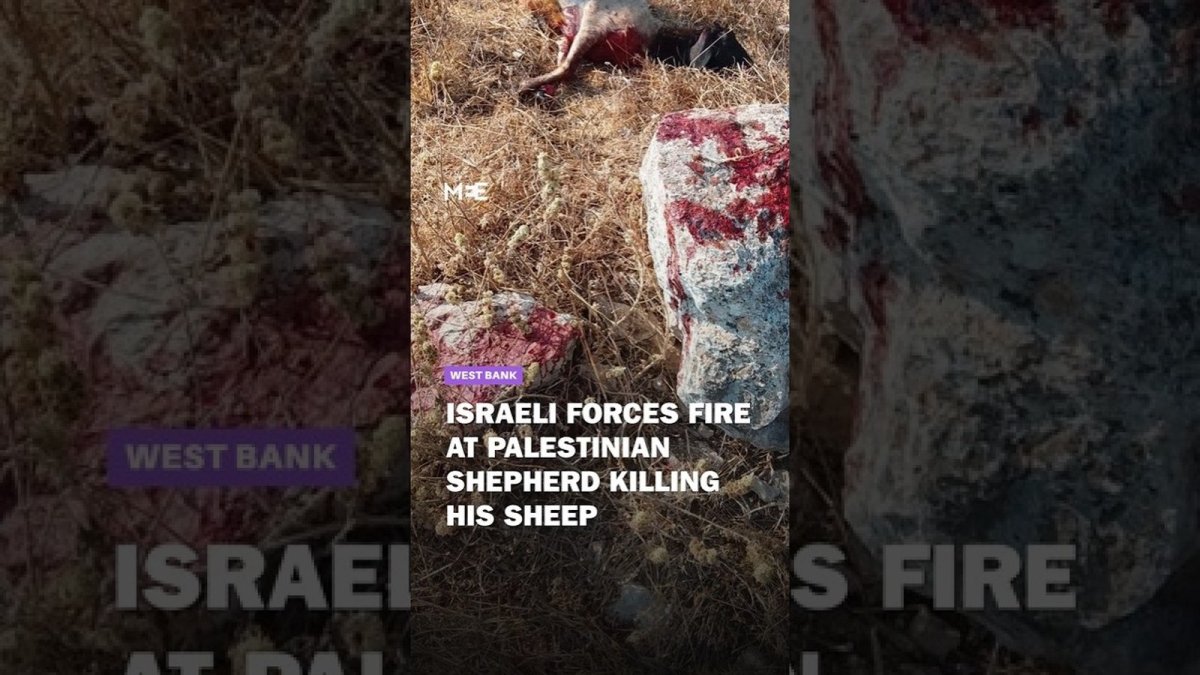
Israeli occupation forces opened live fire at Palestinian shepherd Mahmoud Abdul Rahman Tmeizeh while he grazed his flock in Wadi al-Bayda, west of Idhna, killing three sheep and injuring several others. The 9 August 2026 incident is part of escalating harassment of Palestinian herders in the occupied West Bank, where settler attacks and movement restrictions continue to displace communities.
Israeli Forces Open Fire on Palestinian Shepherd Near Hebron, Killing Three Sheep
Hebron, occupied West Bank – 9 August 2026 — Israeli occupation forces fired live ammunition at Mahmoud Abdul Rahman Tmeizeh while he grazed his flock in the Wadi al-Bayda area west of Idhna. Three sheep were killed and several others wounded in the attack, which WAFA reported occurred without any stated reason. The incident unfolded near the Israeli segregation wall in a rural zone where Palestinian herders have faced repeated restrictions on movement and access to grazing lands.
The Shooting in Wadi al-Bayda
Mahmoud Abdul Rahman Tmeizeh was tending his livestock on Sunday morning when gunfire struck the flock. WAFA documented that the shots came from Israeli forces positioned in the area. The shepherd later shared footage of the dead and injured animals, which Middle East Eye carried in its report. No injuries to Tmeizeh himself were reported, yet the loss of livestock directly threatens the family's livelihood in a region where herding remains a primary source of income.
Pattern of Harassment Near Idhna
WAFA noted that the shooting fits a pattern of escalating attacks and harassment by Israeli forces and settlers against Palestinian farmers and livestock in rural areas around Idhna. These incidents include direct assaults on shepherds, damage to animals, and repeated limits on access to traditional grazing grounds. Herding families in the western Hebron hills describe daily uncertainty when moving their flocks, as military presence and settler activity disrupt routine work.
The positioning of Idhna adjacent to the segregation wall places Palestinian herders in a zone of acute spatial constriction, where military oversight and settlement proximity combine to restrict traditional routes to pasture. Hebron governorate records some of the West Bank's highest concentrations of settler-related incidents, amplifying the daily calculus herding families must perform when deciding whether to risk exposure. Because livestock rearing constitutes the dominant livelihood in these rural pockets, each shooting incident translates into immediate capital loss that cannot be offset by alternative employment, deepening household vulnerability and accelerating the erosion of a once-viable economic base.
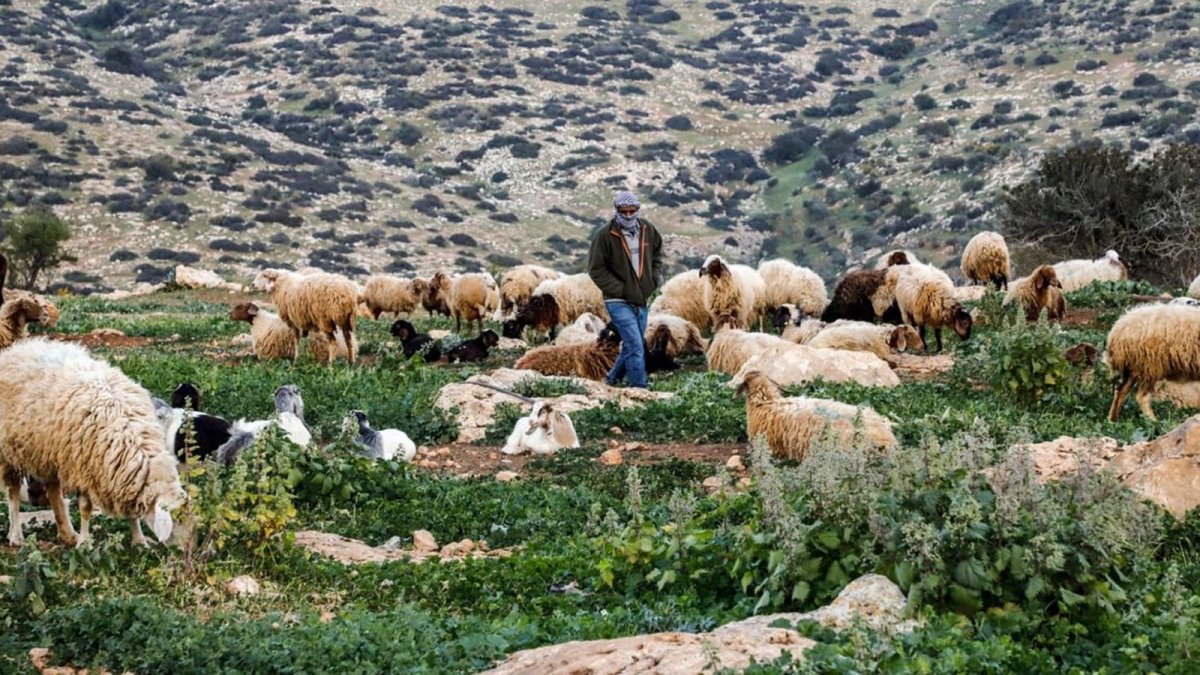
In the western Hebron hills, herding forms a centuries-old tradition integral to Palestinian family identity and continuity across generations. Flocks serve as essential savings and insurance, supplying milk, meat, and wool that sustain households through seasonal hardships. The destruction of breeding animals inflicts lasting damage: injured sheep often fail to recover, lambs are lost, and milk yields drop sharply, threatening both nutrition and income. WAFA and Middle East Eye reported that the Wadi al-Bayda gunfire occurred without any stated reason from the attackers, and the shepherd himself sustained no injuries during the assault on his animals.
Additional Incidents Reported on 9 August
On the same day, WAFA recorded multiple other events across the West Bank. Settlers set fire to a Palestinian home in Masafer Yatta. Colonists released livestock onto Palestinian lands and cut down dozens of fruit trees in separate locations. Israeli forces seized a Palestinian home in Jenin and conducted a raid at Solomon's Pools south of Bethlehem. The Gaza death toll stood at 73,386 according to the same report.
Incidents on 9 August, ranging from the Masafer Yatta house fire to livestock released onto Palestinian fields, fruit trees cut down, and a Jenin home seizure, match a documented pattern of strikes against the economic base of rural Palestinian life. Homes, herds, and orchards are repeatedly targeted, eroding the viability of traditional livelihoods. OCHA and human rights groups have long recorded low accountability for settler violence, with investigations rarely leading to prosecutions or deterrence. This persistent impunity allows such attacks to continue unchecked, deepening economic vulnerability for affected communities.
Settler Violence Statistics for 2026
OCHA data cited in recent humanitarian reports shows that fatalities linked to settler attacks in 2026 already exceeded the total for all of 2025. Eighteen Palestinians had been killed by 20 July 2026, compared with 17 throughout the previous year. In the 14-20 July period alone, about 90 Palestinians were displaced by demolitions and settler attacks. Bedouin and herding communities in Area C remain among the most affected groups.
OCHA's July 2026 figures reveal an unmistakable acceleration: settler-linked fatalities had already surpassed the entire preceding year's total by mid-July, while a single week in that month produced roughly ninety displacements. This trajectory signals a qualitative shift from episodic harassment to sustained pressure that systematically targets the most exposed populations—Bedouin and herding communities in Area C. The data indicate that demolitions and attacks are converging to shrink viable grazing territories, forcing families into narrower corridors where future incidents become statistically more probable and livelihood collapse more imminent.
Amnesty International Documentation
Amnesty International's June 2026 report "Erasing anything Palestinian: Israel's ethnic cleansing of West Bank Bedouin and herding communities" describes a state-backed campaign of forcible displacement. The report details how settlers from the Meitarim Farm outpost in Khirbet Zanuta set fire to tents and classrooms, beat residents, smashed solar panels, and emptied water tanks. The community fled in October 2023. Court orders issued in July 2024 and February 2025 to facilitate return were ignored, and by March 2025 Zanuta no longer existed. Muntasir al-Maliki of Kufr Malik stated, "What is happening right now is [the] erasure of humans, trees and stones, and anything that is Palestinian, by settlers under the support of the military."
Amnesty International's June 2026 analysis frames settler violence not as isolated deviance but as coordinated state policy that advances territorial objectives. Under Article 49 of the Fourth Geneva Convention, the forcible transfer of protected persons and the implantation of settlements in occupied territory are both prohibited; the documented pattern of attacks, ignored court orders, and military facilitation directly contravenes these safeguards. By treating herding communities as obstacles rather than civilians entitled to protection, the policy produces the very displacement the Convention was designed to prevent, converting sporadic aggression into a mechanism of demographic reconfiguration.
Displacement Figures and Movement Obstacles
OCHA recorded the forced displacement of at least 5,910 Palestinians between January 2023 and 30 April 2026 due to settler violence and access restrictions. An average of six settler attacks occurred daily during that period. As of December 2025, OCHA had documented 925 movement obstacles in the West Bank, including 89 permanently staffed checkpoints, 218 partial checkpoints, and 232 road gates. These barriers severely limit herders' ability to reach grazing areas.
Voices from Jordan Valley and Ramallah Area Communities
Al Jazeera reported in June 2026 on the experiences of Mukhlis Masa'id from Khirbet Yarza in the Jordan Valley. Fourteen families, roughly 100 people, fled the village in early 2026 after years of near-daily settler attacks that destroyed crops, assaulted shepherds, and stole hundreds of sheep and cattle. Masa'id described how settlers coordinate attacks: "The settlers have many means of communication among themselves. When they attack the shepherds, dozens of them gather to intimidate them. Meanwhile, we have no means of transportation to reach the shepherds and try to protect them." In Jifna north of Ramallah on 15 April 2026, settlers stormed a livestock pen, returned with 12 Israeli military vehicles, stole 180 head of cattle, assaulted residents, and shot a neighbour in the leg.
Khirbet Yarza’s displacement echoes a wider pattern in the Jordan Valley, the region most severely affected by pressures on herding communities, where dozens of localities remain at risk of forcible transfer. The April 2026 Jifna cattle theft, conducted with military vehicles present, highlights the direct participation of Israeli forces alongside settlers. Amnesty International describes these operations as state-backed, underscoring how official involvement facilitates the removal of communities from land and resources essential to their survival.
Human Impact on Area C Herding Families
Area C covers more than 60 percent of the West Bank under full Israeli control. Herding communities there face the greatest exposure to operations, demolitions, settler violence, and settlement expansion. Families like Tmeizeh's in the Hebron hills continue to graze flocks under constant threat, with each incident compounding economic losses and psychological strain. The cumulative effect leaves many households unable to sustain traditional livelihoods while movement obstacles prevent alternative access to land.
The cumulative weight of repeated losses in Area C extends beyond immediate financial damage to a sustained psychological attrition that undermines the capacity of families to maintain generational continuity. With herding as the sole viable income source for many households, each confiscated or killed animal removes both present revenue and future breeding stock, leaving no buffer against further shocks. This economic strangulation, paired with persistent movement barriers, exerts a broader demographic effect: Palestinian presence in Area C is gradually thinned through attrition rather than overt expulsion, reshaping the human geography of the region over time.
The shooting of Tmeizeh's flock on 9 August 2026 illustrates the daily pressures on Palestinian herders in the occupied West Bank. Reports from WAFA, OCHA, and Amnesty International document a consistent record of attacks, displacement, and restrictions that target the material basis of these communities. Palestinian voices from Idhna to Khirbet Yarza describe an environment where routine herding has become an act of endurance amid coordinated pressure from military forces and settlers.
By Fatima Al-Rashid, Staff Writer
This article was produced with AI-assisted research and editorial support. Reporting is based on sources cited in the article.
What's Your Reaction?
 Like
0
Like
0
 Dislike
0
Dislike
0
 Love
0
Love
0
 Funny
0
Funny
0
 Wow
0
Wow
0
 Sad
0
Sad
0
 Angry
0
Angry
0

Gulf/MENA Correspondent at Global1.News. Based in Doha, covering Gulf politics, energy markets, diplomacy, and development across the Middle East and North Africa. Tracks the economic transformation of the Gulf states.












Comments (0)