
The Final Breath: Record Deforestation Wins Mask the Amazon's Deepening Threats
Deep in the Brazilian Amazon, where the canopy still exhales the oxygen of a continent, a quiet war is being fought over the final breath of the world's largest rainforest. Record-low deforestation numbers tell one story of progress; the collapse of the soy moratorium, a mercury-laced gold rush, and a new oil frontier tell another. For Latin America - and for the millions who call the Amazon home - the question is no longer whether the forest can be saved, but who will be allowed to try.
Deep in the Brazilian Amazon, where the canopy still exhales the oxygen of a continent, a quiet war is being fought over the final breath of the world's largest rainforest. Record-low deforestation numbers tell one story of progress; the collapse of the soy moratorium, a mercury-laced gold rush, and a new oil frontier tell another. For Latin America - and for the millions who call the Amazon home - the question is no longer whether the forest can be saved, but who will be allowed to try.
The Final Breath: Record Deforestation Wins Mask the Amazon's Deepening Threats
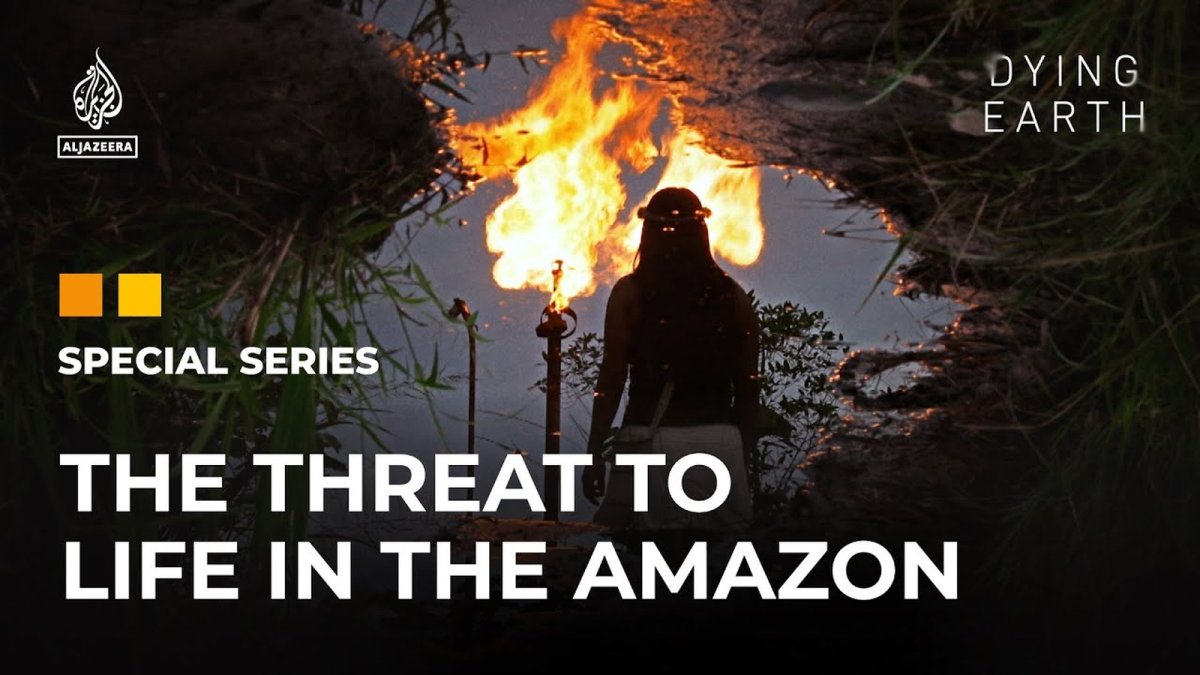
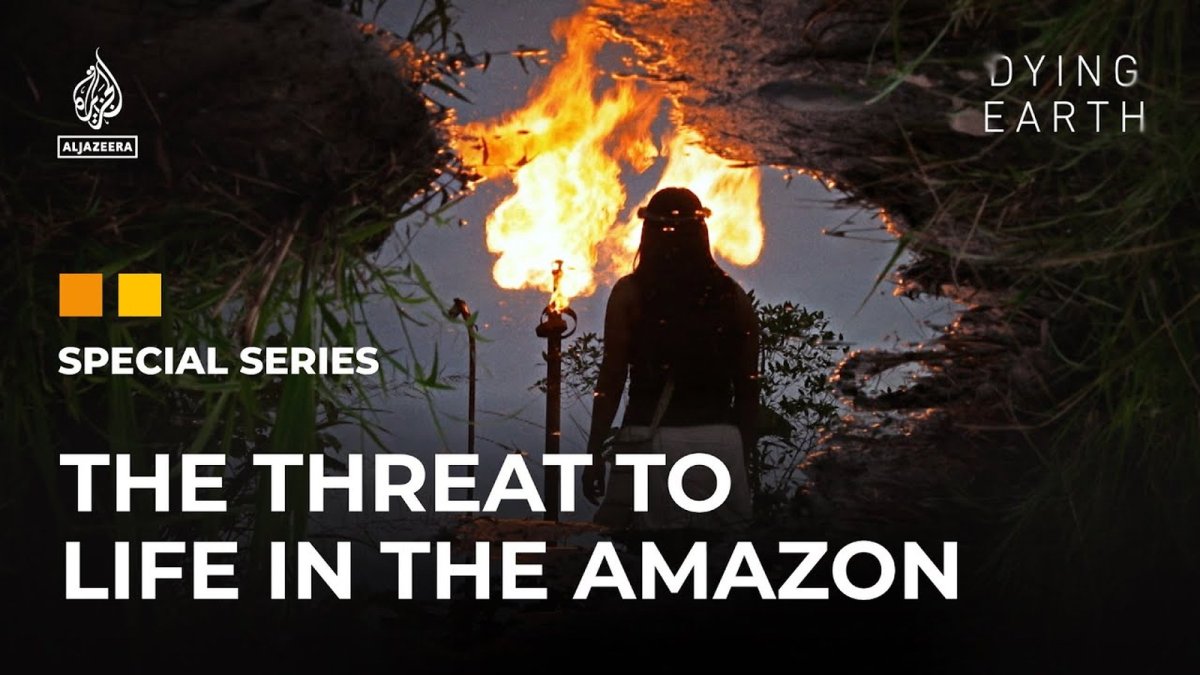
Sao Paulo, Brazil - August 9, 2026 - The Al Jazeera English documentary "The Final Breath" (Dying Earth: E5, published May 8, 2024) examined the impact of industrial development on the Amazon and the deadly battles to protect the rainforest. Two years on, the battle has only intensified: satellite data shows deforestation at its lowest in a decade, yet scientists, Indigenous leaders and environmental defenders warn that new fronts - from a collapsed soy pact to offshore oil - are opening faster than the forest can defend itself. The paradox is stark: President Luiz Inacio Lula da Silva's government can point to the greenest satellite data in a decade, even as the forces that nearly destroyed the biome have simply shifted ground. For Brazil, which holds the largest share of the forest, and for the eight neighboring nations that share the basin's rivers and rainfall, the stakes are existential. The Amazon's final breath is not a metaphor; it is a policy decision, and the clock is ticking.
The Paradox of Progress: Record-Low Deforestation Under Lula
Brazil's National Institute for Space Research (INPE) reported in August 2026 that annual deforestation under the PRODES satellite system reached 2,874 square kilometers for the August 2025 to July 2026 cycle - the lowest in a decade and a 37% drop from the previous year under President Luiz Inacio Lula da Silva. PRODES, which measures clear-cutting against historical baselines, is the biome's most trusted barometer. The DETER early-warning system, which flags forest destruction in near-real time for enforcement teams, recorded its lowest 12-month alert level since 2013; May 2026 alerts ran 61% below May 2025. The numbers reflect an aggressive push by IBAMA, the federal environmental agency, whose field agents have returned to the territory after years of budget strangulation, coordinated by the Ministry of Environment under Marina Silva. Yet the paradox cuts both ways: the progress is real, the enforcement is live, but nothing in the Amazon is irreversible. A single political shift, a single dismantled budget, and the clearing returns - faster than the forest can regenerate.
Industrial Development's Long Shadow
"The Final Breath" directed its lens at the engines of destruction: highways slicing through intact forest, hydroelectric dams drowning Indigenous lands, cattle ranches converting standing forest to pasture, and soy fields marching across Mato Grosso's cerrado and into the arc of deforestation. These are not abstract forces. They are bulldozer operators, land grabbers, and agribusiness supply chains that answer to global markets - and they are the reason the documentary's battle is deadly. The roads built for soy trucks become arteries for illegal loggers and gold miners. The dams flood ancestral territories and disrupt fish migration, strangling riverside communities that depend on the water. Small farmers, squeezed between industrial expansion and conservation law, face an impossible choice: clear the lot, or lose the land to a neighbor who will. Industrial development in the Amazon has never been simply an environmental issue; it is a redistribution of territory, wealth, and power, and it falls hardest on those with the least legal title and the most to lose. In the documentary, researchers and activists describe a forest under siege by an economic model that treats standing trees as debt and cleared land as credit - a model that has not changed, merely found new frontiers.
Mercury in the Rivers, Poison in the Blood
Beneath the canopy, the deadliest threat is invisible. Illegal and semi-industrial gold miners pump liquid mercury into the region's rivers to separate gold from alluvial sediment, and the heavy metal travels up the food chain. A 2025 review led by Lucchini and colleagues found total mercury concentrations ranging from 0.10 to 4.73 micrograms per gram of fish tissue across Amazonian species, with piscivorous predators such as surubim carrying the highest loads - levels that exceed safe consumption thresholds for riverside communities that eat fish daily. A systematic review published in Springer's environmental health journals in May 2025 documented the resulting harms in Indigenous Amazonian populations: neurodevelopmental damage, kidney failure, and a shadow of fear over pregnancy itself. Indigenous women told researchers they are afraid to bear children, knowing mercury already in their bodies may pass to the unborn. Nowhere is the crisis more acute than the Yanomami territory, Brazil's largest Indigenous reservation, where FUNAI and health workers recorded the deaths of 99 Yanomami children under five in 2022 alone, victims of malnutrition, pneumonia, and malaria - the collateral toll of the gold rush that swarmed their land during the Bolsonaro years.
The Soy Moratorium Collapse
For sixteen years, the Amazon Soy Moratorium was the gold standard of corporate conservation. Since 2008, major grain traders had voluntarily refused to purchase soy grown on land cleared after July of that year, and the pact helped slash deforestation in Mato Grosso's soy frontier. In early 2026, the agreement collapsed as most traders terminated their commitments amid legislative challenges and pressure from farm lobbies. The consequences will be measured in hectares and emissions. A study published in the journal Science on July 16, 2026 estimates the collapse will drive at least 1.4 million hectares of additional deforestation over the next decade - a 17% increase over historic rates - releasing carbon equivalent to Canada's entire annual emissions, according to analyses cited by WWF, Valor International, and Phys.org. The numbers are blunt: Brazil cannot meet its climate commitments under the Paris Agreement with an open soy frontier. The moratorium's demise also signals a deeper shift - a retreat from voluntary corporate responsibility at the exact moment the government's enforcement gains need reinforcement. For the Amazon, it turns the clock back to an era when global appetite for Brazilian grain came with no environmental bill attached.
Voices from the Ground: Defenders Under Fire
The documentary's "deadly battles" have a human ledger. Global Witness recorded at least 146 land and environmental defenders killed or disappeared worldwide in 2024 - three every week - and Brazil has held the grim top spot for murders over the past decade. Of the 342 defenders killed in Brazil since 2012, around a third were Indigenous or Afro-descendant, and more than 85% of the killings took place in the Brazilian Amazon. Across Latin America, the toll is staggering: the region accounts for 88% of the 1,910 defender murders documented between 2012 and 2022, with Colombia leading the count and Brazil second. These are not statistics; they are people with names, territories, and families. They are the Kayapó women who map illegal mines, the riverine activists who document fish die-offs, the quilombola leaders who defend ancestral land against ranchers. In the Amazon, the guardians of the forest are its defenders, and they are being killed for the crime of protecting the biome the world says it wants to save. Every murder sends a message to the living: back down. And yet, the defenders do not.
The Oil Frontier at the Amazon's Mouth
The newest frontier is offshore, and it may be the most consequential. Brazil has confirmed it will offer the equatorial-margin Foz do Amazonas region for oil exploration, and Petrobras has received an environmental license from IBAMA to drill exploratory well FZA-M-059 in deep waters off Amapá, near the mouth of the Amazon. The basin is ecologically precious and technically treacherous: currents sweep across the delta, and an oil spill would not stop at a coastline - it would ride the river plume into the heart of the biome. In 2026, Upstream reported a drilling fluid leak at the Morpho well in the sensitive basin, an early warning of what industrial-scale extraction could bring. IBAMA's president, Rodrigo Agostinho, had earlier called the project "infeasible" from an environmental standpoint, a position that boosted Environment Minister Marina Silva's efforts to hold the line. Now, with the license granted and the offer confirmed, the energy-versus-environment fight has become Brazil's biggest political fault line - pitting short-term oil revenue for Amapá's struggling economy against the irreversible risk to a marine system that Indigenous and coastal communities depend on for survival.
What This Means for Latin America
The Amazon knows no borders. It spans nine countries - Brazil, Peru, Colombia, Bolivia, Ecuador, Venezuela, Guyana, Suriname, and French Guiana - and its threats flow across them. In 2026, the climate crisis has tightened its grip: the Madeira River at Porto Velho fell to just 48 centimeters against a 3.32-meter average for the date, and the Solimões River at Tabatinga, on the Colombia border, hit its lowest level on record, with rivers across the basin at all-time lows, as the BBC reported. Drought of this magnitude is not only an ecological disaster; it is an economic and political one. It shuts down hydroelectric dams, strands river cargo, ignites fires in dried wetlands, and deepens the vulnerability of Indigenous communities already facing mercury and land invasions. Across the region, Indigenous land rights movements have responded with increasing legal ambition - in Brazil, in Colombia, in Ecuador - demanding that governments treat the forest as a living subject with rights of its own. The shared fate of the biome means that no single country can save it, and no single country can destroy it alone.
The Bottom Line: The Final Breath
The final breath of the Amazon has not been taken, but the air is thinning. The next twelve months will test every front: whether IBAMA and Marina Silva's enforcement push can survive political headwinds; whether the collapse of the soy moratorium can be reversed by renewed corporate commitment or new legislation; whether the Foz do Amazonas drilling proceeds; whether the mercury crisis in Yanomami and Munduruku territories receives the public health response it demands; and whether the world will demand accountability for the murder of its forest defenders. For Latin American readers, this is not distant news from a remote jungle. It is the story of the air we breathe, the rivers that feed our cities, the rainfall that waters our fields, and the political choices made in Brasília, Bogotá, Lima, and Quito. The paradox of 2026 is that progress and peril have never been so close - record-low deforestation beside record-breaking drought, corporate pacts collapsing as enforcement rises. The Amazon's final breath will be decided by whether governments, companies, and citizens treat these victories as a foundation or a farewell.
By Elena Vasquez, Staff Writer
This article was produced with AI-assisted research and editorial support. Reporting is based on sources cited in the article.
What's Your Reaction?
 Like
0
Like
0
 Dislike
0
Dislike
0
 Love
0
Love
0
 Funny
0
Funny
0
 Wow
0
Wow
0
 Sad
0
Sad
0
 Angry
0
Angry
0

Latin America Correspondent at Global1.News. Based in Mexico City, covering politics, economics, energy, and culture across the region. Brings an on-the-ground perspective to stories spanning from the Rio Grande to Patagonia.













Comments (0)