
The AI Buildout Just Hit a Wall Made of Concrete and Cable
AI data center operators are being forced to compress build timelines to keep pace with demand. A new Onnec survey finds 92 percent under speed pressure, costs up 42 percent, and 43 percent needing remediation after go-live. The AI buildout's real bottleneck is construction itself.
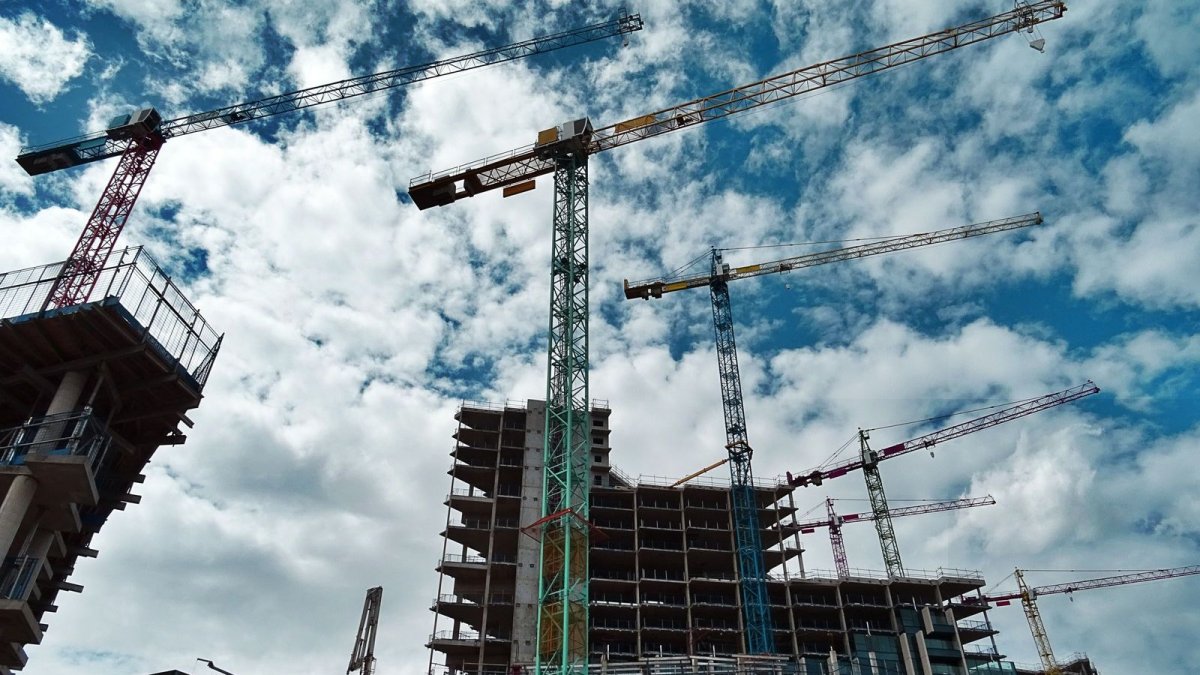
The AI Buildout Just Hit a Wall Made of Concrete and Cable
Let me tell you something that's been sitting with me since the numbers crossed my desk this week. I've been running infrastructure for over a decade, and I've watched every AI bottleneck narrative come and go — chips, power, cooling, land, water. Every single one of them was real, and every single one of them got a trillion dollars thrown at it. But the bottleneck that's forming right now is the one nobody's pricing in, because it doesn't live in a fab or a substation. It lives on a construction site. And you can't fix it with a bigger capex number.
Here's the headline: a new survey of 300 senior decision-makers at data center operators across the UK, Ireland and the Nordics — published August 6 by Onnec, an infrastructure specialist that actually builds these things — found that 92 percent of operators are being forced to compress build timelines to keep pace with AI demand. Not "considering compressing." Forced. And three-quarters of them admit they're making design decisions before the infrastructure requirements are fully understood. That's not engineering. That's gambling with other people's money.
The Survey Nobody's Reading — Speed Is Now the Boss
The Onnec data is worth sitting with, because it's the first time I've seen the operators themselves admit what the rest of us have suspected for months: the AI buildout has stopped being a demand problem and become a delivery problem. The survey — conducted by Sapio between May 27 and June 12 — found that 74 percent say the pressure to accelerate builds is increasing health and safety risks on site. Think about that for a second. Data centers are some of the most complex buildings on Earth — megawatts of power distribution, liquid cooling loops, fire suppression, network backbone — and three-quarters of the people building them say the schedule is now a safety risk.
Then there's the money. 67 percent say their AI-ready build or retrofit costs have increased in the past 12 months. And among those reporting a rise, costs are up an average of 42 percent. Not 12 percent. 42. That's not inflation — that's a structural repricing of what it costs to deliver AI capacity, and it's happening in a single year.
Matt Salter, Onnec's Global Head of Data Centres, said it better than any analyst I've read this month: "Operators are under enormous pressure to deliver AI capacity quickly, but speed and readiness are not the same thing." He's right. And the rest of the survey proves it.
The Cost of Speed — Rework, Remediation, and Go-Live Regret
Here's where the survey gets genuinely uncomfortable. 45 percent say compressed timelines have reduced time for testing, commissioning, or quality assurance. 43 percent say they've increased the risk of quality issues or rework on completed builds. And 43 percent say infrastructure has required upgrades or remediation after go-live.
Read that last number again. Nearly half of these operators are going live with facilities they already know will need work. That is the most expensive way to build anything — not just because remediation after go-live costs multiples of doing it right the first time, but because a data center that goes live with latent defects is a data center that can take down a customer's entire AI workload at 2 a.m. And in this market, a colo customer doesn't forgive a 2 a.m. outage. They move.
Salter again: "No amount of compute or GPU power can compensate for infrastructure or cabling that wasn't designed to keep pace with today's AI demands." That's the sentence I'd frame on the wall of every hyperscaler procurement office in America.
The US Side of the Wall — the Pipeline Is Shrinking
If you think this is a European problem, you're wrong. The same squeeze is showing up on this side of the Atlantic in harder numbers. CBRE reported that new capacity under construction across North America's primary markets fell for the first time since 2020 — down to 5,994 megawatts at the end of 2025 from 6,350 a year earlier. Not because demand dropped. Because permitting, zoning, and power procurement hurdles made the pipeline physically harder to expand.
And the labor picture is worse than the pipeline picture. The Associated Builders and Contractors estimates the US construction industry needs about 349,000 net new workers in 2026 just to keep supply and demand in balance — rising to 456,000 in 2027. Data centers lean hard on specialist trades: electricians, mechanical specialists, commissioning teams, supervisors who understand high-pressure infrastructure. You cannot fill those roles with a weekend course. I've been hiring in this industry long enough to know the truth: the people who can commission a 40-megawatt facility correctly are already working three jobs.
Then there's the gear almost nobody thinks about. Demand for generator step-up transformers has risen 274 percent since 2019. Substation transformers are up 116 percent. Prices have climbed around 80 percent over five years. And lead times for large units now stretch to four years — TerrapinCG puts generator step-up transformers above 50 MVA at 100 to 150-plus weeks. I'll say that slowly: a hundred weeks. The most advanced technology race on Earth is being slowed by a big metal box that takes two years to build.
The Secondary Bottleneck Nobody's Talking About — Commissioning Itself
Here's the part of this story that's genuinely hidden, and it's the part I care about as someone who's had to run these facilities. The headline bottleneck is supply chains and labor. The secondary bottleneck — the one that compounds everything — is commissioning and quality assurance. When you compress a build timeline, the first thing that gets cut is testing. And testing is the only thing standing between a data center and a catastrophic failure six months after go-live.
The survey says it plainly: 61 percent have had a project delayed by supply chain issues — with the biggest culprits being GPUs and compute (53 percent), cooling systems (45 percent), specialist staff (45 percent), power distribution equipment (43 percent), and cabling (39 percent). But 79 percent agree that geopolitical instability will affect the cost or availability of components going forward. So the delays aren't a one-time event. They're the new operating system. And every compressed schedule that tries to make up for a late transformer by cutting commissioning time is just moving the risk from the construction phase into the production phase.
That's the move that scares me. A GPU arrives late, so the project compresses the test window to hit the go-live date. The facility goes live. Six months later, a cable run that was never properly certified fails under full AI load, and suddenly a tenant's training run — which may have cost them a million dollars in compute — is gone. Nobody prices that in. Everybody finds out about it the hard way.
What This Actually Means for Independent Hosting Providers
If you're running independent hosting or colocation — the people I actually write for — here's what this trend hands you, and I don't say this lightly.
First — your reliability is now a premium product. When hyperscaler-scale builds are going live with 43 percent remediation rates, a facility that's been stable for five years isn't just a facility anymore. It's an asset class. The customers who've been burned by a shiny new AI colo that needed remediation after go-live are coming back to the boring, proven facility. Price accordingly. Your uptime history just got more valuable.
Second — buy the long-lead gear now, not when you need it. If you have any plan to expand capacity in the next 24 months, place your transformer and switchgear orders this quarter. A four-year lead time means the gear you order today is the gear you install in 2030. The operators who wait until they've signed a lease to order power distribution equipment are the operators who sign leases for buildings they can't electrify.
Third — commission like your reputation depends on it, because now it does. In a market where the big guys are cutting testing windows, your willingness to do full load-bank testing, cable certification, and commissioning before go-live is a differentiator you can sell. Get the certificates. Document the testing. Hand the customer a commissioning report that shows exactly what was verified. That document is worth more than any marketing page.
Fourth — hire the commissioning people the hyperscalers are short on. The 349,000-worker construction gap means specialist trades are about to get expensive everywhere. If you have a good commissioning engineer, pay them what they're worth and hold on tight. They are about to be the most poached people in the industry.
The Structural Reality — You Can't Fast-Track a Transformer
Here's the uncomfortable truth this whole story lands on: demand is moving at software speed, and supply is moving at construction speed. A model can be updated overnight. A grid connection can take the better part of a decade. A transformer takes two to four years. A commissioning team takes a decade to train. The IEA expects global data center electricity use to more than double, from roughly 415 terawatt-hours in 2024 to around 945 by 2030, with AI-focused facilities quadrupling. And every single one of those megawatts has to be built by a person, with a piece of equipment, on a schedule that physics doesn't care about.
So when you hear about $700 billion in hyperscaler capex for 2026 — and Moody's is already projecting $785 billion, heading toward a trillion by 2027 — understand that the money isn't the constraint anymore. The constraint is the 100-week transformer lead time. The constraint is the 349,000 missing workers. The constraint is the 43 percent of facilities going live knowing they'll need remediation. The money is real. The schedule is not.
The Bottom Line
Here's what I know after watching this industry for a decade: every bottleneck so far — chips, power, cooling — got solved because money could buy the answer. You can outbid everyone for GPUs. You can buy gas plants. You can build your own substations. But you cannot outbid the calendar, and you cannot outbid physics, and you cannot hire a commissioning engineer into existence. Construction is the first bottleneck in this entire boom that money can't just purchase its way through.
That's the real story of August 2026. Not the capex number — the fact that the buildout has finally hit the wall made of concrete and cable, and everybody's still pretending it's a software problem. If you're an independent operator, this is your moment. The big guys are going to be busy for the next two years fixing buildings they built too fast. You can spend that time being the facility that just works. Buh trust me on that one — the customers are already looking.
-- Allan Ali, Founder
This article was produced with AI-assisted research and editorial support. Sources: Onnec survey (August 6, 2026), CBRE, Associated Builders and Contractors, Wood Mackenzie, TerrapinCG, International Energy Agency, Moody's.
What's Your Reaction?
 Like
0
Like
0
 Dislike
0
Dislike
0
 Love
0
Love
0
 Funny
0
Funny
0
 Wow
0
Wow
0
 Sad
0
Sad
0
 Angry
0
Angry
0

Publisher of Global1.News. Automation architect, systems builder, and the guy making sure the truth gets published.













Comments (0)