
Israel Using 'Explicitly Genocidal Language' Against Lebanon's Shia Community
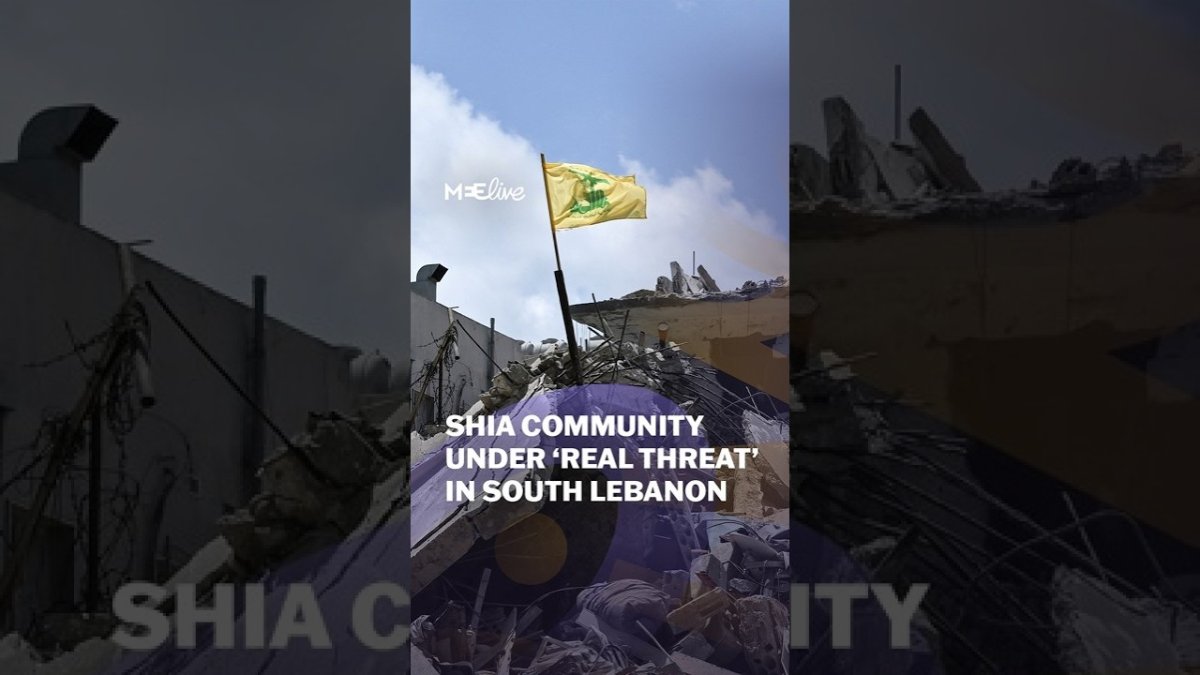
In a recent Middle East Eye report, Special Correspondent Daniel Hilton and analyst Mathilda Mall examined the existential threat now facing Lebanon's Shia community, a population increasingly targeted not for any individual action but for its religious affiliation with the Iranian-backed resistance group Hezbollah.
In a recent Middle East Eye report, Special Correspondent Daniel Hilton and analyst Mathilda Mall examined the existential threat now facing Lebanon's Shia community, a population increasingly targeted not for any individual action but for its religious affiliation with the Iranian-backed resistance group Hezbollah. The report underscores a grim reality: as Israel's military campaign in southern Lebanon intensifies, the Shia community finds itself with little choice and no strong opposition to represent them in negotiations over their own fate. What emerges is a picture of collective punishment, systematic destruction, and a political vacuum that leaves an entire community exposed to a campaign that UN experts have described as bearing a devastating and disproportionate toll on civilians.
Israel's 'Explicitly Genocidal Language' Targets Lebanon's Shia Community as Southern Villages Face Erasure
Beirut, Lebanon – 13 August 2026 — The language coming from Israel's defence establishment has grown increasingly explicit in recent weeks, and for Lebanon's Shia population, the implications are terrifyingly clear. Defence Minister Israel Katz told military correspondents in late June that "it was clear during Operation Silver Plow that the Shia villages along the contact line had to disappear." His words, reported across Israeli media, were not a slip of the tongue but a strategic declaration: the buffer zone south of the Litani River along the "Yellow Line" "must remain free of population," and displaced residents would not be allowed to return. "The army will not retreat an inch," Katz said.
Operation Silver Plow and the Systematic Destruction of the South
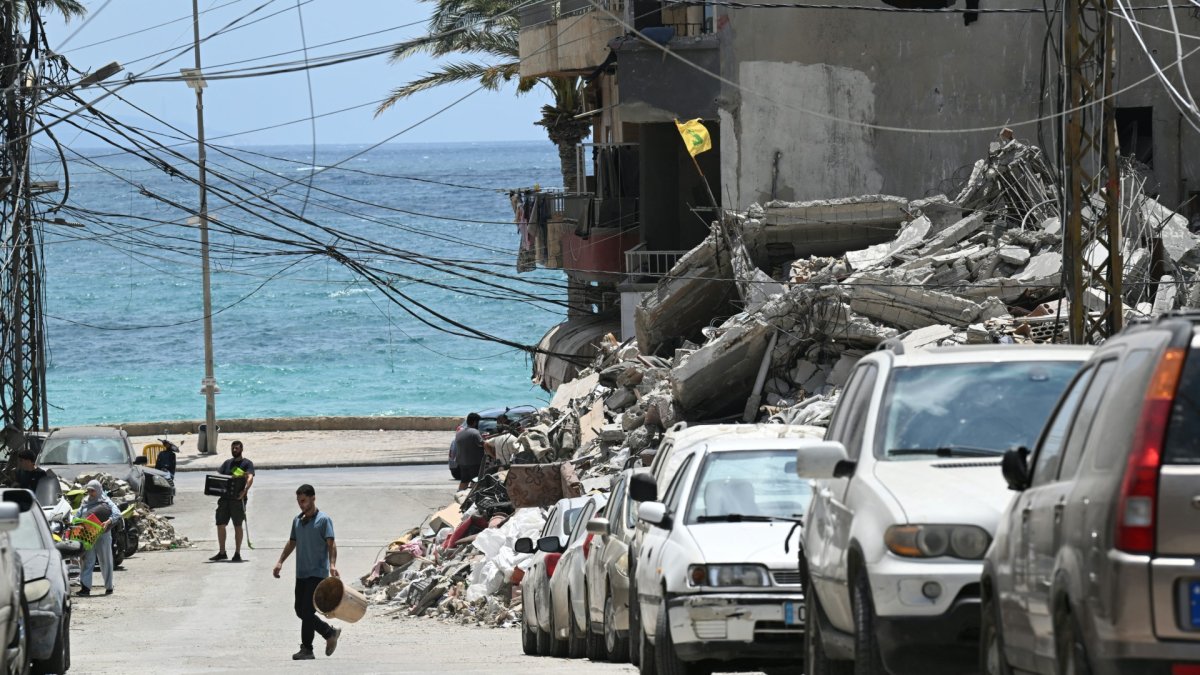
Operation Silver Plow, launched by Israel in April 2026, was officially framed as a mission to clear Lebanese border villages of Hezbollah troops. But the operation's actual footprint tells a different story. Residential areas and buildings have been targeted relentlessly, with demolitions carried out by heavy equipment and continuous air strikes reducing entire neighbourhoods to rubble. Katz himself acknowledged the scale of the destruction, telling military correspondents there is "nearly 100 percent destruction in the contact-line villages of the western and central sectors. In the eastern sector, we are at 73 percent of villages destroyed."
The numbers are staggering, and they are not merely the product of combat. A May 2026 Haaretz report cited Israeli military commanders admitting that homes, schools and government buildings near the border were demolished to "clear the area." Unnamed soldiers told Haaretz that the army is not limited to targeting "terrorist infrastructure"; they "destroy everything." One soldier described the daily routine with chilling candour: "At the end of every day, there's an assessment of what was accomplished, and every commander is required to report how many homes he destroyed." The New York Times has corroborated the systematic nature of the destruction through satellite imagery analysis, while BBC Verify found more than 1,400 buildings destroyed in southern Lebanon since 2 March 2026 based on verified visual evidence.
A Community Displaced and a Return Denied
The human cost of this campaign is measured in the hundreds of thousands of Lebanese civilians driven from the south, most of them from the Shia population. Families who fled the initial bombardments in the spring now find themselves in makeshift shelters across Beirut and the Bekaa Valley, watching from afar as their villages are flattened by bulldozers and bombs. The Israeli government's position is unambiguous: these people will not be coming home. Katz's declaration that the buffer zone "must remain free of population" effectively renders the entire region south of the Litani a depopulated no-man's-land, a policy that international legal experts have condemned as a violation of the most basic tenets of humanitarian law.
For the displaced, the denial of return is not merely a logistical problem but an existential one. Villages like Aita al-Shaab, Bint Jbeil and Mays al-Jabal — names that carry deep cultural and historical significance for Lebanon's Shia community — have been systematically erased from the map. The destruction is not collateral damage; it is the objective. As one Israeli soldier told Haaretz, the army's daily assessments are measured in homes destroyed, not in military objectives achieved.
Lebanese Government Condemns 'Systematic Destruction'
Lebanese Prime Minister Nawaf Salam has responded with rare and forceful clarity. On 12 August 2026, Salam condemned Israel's "systematic destruction" in the south as a violation of international law, stating that Israeli "attacks, incursions, demolitions and the systematic destruction of homes," infrastructure, government buildings and places of worship "represent a serious violation of the principles and rules of international law and international humanitarian law." He rejected Israel's claim that the villages are entirely "military facilities," saying it "does not stand up to any logic and cannot be used as an excuse for destroying them, displacing their inhabitants and preventing them from returning."
Salam's words carry weight, but they also highlight the limits of Lebanese state power in the face of an Israeli military that operates with apparent impunity. The prime minister's condemnation is a moral and legal statement, but it does not translate into protection on the ground. The Lebanese state, weakened by years of economic crisis and political paralysis, has little capacity to enforce its sovereignty over the south, and the international community has shown little appetite for confronting Israel over its actions.
UN Experts Warn of 'Devastating and Disproportionate Toll'
The United Nations has not been silent. On 22 July 2026, UN experts denounced systematic and widespread violations of international humanitarian and human rights law during Israel's war of aggression on Lebanon, warning that civilians are bearing a devastating and disproportionate toll. The experts specifically noted Israel's issuance of immediate "displacement orders," which they said are "reminiscent of those used by Israel in Gaza." The comparison is deliberate and damning: the same tactics of mass displacement, systematic destruction and denial of return that have defined Israel's campaign in Gaza are now being deployed against Lebanon's Shia population.
The UN experts' statement is a legal and moral indictment, but it has not altered the trajectory of the conflict. Since 28 February 2026, the United States and Israel have been at war with Iran and its regional allies, and the Trump administration has said it ordered Israel to withdraw troops from Lebanese territory. Israel, however, insists it will not withdraw until Hezbollah disarms, while Hezbollah refuses to disarm until Israel leaves. The standoff has produced a diplomatic stalemate, with ceasefire talks in Rome in early August 2026 failing to break the impasse.
Analysis: A Standoff That Buys Time for Depopulation
Analysts say the current standoff is not an accident but a strategy. By refusing to withdraw while demanding Hezbollah's disarmament — a condition the resistance group will never accept — Israel buys itself time to delay withdrawal and keep targeting civilians to depopulate the area. The Rome talks, which were supposed to produce a ceasefire, have instead become a forum for procedural delays and maximalist demands. Meanwhile, the bulldozers continue their work in the south, and the displaced population grows more desperate with each passing week.
The political dimension of this crisis is equally troubling. Lebanon's Shia community, which has long been represented politically by Hezbollah and its allies, now finds itself with few alternatives. The party's military role has made it a target, but its political dominance leaves the community with no strong opposition to represent them in negotiations over their own fate. As MEE's Daniel Hilton noted, the community is left with little choice: they are caught between an Israeli military that views them as a demographic threat and a Lebanese political system that has failed to articulate a vision for their protection. The result is a profound sense of abandonment, a feeling that their fate is being decided by forces far beyond their control.
Looking Ahead: A Community at a Crossroads
The coming months will be decisive. If the ceasefire talks in Rome collapse entirely, the south could face an even more intense campaign of destruction. If a deal is reached, the question of return will remain unresolved, with Israel's stated position suggesting that even a formal ceasefire will not guarantee the displaced the right to go home. For Lebanon's Shia community, the stakes could not be higher: their villages, their homes and their future hang in the balance.
What is clear is that the language used by Israeli officials — from Katz's declaration that Shia villages "had to disappear" to the daily reports of homes destroyed — has moved beyond the realm of military strategy into something far more sinister. UN experts have called it what it is: a systematic violation of international law with a devastating toll on civilians. The question now is whether the international community will act, or whether it will allow the erasure of an entire community to proceed unchallenged. For the displaced families of the south, watching from Beirut's overcrowded shelters, the answer cannot come soon enough.
By Fatima Al-Rashid, Staff Writer
This article was produced with AI-assisted research and editorial support. Reporting is based on sources cited in the article.
What's Your Reaction?
 Like
0
Like
0
 Dislike
0
Dislike
0
 Love
0
Love
0
 Funny
0
Funny
0
 Wow
0
Wow
0
 Sad
0
Sad
0
 Angry
0
Angry
0
Gulf/MENA Correspondent at Global1.News. Based in Doha, covering Gulf politics, energy markets, diplomacy, and development across the Middle East and North Africa. Tracks the economic transformation of the Gulf states.










Comments (0)