
Iran's Ports Empty as US Blockade Bites and Hormuz Deepens
The silence at Bandar Abbas is deafening. Where container cranes once swung in relentless rhythm, moving the lifeblood of Iranian commerce, there is now only the lapping of water against empty quays. The Shahid Rajaee terminal, the largest container facility in the Islamic Republic, sits idle—a monument to a war that has entered its sixth month with no end in sight. This is the new reality of the US-Israel war on Iran, which began with surprise attacks on February 28, 2026.
The silence at Bandar Abbas is deafening. Where container cranes once swung in relentless rhythm, moving the lifeblood of Iranian commerce, there is now only the lapping of water against empty quays. The Shahid Rajaee terminal, the largest container facility in the Islamic Republic, sits idle—a monument to a war that has entered its sixth month with no end in sight.
This is the new reality of the US-Israel war on Iran, which began with surprise attacks on February 28, 2026. What started as a kinetic campaign has settled into a grinding attrition of economic warfare, with the United States imposing a naval counter-blockade on all Iranian ports and Tehran responding by sealing the Strait of Hormuz. The result is a strategic stalemate that is reshaping the energy map of the Middle East and testing the resilience of both the Iranian state and the global economy.
\n\n\n\nThe images from Al Arabiya English's exclusive footage show a port in suspended animation. The absence of commercial traffic is not an accident but a calculated act of war. US Central Command (CENTCOM) reports that over the past six weeks, more than 15,000 US personnel have redirected 100 vessels, disabled four, and allowed 26 humanitarian aid ships to pass. The message to the shipping industry is unambiguous: calling at an Iranian port risks interception, detention, or worse.
\n\nThe Strategic Calculus of a Closed Strait
\n\nThe stakes could not be higher. The Strait of Hormuz normally carries approximately one fifth of the world's oil and liquefied natural gas exports—a chokepoint of such strategic importance that its closure was once considered a red line for global powers. That red line has now been crossed. Al Jazeera has reported a 95 percent drop in Hormuz traffic, a collapse that would have been unthinkable just a year ago.
\n\nTehran's decision to close the strait was not taken lightly. Iranian officials maintain that they acted because Washington failed to fulfil commitments under the June 2026 US-Iran memorandum of understanding—an agreement that was supposed to de-escalate tensions but instead collapsed under the weight of mutual suspicion. For the Islamic Republic, the strait is both a defensive shield and an offensive weapon. By closing it, Iran has demonstrated that it can inflict pain on the global economy even as its own ports lie empty.
Yet the blockade cuts both ways. Iran's Deputy Foreign Minister Kazem Gharibabadi has been unequivocal: no military vessel of any country will be allowed through the strait, and the waterway will not reopen until the United States ends the war, lifts the blockade, and helps resolve the situation in Yemen. He dismissed President Trump's claim that all mines had been removed as "propaganda deception" and warned that Iran would target US minesweepers that entered the area. The rhetoric is calibrated for domestic consumption, but the underlying message is clear: Iran will not blink first.
\n\nBandar Abbas: A Port Under Siege
\n\nThe strategic importance of Bandar Abbas cannot be overstated. As the capital of Hormozgan province, it sits directly on the Strait of Hormuz, making it both Iran's commercial gateway and its most exposed military target. The port was struck early in the war—on March 2, shipping operations were halted and fires burned across the facility. The damage was significant, but the blockade has proven more devastating than any bomb.
\n\nCommercial traffic has stayed away, deterred by the threat of US interception. Yet the blockade is not absolute. Lloyd's List, via China Daily, reported that at least two vessels transited the strait toward Iranian ports in April after altering their AIS destination data—a cat-and-mouse game that continues to play out in the waters of the Gulf. On the first full day of the blockade, August 18-19, at least eight ships, including three Iran-linked tankers, crossed the waterway, according to the World Ports Organization. These are not signs of a functioning trade route but rather of a desperate smuggling operation under the watchful eyes of the US Navy.
\n\nThe human cost is mounting. Inside Iran, the economic strain is visible in every corner of daily life. The rial has plunged to record lows against the dollar, food prices have soared beyond the reach of ordinary citizens, and in late August, kilometre-long petrol queues formed in Tehran after authorities announced that fuel quotas would be reviewed. Vice President for Executive Affairs Mohammad Jafar Ghaempanah has admitted that fuel prices will have to change—a politically explosive statement in a country where subsidy reform has historically triggered protests.
\n\nEconomic Asphyxiation: The Bessent Doctrine
\n\nWashington's strategy is being orchestrated by US Treasury Secretary Scott Bessent, who has launched a campaign of "economic asphyxiation" designed to strangle the Iranian economy without committing further military resources. The expanded secondary sanctions target Iran's digital assets, technology, gold, aviation, and shipping sectors, hitting entities in the UAE, Hong Kong, China, Singapore, and Europe. The message to global businesses is simple: if you trade with Iran, you will face the full weight of the US financial system.
\n\nThis is not merely a punitive measure; it is a strategic calculation. The United States and Israel have concluded that the Iranian government cannot be toppled through military means alone—or perhaps at all. Analysts at the Royal United Services Institute, including HA Hellyer, argue that there is no chance of the government in Tehran falling within the next six months. "This is a matter of years, not months," Hellyer has said, "if it happens at all." The regime has weathered far worse, including eight years of war with Iraq in the 1980s, and its security apparatus remains intact.
\n\nThe economic warfare is designed to weaken Iran's capacity to project power, to fund its proxies, and to maintain domestic stability. But it is a blunt instrument. The sanctions are causing immense suffering among the Iranian population, yet they have not produced the political capitulation that Washington seeks. Instead, they have pushed Tehran to build alternatives around the blockade.
\n\n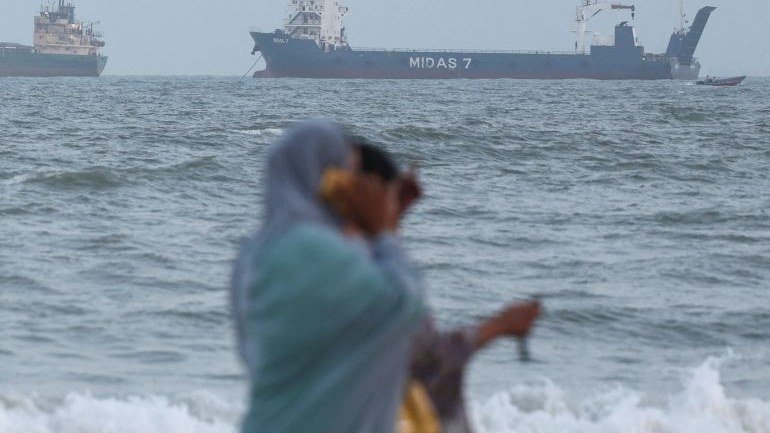 \n\n
\n\nIran's Costly Road Around Hormuz
\n\nIran is not waiting passively for the blockade to end. The Islamic Republic is constructing a parallel infrastructure of survival, expanding Caspian Sea shipping with Russia, accelerating unfinished railway corridors, and developing overland trade routes and alternative payment channels. The Cradle, a regional analysis outlet, has called this "Iran's costly road around Hormuz"—a phrase that captures both the ambition and the inefficiency of the project.
\n\nThese alternatives are expensive and slow. Shipping goods overland through Central Asia or via the Caspian cannot replace the economies of scale offered by Hormuz. But they serve a dual purpose: they keep the Iranian economy functioning at a minimal level, and they signal to the international community that Iran will not be isolated indefinitely. The railway corridors, in particular, are part of a broader vision of connecting Iran to China and Russia through a network of land routes that bypass US naval power entirely.
\n\nDiplomatically, Tehran is also seeking a way out. Iran and Oman are negotiating a "phased framework" that would establish a joint temporary navigational corridor through the strait and a joint mine-clearing project. Iranian Foreign Minister Abbas Araghchi met with his Omani counterpart, Badr Albusaidi, in Tehran in late August. Albusaidi expressed hope that the corridor would "soon" be announced, while technical talks continue on a permanent corridor and traffic-management mechanism. Oman, with its historic role as a regional mediator and its control of the Musandam Peninsula that juts into the strait, is uniquely positioned to broker such an arrangement.
\n\nThe Regional Ripple Effect
\n\nThe war is not confined to Iran's borders. It is reshaping the wider region in ways that will be felt for years. The Houthis, Iran's most capable proxy, declared a naval blockade of Saudi Arabia in July, upending the 2022 truce with the Saudi-backed government and dragging Yemen back into the conflict. The Red Sea, already a dangerous waterway due to Houthi attacks on shipping, has become a secondary front in the broader war.
\n\nThe Gulf states are absorbing the shock. Supply chains are disrupted, inflation is rising, and even as oil prices have climbed, the economic uncertainty is taking a toll. Sanam Vakil of Chatham House notes that Gulf states were already diversifying their economies and broadening their defence partnerships before the war. The conflict has accelerated these trends. A Türkiye-Pakistan-Saudi Arabia defence agreement was signed in Mecca, a signal that the region is re-aligning in response to the crisis.
\n\nFor the Gulf monarchies, the war presents a delicate balancing act. They share Washington's desire to contain Iran, but they also depend on the stability of the strait for their own energy exports. The closure of Hormuz affects them as much as it affects Iran—perhaps more, given their reliance on maritime trade. The UAE and Saudi Arabia have invested heavily in alternative pipeline routes, but these cannot fully compensate for the loss of the strait.
\n\nThe Long Game: Years, Not Months
\n\nAs the war enters its seventh month, both sides are settling in for a long struggle. The United States has the naval superiority to maintain the blockade indefinitely, but it cannot force Iran to capitulate through economic pressure alone. Iran has the resilience to endure the blockade, but it cannot reopen the strait without conceding to US demands. The result is a strategic equilibrium that favours neither side.
\n\nThe negotiations with Oman offer a potential off-ramp, but they are fraught with difficulty. Any agreement must address not only the strait but also the broader issues of the war: the US blockade, Iran's nuclear programme, and the situation in Yemen. The Houthi blockade of Saudi Arabia complicates matters further, as Tehran's ability to control its proxies is not absolute.
\n\nFor the international community, the crisis is a stark reminder of the fragility of global energy security. The Strait of Hormuz has been a chokepoint for decades, but its closure was always considered a worst-case scenario. That scenario is now a reality, and the world is learning to live with it. Oil prices have risen, but not to the catastrophic levels that many predicted. The global economy is adapting, finding alternative sources of supply and alternative routes of transport.
\n\nBut adaptation comes at a cost. The longer the blockade continues, the more entrenched the positions become. Iran is building its land-based alternatives, the United States is deepening its naval presence, and the Gulf states are re-aligning their security arrangements. The war is no longer just about Iran's nuclear programme or its regional ambitions; it is about the future order of the Middle East.
\n\nIn Tehran, the leadership is betting that time is on its side. The regime has survived sanctions, assassinations, and military strikes. It believes that the United States, with its domestic political divisions and global commitments, will eventually tire of the conflict. In Washington, the calculation is different: the blockade is a low-cost way to contain Iran without committing ground troops. Both sides are waiting for the other to blink.
\n\nThe empty port at Bandar Abbas is a symbol of this impasse. It is a reminder of what has been lost—not just in terms of trade and commerce, but in terms of the stability that once underpinned the region. The war has entered a phase of attrition, and there is no clear path to victory for either side. The only certainty is that the Middle East will not be the same when it ends.
\n\nBy Malik Hassan, Staff Writer
This article was produced with AI-assisted research and editorial support. Reporting is based on sources cited in the article.
What's Your Reaction?
 Like
0
Like
0
 Dislike
0
Dislike
0
 Love
0
Love
0
 Funny
0
Funny
0
 Wow
0
Wow
0
 Sad
0
Sad
0
 Angry
0
Angry
0
Middle East Correspondent at Global1.News. Based in Beirut, covering politics, conflict, energy, and society across the Middle East. Brings context and depth to a region often reduced to headlines.











Comments (0)