
Turkey Deepens Mideast Diplomacy: Fidan Calls Qatar, Egypt
Turkish Foreign Minister Hakan Fidan held high-level phone calls Saturday with Qatari Prime Minister Sheikh Mohammed bin Abdulrahman Al Thani and Egyptian Foreign Minister Badr Abdelatty as Ankara deepens Middle East diplomatic coordination on Gaza, Syria and regional stability.
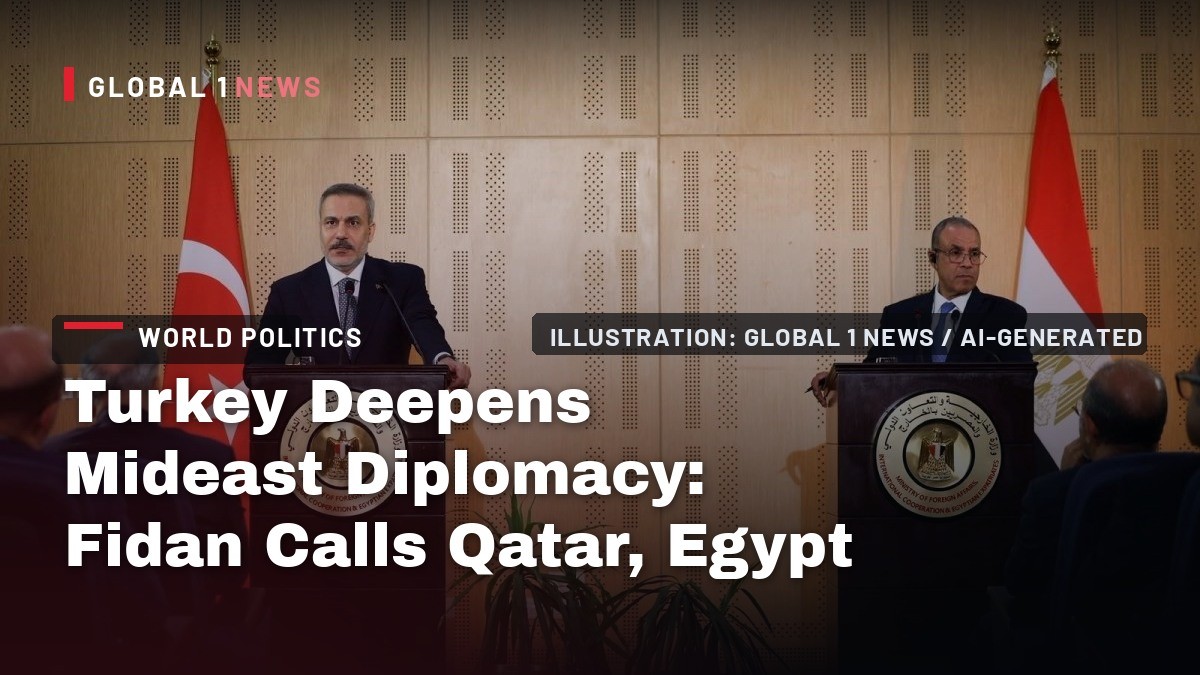
Turkish Foreign Minister Hakan Fidan held separate phone calls Saturday with Qatari Prime Minister and Foreign Minister Sheikh Mohammed bin Abdulrahman Al Thani and Egyptian Foreign Minister Badr Abdelatty, according to Turkish diplomatic sources, as Ankara accelerates its coordination with two of the Middle East's most consequential diplomatic actors. The conversations, which covered regional and bilateral issues, come at a moment when the Ankara-Doha-Cairo axis is emerging as a central pillar of crisis management across the region—from the fragile Gaza ceasefire to maritime security in the Strait of Hormuz and the unresolved file of Syria's political transition.
While Turkish diplomatic sources did not provide further details about the substance of the calls, the timing is telling. Fidan's outreach to both capitals follows a month of intensive trilateral engagement, including his visit to Egypt earlier this month for the second meeting of the Türkiye-Egypt Joint Planning Group in El Alamein, where the two sides reviewed bilateral relations and regional developments. The calls also come as Qatar, Egypt and Türkiye—the three mediator states that have been central to Gaza diplomacy—have jointly condemned Israel's ongoing violations in Gaza and demanded a durable ceasefire.
A Coordinated Response to Regional Crises
The phone calls are part of a broader pattern of sustained diplomatic engagement that has intensified significantly in recent weeks. Fidan has held several rounds of discussions with his Qatari and Egyptian counterparts, underscoring the importance Ankara places on maintaining direct communication with its regional partners. The issues on the table span the full spectrum of Middle East flashpoints: the humanitarian and political situation in Gaza, developments in Syria, tensions affecting maritime security and energy routes, and the broader risk of regional escalation.
For Ankara, the strategic logic is clear. Türkiye, Qatar and Egypt have emerged as important diplomatic players in efforts to address conflicts and tensions across the Middle East, each bringing distinct leverage to the table. Qatar has played a prominent mediation role in Gaza-related negotiations and other regional disputes, leveraging its financial resources and its unique channels of communication with actors across the political spectrum. Egypt's geographic position and longstanding influence in Arab affairs have made Cairo a key player in efforts involving Gaza and broader regional stability, particularly given its control of the Rafah crossing and its historical role as a broker between Palestinian factions and Israel.
Türkiye brings its own assets: a robust military capability, deep intelligence networks under Fidan's stewardship of the National Intelligence Organization (MIT), and a diplomatic posture that has positioned Ankara as a voice for Palestinian rights while maintaining functional channels with all parties. The convergence of these three capitals appears to represent a significant realignment of Middle East diplomacy, one that increasingly operates independently of—and at times in tension with—Washington's preferences.
The Türkiye-Qatar Strategic Partnership
The Fidan-Sheikh Mohammed channel is among the most active in regional diplomacy. Türkiye and Qatar have developed a strategic partnership that covers political, economic and defense cooperation, built on a foundation of mutual trust that has weathered regional storms since the 2017 Gulf crisis, when Doha's isolation by Saudi Arabia, the UAE, Bahrain and Egypt was met with Ankara's swift and unequivocal support.
The two countries have maintained close relations through frequent high-level contacts, joint initiatives and expanding trade and investment ties. Qatar has also been an important partner for Türkiye in regional diplomacy, particularly on issues involving Gaza and wider Middle East security. Fidan and Sheikh Mohammed have held regular discussions on regional developments, including tensions surrounding the Strait of Hormuz and efforts to prevent further escalation in the region.
Sheikh Mohammed, who serves as both Qatar's prime minister and foreign minister, has been at the center of Doha's diplomatic efforts and has maintained contacts with regional and international officials as Qatar pursues its mediation role. His dual role gives him unusual authority to translate diplomatic discussions into policy action, a fact that Ankara has leveraged in its coordination with Doha.
The Türkiye-Egypt Rapprochement Deepens
Türkiye's relationship with Egypt has strengthened significantly after years of strained ties that followed the 2013 ouster of President Mohamed Morsi, which Ankara condemned and Cairo viewed as an unacceptable interference in Egyptian affairs. The rupture took more than a decade to heal, with the first tentative steps toward reconciliation beginning in 2021 and accelerating markedly in 2023 and 2024.
Ankara and Cairo have now expanded political and economic cooperation through high-level visits and regular diplomatic consultations. The two countries have sought to increase bilateral trade and investment while expanding cooperation in areas including defense and energy. Fidan and Abdelatty have frequently discussed Gaza, Syria, Libya and Sudan, among other regional issues.
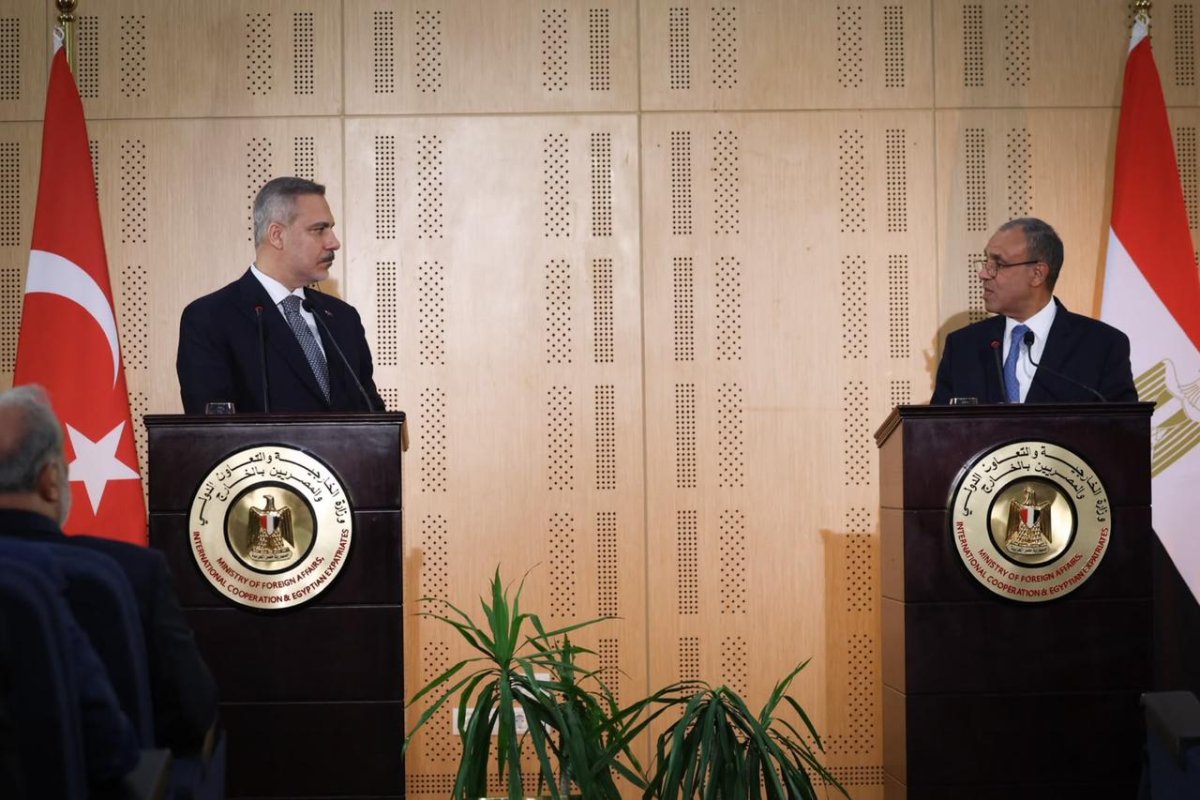
Fidan's visit to Egypt earlier this month for the second meeting of the Türkiye-Egypt Joint Planning Group marked a significant milestone. At a joint press conference in El Alamein, Fidan signaled that Türkiye, Qatar and Egypt may take "radical steps" if the United States does not pressure Israel, a statement that reflects the growing frustration among the three mediator states with the pace of implementation of the Gaza ceasefire arrangements. The two countries have expressed support for Libya's unity and territorial integrity and for stability in Syria, while calling for stronger efforts to address the humanitarian and political situation in Gaza.
Geopolitical Analysis: The Ankara-Doha-Cairo Axis
The deepening coordination between Türkiye, Qatar and Egypt represents more than routine diplomatic consultation. It reflects a structural shift in Middle East politics, one in which regional actors are increasingly seeking to manage crises through their own mechanisms rather than deferring to external powers.
On Gaza, the three countries have positioned themselves as the primary mediators and guarantors of any lasting arrangement. Their joint condemnation of Israeli violations and their demand for a durable ceasefire carry weight because they collectively control key levers: Qatar's financial resources and Hamas channels, Egypt's border control and historical mediation role, and Türkiye's political influence and intelligence capabilities. The three countries have also accepted an invitation to a Gaza governance body—a structured transitional governance framework for post-conflict Gaza—alongside five other nations, signaling their intent to shape the post-war order rather than merely react to events.
The Iran nuclear file adds another layer of complexity. Egyptian President Abdel Fattah el-Sisi has said that Egypt and Türkiye reviewed efforts to reduce regional escalation through diplomatic means, particularly in relation to Iran's nuclear program, warning of the risk of a wider regional conflict. This is a significant development: Cairo and Ankara, both of which have complex relationships with Tehran, are now coordinating their approach to the nuclear file, potentially creating a unified Arab-Turkish front on an issue that has traditionally been dominated by US-Iranian bilateral dynamics.
Energy security and maritime routes are also central to this coordination. The Strait of Hormuz tensions, which have threatened to disrupt global energy supplies, are a direct concern for all three countries. Türkiye's position as an energy transit hub, Qatar's status as the world's largest LNG exporter, and Egypt's control of the Suez Canal and the SUMED pipeline make them natural partners in efforts to secure energy routes and prevent escalation that could have catastrophic economic consequences.
Fidan's Diplomatic Signature
The intensity of Fidan's engagement with regional counterparts reflects his distinctive background and approach. Since becoming foreign minister in June 2023 after serving as head of Türkiye's National Intelligence Organization, Fidan has placed a strong emphasis on direct diplomatic engagement and coordination with regional and international partners. His intelligence background gives him a deep understanding of the region's fault lines and a preference for quiet, sustained diplomacy over public posturing.
Fidan's approach has been characterized by a willingness to engage with all parties, maintain multiple channels of communication, and focus on concrete outcomes rather than symbolic gestures. This has made him an effective interlocutor in complex files, from Gaza to Syria to the normalization of relations with Egypt. His relationship with Sheikh Mohammed, in particular, is built on years of direct engagement that predates his tenure as foreign minister.
Regional Implications and the Road Ahead
The strengthening of the Ankara-Doha-Cairo axis has significant implications for the broader Middle East order. It creates a counterweight to the US-Israel alignment that has dominated regional security arrangements for decades, while also providing an alternative to Iranian influence. The three countries share a common interest in stability, but they also share a common frustration with what they perceive as insufficient international pressure on Israel to implement ceasefire commitments and address the humanitarian catastrophe in Gaza.
Fidan's warning that Türkiye, Qatar and Egypt may take "radical steps" if the US does not pressure Israel is a signal that the axis is prepared to move beyond diplomatic consultation toward coordinated action. What form such steps might take remains unclear, but the fact that the three countries are discussing them publicly suggests a willingness to escalate pressure on Washington and Jerusalem.
The axis also has implications for Syria, where Türkiye, Qatar and Egypt have expressed support for stability and a political transition that preserves the country's territorial integrity. Coordination among the three countries on Syria gives them collective leverage in negotiations over the country's future, particularly as the Assad government's regional rehabilitation continues and as the US maintains its presence in northeastern Syria.
For the United States, the emergence of this axis presents both challenges and opportunities. Washington has historically relied on its bilateral relationships with each of these countries, but the deepening coordination among them reduces US leverage and creates the possibility of a unified regional position that may diverge from American preferences. The growing differences between the US and Israel over Türkiye's role after the Gaza war, as reported by The Media Line, suggest that Washington is still calibrating its approach to Ankara's expanded regional role.
For now, the immediate focus remains on Gaza, where the ceasefire's durability is far from assured. The coordination between Fidan, Sheikh Mohammed and Abdelatty will be critical in the coming weeks as the three countries work to maintain the ceasefire, address the humanitarian crisis, and lay the groundwork for a political settlement. The phone calls Saturday are a reminder that, in the Middle East, diplomacy is a constant process of consultation and recalibration—one in which Türkiye, Qatar and Egypt are now central players.
By Malik Hassan, Staff Writer
This article was produced with AI-assisted research and editorial support. Sources: Daily Sabah, Anadolu Agency, TRT World, Ahram Online.
What's Your Reaction?
 Like
0
Like
0
 Dislike
0
Dislike
0
 Love
0
Love
0
 Funny
0
Funny
0
 Wow
0
Wow
0
 Sad
0
Sad
0
 Angry
0
Angry
0
Middle East Correspondent at Global1.News. Based in Beirut, covering politics, conflict, energy, and society across the Middle East. Brings context and depth to a region often reduced to headlines.











Comments (0)