
Iran Puts Hundreds of Thousands on the Streets of Tehran in Its Biggest Wartime Show of Force
Iran staged its largest wartime mobilization since February, filling central Tehran with hundreds of thousands of marchers in combat uniform as the Revolutionary Guards claimed a tanker strike in the Strait of Hormuz.
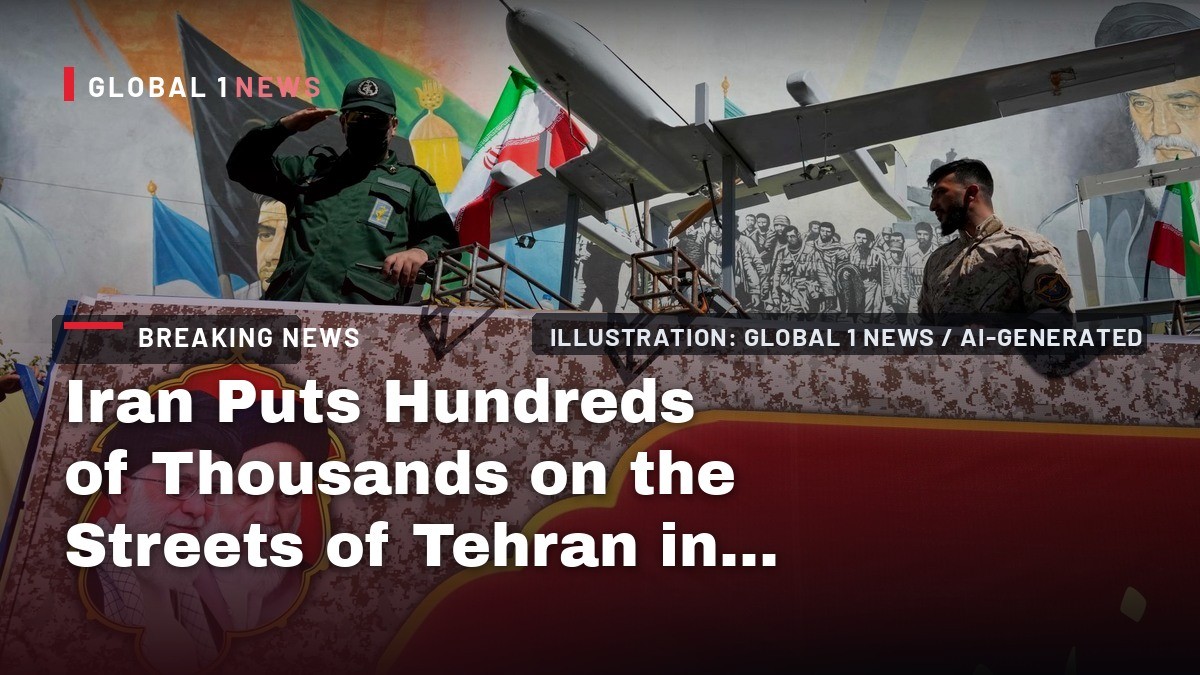
Hundreds of thousands of Iranians filled downtown Tehran on Friday in the government's largest wartime mobilization since February, marching in combat uniforms past the country's senior leadership. The same day, Iran's Revolutionary Guards said they struck an oil tanker in the Strait of Hormuz — the waterway Tehran has effectively shut since the war began. Two events, one message: the Islamic Republic can fill its streets and strike at sea on the same afternoon.
Iran Puts Hundreds of Thousands on the Streets of Tehran in Its Biggest Wartime Show of Force
Tehran, Iran — They came in combat fatigues, carrying flags, some wearing burial shrouds. By Friday afternoon, downtown Tehran had become a parade ground running from Imam Hussein Square to Enghelab Square, as state media put the crowd in the hundreds of thousands and the government's own broadcasters promised that weapons training would begin soon.
The Streets of Tehran, Filled
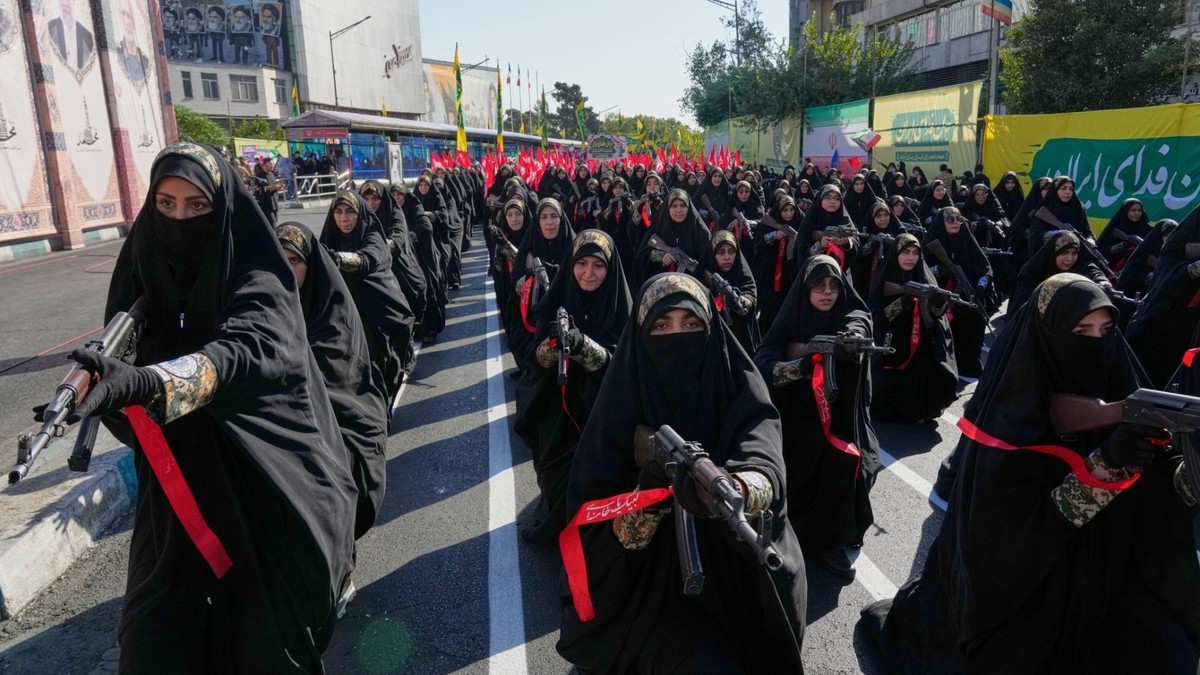
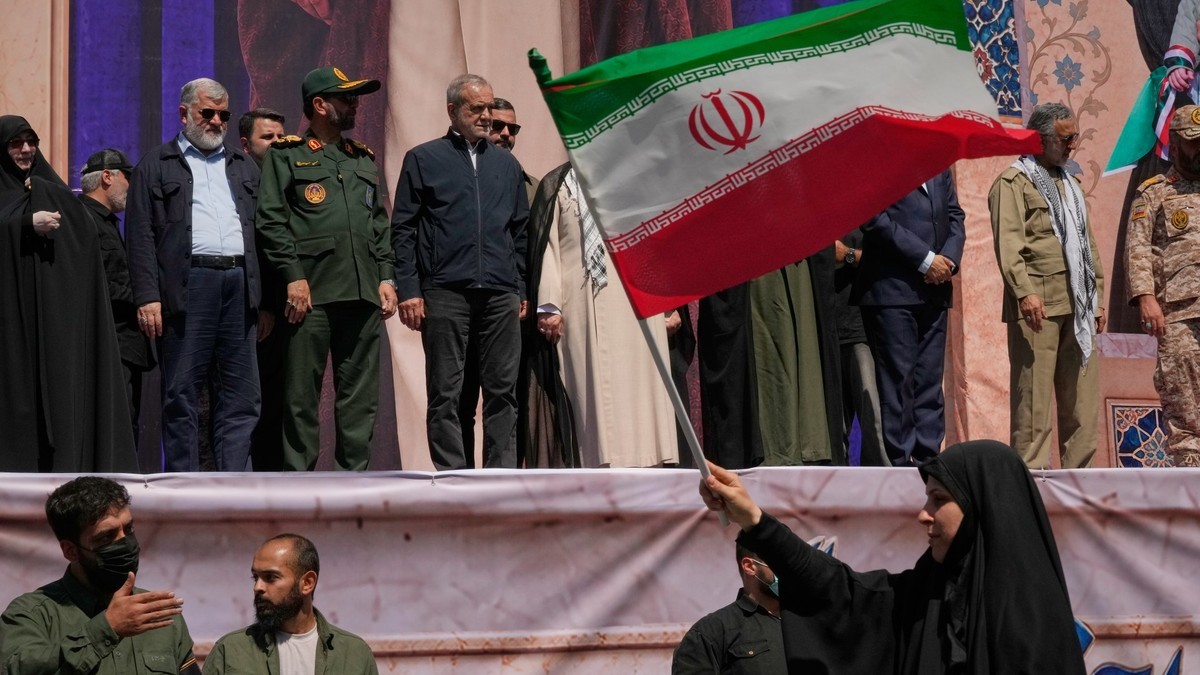
The Associated Press called Friday's demonstration the biggest of its kind since the United States and Israel attacked Iran in February, with marchers moving through the capital as onlookers cheered. State television had spent days urging Iranians to join the "Janfada" campaign — AP glosses the name "Janfaday-e Iran" as the ones who sacrifice their lives for Iran. Military hardware lined the route: anti-aircraft batteries, truck-mounted machine guns manned by female Guard members in black headscarves, and the drones Iran has used against shipping in the Strait of Hormuz. Tasnim, the state news agency, reported that veterans of the Sacred Defense wars joined, with women and young Iranians in separate sections, and that some participants wore burial shrouds to symbolize their readiness to die for the country. Marchers trampled U.S. and Israeli flags and chanted "Death to America" and "Death to Israel." President Masoud Pezeshkian and senior commanders watched.
What the State Says the Numbers Are
Every crowd figure attached to Friday's rally comes from the Iranian state, and none could be independently confirmed. Gen. Hassan Hassanzadeh, Tehran's Guard chief, told the state broadcaster that more than 600,000 people had registered to participate, with over 1 million expected to take part in training. On Friday morning, that broadcaster estimated more than 300,000 people were on the streets. Tasnim put the Tehran parade at "313,000-strong" and noted that 313 carries significance in Islamic tradition, tied to the Battle of Badr in 624 CE. Tasnim, which renders his name Hassan-Zadeh, separately quoted the same commander as saying about 500,000 had registered in Tehran alone. Tasnim also said the Janfada-ye Iran campaign began on March 29 and now claims more than 32 million participants nationwide — a scale of volunteering the AP has previously said it could not verify. The AP reported that estimates varied and that it could not independently confirm the figures.
A Volunteer Army, or a Domestic Security Force
The volunteers, AP reported, would serve as an additional layer of security alongside the paramilitary Revolutionary Guard and its all-volunteer Basij militia — the force that has played a key role in quashing anti-government protests. Hossein Taeb, the newly installed head of the Basij, declared as the rally began that the volunteers would be ready for "full-fledged defense" and that similar rallies would follow in other cities. The new trainees, he said, would make a "nightmare" for Iran's enemies. AP's own assessment was blunter: Friday's events suggested that hardliners like Taeb will be more prepared to suppress any future demonstration against the theocracy. The Financial Times, in reporting carried by The Irish Times, said Basij volunteers are now armed at home for the first time since the early years after the revolution, authorized to defend the Islamic Republic from their own doorsteps without seeking permission from commanders, according to people close to the regime. Saeed Laylaz, a Tehran-based analyst, told the FT the Basij is "moving towards greater co-ordination, to play a more significant security role in any future crisis" — not becoming more militaristic, he said, "but it will have greater authority and will become more agile."
The Man at the Front of the Basij
Taeb's installation is the clearest signal of where the Basij is heading. Supreme Leader Mojtaba Khamenei — described by The Irish Times as Ali Khamenei's son and successor — named him head of the IRGC Basij Organization in a decree dated 10 August 2026 and published on rahbar.ir, replacing Maj. Gen. Gholamreza Soleimani, who, according to Euronews, was killed in the U.S.-Israeli war this year. The decree instructed Taeb to "strengthen the popular intelligence network" and make greater use of new technologies for a "people-based" response to enemy threats, and ordered the Basij's reach broadened under the slogan "Every Iranian, a Basiji." Taeb is not new to this fight. He commanded the Basij during the unrest around the disputed 2009 presidential election, when the force helped crush the Green Movement demonstrations, then led the IRGC Intelligence Organization for roughly 13 years, building it into one of Iran's most powerful security institutions. The United States sanctioned him in 2010 over his command responsibility for the violence; the European Union followed in 2011. He was moved aside in June 2022 after a run of intelligence failures attributed to Israel.
Same Day, Another Tanker in the Strait
While Tehran marched, the Revolutionary Guards said they struck an oil tanker sailing under the Togolese flag in the Strait of Hormuz, state news agency IRNA reported. The Guards' statement said the Togo-flagged tanker "Trend" had been "targeted and detained after a fire broke out on board," describing an attempted "illegal passage" through the waterway. The U.K. Maritime Trade Operations center said a tanker was hit by a projectile, sparking a fire that was extinguished. In warning 138-26, issued at 0040 UTC on 18 September, UKMTO reported a tanker hit by an unknown projectile, all crew safe and environmental impact unconfirmed. A second warning, 139-26, issued at 0700 UTC the same day, was a time-late report of a separate incident on 16 September — a tanker struck while transiting outbound, crew safe, no damage assessment reported. UKMTO had announced on Thursday a security incident in the strait, 16 nautical miles northeast of Khasab, Oman, without naming the vessel. It remains unclear whether that ship is the same one the Guards described.
An Economy Under Blockade
The timing of Friday's display was not accidental. Iran's government, AP reported, has sought to rally the people and stress national unity even as the economy worsens under a U.S. naval blockade of Iranian ports and new U.S. sanctions meant to increase Tehran's pain. The numbers are stark: U.S. pressure has cut Iran's oil exports from about 1.85 million barrels a day last spring to roughly 255,000, according to trade data compiled by Kpler and reported by AP, while Gulf neighbors have been helped to increase their own flows. The U.S. Energy Information Administration put Brent at an average of $91 a barrel in August, $7 above July, with crude production shut-ins rising to 6.7 million barrels a day from 5.0 million. On 8 September, U.S. forces sank five Iranian oil tankers near Kharg Island, Washington targeted Iran's aviation sector with fresh sanctions, and the rial fell to a record low. Secretary of State Marco Rubio said that day that Iran would "lose tankers" for every attempt to hit U.S. ships. U.S. Central Command said its forces had redirected 103 commercial vessels to enforce the blockade in the period to 15 September. The blockade took effect on 13 April, was lifted on 18 June under a memorandum meant to reopen the strait, and was reinstated on 14 July after Iran announced it was closing Hormuz. The Pentagon estimated Iran had lost $4.8 billion in oil revenue by 1 May.
Seven Months of War
The war began on 28 February 2026, when the United States and Israel attacked Iran. Before the fighting, the Strait of Hormuz carried about a fifth of the world's oil shipments. Seven months on, the waterway is barely functioning. UKMTO said U.S.-facilitated transits off Oman have averaged 24 a day over the past week, but overall traffic remains about 90% lower than before the war, and RTHK reported only a single-digit number of vessels crossing daily. Tehran wants to charge tolls for passage and attacks ships it accuses of trying to bypass its preferred route; Iran's foreign minister, Abbas Araghchi, has said the strait is open to all except the United States, Israel and their allies. Iran's Supreme National Security Council secretary, Mohammad-Bagher Zolghadr, has said Washington must end the war, lift the blockade and withdraw its troops before the strait reopens. On the American side, ABC News reported 18 US service members killed and 824 wounded since the war began, the deadliest single attack being six soldiers at Port Shuaiba in Kuwait on day two. President Donald Trump said on 9 September he was not looking for a deal, predicting the conflict would end "immediately" once Iran "can't hold out any longer."
The Dissent the Parade Was Built to Deter
Friday's rally was staged in a country where, in January, shortly before the war, Iran saw some of the largest nationwide protests in its history — demonstrations that began over the struggling economy and widened into broader grievances. Activists have said a crackdown killed more than 7,000 people and saw tens of thousands detained. In May, government officials said more than 30 million Iranians, in a country of some 90 million, had volunteered to lay down their lives for the theocracy; AP could not independently confirm that. Against that backdrop, the Basij's expanded role reads as preparation as much as mobilization. Volunteers now authorized to defend the country from their own doorsteps, without commander approval, are a decentralized posture that cuts both ways in a state with a recent history of mass unrest.
A World That Cannot Agree on Iran
The diplomatic picture is as deadlocked as the strait. On Thursday, Russia and China vetoed a U.S.-drafted Security Council resolution that would have extended the mandate of a panel of experts monitoring international sanctions on Iran. The draft drew 11 votes in favor; Pakistan and Somalia abstained. The panel, tied to the Council's 1737 sanctions committee, was due to expire later this month and had already been idle for about a year because members could not agree on its membership. Russia's ambassador, Vasily Nebenzya, called the draft legally flawed and said the 2015 nuclear deal's sanctions architecture is finished; China cited double standards and urged diplomacy. Moscow and Beijing say UN limits tied to Resolution 2231 lapsed in October 2025, while Western governments say the sanctions remain fully in force. The E3 — France, Germany and the U.K. — triggered the deal's "snapback" mechanism in August 2025, and UN sanctions were reimposed on 27 September 2025. The IAEA's Board of Governors has since referred Iran's non-compliance with nuclear safeguards obligations to the Security Council and General Assembly, the first such referral in 20 years. Earlier this month, Iran said Arab foreign ministers would sign a Hormuz navigation deal in Oman.
What Comes Next
Taeb said Friday that similar rallies will take place in other cities soon, and state media has told Iranians that rifle training will begin shortly. Whether those registrations become an organized force — and how many of those who signed up are combat-capable — is not something the available figures establish. What is established is this: the government that filled the streets of Tehran on Friday also claimed a tanker strike in the strait it has shut to most of the world's shipping, while its economy contracts under blockade and its security apparatus reorganizes under the man who ran the Basij the last time Iran's streets rose up. The war is in its seventh month. The parade, and the tanker, were the message.
By Jessica Ali, Staff Writer
This article was produced with AI-assisted research and editorial support. Sources: The Associated Press (Nasser Karimi, Cara Anna, Lee Keath), Tasnim News Agency, UKMTO maritime warnings 138-26 and 139-26, RTHK/AFP, Iran International, Euronews, The Irish Times carrying Financial Times reporting, The National, Eurasia Review/Al Bawaba, UN Security Council records, CENTCOM statements, ABC News, Kpler trade data via AP, and U.S. Energy Information Administration data.
What's Your Reaction?
 Like
0
Like
0
 Dislike
0
Dislike
0
 Love
0
Love
0
 Funny
0
Funny
0
 Wow
0
Wow
0
 Sad
0
Sad
0
 Angry
0
Angry
0

Editor-in-Chief at Global1.News. Atlanta-based journalist who cuts through the BS and tells it like it is. Lead anchor, host, and the voice you hear when the spin stops and the truth starts.









Comments (0)