
Virginia’s Loudoun County board votes to pause new data center applications
Virginia’s Loudoun County just hit the pause button on new data‑center builds, and the move is sending ripples through the industry that can’t be ignored.
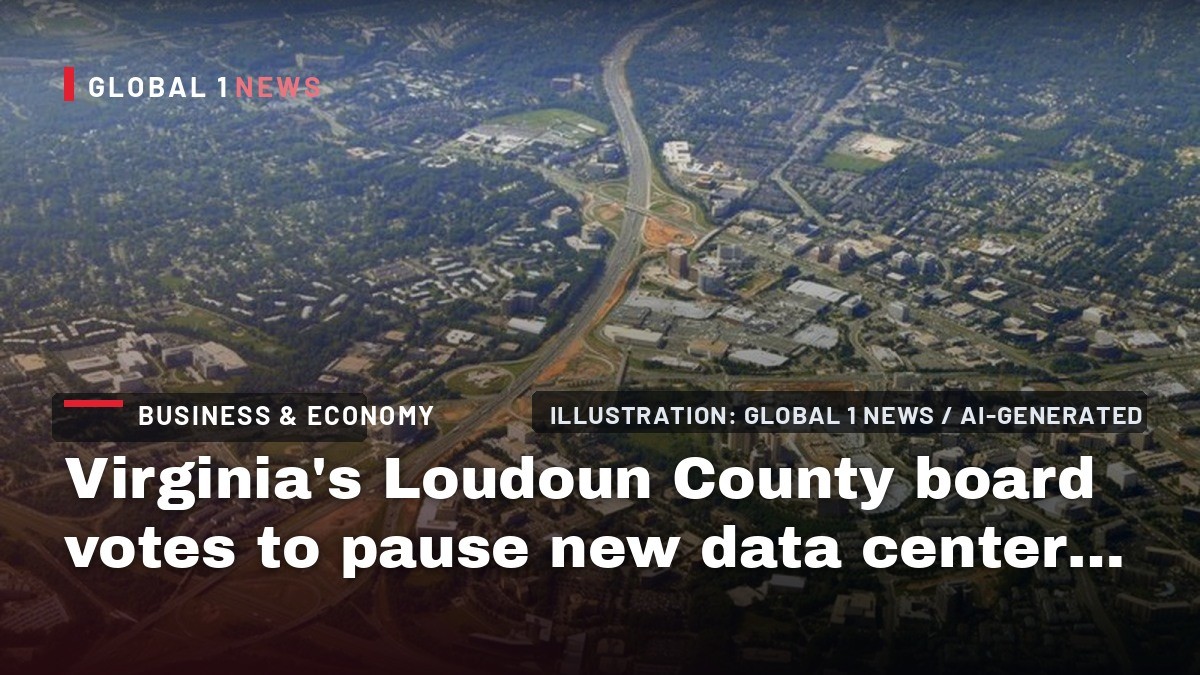
Virginia’s Loudoun County just hit the pause button on new data‑center builds, and the move is sending ripples through the industry that can’t be ignored. A 7‑1 vote by the board of supervisors put a 12‑month moratorium on fresh applications in what’s essentially the world’s data‑center hot‑spot. For founders running real hosting infrastructure, this is a reminder that the “by‑right” zoning that once made it easy to drop a rack in Loudoun is now under serious scrutiny. The decision, championed by Supervisor Juli E. Briskman, is framed as a breath of fresh air for residents, but it also flags a growing regulatory backlash that could reshape where and how we build capacity.
Why the Moratorium Matters for Independent Providers
The vote was decisive: seven supervisors in favour, one against, and one abstention. The lone dissent, Supervisor Kristen Umstattd, and the abstaining Caleb Kershner, represent the minority that still sees Loudoun’s data‑center boom as a net positive. But the majority’s “pause” is more than a political gesture; it’s a direct challenge to the “by‑right” zoning that has allowed countless facilities to spring up with minimal oversight.
For independent hosting operators, the shift from “by‑right” to a discretionary approval process means longer lead times, higher permitting costs, and the need to justify every megawatt of power consumption to a board that’s now explicitly tasked with protecting local communities. The moratorium gives us a window to reassess our expansion strategies before the next wave of regulation hits.
The Scale of Loudoun’s Data‑Center Landscape
Loudoun County isn’t just another market; it’s home to hundreds of data‑center facilities that collectively hold gigawatts of capacity. The “Data Center Alley” in Ashford is a literal corridor of racks from some of the world’s largest tech firms. That concentration of power draws attention, and the county’s move mirrors a broader trend of moratoriums across the United States aimed at quantifying the impact on residents and resources.
The sheer density of power draw and cooling demand in Loudoun has been a double‑edged sword. On one hand, it offers unparalleled connectivity and low‑latency access to major cloud backbones. On the other, it creates a pressure cooker for local utilities, road infrastructure, and community sentiment. The moratorium is a formal acknowledgment that the externalities of that scale can’t be ignored forever.
Regulatory Evolution: From By‑Right to Discretionary
Prior to this vote, Loudoun had already stripped “data centre” from the list of by‑right zoning options, a move that signaled the county’s intent to tighten control. The current moratorium pushes that agenda further by pausing any new applications while the board works on revised regulations. The board’s October 20 business meeting will receive a formal resolution memorializing the pause, indicating a structured approach rather than an ad‑hoc reaction.
What this means for us in the hosting business is that the regulatory environment is moving from a predictable, almost automatic approval process to a discretionary one that will likely demand environmental impact studies, community outreach, and perhaps even a cost‑benefit analysis that weighs local job creation against power consumption. Those are hurdles that VC‑backed, hype‑driven projects often underestimate.
Risk Management for Founders
From a risk‑management standpoint, the moratorium forces founders to ask hard questions: Do we have enough capacity in existing sites to meet growth targets? Can we diversify geographically before the next county hits the brakes? The answer is rarely simple, but the cost of ignoring the warning signs can be catastrophic—think delayed roll‑outs, sunk capital, and strained client relationships.
Independent providers have an advantage here: we’re not tied to the massive, single‑site strategies that some hyperscalers pursue. By spreading workloads across multiple, smaller facilities, we can sidestep the regulatory choke points that loom in hotspots like Loudoun. It’s a strategy that has kept many of us afloat when larger players get tangled in zoning battles.
Community Impact and the Politics of Power
The board’s justification for the pause is rooted in protecting communities. Residents have long complained about the visual impact of massive warehouses, the strain on local roads, and the fear that power‑hungry data centres could drive up electricity rates. While those concerns are often amplified by NIMBY rhetoric, they’re not without merit when you have gigawatts of capacity humming in a suburban county.
For hosting founders, this is a lesson in stakeholder management. Engaging local officials early, demonstrating energy‑efficiency measures, and contributing to community projects can turn a potential adversary into an ally. The board’s vote shows that even a single dissenting voice can be outweighed by a coordinated community pushback if you’re not proactive.
Strategic Takeaways for the Next 12 Months
With a full year of pause on the table, the immediate action item is to audit your pipeline. Identify any projects slated for Loudoun and re‑evaluate timelines. If you’re already in the permitting process, be prepared for a possible reset. Use this window to explore alternative sites in less regulated jurisdictions, or to double‑down on existing facilities by optimizing power usage effectiveness (PUE) and increasing density where feasible.
Another practical step is to monitor the county’s upcoming resolution on October 20. The language of that resolution will hint at the future regulatory framework—whether it leans toward stricter caps, mandatory renewable‑energy sourcing, or new community‑impact fees. Align your compliance roadmap now rather than scrambling later.
Bottom Line: Adapt or Get Left Behind
The Loudoun moratorium is a clear signal that the era of unchecked data‑center expansion is over, at least in the most saturated markets. For founders who have built their businesses on the promise of cheap land and easy permits, the writing on the wall is unmistakable: you either adapt to a more rigorous, community‑focused approval process, or you watch your growth plans stall.
In practice, that means diversifying locations, tightening operational efficiency, and building relationships with local regulators before you need them. The pause is a chance to do the hard work of aligning business goals with the realities of power consumption, land use, and community impact. Miss the deadline, and you’ll be scrambling when the next county decides to pull the plug.
— Allan Ali, Founder
This article was produced with AI-assisted research and editorial support. Reporting is based on the source material cited below. Sources: Data Center Dynamics; datacenterdynamics.com; Global1.News (18 September 2026).
By Allan Ali, Global1.News
What's Your Reaction?
 Like
0
Like
0
 Dislike
0
Dislike
0
 Love
0
Love
0
 Funny
0
Funny
0
 Wow
0
Wow
0
 Sad
0
Sad
0
 Angry
0
Angry
0

Publisher of Global1.News. Automation architect, systems builder, and the guy making sure the truth gets published.















Comments (0)