
Immigration judge rules US can deport president of Wisconsin's largest mosque
In a decision that reverberates across the United States, the Chicago Immigration Court has cleared the way for the removal of Salah Sarsour, a Palestinian‑American community leader who heads Wisconsin’s largest mosque.
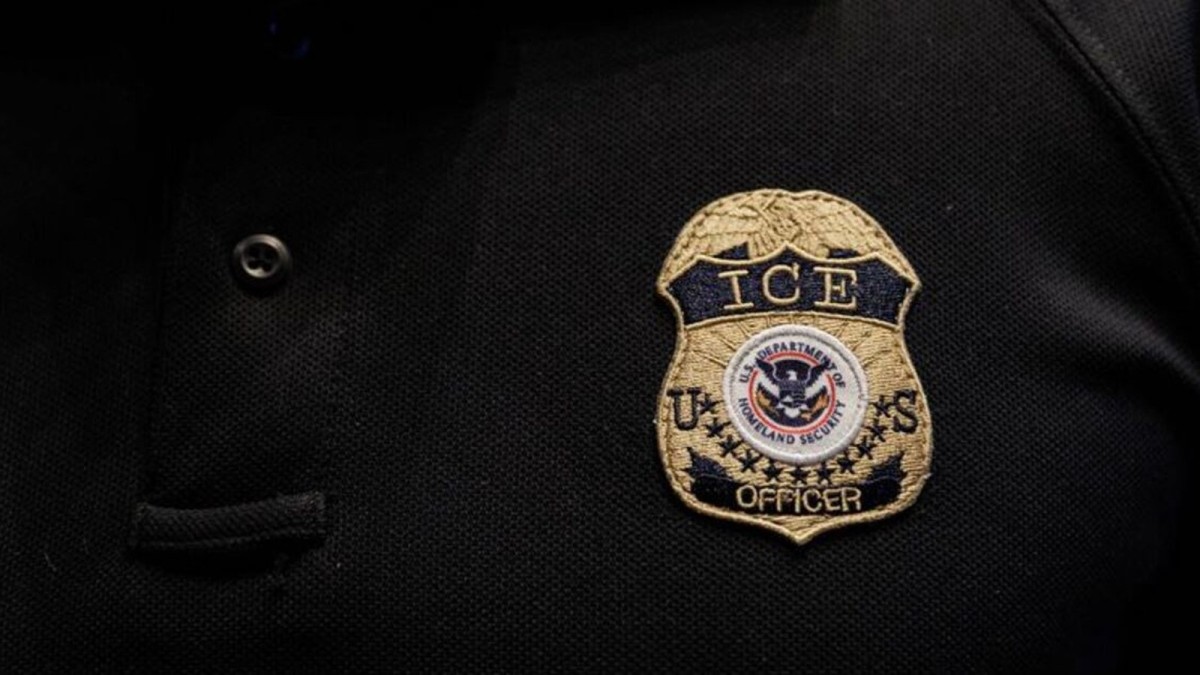
In a decision that reverberates across the United States, the Chicago Immigration Court has cleared the way for the removal of Salah Sarsour, a Palestinian‑American community leader who heads Wisconsin’s largest mosque. The ruling, issued by Judge Jayme Salinardi, rests on a Cold War‑era provision of the Immigration and Nationality Act that permits deportation on grounds of national security and foreign‑policy concerns. While the case is being fought in the U.S. legal system, its implications touch on the lived realities of Palestinians in the occupied West Bank, the legacy of Israeli military courts, and the broader debate over free speech and security in the age of heightened political polarization.
Legal backdrop and the judge’s reasoning
The judge’s order follows a series of procedural steps that began with Sarsour’s detention by Immigration and Customs Enforcement in late March. After a federal judge ordered his release in mid‑June on the basis that Sarsour had raised a “substantial free‑speech retaliation” claim, the immigration court revisited the matter. Judge Salinardi concluded that, despite the earlier finding on free‑speech grounds, Sarsour still meets multiple criteria for removability under the Immigration and Nationality Act, a statute originally crafted to address Cold War security threats.
Crucially, the judge rejected the government’s allegation that Sarsour had lied on his green‑card application, focusing instead on the broader security and foreign‑policy rationale. The Department of Homeland Security welcomed the decision, emphasizing that “multiple grounds of removability” have been sustained. Sarsour’s legal team has announced an appeal, describing the ruling as “deeply disappointing” and warning that deportation would place his life at risk if he is sent back to the West Bank.
The personal story behind the headline
Sarsour, a permanent resident of the United States for more than three decades, grew up in the Israeli‑occupied West Bank. He now leads the Islamic Society of Milwaukee, a congregation that has publicly framed his legal battle as a case of targeted discrimination based on his Palestinian heritage and his advocacy for Palestinian rights. The society’s statement underscores the perception that Sarsour’s case is emblematic of a broader pattern of pressure on Muslim and Palestinian community leaders in the United States.
During his detention, Sarsour’s health deteriorated; his legal representatives noted a loss of more than 30 pounds and the presence of type 2 diabetes. He has no criminal record in the United States, a fact that contrasts sharply with the government’s reliance on a teenage conviction in an Israeli military court – a conviction that the Trump administration highlighted as evidence of a security threat.
The Israeli military‑court conviction
The conviction cited by U.S. officials stems from a teenage trial in a West Bank military court, where Sarsour was found guilty of throwing Molotov cocktails at Israeli army installations. The Trump administration used this episode to argue that Sarsour posed a security risk, noting that the conviction had been known to U.S. authorities for decades. Sarsour, however, disputes the circumstances of the conviction, asserting that he was subjected to torture and coerced confessions – a claim that aligns with findings from Israeli rights organization B’Tselem, which reports a 96 percent conviction rate in West Bank military courts and a history of extracting confessions through torture.
The reliance on a decades‑old teenage conviction raises complex questions about the weight given to foreign legal outcomes in U.S. immigration proceedings, especially when those outcomes stem from a judicial system that international observers have repeatedly criticized for due‑process deficiencies.
U.S. policy trends under the Trump administration
Sarsour’s case is part of a broader pattern of immigration enforcement actions taken during the Trump era. The administration pursued a series of measures aimed at curbing what it framed as extremist influences among immigrants, including heightened social‑media screening, funding freezes for universities hosting pro‑Palestinian protests, and attempts to deport foreign activists supporting Palestinian causes. These policies were justified by officials as necessary to protect national security, yet critics argue that they conflated legitimate political advocacy with extremist activity.
Advocates, including several Jewish groups, have pushed back against the administration’s narrative that criticism of Israeli policies equates to antisemitism. They maintain that legitimate dissent regarding Israel’s occupation of Palestinian territories should not be labeled extremist, a distinction that lies at the heart of the legal and political debates surrounding Sarsour’s deportation.
Regional implications and the West Bank context
If Sarsour is ultimately removed, the personal risk he cites – that his life would be in danger upon return to the West Bank – reflects the broader security environment in the occupied territories. The high conviction rate in military courts, combined with documented instances of coercion and torture, creates a climate where former detainees and political activists often face renewed scrutiny and potential re‑arrest.
For Israeli authorities, the case underscores the lingering impact of security policies instituted during the occupation, policies that continue to shape the lives of Palestinians decades later. The use of a Cold War‑era U.S. law to address a security claim rooted in an Israeli‑administered conviction illustrates the transnational reach of legal frameworks that originated in a very different geopolitical context.
Community response and the broader debate on free speech
The Islamic Society of Milwaukee has framed Sarsour’s legal battle as an assault on the rights of Palestinian‑American communities. Their statement emphasizes that the deportation effort is “based on his Palestinian and Muslim background, and his advocacy for Palestinian rights.” This narrative resonates with broader concerns among American Muslim communities about being targeted for their political views, especially in a climate where immigration enforcement has been linked to ideological profiling.
Legal scholars note that the judge’s acknowledgment of a “substantial free‑speech retaliation” claim highlights a tension within U.S. immigration law: balancing national security concerns with constitutional protections. While the court ultimately found sufficient grounds for removal, the initial release on free‑speech grounds signals that the judiciary remains attentive to the potential chilling effect of immigration enforcement on political expression.
Looking ahead: legal avenues and policy implications
Sarsour’s legal team has signaled its intent to appeal, indicating that the case will continue to move through the appellate system. The appeal will likely focus on the interplay between the security rationale invoked under the Immigration and Nationality Act and the constitutional protections afforded to permanent residents under the First Amendment. The outcome could set a precedent for how similar cases involving political activists are handled in the future.
Beyond the courtroom, the case may influence ongoing policy discussions about the scope of immigration enforcement in politically sensitive contexts. As the United States grapples with the legacy of the Trump administration’s hard‑line immigration stance, Sarsour’s story serves as a litmus test for how the legal system reconciles security imperatives with the democratic principle of free expression, especially for communities whose identities intersect with contested geopolitical narratives.
This article was produced with AI-assisted research and editorial support. Reporting is based on the source material cited below. Sources: Al-Monitor; al-monitor.com; Global1.News (01 October 2026).
By Hannah Berg, Staff Writer
What's Your Reaction?
 Like
0
Like
0
 Dislike
0
Dislike
0
 Love
0
Love
0
 Funny
0
Funny
0
 Wow
0
Wow
0
 Sad
0
Sad
0
 Angry
0
Angry
0

Israel Correspondent at Global1.News. Based in Tel Aviv, covering Israeli politics, security, technology, and society. Provides balanced, deeply-sourced reporting on one of the most closely-watched regions in the world.












Comments (0)