
Iran and Oman Close in on Hormuz Shipping Deal, Offering Hope for Oil Markets
Iran and Oman agreed on coordinates for a new Hormuz shipping route under a potential 60-day deal to ease oil flows. Brent fell to $83.47 after spikes to $88.10, following Trump's August 2 strike cancellation. Risks remain from Houthi and Hezbollah actions as the war grinds on.
Route Coordinates Locked In After Intense Negotiations
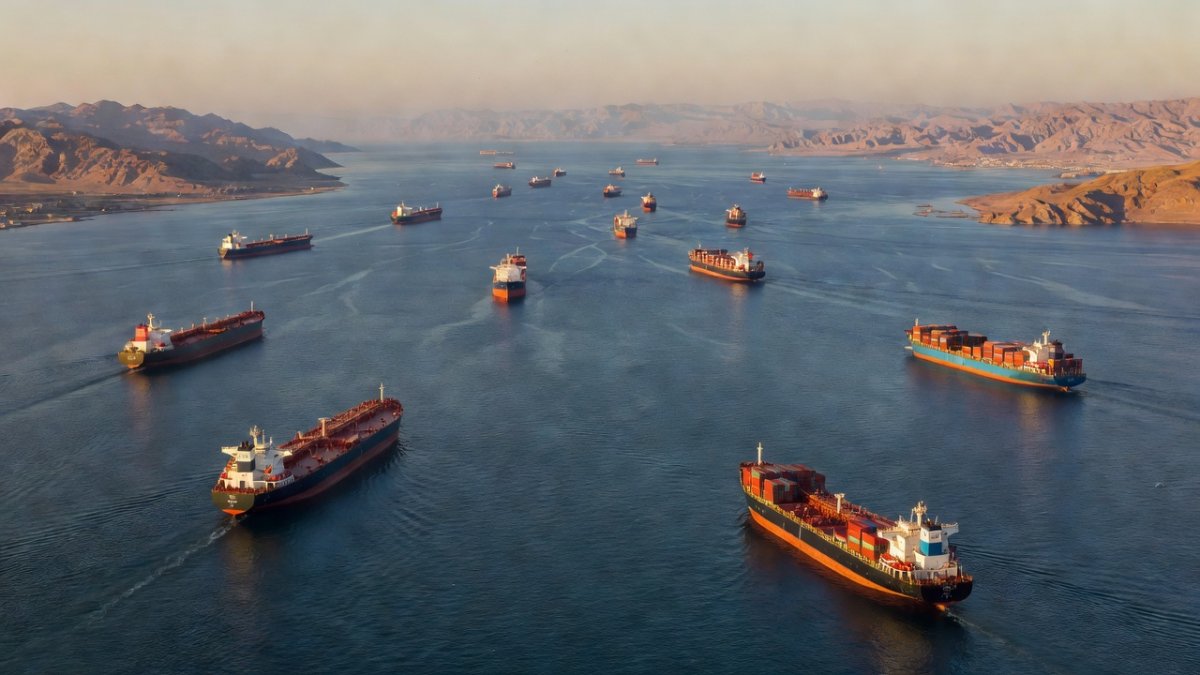
Iran and Oman have agreed on the geographical coordinates for a new shipping route through the Strait of Hormuz, according to reports verified across multiple outlets on August 5, 2026. The understanding marks a concrete step toward reopening the critical waterway after months of closure tied to the ongoing conflict.
Tehran described the progress as positive at both technical and political levels. Iranian Foreign Ministry spokesman Esmaeil Baghaei emphasized that the focus remains on temporary arrangements rather than permanent changes to the waterway's status.
This development follows direct mediation involving Pakistan, Turkey, and Saudi Arabia. The talks aim to establish a single two-way shipping corridor instead of multiple separate lanes, a format Iran has pushed to maintain oversight.
Mechanics of the Proposed 60-Day Temporary Arrangement
The emerging deal centers on a 60-day temporary arrangement between Oman and Iran that could be extended, Axios reported on August 5. The United States, Iran, and Oman are reportedly closing in on an interim agreement with an eye toward a possible announcement that same day.
Iran seeks arrangements lasting up to three months that would allow Tehran to control the designated route. Officials have stressed these measures serve as a stopgap while broader issues remain unresolved.
The draft deal under discussion would jointly manage traffic through the strait. This structure reflects Iran's insistence on a single corridor rather than reverting to prewar open access patterns.
Trump's Pattern of Threats and Sudden De-Escalations
President Donald Trump canceled planned attacks on Iran on August 2, 2026, citing the "perimeters" of a deal on the Strait of Hormuz. He stated that Israel had agreed to commit to the framework and framed the decision as being "for the future benefit of the world" and "the survival of a successful and prosperous Iran."
The New York Times noted on August 3 that Trump has repeatedly threatened major strikes on Iranian infrastructure only to claim imminent diplomatic breakthroughs. This cycle has left both sides navigating repeated attacks and counterattacks since the war began on February 28, 2026.
Intensive mediation by Pakistan, Turkey, and Saudi Arabia preceded the latest pause. Trump described the moment as a "last chance" on August 4 while signaling optimism about the Oman channel.
Iran's Firm Stance Against Direct US Talks
Iranian officials have repeatedly clarified that Tehran is not holding direct talks with the United States. Esmaeil Baghaei stated on August 4 that all discussions with Oman proceed at technical and political levels without American participation in the room.
This position aligns with Iran's broader approach since negotiations collapsed after Trump's 2025 letter to Supreme Leader Ali Khamenei set a 60-day deadline for a nuclear agreement. The current Oman channel serves as an indirect path to manage the strait.
Tehran's goal remains setting temporary arrangements that give it control over the shipping route. Officials have framed this as essential for any short-term reopening of the waterway.
The Oman channel provides a discreet backchannel that allows both Washington and Tehran to maintain their public positions while advancing practical solutions on the strait. This indirect approach lets Iranian officials claim no direct engagement with the United States even as technical details are hammered out through Omani intermediaries. Such arrangements have proven useful in past crises where face-saving measures were essential for progress.
Oil Markets React to Diplomatic Hopes Amid Volatile Prices
Brent crude fell about 5 percent to $83.47 a barrel by lunchtime in London on August 3, with intraday drops reaching 7.3 percent. West Texas Intermediate dropped 4.67 percent to $80.72 during the same session as European stock markets rallied on the news.
By August 5, Brent traded in the high $70s to low $80s as markets assessed the talks. Earlier spikes saw Brent reach $84.98 per barrel on July 14 and climb 4.6 percent to $88.10 on July 17 after sustained US strikes.
The Strait of Hormuz carries roughly 20 percent of globally exported crude oil and about 20 percent of LNG capacity. US diesel prices hit $5 a gallon in mid-July, and analysts say prices are unlikely to return to prewar levels for months even if the strait reopens.
During the height of the crisis in late spring, Brent crude spiked above $120 a barrel amid fears of prolonged closure, only to tumble to around $70 in June as temporary lulls emerged before hostilities reignited. Hedge funds have been positioning aggressively in both directions, with some betting on further volatility from any breakdown in talks while others load up on long positions anticipating a deal that could stabilize flows.
A full reopening of the strait would likely bring immediate relief to gasoline and diesel prices at US pumps, potentially shaving 20 to 30 cents per gallon within weeks as supply chains normalize. Yet analysts caution that prices are unlikely to return to prewar levels for months due to lingering uncertainties, rebuilt inventories, and the time required for shipping patterns to fully recover from the disruptions.
Human and Economic Costs of the Months-Long Conflict
Independent casualty trackers estimate roughly 9,000 to 18,000 people killed across all sides since February 28, 2026. The toll includes civilians in Iran, Israel, Lebanon, and Gulf states.
A fragile interim ceasefire collapsed in early July, leading Iran to assert control over the strait and strike targets in Israel and the Gulf region. The US reinstated its naval blockade of Iran on July 14 amid the renewed fighting.
American families have felt the impact through higher fuel costs and broader economic uncertainty. The conflict's effects on global stability and energy prices remain a direct concern for households far from the region.
The US State Department issued a stark warning on August 1 urging American citizens across the Middle East to leave the region or shelter in place amid escalating risks. The July 14 reinstated naval blockade compounded these dangers, while the war has severely disrupted commercial flights in and out of the Middle East, forcing airlines to reroute around conflict zones and driving up travel costs for families.
Shipping companies have been forced to reroute vessels around the Cape of Good Hope, adding weeks to journeys and inflating freight rates that ultimately pass to consumers. The Strait of Hormuz carries roughly 20 percent of globally exported crude oil and about 20 percent of LNG capacity, underscoring why even temporary closures send shockwaves through energy markets and household budgets worldwide.
Lingering Risks From Regional Actors Threaten Fragile Progress
Yemen's Houthi rebels announced an attack on a Saudi oil tanker in the Red Sea on August 5, adding fresh complications. Israel conducted strikes in southern Lebanon the same day, accusing Hezbollah of violating the ceasefire.
These incidents highlight how quickly peripheral conflicts could derail the Hormuz talks. The New York Times reported that the emerging deal could ratify Tehran's control over what was previously an open waterway.
Any extension beyond the initial 60-day window will depend on sustained restraint from multiple actors. Continued strikes or tanker incidents risk reigniting the cycle that has defined the conflict since February.
The Houthi tanker attack came on the very same day that route coordinates were agreed upon, underscoring the fragility of any progress. Earlier threats of a Bab al-Mandab blockade had already helped push oil prices back above $100, demonstrating how quickly regional actors can reignite market fears.
Israel's accusation that Hezbollah violated the ceasefire raises serious questions about stability on the Lebanon front, where any renewed fighting could draw in additional parties and derail the Hormuz negotiations. Such developments highlight the interconnected nature of these conflicts, where progress in one area can be undermined by flare-ups elsewhere.
Path Forward and Implications for American Energy Security
The coming days will test whether the Oman channel can deliver a workable shipping route. Markets will watch closely for signs that the temporary arrangement can hold beyond the initial period.
Folks, this matters at the pump and for long-term stability. Lower volatility in the strait could ease pressure on diesel and gasoline prices that spiked earlier this summer.
Readers should track official updates from the State Department and energy agencies rather than relying on rumors. Staying informed about concrete developments in the Hormuz negotiations gives American families the clearest picture of what comes next.
Analysts point to the 60-day arrangement's built-in extension mechanism as a key feature that could allow the deal to evolve into a longer-term framework if initial compliance holds. There is also the possibility of a Wednesday announcement that would formalize the interim agreement and provide markets with clearer signals.
American families should closely monitor State Department advisories for travel updates and Energy Information Administration fuel price data for signs of relief at the pump. The United States has been publicly optimistic about the prospects, though Tehran continues to deny any direct talks, maintaining its stance through the indirect Oman channel.
By Jessica Ali, Staff WriterThis article was produced with AI-assisted research and editorial support. Reporting is based on sources cited in the article.
What's Your Reaction?
 Like
0
Like
0
 Dislike
0
Dislike
0
 Love
0
Love
0
 Funny
0
Funny
0
 Wow
0
Wow
0
 Sad
0
Sad
0
 Angry
0
Angry
0

Editor-in-Chief at Global1.News. Atlanta-based journalist who cuts through the BS and tells it like it is. Lead anchor, host, and the voice you hear when the spin stops and the truth starts.












Comments (0)