
IPv4 Is Back Above $50 an Address — and the Internet Still Can't Quit the 1980s
IPv4 address prices are climbing toward $50 per address as AI infrastructure demand hits a fixed supply. Allan Ali breaks down the market data, the IPv6 failure, and what independent hosting providers must do now.
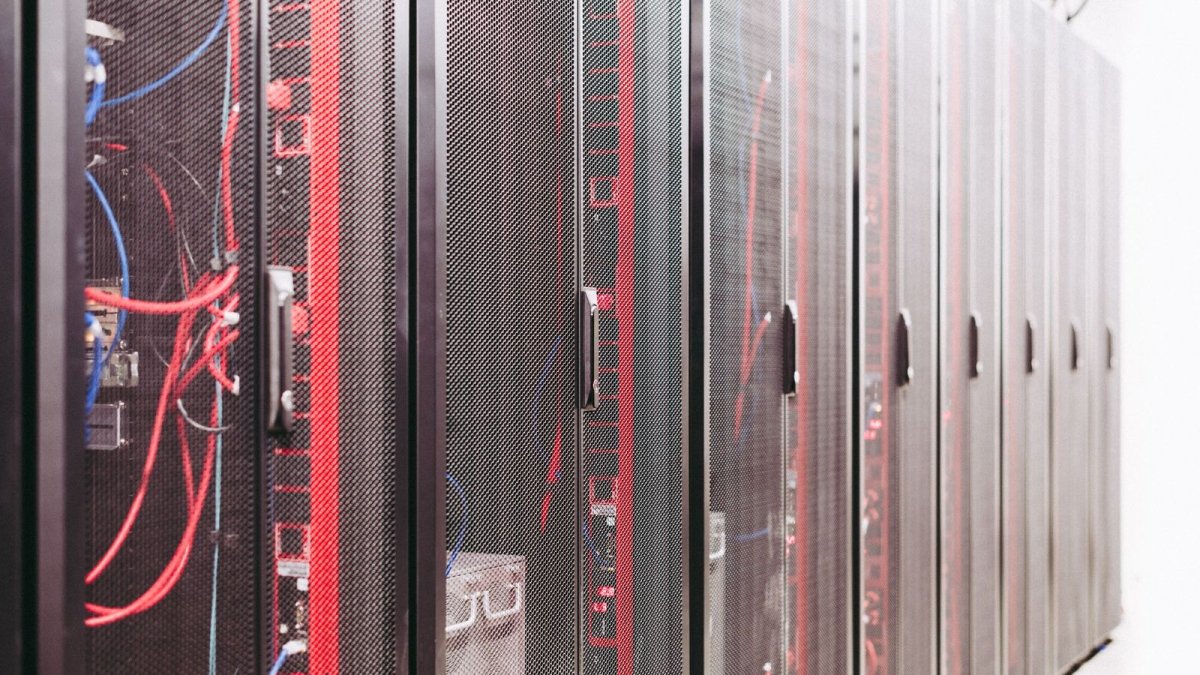
IPv4 Is Back Above $50 an Address — and the Internet Still Can't Quit the 1980s
Let me tell you something that's been sitting heavy with me all week. I run hosting infrastructure. I've been doing it for over a decade. And every time I go to quote a new server or expand a network, there's this quiet line item that nobody talks about at conferences, nobody puts in the marketing materials, and nobody warns you about when you start — the cost of the addresses themselves.
The Numbers — What an IPv4 Address Actually Costs in 2026
Let me give you the real figures from the secondary market, because this isn't theory. A /24 block — that's 256 addresses, the minimum size most anti-spam and routing policies take seriously — runs anywhere from $28 to $45 per address if you want to buy it outright. Do the math: $7,000 to $11,500 for a single /24. One block. Two hundred and fifty-six numbers that somebody's great-grandfather's university got for free in 1987.
Don't want to buy? Fine. Lease it. That same /24 costs between $97 and $128 a month. A /20 — 4,096 addresses, the kind of space a growing VPS provider actually needs — leases for $1,393 to $1,802 a month. And if you're a serious player eyeing a /16, a full 65,536 addresses, we're talking $1.18 million to $1.84 million to buy, or between $19,000 and $26,000 a month to lease. For numbers.
Here's the kicker: per-address prices in North America and Europe have recovered to the $38 to $58 range after the 2025 correction, roughly 10 to 15 percent below the 2021 peak but climbing with momentum. The market peaked above $60 an address in 2021, crashed through 2022 and 2023, and bottomed out in mid-2025 when a /16 dipped below $20 per address for the first time since 2019. Now — with AI infrastructure buying up address space like it's going out of style — the bottom is clearly in. Prices are back, and they're headed up.
How We Got Here — a Short History of the Biggest Artificial Shortage on the Internet
Let me explain this to anyone who's ever wondered why the internet charges you for numbers. IPv4 uses 32-bit addresses. That caps the entire space at 4,294,967,296 unique addresses. Four point three billion, total, for a planet with eight billion people and maybe forty billion connected devices. The designers of the 1970s and 1980s never imagined a smartphone in every pocket or a GPU cluster in every county.
And the early allocation was scandalously wasteful. Universities got classful blocks bigger than some countries use today. Corporations hoarded address space they stopped needing decades ago. By the time the industry woke up, the free pools were gone. APNIC, the Asia-Pacific registry, exhausted its pool back in 2011. ARIN, North America, in 2015. LACNIC in 2014. RIPE NCC — Europe, the Middle East, Central Asia — in 2019. AFRINIC, Africa, hung on longest and even that buffer is now effectively gone. As of 2026, there are roughly 3.9 million unallocated addresses left on the planet, and they're mostly sitting in regional registries' reserve policies, not in any pool you or I can draw from.
Practically speaking, the only way to get IPv4 today is the secondary market — buying or leasing from whoever already holds it. The RIRs run transfer policies, you justify your need, prove clean provenance, register the transfer. But make no mistake: this is now an asset market, not an allocation system. Addresses that were free in 1990 are balance-sheet assets in 2026.
The New Buyer Nobody Expected — AI Is Eating the Address Space Too
Now here's the part that should scare every independent hosting provider into paying attention. The AI buildout — the thing I've been writing about for weeks, the $700 billion of capex, the GPU clusters, the data centers — is a massive new consumer of IPv4 space. GPU clusters need management networks. Inference infrastructure needs API endpoints. Every customer-facing service needs a public address. And unlike compute, which you can manufacture, or power, which you can build, there is no factory for IPv4. The supply is fixed at 4.3 billion. Forever.
This is why the 2024 to 2026 period saw prices recover even as transfer volumes hit near-record highs. Institutional buyers, private-equity-backed IP investment vehicles, and genuine operational demand from cloud and AI infrastructure all piled into the same finite pool. Small /24 blocks held firm through the correction while large blocks crashed — because the buyer pool for a /24 is huge, while a /16 needs a single buyer with the capital and the operational footprint to justify a seven-figure purchase.
The Secondary Bottleneck Nobody's Talking About — We Had the Fix and Refused to Use It
Here's where I get genuinely angry, because this entire shortage was avoidable. IPv6 exists. It's been a standard since 1998. It has 128-bit addressing — 340 undecillion addresses. Enough for every atom on Earth to have its own public IP, with room to spare. The registries effectively give IPv6 away. There's no meaningful resale market because there's no scarcity.
And the industry still hasn't deployed it. Google's own statistics show global IPv6 user adoption crossed about 50 percent in early 2026 — 50.10 percent on a March day, to be precise — while independent measurement from APNIC Labs puts actual capability closer to 42 percent. Half the internet, after twenty-eight years, still can't speak the protocol that would end this shortage overnight.
Why? The same reason every infrastructure transition stalls: nobody wants to pay for it. ISPs deferred IPv6 investment for decades because IPv4 kept working and the costs were immediate. Application developers never had to think about it. Enterprises punted. So we've spent the last ten years building CGNAT band-aids — carrier-grade NAT that hides thousands of customers behind one address — and paying a monthly lease on an asset class that should have been obsolete in 2010. That's the secondary bottleneck: not the exhaustion itself, but a quarter-century of collective refusal to migrate. And every hosting provider — including you, reading this — is paying that tax, every single month.
The CGNAT Trap and the Reputation Tax
There's another cost hiding in this market that doesn't show up in the price tables, and it hits small operators hardest: reputation. An IPv4 block that's been flagged for spam or abuse is worth a fraction of a clean one. Blacklist removal is expensive. Deliverability is everything for businesses sending email. And when you're behind CGNAT, you don't control your reputation at all — you're sharing an address with strangers who may be spamming the world from the same NAT pool you're trying to send legitimate mail from.
That creates a two-tier market inside the address market. The clean, well-routed, historically reputable blocks command premium prices and only get more valuable. The dirty, abused, or poorly-managed space trades at a discount because the cleanup cost is real. If you're planning to grow, the address you buy today is an asset whose value depends on how responsibly you manage it.
What This Actually Means for Independent Hosting Providers
Here's what you need to do, and I'm going to be direct about it.
First, treat address space as capital, not an operating cost. If you've got the cash flow, buying a /24 at $7,000 to $11,500 beats leasing at $100-plus a month over a five-year horizon — the math flips in your favor by year three, and the asset appreciates. Companies that bought space in 2020 are sitting on 300 percent gains. That's a better return than most hosting margins.
Second, lock in your leasing now. Lease prices have been remarkably stable — $0.30 to $0.50 per address per month across block sizes — but purchase prices are climbing again, and lease rates follow the asset value with a lag. If you're leasing /20s at $1,500 a month, sign multi-year terms while the market is 10 to 15 percent below its 2021 peak. This window won't stay open.
Third, go dual-stack yesterday. If you're not offering IPv6 alongside IPv4 to every customer, you are competing with one hand tied behind your back. Yes, you still need IPv4 for legacy compatibility — that's the whole problem. But every service you can move to IPv6-native reduces your future IPv4 lease burden and protects you from the next price leg up.
Fourth, guard your reputation like it's a server in a flood. Abuse monitoring, strict onboarding, quick blacklist response — this isn't just compliance theater. It's protecting the resale value of an appreciating asset. A clean block is worth twice a dirty one, and that gap only widens as the market tightens.
The Structural Reality — This Market Isn't Going Back to Free
Let me be blunt about where this ends. There is no scenario where IPv4 becomes cheap again. The supply is fixed, the AI buildout guarantees new demand for years, and IPv6 adoption is crawling at a pace that would take another generation to meaningfully reduce IPv4 pressure — even then, legacy systems will keep IPv4 alive for decades. Every new GPU cluster, every new cloud region, every new VPS provider is a new buyer in a market with no new supply.
This isn't a bubble. Bubbles pop. This is a structural shortage — the kind that compounds. The 2021 peak wasn't the top of a mania; it was the market discovering what a genuinely scarce, genuinely essential resource is worth. The 2025 correction was a breather, not a reversal. Every signal — AI demand, institutional investment, record transfer volumes, rising /24 premiums — points in one direction.
The Bottom Line
I've been running servers for a decade, and I understood this market was real the day I paid more for 256 numbers than I paid for the server that uses them. That was years ago. The numbers have only gotten more expensive since.
The internet was built on a promise that the plumbing would be free and infinite. It's neither. The people who understand that — who bought addresses when they were cheap, who deployed IPv6 when it was optional, who treat address space as the appreciating asset it is — are the ones who'll still be in business when the next price jump hits. The rest will be paying rent on someone else's balance sheet.
Plan for it now, or pay for it later. Those are your only two options. Buh trust me, I've seen the bill.
— Allan Ali, Founder
This article was produced with AI-assisted research and editorial support. Reporting is based on sources cited in the article.
What's Your Reaction?
 Like
0
Like
0
 Dislike
0
Dislike
0
 Love
0
Love
0
 Funny
0
Funny
0
 Wow
0
Wow
0
 Sad
0
Sad
0
 Angry
0
Angry
0

Publisher of Global1.News. Automation architect, systems builder, and the guy making sure the truth gets published.












Comments (0)